REVIEW · HO CHI MINH CITY
From Ho Chi Minh: Black Virgin Mountain& Cao Dai Temple tour
Book on GetYourGuide →Operated by Anny Travel · Bookable on GetYourGuide
A 986-meter mountain plus a midday religion show? That combo is rare. This trip pairs the Ba Den (Black Lady) Mountain viewpoints, caves, and big-temple complex with the Cao Dai Temple service, which feels like art, theater, and faith all at once.
I love the way the morning starts early and then turns into a real change of scenery: a relaxed drive to Tay Ninh, then cable car views of waterfalls, caves, and thick forest. I also like that the tour doesn’t just drop you at buildings. You get time at the top, then you join the midday prayer service at Cao Dai, and finally you eat lunch afterward.
One thing to watch: the listing says cable car is not included, and one earlier experience had a surprise cable car charge after booking. So before you go, confirm the exact costs in your plan, especially if you want to budget tightly for the ride up.
In This Review
- Key things I found most interesting
- Morning Pickup to Tay Ninh: getting there is part of the day
- Ba Den (Black Lady) Mountain: temples, caves, and the big bronze Buddha
- What’s actually at the top
- The single most important practical note: cable car cost
- The drive down and the move to Cao Dai Temple
- Cao Dai Temple: the all-seeing eye, the dragon walls, and a spiritual mash-up
- Why the interior hits differently
- The midday service: what you should plan for
- One caution from a real booking experience
- Lunch after the service: a practical finish
- Price and value: is $75 worth it?
- Does the afternoon include Cu Chi Tunnels?
- Who this tour suits best
- Final verdict: should you book?
- FAQ
- What time is pickup for the Black Lady Mountain and Cao Dai Temple tour?
- Do I get breakfast before going to the mountain?
- How long does it take to travel from Tay Ninh to Black Lady Mountain?
- Is entrance fees included?
- Is the cable car included?
- What about lunch?
- Will I join a Cao Dai prayer service?
- Is the Cu Chi Tunnels afternoon tour included every day?
- What language is the tour guide?
Key things I found most interesting
- Ba Den Mountain at 986 m: one of the highest points in the south-east region, with panoramic views from the cable car.
- Bronze highest Buddha statue: a major draw once you reach the top complex.
- Caves and forest scenery: the mountain’s caves that once sheltered Buddhist monks and nuns still feel quiet and “kept.”
- Cao Dai Temple’s visual overload: dragons, the all-seeing holy eye, and interior statues of Jesus, Buddha, and Brahma.
- Midday service timing: the itinerary is built around joining the prayer service, not just sightseeing.
- Cu Chi might be added: on some days the afternoon continues to Cu Chi Tunnels, but not always.
Morning Pickup to Tay Ninh: getting there is part of the day
The day starts early. Pickup is around 06:00 to 06:30. After you’re collected, you head for breakfast at a local restaurant, then you’re on the road toward Tay Ninh.
The drive is about 3.5 hours from Ho Chi Minh City area to the north-east of Tay Ninh, and it matters. You’re going to a religious site and a mountain complex, so starting in the morning helps you avoid turning the day into one long rush. Even better, the scenery along the route changes as you go. It keeps your brain switched on during the transport, instead of just wishing for coffee.
You’ll also want to be mentally ready for the rhythm of a half-day tour. This isn’t one of those slow, flexible travel days where you wander whenever you feel like it. You’re moving on a schedule, and the schedule is designed around the midday service later.
You can also read our reviews of more tours and experiences in Ho Chi Minh City.
Ba Den (Black Lady) Mountain: temples, caves, and the big bronze Buddha
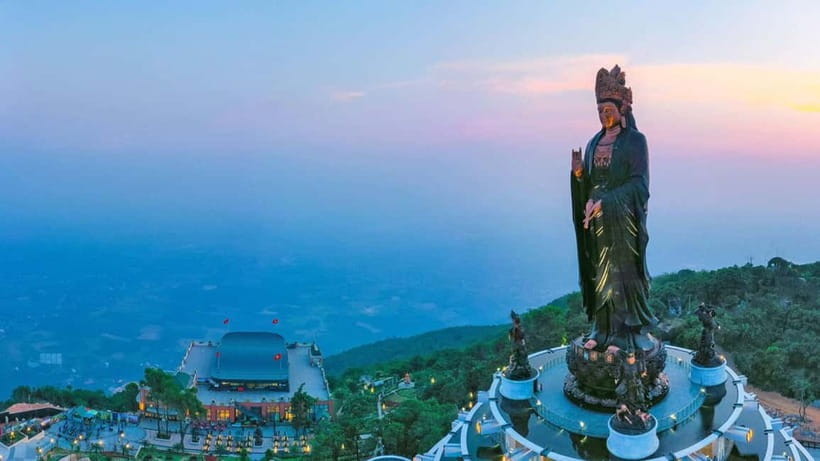
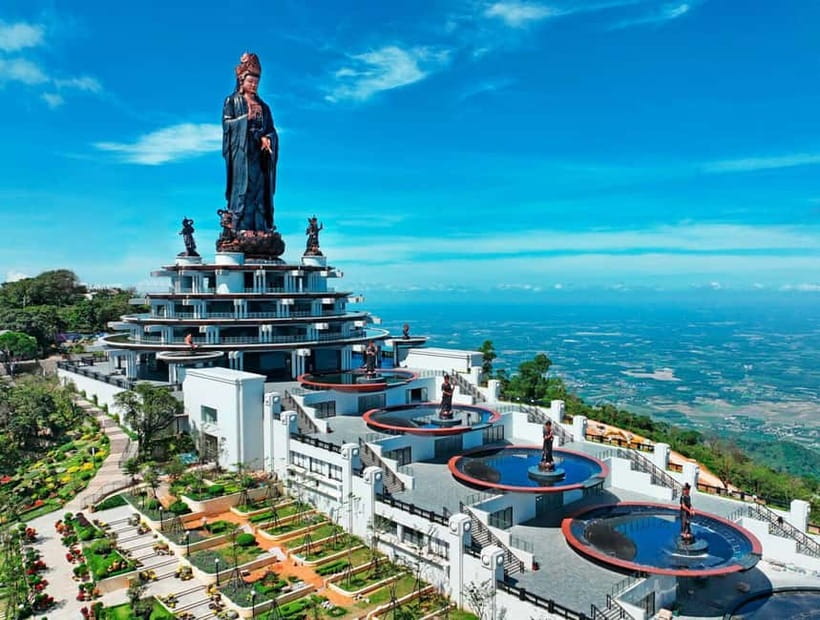
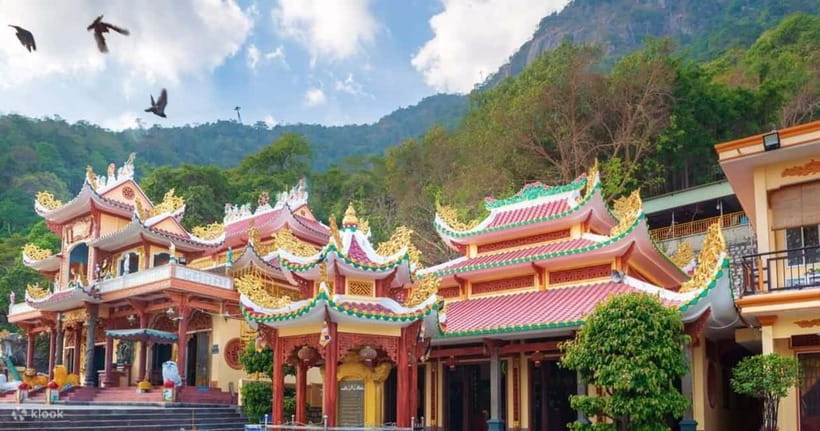
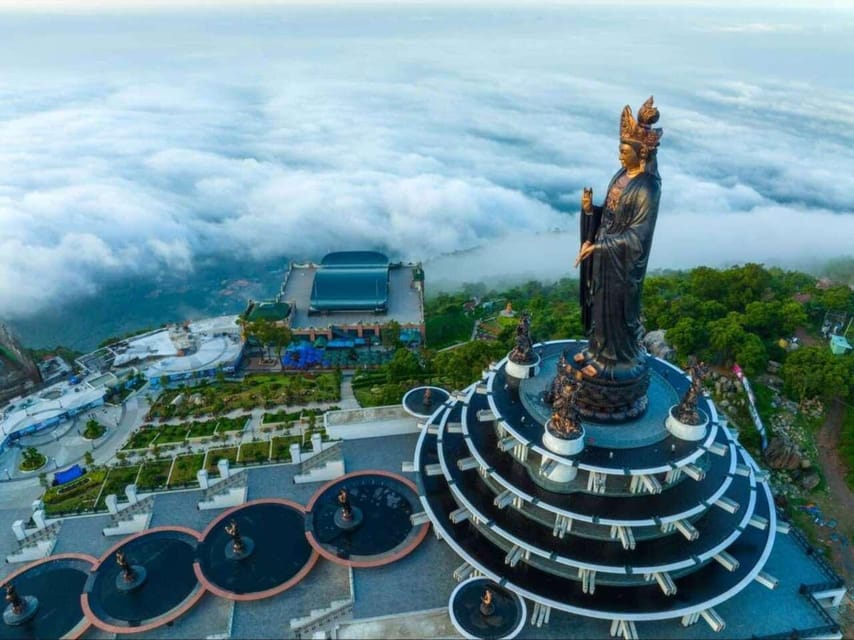
Black Lady Mountain covers three main mountains over about 24 km, rising to 986 meters. Once you’re there, the big move is the cable car. The top-level experience is built around getting you high quickly, then letting you explore the complex from above.
From up there, you get the kind of view that makes the morning worth it: a wide look over the river, city, and the surrounding areas. The description also points to visible waterfall scenery under sunlight, plus caves and dense forest. Even if you don’t study every detail, the feeling is consistent. You look down and the whole region reads differently than it does from the road.
What’s actually at the top
The top complex is more than one statue and a souvenir stall. You’ll find the highest Buddha statue made of bronze (that’s the headline), but the area also includes temples, statues, water features, and flower gardens. This matters because it gives you different kinds of photo stops and a place to pause, not just a single viewpoint and then a return to the bus.
One extra layer of interest is the mountain’s caves. They were used by Buddhist monks and nuns in the past, and they remain largely undisturbed. That helps the site feel less like a theme park and more like a spiritual landscape. You’re not just climbing for a view; you’re walking through areas that have a long routine behind them.
The single most important practical note: cable car cost
Cable car isn’t listed as included. And that matches a real-world issue: one earlier booking had to pay cable car costs after the fact. That doesn’t mean it always happens, but it does mean you should treat cable car as a potential extra cost.
Before you board, check whether your total already covers it. Ask the guide or the operator to confirm what you’re paying for before you reach the ticket counter.
The drive down and the move to Cao Dai Temple
After you’ve taken in the top complex, you take the cable car back down, and your coach heads to Cao Dai Temple in Tay Ninh.
This transfer stage is where the timing becomes obvious. The temple experience isn’t just “arrive and look around.” The tour is set up to get you into the midday service. That’s why the order matters: mountain first, then religion service.
A small but useful mindset shift helps here. Don’t treat Cao Dai as a quick photo stop. It’s a functioning religious space, and the tour is designed around watching the service through respectful participation.

Cao Dai Temple: the all-seeing eye, the dragon walls, and a spiritual mash-up
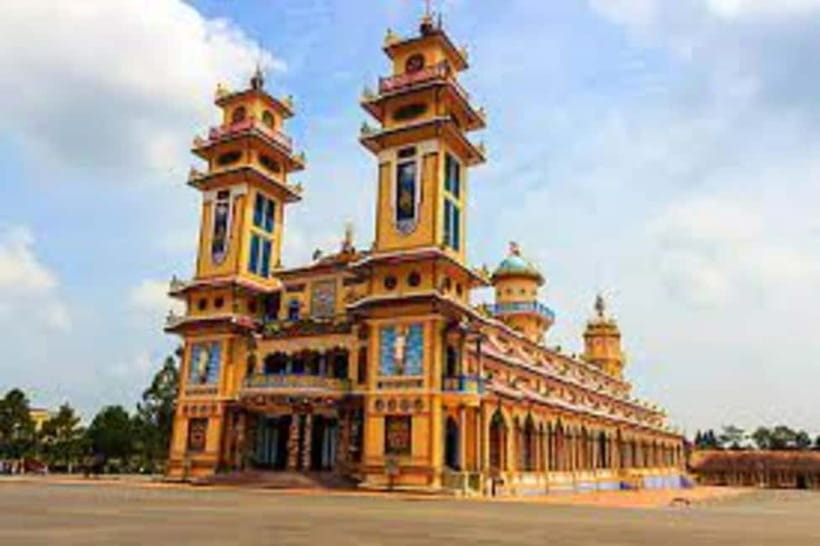
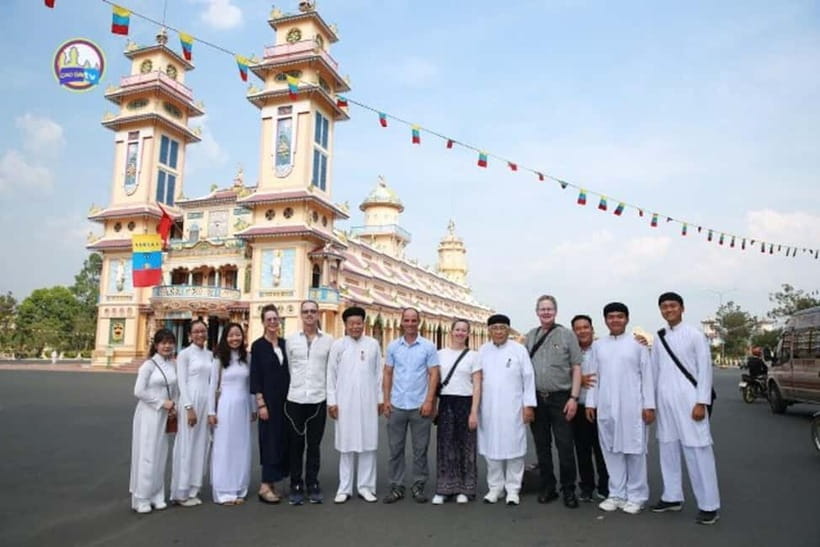
Cao Dai Temple is unlike most places you’ll see in Vietnam, and that’s the point. The exterior is decorated with colorful dragons of different shapes competing across the façade. Above the main entrance sits the all-seeing holy eye, which is one of the most recognizable symbols of the Cao Dai sect.
The exterior decoration also includes swastikas. In today’s world, that symbol is heavily loaded with modern political meaning, so it can feel jarring at first. At Cao Dai, it’s part of the temple’s traditional decorative language. If you’re sensitive to symbols, pause and remember you’re looking at a specific religious-and-cultural context, not a modern propaganda setting.
Why the interior hits differently
Inside, you’ll see the temple’s visual logic in full force. The interior includes statues of Jesus Christ, Buddha, and the Hindu god Brahma standing side by side. That’s not a random decoration choice. It’s part of Cao Dai’s belief system, which is known for mixing elements from different religious traditions.
You also get the surreal feeling of a western imagination trying to label what it’s seeing. The architecture and color choices can make the temple feel like an art installation, except it’s tied to real prayer and real community practice.
The midday service: what you should plan for
The tour specifically calls out the midday service as something you shouldn’t miss. The service is the best reason this tour becomes more than sightseeing. When you’re in the space during a service, you start noticing details you’d skip on a normal visit: the flow of attention, how people behave, and how the symbolism is meant to be experienced, not just looked at.
Dress code isn’t provided in the tour info you shared, but I’d treat it like a religious site: keep your focus on respectful behavior and don’t touch anything that looks like it’s marked as off-limits.
One caution from a real booking experience
A previous group described the guide as friendly but not super strong on interpretation, basically repeating what signs already say. They also mentioned the guide touching items with signs that requested visitors not touch.
That’s not something you should ignore. When you’re at Cao Dai, follow the signage and be ready to politely correct your own behavior. If a guide seems careless, you can still enjoy the service by staying mindful yourself. If you care a lot about deep explanations, come with curiosity questions and ask clearly when you want context.
Lunch after the service: a practical finish
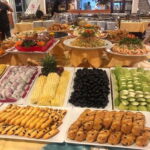
Once the midday prayer service wraps, the itinerary includes lunch at a restaurant. There’s no cuisine type listed, so I can’t promise you a specific dish style. But including lunch is a real value point for this kind of half-day format. It saves you from finding something close by that might be crowded or expensive.
You also get one Aquafina water bottle per person, which helps during a morning that mixes walking around temple areas and time spent waiting in religious spaces.
Price and value: is $75 worth it?
At $75 per person, the big question is what you’re actually buying. The included items are useful and standard for a full-day cultural tour format:
- Transfers
- English-speaking tour guide
- Entrance fees
- 01 lunch
- 01 Aquafina water bottle/pax
- Tax
The likely extra costs are:
- Cable car
- Drinks
- Holiday surcharge if it applies
- Personal expenses
- Language guide surcharge if you’re not using English
Here’s how I’d judge the value for your budget. If your plan expects cable car costs anyway, then $75 can feel fair because you’re getting transport across distance plus guide plus entrance fees plus lunch. But if you assumed cable car was in the base price, you could feel hit by an add-on charge.
So the smartest move is simple: confirm cable car cost before travel day. That one step protects you from the exact kind of frustration that can sour an otherwise great cultural morning.
Does the afternoon include Cu Chi Tunnels?
This experience can continue in the afternoon, but it’s not guaranteed every day. The note says there are a few days with no activity, and you should check availability via WhatsApp/Phone +84 817177745 (Jenny).
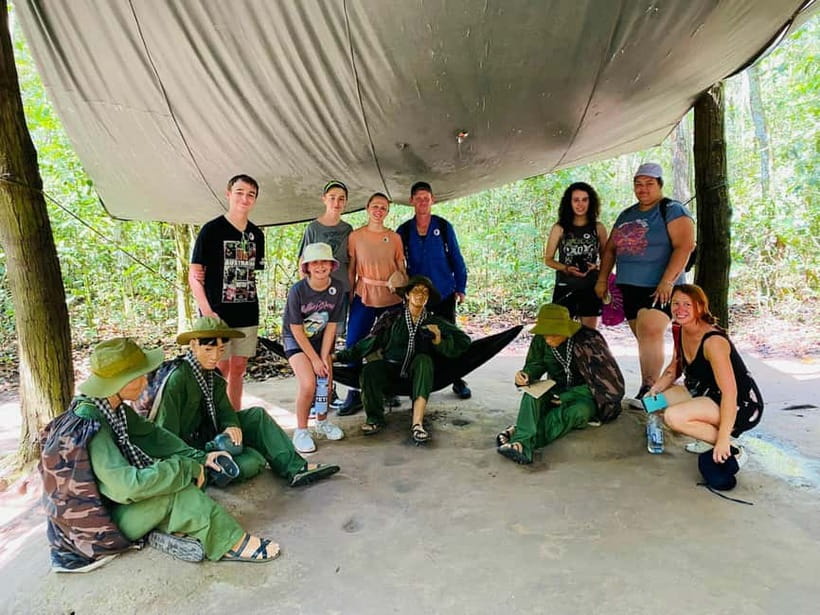
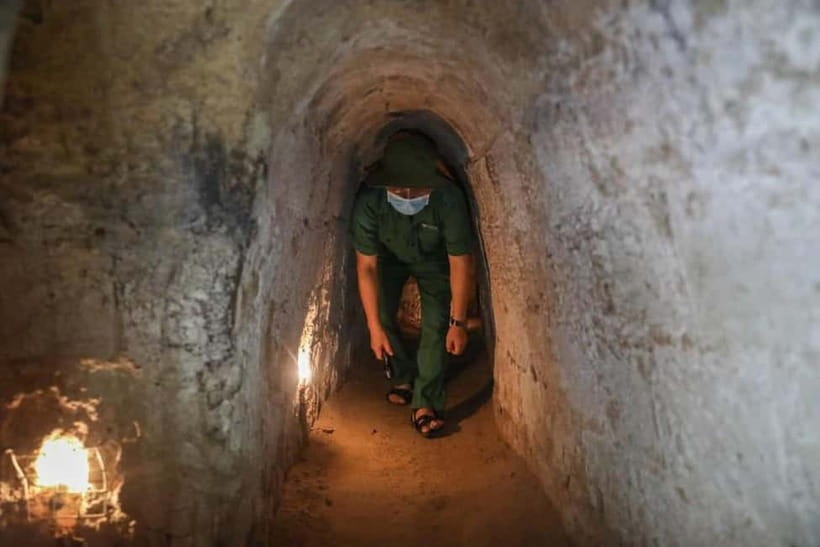
When the Cu Chi portion runs, it starts after lunch. You leave Tay Ninh around 13:00 and head to Cu Chi Tunnels. The tour description highlights guerrilla warfare tactics: clever tunnel design, strategic trap doors, and the fact that American troops failed to conquer the area even after heavy bombing.
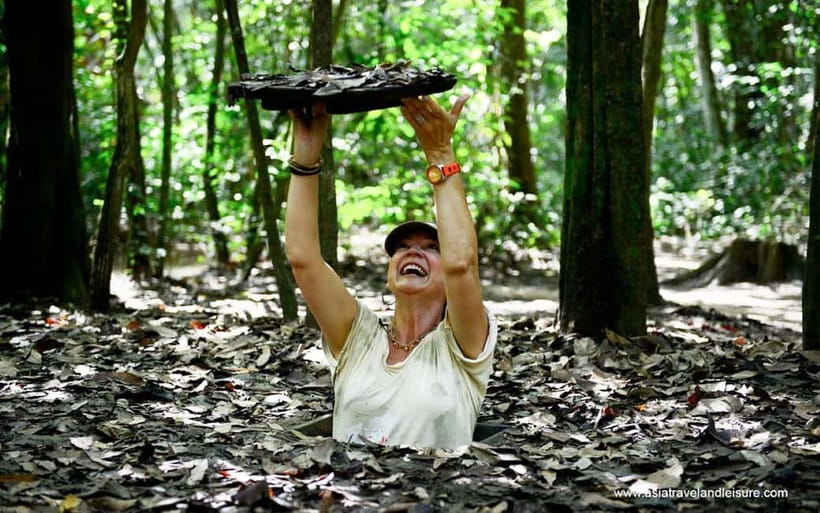
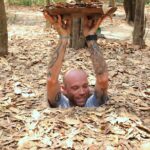
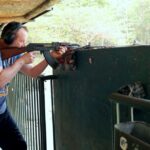
You also get a chance to crawl through a portion of the tunnel system described as 121 km long and multiple-layered. The tour also mentions concealment methods for smoke from cooking and even a chance to fire real AK bullets.
One more practical thought: if Cu Chi isn’t operating on your dates, your day may end after lunch and the Cao Dai service portion. If you’re coming for only the mountain and temple, that can still work well.
Who this tour suits best
You’ll enjoy this most if you like cultural contrasts in one day. A mountain complex with caves and a bronze Buddha gives you a spiritual-pilgrimage vibe. Then Cao Dai swaps that vibe for a colorful, mixed-tradition temple where the service is the main event.
This is also a good fit if you don’t want the hassle of piecing together separate transport and tickets. The tour includes transfers and entrance fees, so your plan is less stressful.
If you hate strict timing, this might feel like a sprint. You’re starting early, moving from mountain to temple, and aiming for the midday service. But if you’re okay with a scheduled day, you’ll get more done without spending extra mental energy.
Final verdict: should you book?
I’d book this if you want a meaningful morning with real sights and a service-based experience at Cao Dai. The midday prayer service is the part that turns the day from photos to something you remember for longer.
I’d also confirm two things first:
1) whether the cable car cost is fully covered in your package, since it may not be included, and
2) how your group is guided at the temple, because a stronger explanation can make symbols feel less confusing.
If you’re mainly looking for a quick checklist tour, you might find parts of it too structured. But if you’re curious and you respect the religious context, this is an excellent way to experience Tay Ninh in one go.
FAQ
What time is pickup for the Black Lady Mountain and Cao Dai Temple tour?
Pickup is scheduled for 06:00am to 06:30am.
Do I get breakfast before going to the mountain?
Yes. You’ll have breakfast at a local restaurant before heading to Black Lady Mountain.
How long does it take to travel from Tay Ninh to Black Lady Mountain?
Black Lady Mountain is approximately 3.5 hours to the northeast of Tay Ninh based on the tour description.
Is entrance fees included?
Yes. Entrance fees are included.
Is the cable car included?
No. Cable car is listed as not included.
What about lunch?
Lunch is included as 01 lunch, and you also receive 01 Aquafina water bottle per person.
Will I join a Cao Dai prayer service?
Yes. The itinerary includes joining the midday service at Cao Dai Temple.
Is the Cu Chi Tunnels afternoon tour included every day?
No. The plan notes that on some days there is no Cu Chi activity, so you should check availability.
What language is the tour guide?
The tour includes an English-speaking tour guide. Other languages may have a surcharge.