REVIEW · HO CHI MINH CITY
Ho Chi Minh Most Historical Spots & War Museum Tour (Private & All-Inclusive)
Book on Viator →Operated by ForeverVacation · Bookable on Viator
Saigon history hits hard, and then keeps going. This private, all-inclusive tour strings together major war-era sites and peace memorials in about 6 to 7 hours, starting with hotel pickup in an air-conditioned vehicle.
What I like most is how the day mixes heavy context with real stops you can actually stand in. You start at the War Remnants Museum, where the exhibits are intense but well organized, including an audio system with numbered explanations that help you follow what you’re looking at. The guide Ocean, praised for being polite and making history click, helps too. I also like the balance afterward: Thich Quang Duc’s memorial moment, a calm Khmer pagoda, and the FITO Medicine Museum.
One drawback to plan for: the route is time-heavy. Even with a private pace, you’ll spend long chunks on museums and memorials, so it can feel like a lot if you’re hoping for long wandering and casual breaks. Time crunch is real.
In This Review
- Key Highlights You’ll Feel Right Away
- How the Private Pickup Sets the Tone in Ho Chi Minh City
- War Remnants Museum: Proof, Details, and the Numbered Headset
- Thich Quang Duc Monument: A Protest Story at Street Level
- Chùa Chantaransay: Khmer Culture and Theravada Calm
- FITO Medicine Museum: A Lesson in Vietnamese Remedies and Museum Design
- A City-Icons Circuit: Turtle Lake, Churches, Post Office, and Opera
- Reunification Palace: The 1963 to 1975 Timeline Comes Alive
- When the Tour Adds Performance and Other Long-Range Stops
- Is $133 a Fair Deal for a Private Historical Tour?
- Who This Tour Fits Best
- Should You Book This Tour?
- FAQ
- What time does pickup start?
- How long is the tour?
- Is this tour private?
- Are museum admissions included?
- Is lunch included?
- Do I get a mobile ticket?
- What if I need to cancel?
Key Highlights You’ll Feel Right Away

War Remnants Museum with audio headsets and numbered info
Thich Quang Duc Monument: a protest story tied to a specific intersection
Chantaransay Pagoda with Khmer culture and Theravada monks
FITO Museum across multiple floors and 18 exhibition rooms
A practical city-sightseeing mix that can include District 1 landmarks
English-speaking guide Ocean, noted for friendly, clear explanations
How the Private Pickup Sets the Tone in Ho Chi Minh City
The day starts with pickup from your hotel around 9:00 AM. The operator notes your exact time may shift based on where you’re staying, but the idea is simple: you get picked up by a friendly English-speaking guide and transferred in a comfortable air-conditioned vehicle. That matters in Ho Chi Minh City, where heat and traffic can chew up your energy before you even hit the first museum.
This is also a private tour, meaning it’s just your group. No waiting around for strangers, no “everyone has to agree” energy. You can ask quick questions, adjust pace if someone needs a breather, and get help moving between stops without wasting time.
The tour uses a mobile ticket, so you’re not stuck with paper paperwork. It’s a small thing, but it reduces hassle on a day where you’ll likely be walking, taking photos, and switching contexts fast.
You can also read our reviews of more private tours in Ho Chi Minh City


War Remnants Museum: Proof, Details, and the Numbered Headset

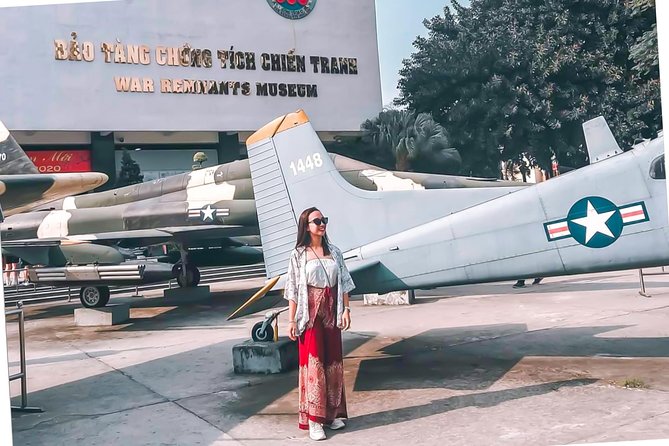
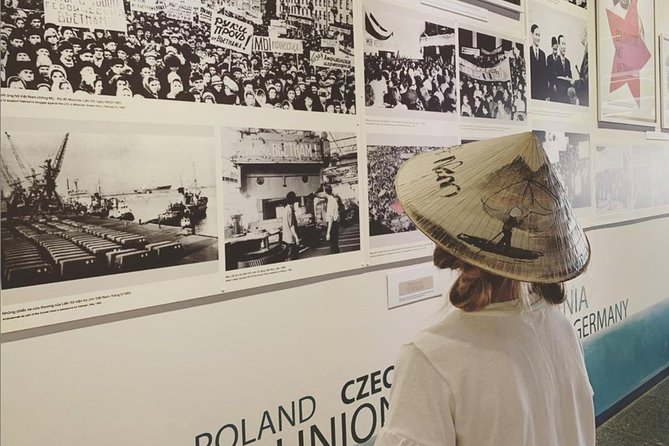
The strongest anchor of this tour is the War Remnants Museum. It opened to the public in 1975 and was once known as the Museum of American War Crimes. Either way, the focus stays the same: the Vietnam War through photographs, documents, and testimonies that don’t shy away from what happened.
Expect an experience that’s not just informative but emotionally heavy. One of the best-use tips here is to slow down and use the audio system if it’s provided during your visit. The audio feature is described as earphones with a numbered setup tied to what you’re viewing. That’s helpful because big museums can turn into a blur. The numbers help you connect each exhibit to a specific story instead of just moving on.
What the guide adds is the missing thread. A good explanation helps you understand why certain rooms hit so hard, including sections related to war crimes and Agent Orange. You’ll still feel the weight, but it’s easier to process when someone gives you the context for each exhibit.
If you’re the type who likes to read everything, bring that energy. If you don’t, you can still enjoy the visit—just focus on the rooms and themes you care about most and let the guide point you toward what to see first.
Thich Quang Duc Monument: A Protest Story at Street Level
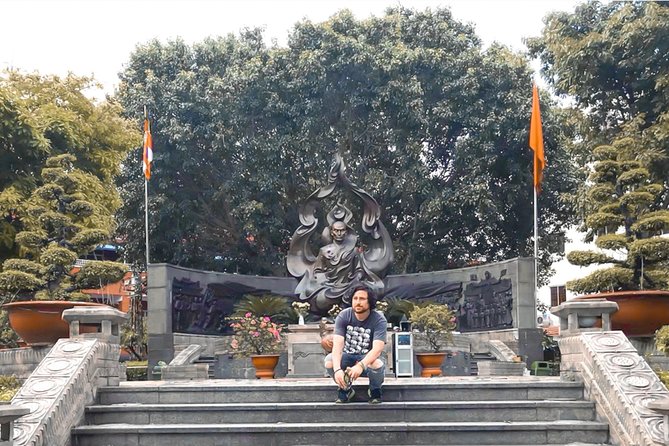
After the museum, the tour moves to the Thich Quang Duc Monument, a memorial park dedicated to the Buddhist monk who self-immolated in protest in 1963. The description ties the event to a location near what’s now the Reunification Palace area, and that geographic connection is the point.
This is the kind of stop where you’ll want to pause. You’re not just looking at a statue—you’re standing at a scene that’s tied to a specific moment in modern history. The park setting also gives you a small reset after the museum’s intense content. It’s still serious, just quieter.
The time here is typically short compared with the museum, around 20 minutes. That’s enough for a look, a few photos, and a minute to breathe before you shift into the spiritual and cultural side of the day.
Chùa Chantaransay: Khmer Culture and Theravada Calm
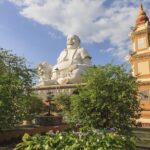
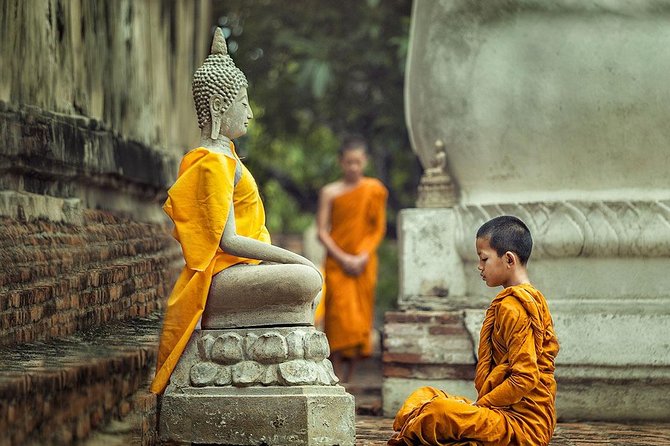
Next comes Chùa Chantaransay, also called the Chantarangsay Pagoda. This stop is different from the war-focused sites. It’s a religious and cultural haven for the Khmer people in southern Vietnam and includes monks from the Theravada sect.
In practice, this is a great contrast stop. The day has been about conflict and protest. Here, you get a sense of how communities practice faith and keep cultural identity alive. If you like architecture, you’ll also likely appreciate the atmosphere more than the text—temples can be easier on the mind than museums.
Admission is free for this stop, so it’s a low-cost way to add depth to the day. Plan around 45 minutes. That’s usually enough to walk through calmly, observe respectfully, and avoid feeling rushed.
FITO Medicine Museum: A Lesson in Vietnamese Remedies and Museum Design
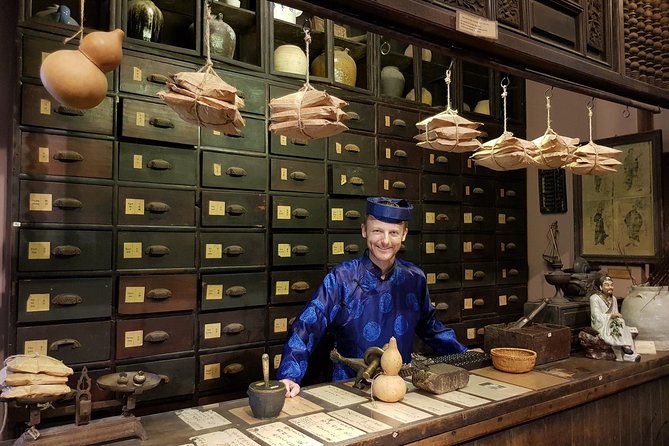
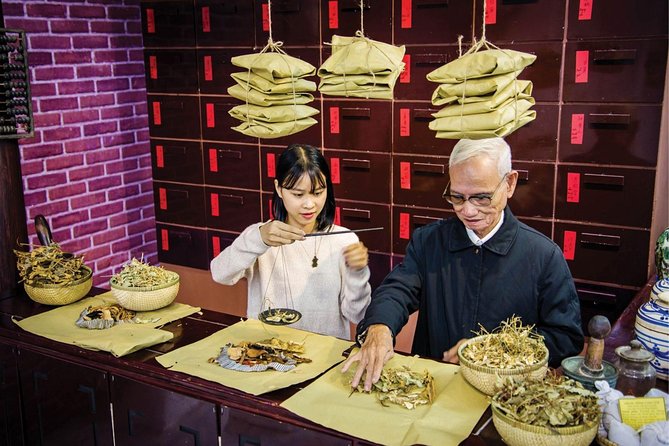
Then you hit the FITO Medicine Museum, a unique mix of traditional and modern architecture. The museum is laid out in a way that makes it easier to structure your visit: one ground floor plus five upper floors, with 18 exhibition rooms.
Even if you’re not a “museum person,” this stop can work because it’s more hands-on in feel. The description points to things like delicately carved wooden pictures and multiple themed rooms, so you’re not just staring at one long wall. It’s a different angle on history—how people heal, what traditions persist, and how knowledge becomes public.
Admission is included here. The stop runs about 1 hour, which is a good length. You get enough time to absorb the big ideas without the fatigue that comes from a multi-hour museum session.
Practical tip: this museum is more about reading and looking than emotional intensity. If you feel museum overload, this is the kind of stop that helps balance the day.
You can also read our reviews of more historical tours in Ho Chi Minh City




A City-Icons Circuit: Turtle Lake, Churches, Post Office, and Opera
After the memorials and museums, the route can include several classic city sights. The schedule you receive may vary based on how your guide sequences stops, but these are the kinds of places that often fit into the remaining time.
Here’s what to expect from the highlights listed in the route details:
- Turtle Lake roundabout: a recognizable crossroads point near Vo Van Tan, Pham Ngoc Thach, and Tran Cao Van. The street around the lake is named Cong Truong Quoc Te, and the lake is officially named Cong Truong Quoc Te. It’s a good “get your bearings” moment and a quick photo pause.
- Nguyen Dinh Chieu Street little house: described as a hiding place for nearly two tons of Saigon Commandos weapons during the spring offensive and the 1968 uprising, now declared a National Monument of Culture. This is history you can still point at in a small space.
- Tan Dinh Church: a Romanian-style church built in 1876 with Gothic and Renaissance elements that have survived Vietnam’s turbulent eras. It’s a “slow down and look at details” kind of stop.
- Dong Khoi Street: a historically important street connected with French colonial life, including the old name Rue Catinat. It’s where architecture and city change are visible.
- Saigon Opera House: an elegant colonial building near Le Loi and Dong Khoi Street, close to major landmarks like the Notre Dame Cathedral Basilica and the Central Post Office.
- Saigon Central Post Office: built between 1886 and 1891, with Gothic, Renaissance, and French colonial design. The description also notes a common misconception that credits Gustave Eiffel, so your guide may help you sort myth from design.
If your route includes these, you’ll get a satisfying contrast: war history paired with the colonial-era city planning that still shapes central Saigon. It’s also where having an English-speaking guide matters, because the difference between “nice building” and “story behind the building” is usually one explanation away.
Reunification Palace: The 1963 to 1975 Timeline Comes Alive
One of the most memorable landmark stops is Reunification Palace. The site served as the base of Vietnamese General Ngo Dinh Diem until his death in 1963, and it became globally known after 1975.
The description also mentions the moment a tank from the North Vietnamese Army crashed through the main gate. That’s the kind of detail you remember later, because it turns a building into a timeline you can picture.
This is a valuable stop in the context of the tour. After the War Remnants Museum’s documentation-heavy approach, the palace adds a more “you can feel the stakes” story. It’s not just what happened; it’s where decisions were made.
Time here varies, but it’s usually a major anchor in a 6 to 7 hour day. If you’re weighing priorities, treat Reunification Palace as must-see if you want Vietnam’s modern turning points in one place.
When the Tour Adds Performance and Other Long-Range Stops
The stop list includes options that can stretch the day depending on timing. For example:
- À Ố Show: a Vietnamese bamboo circus performance.
- Water puppetry: a tradition dating back to the 11th century in the Red River Delta.
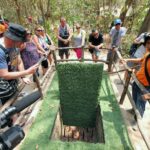
- Cu Chi tunnels: an enormous network of tunnels under the Củ Chi District, part of a larger tunnel system.
These additions can be fantastic, but they’re also time-sensitive. Performances run on schedules, and longer-distance sites can eat up travel time. So if your goal is maximum museum time, you’ll want your guide to know that early.
The practical approach: tell Ocean (or your guide) what kind of day you want—museum-heavy, landmark-heavy, or a mix—and let them sequence stops accordingly. In a private tour, your preference can steer what you get most out of.
Is $133 a Fair Deal for a Private Historical Tour?
At $133 per person for about 6 to 7 hours, the value depends on what you count as “included.” Here’s what the description clearly supports:
- Pickup is offered from your hotel.
- The vehicle is comfortable and air-conditioned.
- Admissions are included for the War Remnants Museum and FITO Museum.
- Some stops are marked as free, including the Thich Quang Duc Monument and Chantaransay Pagoda.
That already makes the tour easier to justify than a cheaper itinerary where you end up paying for multiple tickets and arranging rides yourself.
Where you should use your judgment is lunch and any extra attractions. The schedule includes a lunch time slot around 11:30 AM, but the description doesn’t spell out whether the meal cost is covered. If you want lunch included, ask before you go. It’s also smart to ask about any ticketed performance or viewpoint add-ons that might come up later, since only a couple admissions are explicitly listed as included.
Bottom line: this is a strong value if you want a guide to connect the dots—especially in the War Remnants Museum, where the audio + explanation combo saves time and improves understanding.
Who This Tour Fits Best
This tour fits best if you want history in a guided, organized package without the stress of planning routes and buying tickets one by one.
It’s a good match if you:
- care about Vietnam War history and modern turning points
- like museum structure and interpretive help
- prefer private transport and fewer logistical headaches
It might feel like a lot if you:
- want lots of free time to wander at your own pace
- avoid heavy topics and want lighter cultural stops only
Should You Book This Tour?
I’d book it if you want the War Remnants Museum handled properly, plus a thoughtful mix of memorial, temple, and museum time. The included admissions for two major stops, the hotel pickup, and the private guide attention make it feel efficient.
If you’re sensitive to intense content, plan your mental pacing. Start strong with the museum, then use the monument and pagoda as your reset. And before you go, tell your guide what you want most: deeper war history, more architecture, or performances like water puppetry. A private tour works best when you steer it.
FAQ
What time does pickup start?
Pickup starts around 9:00 AM, though the exact pickup time can vary depending on where your hotel is located.
How long is the tour?
The tour runs about 6 to 7 hours.
Is this tour private?
Yes. It’s a private tour/activity, and only your group participates.
Are museum admissions included?
Admission tickets are included for the War Remnants Museum and the FITO Museum. The Thich Quang Duc Monument and Chantaransay Pagoda are listed as free.
Is lunch included?
The schedule includes a lunch time slot around 11:30 AM. The description doesn’t specify that lunch is covered, so it’s best to confirm what’s included.
Do I get a mobile ticket?
Yes. The tour offers a mobile ticket.
What if I need to cancel?
You can cancel up to 24 hours in advance for a full refund. If you cancel less than 24 hours before the start time, you won’t get a refund.