REVIEW · HO CHI MINH CITY
Full-Day Ho Chi Minh City Tour with Colonial Heritage & Chinatown
Book on Viator →Operated by TNK Travel · Bookable on Viator
Saigon makes sense fast on this full-day loop. You’ll get a tight mix of colonial landmarks and a river water-bus photo run, plus real neighborhood time in Cho Lon. It’s built for people who want the city to click quickly, not hours of guesswork.
I especially like the air-conditioned pickup and small-group pace that keeps you moving without feeling rushed. I also love that lunch and several key entries are handled for you, so you can focus on seeing.
One thing to consider: the day is packed, so some stops are brief, and you may have time set aside for organized shopping.
In This Review
- Key highlights at a glance
- A smart first-day plan for Ho Chi Minh City
- Independence Palace and the long shadow of 1975
- Notre Dame Cathedral and the Central Post Office combo
- The War Remnants Museum: powerful, direct, and worth the time
- Lunch at Propaganda Vietnamese Bistro (and why this matters)
- Vietnamese coffee stop with city views
- Bach Dang Quay water-bus: river views that change the whole picture
- Cho Lon Chinatown: Thien Hau Pagoda and Binh Tay Market
- Thien Hau Pagoda (Ba Thien Hau Temple)
- Binh Tay Market
- Price and logistics: what $47.50 really buys you
- How the guide experience can affect your day
- Who should book this tour (and who might want a different approach)
- Should you book this Ho Chi Minh City colonial heritage and Chinatown tour?
- FAQ
- What is the duration of the Ho Chi Minh City colonial heritage and Chinatown tour?
- What time does the tour start, and where does it meet?
- Is pickup included?
- What’s included in the price?
- Does the tour include a water-bus ride?
- Is lunch included, and where do you eat?
- Is entry to the Notre Dame Cathedral guaranteed?
- How big is the group?
- What happens if the weather is bad?
- Can I cancel for a full refund?
Key highlights at a glance
- Independence Palace first for a powerful sense of how modern Vietnam got shaped
- War Remnants Museum included for the story told from Vietnam’s perspective
- Central Post Office plus free postcards to bring home something useful (not just photos)
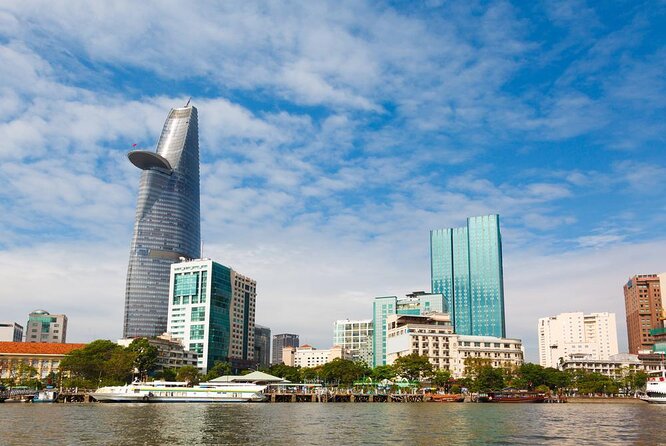
- Bach Dang Quay water-bus ride for skyline views from the river
- Cho Lon Chinatown time at Thien Hau Pagoda and Binh Tay Market
A smart first-day plan for Ho Chi Minh City
This tour is the kind of day that helps you understand Ho Chi Minh City’s layers. One moment you’re in scenes tied to national unification. The next, you’re looking at French-era architecture and still-standing institutions. Then you switch gears to Cho Lon, where Chinese-Vietnamese culture shows up in streets, temples, and markets.
The pacing matters. You’re not doing this as solo sightseeing where you lose time figuring out transport and entrances. Instead, you ride in an air-conditioned vehicle, you get picked up in Ho Chi Minh City, and you spend your energy on what you came for.
You’re also set up for a smooth logistics day: lunch is included, and the tour runs about 8 to 9 hours starting at 7:30 am. The exact end time can shift with traffic and weather, which is normal in a city this busy.
You can also read our reviews of more city tours in Ho Chi Minh City


Independence Palace and the long shadow of 1975
Your day starts at Independence Palace, also called the Reunification Palace. This is one of those places where “what happened here” feels real, because the interiors and design reflect the era it represents. You’ll have about 1 hour here with admission included.
What makes this stop worth your time is how it sets context. Ho Chi Minh City is famous for change—new buildings, new streets, new energy. But that energy is built on a history that’s not abstract. In the palace, you’ll see physical details from the period around the fall of Saigon in 1975, and your guide explains how this site fits into Vietnam’s unification story.
If you like history that feels grounded in rooms, documents, and layout (not just dates), this is a strong opening move. If you only care about architecture, it still works, because the building’s 1960s-era style gives you a “time machine” effect.
Notre Dame Cathedral and the Central Post Office combo
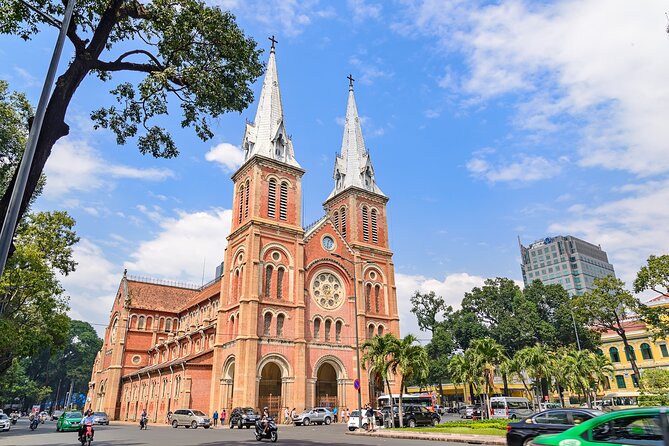
Right after the palace, you’ll pass through the city’s historic core. The Saigon Notre Dame Cathedral is next. It’s a short stop—around 10 minutes—and it’s included as a free admission stop. Its Neo-Romanesque look is easy to spot from outside, and the French-influenced construction materials are part of why it’s such a recognizable landmark.
Heads-up: the interior viewing can be temporarily unavailable due to renovations. That’s not unusual in older, working landmarks. If interior access is limited, the exterior photo angles and your guide’s explanation are where you’ll get the value.
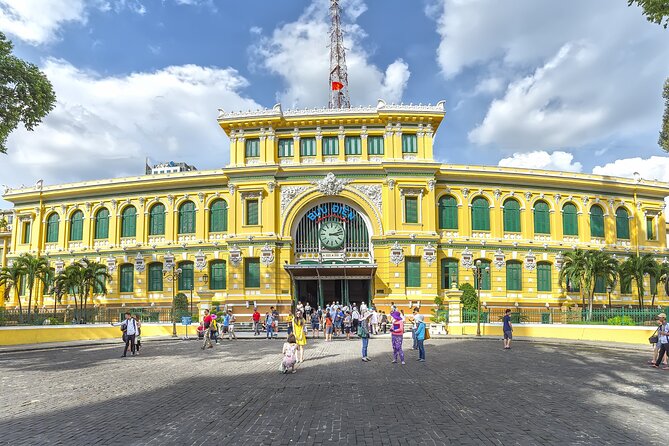
Then you walk to the Central Post Office. This is the “wow, that’s gorgeous” stop. It’s tied to a Gustave Eiffel-designed legacy, and the mix of tall ceilings and European-style structure with Vietnamese setting is part of the charm. You’ll get about 45 minutes here, also with free admission.
Two practical bonuses make this stop better than it sounds:
- The post office is still operational, so you’re not only looking at a museum set.
- TNK TRAVEL Group provides complimentary postcards, which are a nice way to turn your sightseeing into something tangible you can mail.
The War Remnants Museum: powerful, direct, and worth the time
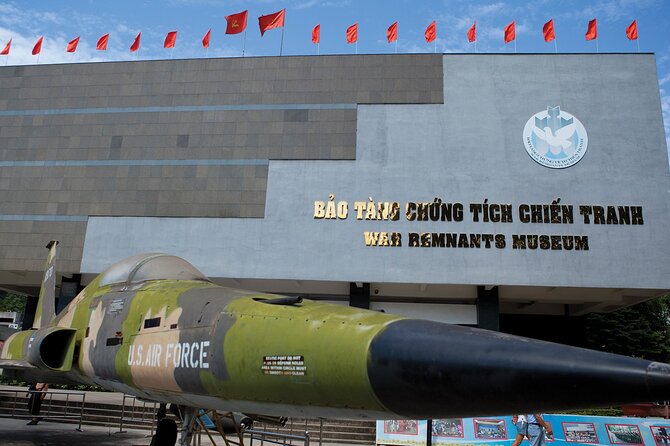
If there’s one stop that truly earns its place on a Ho Chi Minh City first-day itinerary, it’s the War Remnants Museum. You’ll have about 45 minutes, and admission is included.
This museum is presented in a way that focuses on the human cost and the real damage from the Vietnam War—through photos, installations, and military equipment on display. It also frames the war’s effects in a way that helps you connect past events to the modern country you’re seeing today.
One reason I’d prioritize this stop even if you’re not a “museum person”: it’s hard to get this perspective from headlines alone. Standing in front of the exhibits gives you something more solid than secondhand summaries. Plan to go in with a steady pace—don’t rush your way through it just to check a box.
Lunch at Propaganda Vietnamese Bistro (and why this matters)
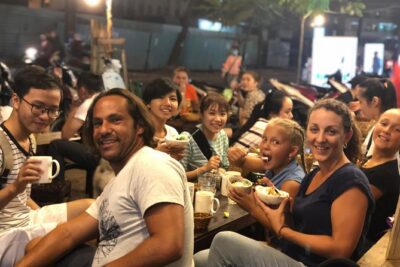
After the museum, you’ll head to Propaganda Vietnamese Bistro for lunch. You’ll have about 1 hour 30 minutes, with lunch included.
This is more than a break. A well-timed meal prevents the classic full-day tour problem: you get home hungry, cranky, and too tired to enjoy the last two stops. With lunch handled, you can actually sit, eat, and reset.
The menu can include Vietnamese favorites like pho, spring rolls, and fruit options. The details can vary, but the point is that you’re eating Vietnamese food prepared for visitors, not just grabbing something quick and cold from the street. That makes the meal feel like part of the experience rather than an unavoidable pause.
You can also read our reviews of more historical tours in Ho Chi Minh City





Vietnamese coffee stop with city views
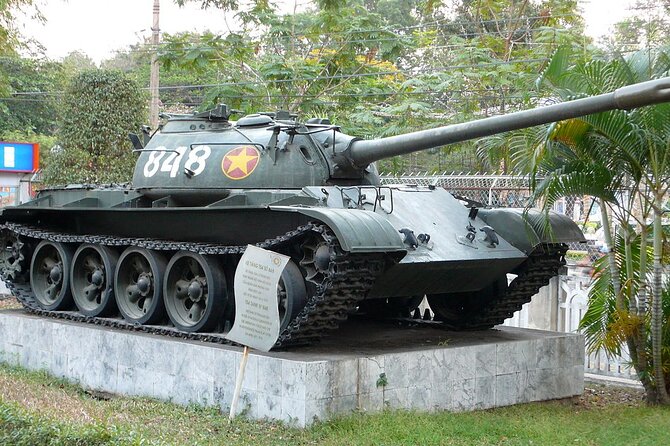
Next comes a slower moment: Vietnamese coffee at a local spot with views over the streets below. You’ll have around 30 minutes here, and admission is free.
You’ll typically see options like cà phê sữa đá (iced coffee with condensed milk) or black coffee. Either way, it’s a good chance to try one of the most recognizable rituals in Vietnam without turning it into a separate search mission.
This pause also gives you a sense check. By now you’ve seen the palace, cathedral exterior, and the post office. Watching motorbikes flow below while you sip coffee helps you understand how the city moves today—fast, layered, and built from constant motion.
Bach Dang Quay water-bus: river views that change the whole picture
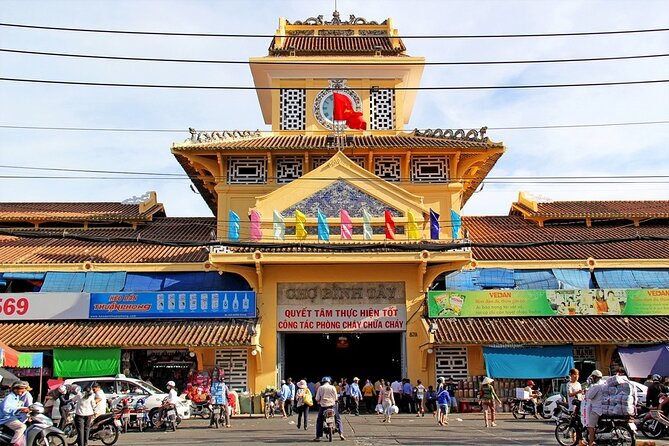
Then comes the part that many city tours skip: seeing Ho Chi Minh City from the water.
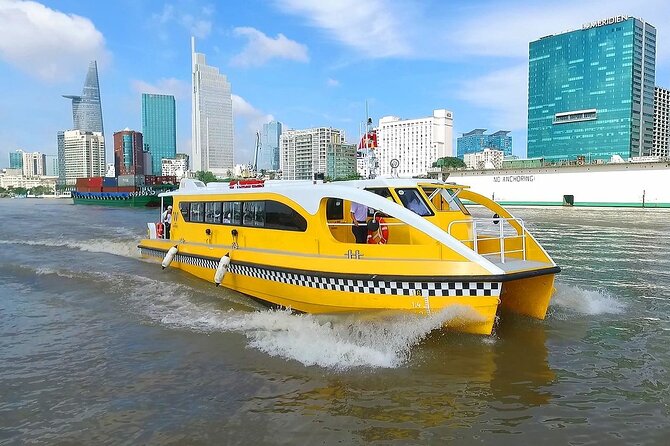
You’ll go to Bach Dang Quay and ride a water taxi for about 30 minutes. Admission is included. The payoff is perspective. From the river, the city’s mix of old and new becomes easier to read at a glance.
Expect skyline landmarks along the way, including:
- Landmark 81 (Vietnam’s tallest structure)
- Bitexco Financial Tower
- Views toward District 2’s more residential areas
You also get a reminder of why Saigon earned nicknames tied to romance and colonial-era identity. A river view isn’t just “pretty.” It’s practical. It shows you the geography that shaped trade and settlement, and it helps your brain map the city faster than photos on flat ground.
If you care about pictures, this is where you’ll use your camera most. Bring your phone with enough battery for the whole ride, because river lighting can shift quickly.
Cho Lon Chinatown: Thien Hau Pagoda and Binh Tay Market
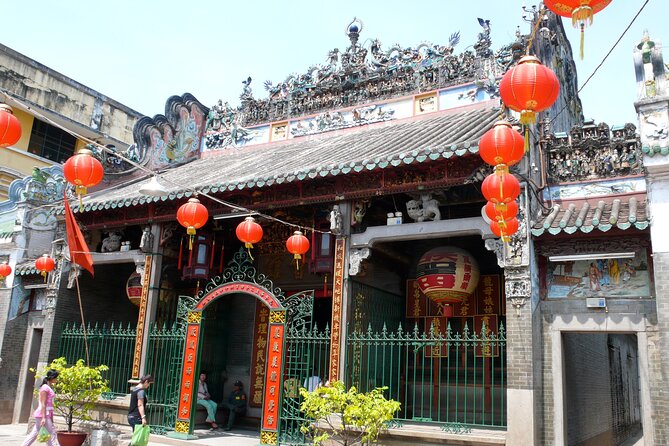
After the river, you shift into Cho Lon, also known as Chinatown. This is where you’ll feel the day turn from landmark tourism into neighborhood wandering.
Thien Hau Pagoda (Ba Thien Hau Temple)
First stop in Cho Lon: Ba Thien Hau Temple, home to the Thien Hau Pagoda. You’ll get about 30 minutes, with free admission.
The temple is dedicated to the sea goddess, built in the 19th century. Even in a short visit, you’ll see details in the roof design and decorative elements that reflect how Chinese-Vietnamese religious culture shaped this area.
This is a strong stop if you like religious architecture and want to see a living place of worship, not just a photo backdrop. Keep expectations realistic: it’s part temple visit, part cultural walk.
Binh Tay Market
Next is Binh Tay Market, the commercial core inside Chinatown. You’ll have about 30 minutes here with free admission.
The market is recognizable by its Chinese-influenced style and its clock tower and dragon-emblazoned exterior. The building dates to 1928, and inside you’ll find stall clusters with goods like textiles, handicrafts, spices, dried items, and traditional remedies.
This stop can be a sensory hit. The smells and the pace are real. If you like browsing, it’s fun. If you’re sensitive to crowds and constant selling, go with a quick goal: pick one small item or one edible souvenir, then move on.
Price and logistics: what $47.50 really buys you
At $47.50 per person, this tour feels like good value because it bundles the big-ticket “time costs” into one day.
Here’s what you’re getting for your money:
- Air-conditioned vehicle
- Pickup in Ho Chi Minh City
- English-speaking guide
- Lunch
- All fees and taxes
- Admission for several main stops, including Independence Palace, War Remnants Museum, and the water-bus ride
When you add up that mix, the price makes sense for travelers who want structure. You’re paying partly for convenience and partly for expert context—especially for the museum and the historical sites.
Two logistics notes matter:
- Tour end time may change because of traffic and weather.
- It requires good weather, since the river portion depends on conditions.
If you’re visiting during a season with sudden rain, pack a light rain layer so you can stay comfortable.
How the guide experience can affect your day
Most of the time, the guide is what turns a list of stops into a storyline. You’ll typically get clear explanations at the palace and museum, and you’ll get local suggestions during breaks.
One guide named Thuyen has stood out for prompt pickup, good communication before the day starts, and solid insight during the tour. That’s the kind of guidance that helps you connect the dots fast.
Still, here’s a practical consideration: English clarity can vary by guide. If you’re someone who needs very clear spoken English, consider downloading a translation app as backup. It’s a small step that protects your enjoyment.
Who should book this tour (and who might want a different approach)
This tour is a strong fit if:
- You want a first-day orientation in Ho Chi Minh City
- You like a mix of history and real neighborhoods
- You’d rather pay once and have tickets and lunch handled
- You want river views without needing to plan them
You might consider a different plan if:
- You prefer longer stays in fewer places
- You dislike shopping stops that interrupt sightseeing time
- You’re very language-sensitive and need an English guide with consistently crisp pronunciation
Should you book this Ho Chi Minh City colonial heritage and Chinatown tour?
If you’re looking for a single day that gives you both context and variety, I’d say yes. You cover the national story through Independence Palace and the War Remnants Museum, then you add everyday Ho Chi Minh City through coffee, river rides, and Cho Lon’s temple and market life. That combination makes the day useful even if you only have a short trip.
If your goal is slow travel and deep time in one neighborhood, you’ll probably feel the schedule pressure. But for most first-time visitors, this is one of the more efficient ways to understand the city without wasting hours.
FAQ
What is the duration of the Ho Chi Minh City colonial heritage and Chinatown tour?
The tour runs about 8 to 9 hours.
What time does the tour start, and where does it meet?
It starts at 7:30 am at 112 Đ. Trần Hưng Đạo, Phường Phạm Ngũ Lão, Quận 1, Hồ Chí Minh, Vietnam. The tour ends back at the meeting point.
Is pickup included?
Yes, pickup is offered in Ho Chi Minh City.
What’s included in the price?
The price includes an air-conditioned vehicle, lunch, all fees and taxes, and an English-speaking tour guide. Admission tickets are included for specific attractions on the route.
Does the tour include a water-bus ride?
Yes. You’ll take a water taxi from Bach Dang Quay for about 30 minutes for city views.
Is lunch included, and where do you eat?
Lunch is included, and you’ll eat at Propaganda Vietnamese Bistro.
Is entry to the Notre Dame Cathedral guaranteed?
Interior viewing may be temporarily unavailable due to renovations, but the stop is part of the tour.
How big is the group?
The maximum group size is 15 travelers.
What happens if the weather is bad?
If the experience is canceled due to poor weather, you’ll be offered a different date or a full refund.
Can I cancel for a full refund?
Yes. You can cancel for a full refund up to 24 hours before the experience’s start time.