REVIEW · HO CHI MINH CITY
From Ho Chi Minh: Cu Chi Tunnels And Mekong Delta Full Day
Book on GetYourGuide →Operated by Trip in Vietnam · Bookable on GetYourGuide
Two worlds in one day. This Cu Chi Tunnels and Mekong Delta trip mixes Vietnamese wartime history with a slow, friendly river rhythm. I especially love the hands-on feel of the underground tunnel network and the tasting moments like wartime tapioca plus honey tea and seasonal fruit. One thing to watch: changing the tour language can sometimes trigger extra private-tour charges, so confirm the total before you lock it in.
The day runs in two clean halves: first Cu Chi, then the Mekong Delta. You’ll start with hotel pick-up in central Saigon, then settle into a guided program that explains how guerrillas lived, hid, and fought—followed by boat time that swaps pressure for peace. A guide like Thi can make a big difference here, keeping the history clear and the pace comfortable.
You’ll also get the kind of food-and-music stops that make this more than a quick sightseeing hit. The trip includes lunch, an on-site tapioca and tea snack at Cu Chi (made on the Hoang Cam stove), coconut candy at a production site, and multiple chances to hear traditional folk songs. If you want one day that covers both Vietnam’s toughest past and its everyday countryside life, this fits well.
In This Review
- Key things to know before you go
- How this one-day tour balances war history and river calm
- Cu Chi Tunnels: the underground city and the spider-web feeling
- The wartime-style tapioca snack and the Hoang Cam stove
- Documents, footage, and the guide’s role (including Thi)
- Shooting range at Cu Chi: optional, and not included
- Mekong Delta by river boat: fishing, ports, and folk songs
- Rowing through shady canal lanes
- Coconut candy production and tasting local flavors
- Fruits, honey tea, and seasonal snacks that match the season
- Village walks and fruit garden time
- The included meals: lunch plus a spread of hometown flavors
- Price and value: is $49 a fair deal for a full-day combo?
- Language selection and what to clarify before you go
- Who this tour suits best
- Should you book Cu Chi Tunnels and Mekong Delta?
- FAQ
- How long is the tour?
- Where does the tour pick you up and drop you off?
- Is lunch included?
- What’s included at Cu Chi?
- Is the shooting range included?
- What languages are available?
- Is a private group available?
- Does the tour include Mekong Delta boat and rowing time?
- What is the cancellation policy?
Key things to know before you go
- Cu Chi tunnel crawl and hidden refuges let you picture guerrilla life beyond museum photos
- Hoang Cam stove tapioca snack connects food to the way smoke was hidden during the war
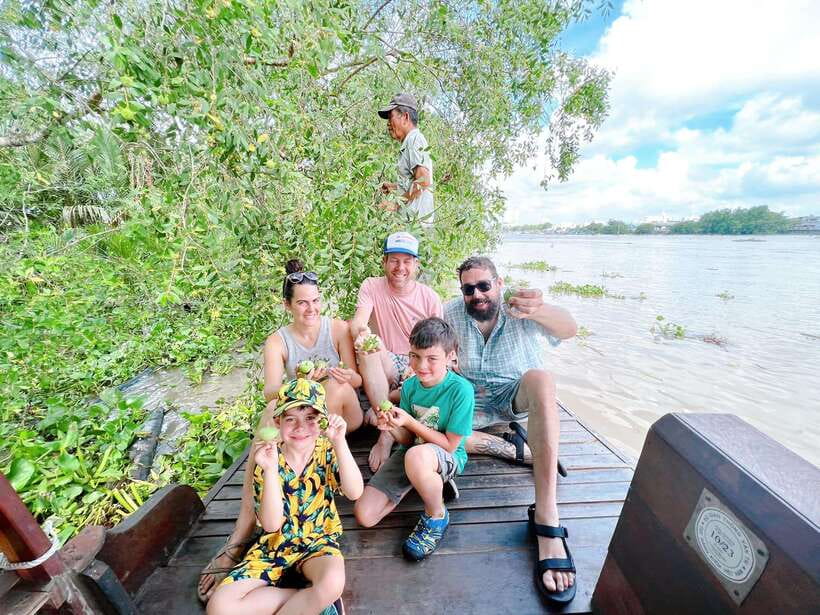
- Mekong boat ride plus quiet rowing gives you both main-river views and narrow-canal atmosphere
- Folk songs and honey tea keep the day cultural, not just scenic
- Coconut candy made on-site turns a snack stop into a real local craft moment
- Language choice can affect your bill in some cases, so confirm what you’re selecting up front
How this one-day tour balances war history and river calm
This is a rare format: you start underground with the Vietnam War story, then you end above ground on the Mekong, where people fish, farm, and live close to the water. That change in setting is part of the value. Your brain gets two perspectives in one day: survival and strategy first, then daily life and hospitality.
You’ll feel the tour’s structure from the start. Hotel pick-up in central Saigon keeps things simple, and the English-speaking guide (with language surcharges for others) gives you a single thread tying Cu Chi and the Delta together. The result is a day that’s easier to understand, especially if you don’t already know the history.
You can also read our reviews of more tours and experiences in Ho Chi Minh City
Cu Chi Tunnels: the underground city and the spider-web feeling
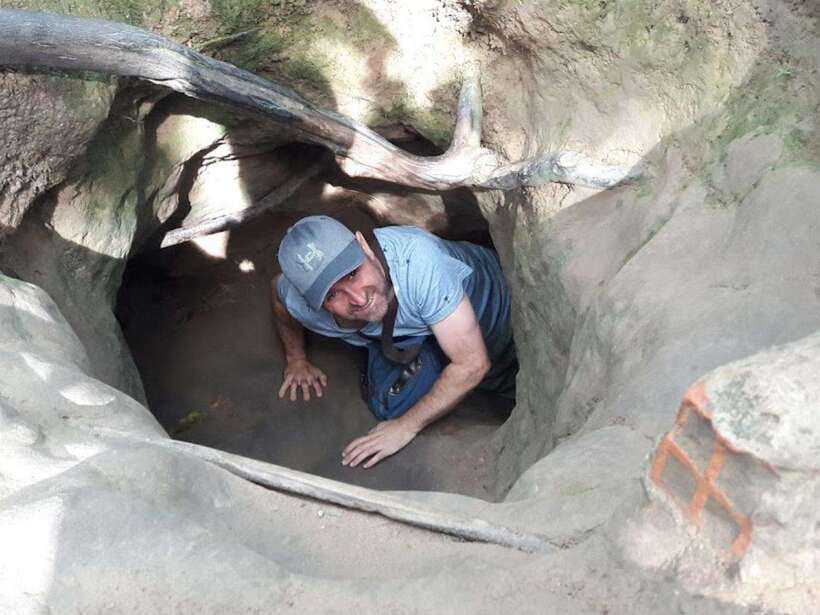
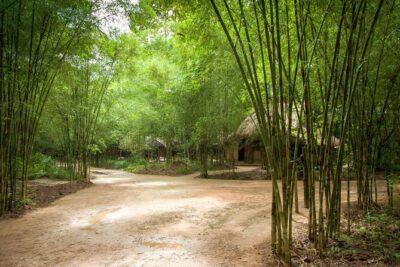
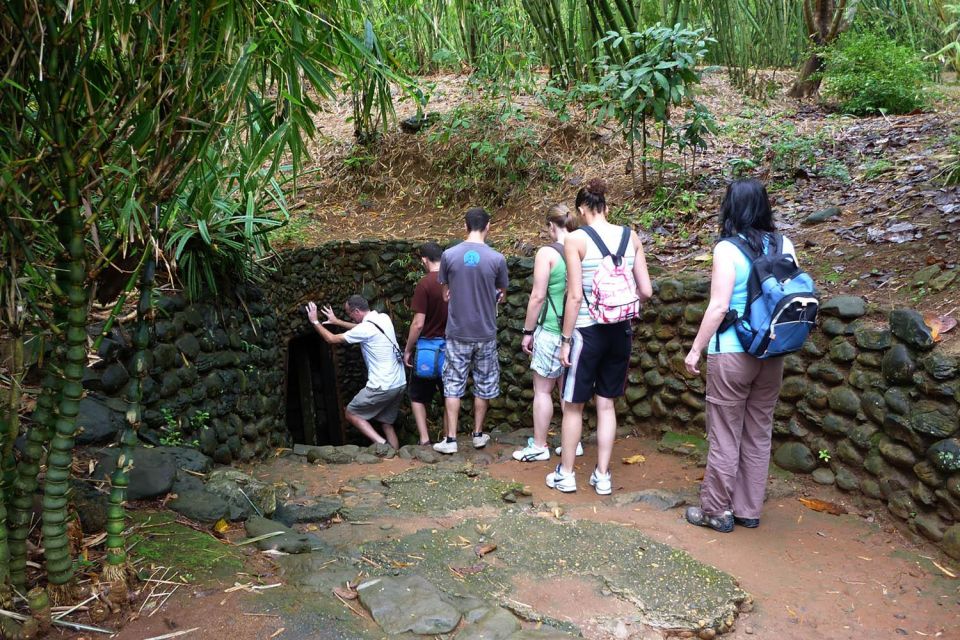
Cu Chi isn’t presented as a vague “war memorial.” It’s taught as a functioning underground world: an intricate network of tunnels described like a spider web, with secret hideouts and refuge spaces. That framing matters because it helps you understand the tunnels as engineering—built for movement, concealment, and resistance.
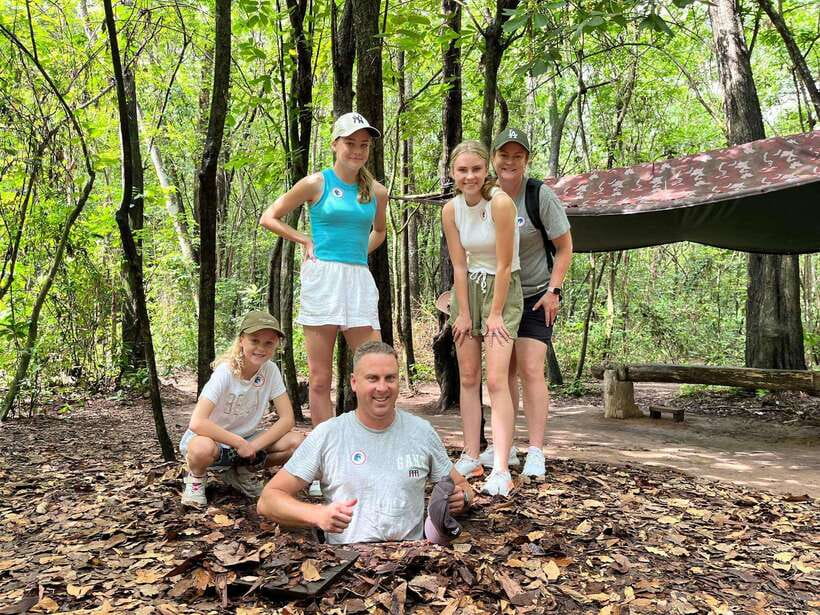
Inside the tunnel area, you’ll see how guerrillas used natural materials for camouflage, including leaves used to blend into surroundings. You also get short documentaries and authentic war footage filmed by cameramen, so the story isn’t only told in words. The point is not shock. It’s context: how people stayed mobile and hidden in a dangerous environment.
Then comes the experience you’ll remember most: the opportunity to go inside a narrow tunnel. You’ll feel what it’s like to move in a tight, dark space where survival depended on stealth and discipline. Even if you’re not a history person, the physical reality of the crawl helps the explanations stick.
The wartime-style tapioca snack and the Hoang Cam stove
One of the most practical details in this tour is food that ties directly to the war story. At Cu Chi, you get a light snack of tapioca plus tea, cooked on the Hoang Cam stove—designed with the ability to hide smoke. It’s a small stop, but it turns history into something you can taste and understand.
Instead of only viewing artifacts, you’re tasting a wartime method. Tapioca is simple and durable, and the idea of minimizing smoke shows how even basic cooking had to fit the safety needs of guerrilla life. If you’re the kind of traveler who likes learning through everyday details, this snack earns its place.
Documents, footage, and the guide’s role (including Thi)
A tour like this lives or dies by the guide. The best days move quickly without turning history into trivia. On this tour, a guide named Thi stood out for making the day feel smooth and genuinely enjoyable, while still explaining what you were seeing.
Look for a guide who can translate the setting clearly: what each area was for, why tunnels were built the way they were, and how camouflage worked in practice. When the explanation clicks, the tunnel network stops being just “holes in the ground” and starts feeling like a system.
Shooting range at Cu Chi: optional, and not included
You may also have the chance to shoot with real bullets and real famous guns such as AK-47 and M-60. This is optional and not included in the base price. The bullet fee is roughly 600,000 VND per pack of 10 bullets.
If you’re considering this part, decide before you’re standing there. It can add meaningful cost, and it’s not required to enjoy Cu Chi. Personally, I’d treat it as a bonus only if you’re comfortable with the price and the reality of live-fire experiences.


Mekong Delta by river boat: fishing, ports, and folk songs
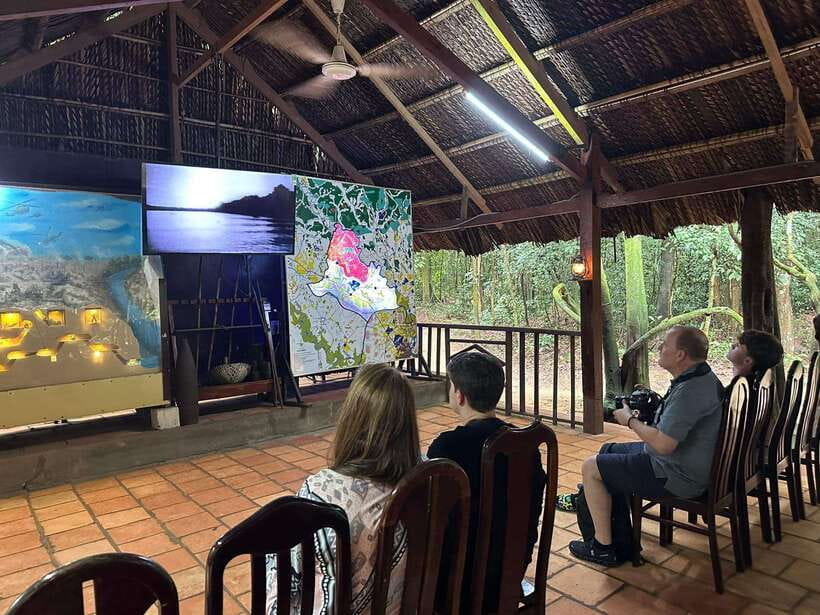
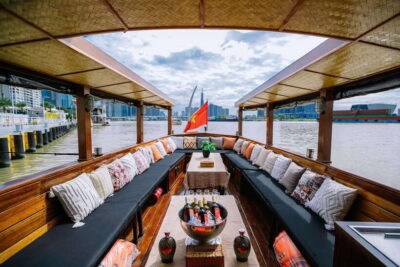
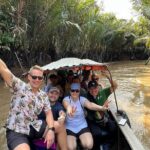
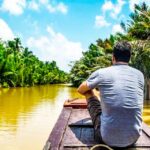
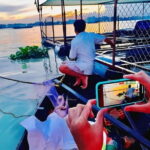
After Cu Chi, the Mekong Delta shift feels intentional. The area is described as peaceful and countryside-like, and the tour leans into that tone with a boat ride on the Mekong River. You’ll hear folk songs imbued with love for the homeland, paired with the sound of waves.
From the water, you’ll see fisherman’s ports and watch the river’s alluvial flow. The “mother river” framing is more than poetic language here; it helps you understand why locals care so much about this waterway for fishing, watering, and farming. You may also see the idea of large-scale fishing described in the region, including catches reported as near 100 kg.
This boat segment is also built for photographs. The scenes are naturally framed by the riverbanks, and the mix of daily activity and gentle music makes it easier to enjoy without rushing.
Rowing through shady canal lanes
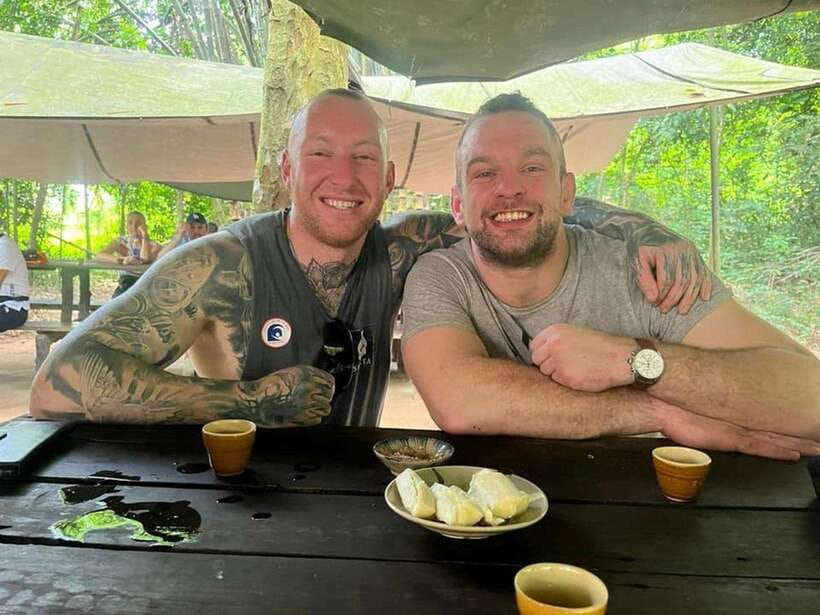
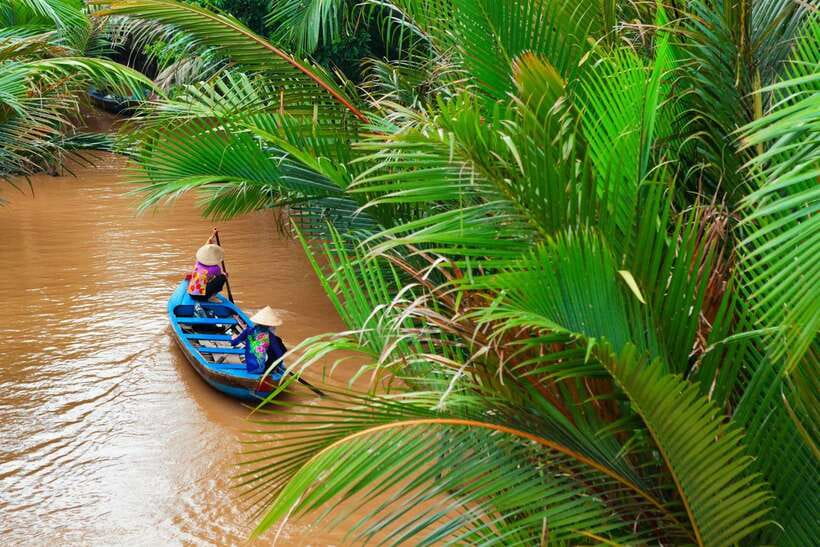
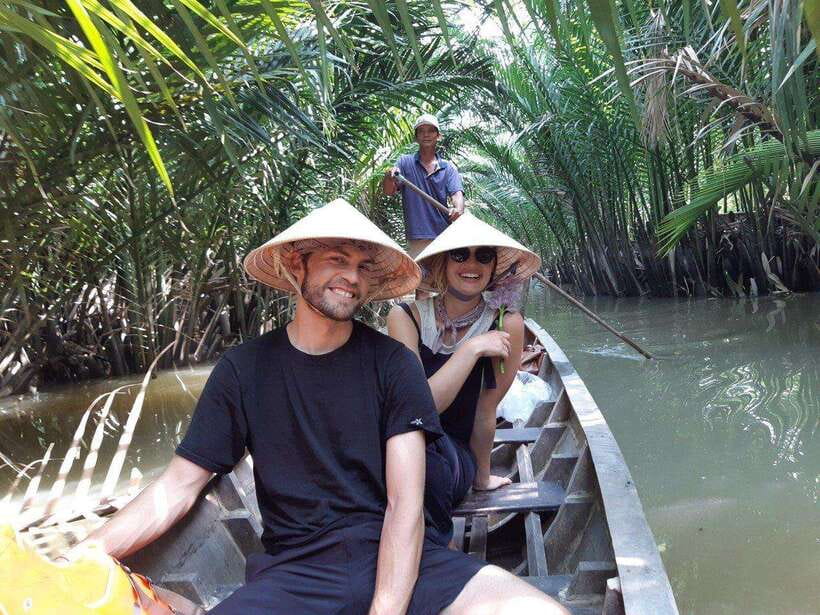
One of the nicest add-ons in this itinerary is the calmer side of the Delta: a rowing boat through smaller canals. The idea is to slow the pace and thread you through a maze of shaded passages.
Even without a detailed map, the experience gives you a sense of how many villages and fruit areas depend on water access. You’re not just watching the countryside from a distance—you’re moving through it at a human pace, which makes the experience feel more personal.
Coconut candy production and tasting local flavors
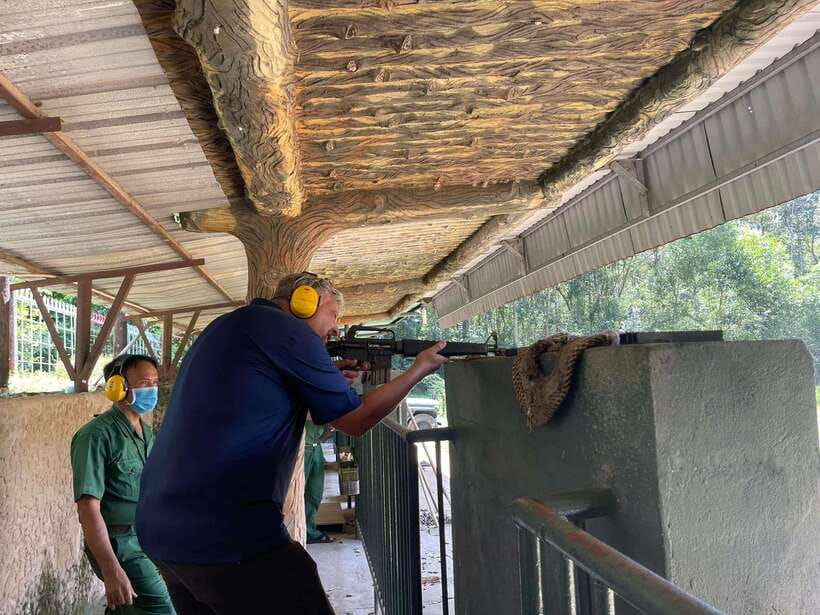
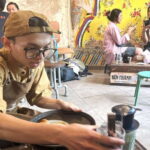
A classic Mekong stop appears here in a practical way: coconut candy made right at the production site. Instead of just buying a wrapped souvenir, you can watch how the candy is made and then taste different flavors.
This is a good example of why I like this tour format. You’re not only consuming views. You’re consuming local craft. Coconut candy is simple, but it shows a whole chain of work—picking, processing, cooking, and shaping—done by local producers.
Fruits, honey tea, and seasonal snacks that match the season
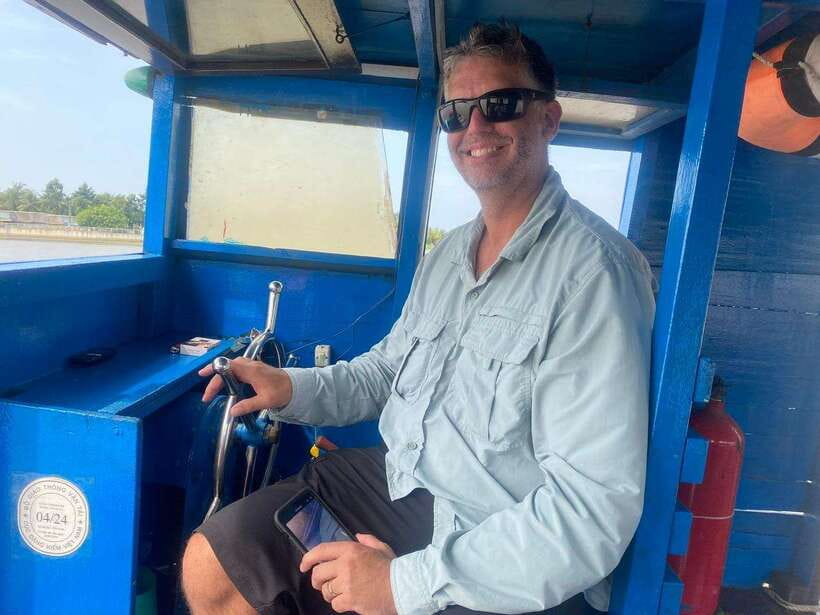
As you move through the villages and fruit gardens, you’ll get more food moments: you can enjoy fresh tropical fruits picked right in the garden, plus honey tea. There’s also more folk music with singing by local people.
These stops are important because they break the day into small, enjoyable anchors. On a one-day schedule, those anchors keep you from feeling like you’re only traveling from one checkpoint to another. They also make the Mekong part feel lived-in rather than staged.
Village walks and fruit garden time
You’ll have time to walk through peaceful villages and fruit gardens, soaking up a rustic countryside atmosphere. It’s not described as a long trek, so it fits well even if you want something gentle.
This segment is also where the tour’s “friendly and peaceful land” promise becomes more than marketing. When you’re on foot, you can see how everyday life is arranged around gardens and water routes.
The included meals: lunch plus a spread of hometown flavors
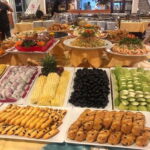
The tour includes lunch at a restaurant and bottled water. The Mekong portion is described as offering eight dishes with hometown flavors, and the overall program includes multiple tasting moments across the day.
In practice, that means you’re likely to get a substantial meal rather than a light snack. Still, it’s smart to eat at the right pace and save appetite for the fruit and honey tea moments, since those are part of what makes the Delta feel special.
Price and value: is $49 a fair deal for a full-day combo?
At $49 per person, this is positioned as a budget-friendly one-day way to cover both Cu Chi and the Mekong Delta. The value comes from several things that add up fast on your own: hotel pick-up and drop-off in central Saigon, an English-speaking guide, entrance fees, lunch with bottled water, and a Cu Chi snack (tapioca and tea).
The two biggest money add-ons you should expect are straightforward. First, bullet fees at the shooting range are not included (about 600,000 VND per 10-bullet pack). Second, language surcharges apply if you choose a language other than English.
If you’re traveling with a tight schedule and want a guided, end-to-end experience, this price can make sense. If you’re the kind of traveler who prefers independent timing and sorting out entrance tickets yourself, you could spend less by going separately. But you’d likely lose the “two worlds in one day” structure and guide-led explanations that keep the history and culture coherent.
Language selection and what to clarify before you go
Here’s the caution I’d take seriously: changing the tour language can sometimes lead to a private-tour pricing change. In one case, it was described as extra charges without clear notice, along with limited ability to cancel or adjust afterward.
So do this simple check before you finalize:
- Confirm which language option you selected and what price it applies to.
- Ask whether your group type stays the same or changes with language.
- Get clarity on whether any surcharges are included in the final total you’ll pay.
This isn’t about being paranoid. It’s about preventing a frustrating day when you already paid for a full schedule.
Who this tour suits best
This day trip fits best if you want:
- A guided history lesson that’s more than reading panels
- A hands-on Cu Chi visit that includes a tunnel crawl and wartime-style cooking
- A gentler second half with a Mekong boat ride, village time, and folk music
- Food included across the day, including fruit, honey tea, and coconut candy
It’s also a solid choice for first-time visitors in Ho Chi Minh City who want to see a major historic site plus one of Vietnam’s most iconic river regions without spending multiple days coordinating transport.
If you’re traveling with friends who disagree—one wants history, one wants scenery—this is one of the few one-day formats that can satisfy both sides.
Should you book Cu Chi Tunnels and Mekong Delta?
I’d book this tour if you want one day that covers Vietnam’s hard past and its everyday countryside life, with strong food and music moments built in. The combination of tunnel crawling, wartime explanations, and then a relaxed Mekong boat-and-rowing sequence is a smart way to make limited time feel full.
I’d hesitate only if you’re worried about spending surprise money. The language-selection issue is a real caution, and the shooting range has a clear extra cost if you choose that option. If you confirm the total up front and skip the optional add-ons you don’t want, you’re much more likely to end the day feeling satisfied instead of annoyed.
FAQ
How long is the tour?
It’s a one-day experience. Starting times depend on availability.
Where does the tour pick you up and drop you off?
Pickup and drop-off are included at the center of Saigon.
Is lunch included?
Yes. Lunch at a restaurant and bottled water are included.
What’s included at Cu Chi?
You’ll get entrance fees and a light snack with tapioca and tea at the Cu Chi tunnels.
Is the shooting range included?
The bullet fee is not included. You’ll need to pay roughly 600,000 VND for a pack of 10 bullets if you want to shoot.
What languages are available?
English is available, and other languages are listed as options with a surcharge for non-English languages.
Is a private group available?
Yes, a private group is available.
Does the tour include Mekong Delta boat and rowing time?
Yes. You’ll take a cruise on the Mekong River and also row through smaller canals.
What is the cancellation policy?
Free cancellation is available up to 24 hours in advance for a full refund.