REVIEW · HO CHI MINH CITY
Remembering Long Tan- Nui Dat Battle : A Tour of Historic Sites
Book on Viator →Operated by Viet Kolors Tour · Bookable on Viator
Second World War sites, mapped for your feet. This is a focused day trip that takes you out to Nui Dat and the Long Tan area so you can see the exact places tied to the fighting, not just read about them. I especially like how the route strings together artillery and command points, and how Dingo Chien (a guide some guests highlight) brings the locations to life with clear English and lively Aussie references.
What also works for most people is the mix of outdoors stops and one hands-on, underground chapter. You’ll spend time walking between memorials, then move into the Long Phuoc Tunnels, used for ammunition storage, before heading back to Saigon. One consideration: the early start at 7:30 AM plus several hours of driving means you should go in rested, because the day is long even with breaks.
In This Review
- Key highlights worth knowing
- A solemn day trip from Ho Chi Minh City to Nui Dat
- Price and logistics: what $107.10 includes (and why it’s fair)
- Stop 1: Leaving Saigon and using the Ba Ria rest break well
- Stop 2: The Long Tan battle route around Nui Dat
- 161 Kiwi artillery and the shaped geography of a base
- Kangaroo Pad and SAS hill
- Luscombe airfield and the Luscombe bow
- 6 RAR flagpole as a memorial anchor point
- Horseshoe Hill: another base where the Diggers were stationed
- Stop 3: Long Phuoc Tunnels and what ammunition storage means
- The guide factor: why Dingo Chien’s style makes a difference
- What to expect from the pace, timing, and return to Saigon
- What this tour is best for (and who should skip it)
- A quick practical checklist before you go
- Should you book this Long Tan and Nui Dat tour?
- FAQ
- How long is the tour?
- What time does the tour start?
- Is pickup and drop-off included?
- What does the tour cost?
- What’s included in the price?
- Is admission included for the sites?
- How many stops will I visit?
- What kind of group is this?
- Can I cancel for a refund?
Key highlights worth knowing
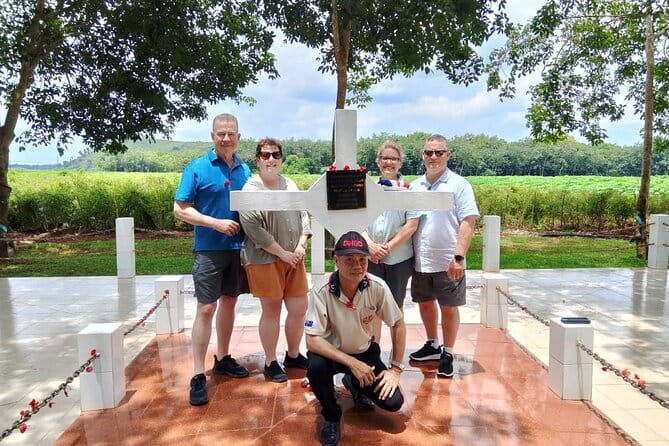
- 161 Kiwi artillery: See a named artillery position as part of the Nui Dat circuit.
- Memorial stops tied to units and personnel: You’ll visit the 6 RAR flagpole and related landmarks.
- Horseshoe Hill base area: Another staging base where the Diggers were stationed.
- Long Phuoc Tunnels: Visit the tunnel system used to store ammunition.
- Dingo Chien-style guiding: Guests give strong praise for his English and his ability to connect tactics and people to the ground.
- Lunch + hotel pickup: Most of your day is handled, including bottled water and flowers.
A solemn day trip from Ho Chi Minh City to Nui Dat
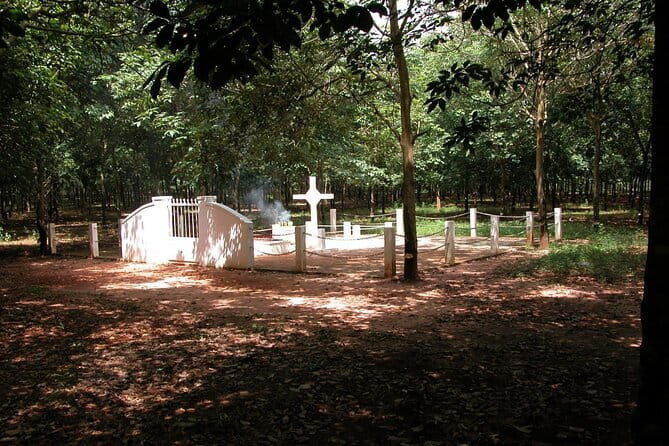
This tour is built like a straight-line lesson. You leave Ho Chi Minh City early, roll out to Ba Ria–Vung Tau Province, and spend the middle of the day walking key points around Nui Dat and the wider Long Tan area. The vibe is respectful. It’s not a sightseeing buffet. You come for history you can locate on the ground.
What I appreciate is that the itinerary is specific about where you go. You’re not just told “visit the battle sites.” You’ll be taken to named landmarks like the Kangaroo Pad, SAS hill, Luscombe airfield, and the Luscombe bow, plus the 6 RAR flagpole. That kind of detail matters because it turns a story into a map you can actually follow.
You can also read our reviews of more historical tours in Ho Chi Minh City



Price and logistics: what $107.10 includes (and why it’s fair)

At $107.10 per person for about 7 hours, the price makes sense mainly because several big items are bundled. You get air-conditioned transport, lunch, bottled water, an English-speaking guide, and all fees and taxes. You also get pickup and drop-off at your hotel in Saigon, which saves time and hassle when you’re trying to fit this into a short stay.
On value: the places you visit require entry fees and local coordination, so “cheap” often turns into “you pay extra later.” Here, the tour calls out that fees and taxes are included, and the schedule is set. That’s good if you want a smooth day without chasing transport across multiple sites.
My practical caution is simple: you’re paying for a guided route with a lot of driving. If you’re the kind of traveler who hates early mornings, this may feel like work. But if you want a structured, history-first day with transportation handled, it’s a straightforward deal.
Stop 1: Leaving Saigon and using the Ba Ria rest break well
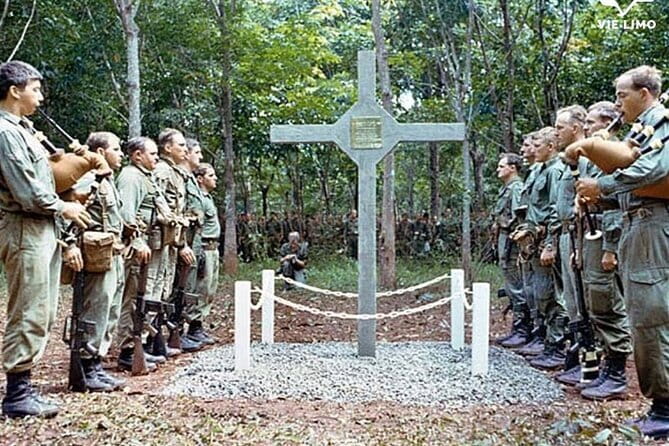
Your day starts with hotel pickup around 7:30 AM. You then head out toward Ba Ria–Vung Tau Province, with a stop at the Ba Ria rest stop for a break along the way.
This first stretch is less about monuments and more about setting you up for the rest of the day. You’ll get time to use restrooms, grab a quick snack if you need one beyond what’s provided, and settle in before you start walking and focusing. Since the schedule is tight, that break is worth using instead of rushing through it.
Stop 2: The Long Tan battle route around Nui Dat
The heart of the day is a 2-hour block dedicated to the key Nui Dat area landmarks. The tour drives you over to the Nui Dat army base, following local military maps, which is exactly what you want for this kind of visit. When the driver is using maps designed for the site, you don’t waste time guessing, and you get context as you move from point to point.
Here’s what you’ll see in this Nui Dat battle-area circuit:
161 Kiwi artillery and the shaped geography of a base
The first named feature is the 161 Kiwi artillery. Seeing it as a specific, labeled position helps you understand why artillery locations mattered. It’s the kind of stop where you’ll likely look at the surrounding ground differently than you would on a normal outing, because the terrain is part of the story.





Kangaroo Pad and SAS hill
Next comes the Kangaroo Pad and SAS hill. These names are more than labels. They hint at how forces moved and where decisions would have been made. Even if you don’t know the full operational background going in, having these points lined up gives you a clear sequence.
Luscombe airfield and the Luscombe bow
You’ll also visit the Luscombe airfield and the Luscombe bow. One detail stands out here: it’s the spot where Dottie and Col Joy performed a concert during the Battle of Long Tan. That’s an unexpected, human-scale moment in a very heavy landscape.
I like that this tour doesn’t keep everything only tactical. You get the reminder that people were living, performing, and communicating amid conflict. It adds weight to the rest of the visit rather than distracting from it.
6 RAR flagpole as a memorial anchor point
After the landmark run, you’ll continue on to the 6 RAR flagpole, the second memorial site on this leg. Memorial anchors are important on days like this. They give your brain a place to regroup and reflect instead of just collecting coordinates.
Horseshoe Hill: another base where the Diggers were stationed
The tour then shifts to Horseshoe Hill, another base where the Diggers were stationed. This stop matters because it broadens the day beyond one cluster of points. It helps you think in terms of staging areas—places that supported movement and strategy even if you only see them briefly.
Stop 3: Long Phuoc Tunnels and what ammunition storage means

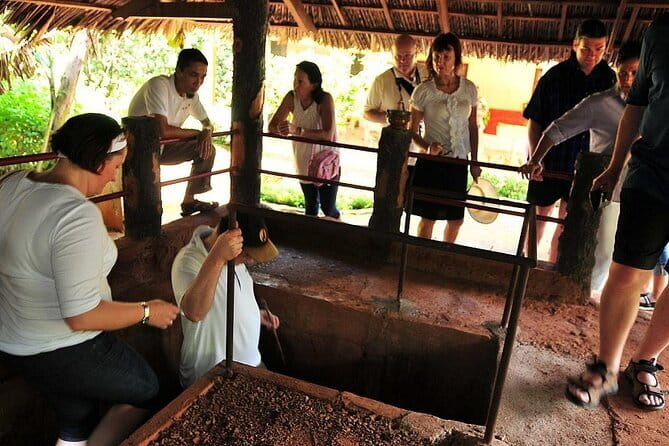
After Nui Dat, you head to the Long Phuoc Tunnels. This stop is 1 hour, and it focuses on a single function: the tunnels were used as storage for ammunition.
That’s a powerful framing choice. Instead of treating the tunnels as just a cool underground walk, the tour ties them to logistics: keeping supplies protected and ready. Even if you’re only there for an hour, that context tends to change how you read the space. You start imagining the effort of moving and storing essential materials in a place built to reduce risk.
My advice here: keep your pace slow. Underground sites can be more tiring than they look, and your best learning happens when you pause long enough to actually see details instead of rushing to the exit.
The guide factor: why Dingo Chien’s style makes a difference

A big reason people rate this tour so highly is the guiding. Multiple guests praised Dingo Chien for being very effective with English and for linking the sites to the people, weapons, and tactics connected to the battle. One reviewer specifically noted his detailed knowledge of 6 RAR personnel, weapons, and tactics, plus his humor and comfort with Aussie wording.
That matters because battlefield tours can go one of two ways. They can become a checklist, or they can become a map with meaning. A guide who can explain why a location matters, without losing the thread, turns a drive-by history day into a real learning experience.
If you prefer listening that feels human—not stiff—this is the kind of tour where that style helps. And if you’re worried about whether the subject will feel too technical, that mix of tactics with understandable explanations is exactly what you want.
What to expect from the pace, timing, and return to Saigon
The tour runs from 7:30 AM until roughly 7 hours total. The schedule is set up like this:
- Morning drive out of Saigon with a rest break
- A 2-hour Nui Dat battle-area visit with multiple named stops and memorial points
- A 1-hour visit to the Long Phuoc Tunnels
- Return to your hotel in Saigon
Because Stop 2 includes several landmark checks, this is not a “wander at your own speed” kind of day. You’ll follow the guide’s timing and move between sites, which is good for efficiency. Just be ready for a full day of standing and walking around memorial areas.
What this tour is best for (and who should skip it)
This trip is a strong match if you:
- Want a guided route that visits named, battle-linked landmarks rather than generic monuments
- Like history that is tied to specific places and not just dates
- Appreciate a tour with hotel pickup, lunch, and fees handled
- Enjoy learning with an English-speaking guide who can explain the ground and the context clearly
It may be a less ideal match if you:
- Hate early mornings or long drives
- Want a relaxed sightseeing day with lots of free time
- Feel strongly that any battlefield/memorial content is too heavy for your travel mood
A quick practical checklist before you go
The itinerary doesn’t call out what to bring, so I recommend you plan like it’s an outdoor day with memorial stops.
- Wear comfortable shoes for walking on uneven ground and into/out of different viewing areas
- Bring light layers, since the morning can feel cooler and the day can warm up
- Stay hydrated; bottled water is included, but you’ll still want to sip regularly
- Have patience for a schedule that’s built around timing between sites
And since lunch is included, you can keep the morning simple: eat something small before pickup if you wake hungry, then treat lunch as your main meal later.
Should you book this Long Tan and Nui Dat tour?
Book it if you want a history-focused day with specific locations, a structured route, and the convenience of pickup, lunch, and fees included. The biggest “yes” factor is the guiding: guests repeatedly praise Dingo Chien for making the places understandable, with strong English and a sense of humor that keeps the day from feeling sterile.
Skip it if your ideal Vietnam day is more about free wandering than guided site-hopping, or if early starts drain you faster than you expect. Also, go in ready for a respectful, somber topic—this is memorial territory, not a casual photo walk.
If that sounds like your kind of day, this tour is a solid way to see the Long Tan and Nui Dat story on the ground, in a single, efficient run.
FAQ
How long is the tour?
The tour lasts about 7 hours.
What time does the tour start?
Pickup starts at around 7:30 AM.
Is pickup and drop-off included?
Yes. The tour includes convenient pickup and drop-off services at your hotel.
What does the tour cost?
The price is $107.10 per person.
What’s included in the price?
Included are an air-conditioned vehicle, lunch, all fees and taxes, flowers, an English-speaking guide, and bottled water.
Is admission included for the sites?
Yes. Admission tickets are included for the Battle of Long Tan and Long Phuoc Tunnels stops, while the Ho Chi Minh City rest stop is listed as free.
How many stops will I visit?
You’ll visit the Saigon area to start, the Nui Dat battle-area memorial circuit, the Long Phuoc Tunnels, and then return to your hotel in Saigon.
What kind of group is this?
It’s private, meaning only your group participates.
Can I cancel for a refund?
Yes. You can cancel up to 24 hours in advance for a full refund. If you cancel later than 24 hours before the start time, the amount paid won’t be refunded.