REVIEW · HO CHI MINH CITY
6 Hours Historical Tour in Cu Chi Tunnel with Free Snack
Book on Viator →Operated by Kim Delta Travel · Bookable on Viator
Cu Chi Tunnels hit hard, even before you go underground. This 6-hour tour from Ho Chi Minh City pairs Cu Chi history with hands-on stops: traps, a short war documentary, a tunnel crawl, and quick snacks like tapioca and pandan tea.
I like that the visit is structured for first-timers, with an English-speaking guide who can explain what you’re seeing and why the tunnels mattered.
What I also like: the tour is built around value. For one set price you get air-conditioned transport, admission, and the core experience, not just a drive-by photo stop.
One consideration: if you’re sensitive to tight spaces, plan carefully. The crawl through a small section is part of the experience, and a small number of groups have also felt a bit rushed or uneven with guide English.
In This Review
- Key Points Worth Your Attention
- Why Cu Chi Tunnels Still Feel Personal
- Getting There From HCMC: Pickup, Timing, and How It Feels Day-Of
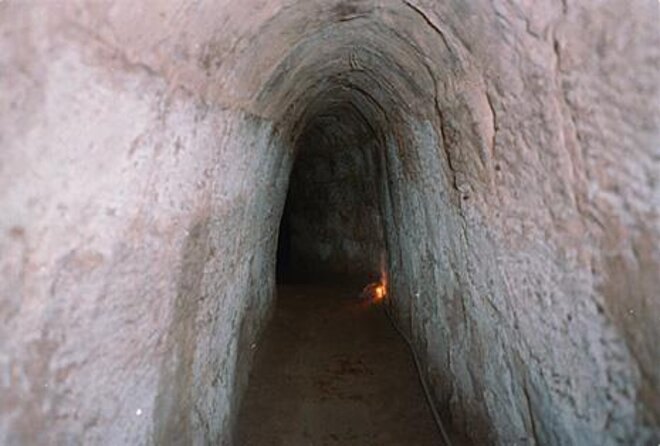
- The Tunnel Stop: What You’ll Actually Do at Cu Chi
- The Surprise Teaching Moments: Beyond Fighting
- Snacks, Tea, and the Optional AK-47 Shooting Range
- Your Guide Can Make or Break It
- Price and Value: Is $19.79 a Good Deal?
- Who Should Book This Tour (and Who Should Think Twice)
- Should You Book This 6-Hour Cu Chi Tour?
Key Points Worth Your Attention
- Short, focused tunnel experience: documentary, traps, then a guided tunnel crawl.
- Snack included: tapioca plus hot pandan-leaf tea and bottled water.
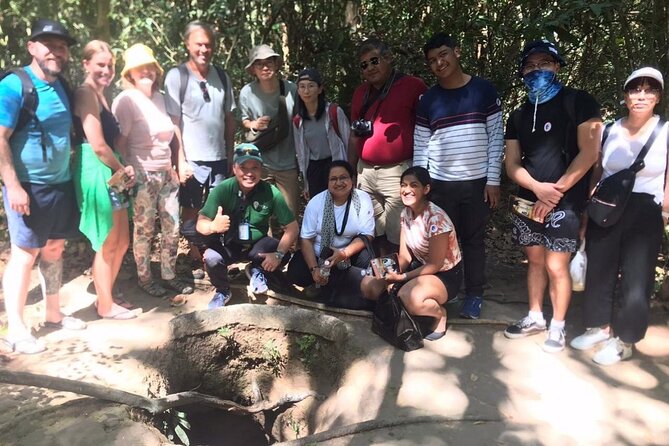
- Small-group feel: capped at 25 people, so questions are easier to ask.
- War-era details you can visualize: hospitals, schools, theaters, and kitchens hidden in the network.
- Optional AK-47 shooting: available for extra cost (bullets not included).
Why Cu Chi Tunnels Still Feel Personal
The Cu Chi Tunnels are famous for a reason: they weren’t built as a monument. They were built as a survival system. You’re walking into a place designed for the harsh reality of war—where movement had to be hidden, fast, and narrow.
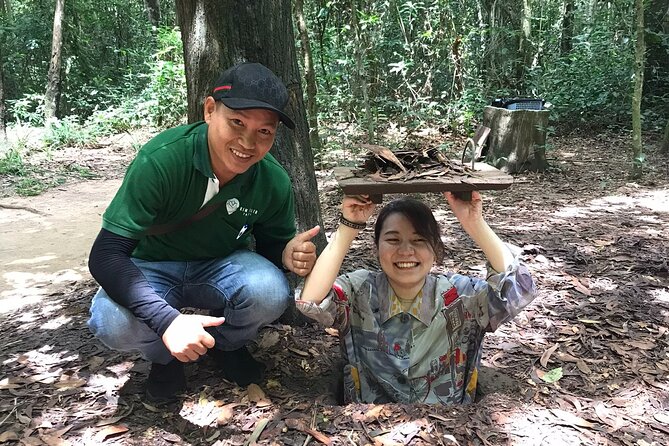
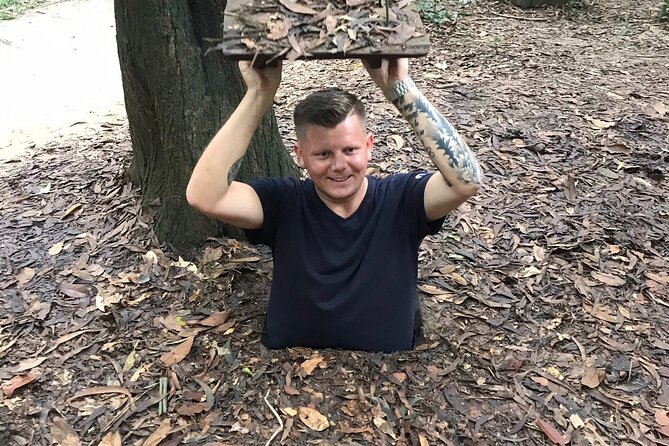
The tour makes this easier to grasp because it doesn’t treat the site like random underground tunnels. You’re given the story behind the architecture: entrances concealed with a secret wooden door and camouflage leaves above. And the spaces are intentionally small, because the system was built around Vietnamese fighters—so what feels cramped to you was meant to be workable for them.
The best part is how the tour ties the physical layout to daily life. Instead of only focusing on combat, you’ll hear how the tunnels supported hospitals, schools, theaters, and kitchens. That’s the piece that tends to stick with you after you’ve left—this wasn’t just a hiding place. It was a whole functioning world, built under pressure.
You can also read our reviews of more historical tours in Ho Chi Minh City



Getting There From HCMC: Pickup, Timing, and How It Feels Day-Of

This is a half-day style excursion: the schedule runs at 8:00 am or 12:30 pm, for about 6 hours total. That matters because Cu Chi is outside the city proper, so you’ll spend real time in transit. If you hate long drives, this may not be your kind of outing—but if you want a clean, pre-packaged route, it’s a solid choice.
Good news on logistics: pickup is offered for guests staying in Central District 1 hotels. If you’re not picked up, the meeting point is at 268 Đề Thám, Phường Phạm Ngũ Lão, Quận 1. The tour ends back at the same meeting point, so you don’t have to solve transportation at the end when you’re tired.
The ride itself is part of the comfort package. You’ll travel in an air-conditioned vehicle, and the tour uses a mobile ticket. Also, there’s a maximum group size of 25, which helps the experience feel less like a factory line.
If you’re the kind of person who likes a smooth start, aim to be ready a few minutes early. One review flagged that some portions can feel rushed, so you’ll want a calm buffer at the beginning. Once you’re at the tunnels, the pacing becomes more about what you see than what you plan.
The Tunnel Stop: What You’ll Actually Do at Cu Chi
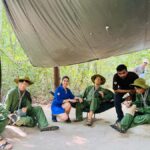
The heart of the day is the Cu Chi Tunnels area, and the tour follows a clear flow: arrive, watch a short documentary, then move into the key exhibits and activities.
First comes the short documentary. It’s there to get you oriented fast—who used the tunnels, how the network worked, and what kinds of strategies made it effective. If you come in with zero background, this segment gives you the map in your head before you start walking through platforms and viewing areas.
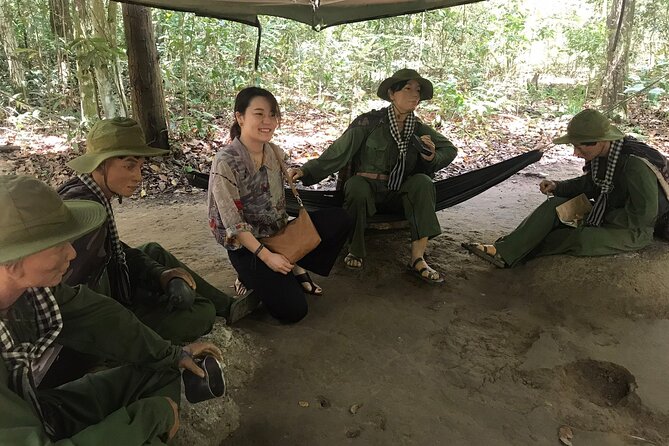
Then you’ll hit the war-era features. You’ll learn about booby traps used during the time of conflict. These displays are where the site can feel most uncomfortable, not because they’re graphic, but because they explain how deadly the environment could be. The tour also connects these traps to the logic of the tunnels: hiding in plain sight, moving carefully, and using the terrain itself as cover.
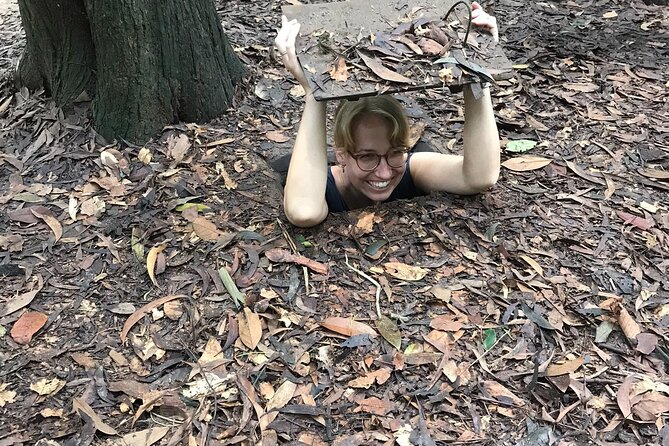
After that, you’ll be guided to a chance to crawl through a tunnel section. This is the moment that turns the history from story into physical sensation. You’ll be dealing with tight space and limited movement. Even if you don’t mind enclosed areas, it can still surprise you how small it feels.
Important reality check: the crawl is part of the experience, but comfort levels vary. If you’re claustrophobic, consider what you’re willing to do before you arrive. You can still learn a lot from watching and listening, but the crawl is the main hands-on payoff.
The Surprise Teaching Moments: Beyond Fighting
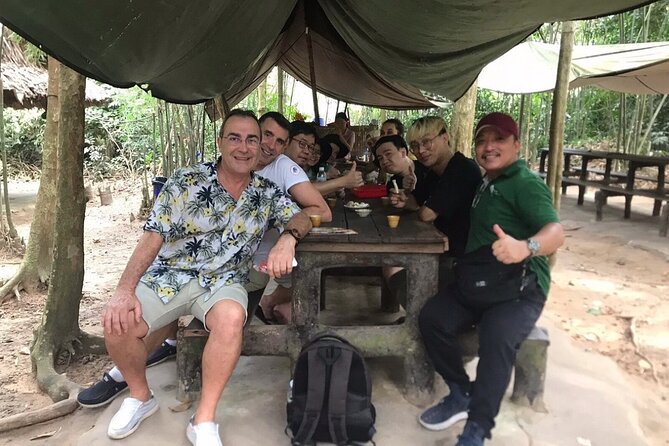
The Cu Chi story isn’t only about combat tactics. One of the reasons this tour lands well is that it explains how the tunnels supported day-to-day systems. You’ll hear that there were hospitals, schools, theaters, and kitchens built into the network.
That set of examples changes how you interpret what you’re seeing above ground too. You start noticing the practicality of the layout: space for people to live, learn, and recover, not just hide. It helps you understand why the tunnels mattered over time. A hiding place works for a short window. A tunnel network that supports schooling and food is something else. It’s infrastructure under siege.
You also get the visual idea of how entrances were managed: secret doors and camouflage leaves were designed to blend the tunnel world into the surrounding landscape. Even the idea that the spaces were sized for the Vietnamese fighters matters. When you understand that the tunnels were built for specific bodies and specific movements, the site feels less like a generic maze and more like purposeful engineering.
This is the part of the tour that often feels most memorable later, when you’re back in the city and you realize you’ve been holding a totally different picture of what wartime life could include.
Snacks, Tea, and the Optional AK-47 Shooting Range
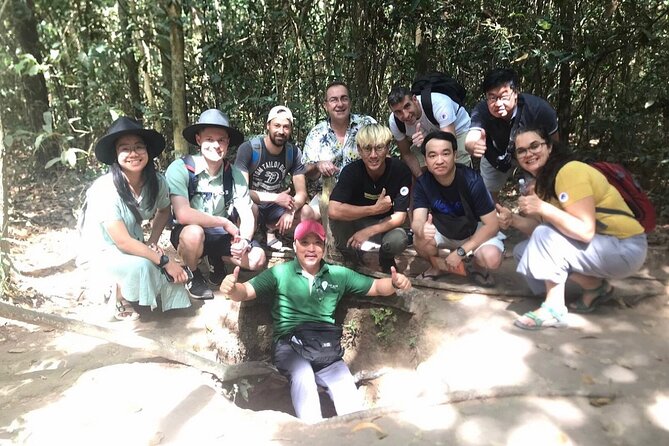
Included with the tour are simple, useful breaks: tapioca, hot pandan leaves tea, and bottled water. This isn’t a fancy lunch, but it’s a practical reset when you’re walking, watching, and listening for hours. Tapioca fits the war-era theme of the day, and the pandan tea gives you a warm, calming end to the more intense parts of the visit.
If you want an extra activity, there’s an option for rifle shooting with an AK-47. This is optional and costs extra at your own expense, and bullets for shooting are not included. This can be a good add-on if you’re curious, but it’s also the kind of thing that can change how your day feels. If you’re more interested in history than action, skip it and use the time to watch exhibits more closely.
Either way, the tour tries to keep you moving without making you feel like you’re being dragged through a checklist. The food and tea are timed as a simple recovery moment rather than a full stop for a separate meal plan.




Your Guide Can Make or Break It
You’ll have an English-speaking guide, and that matters a lot with a site like this. Cu Chi is full of small details, and the value comes from connecting those details to the bigger story. If the guide can answer questions clearly, the whole experience gets more satisfying.
The names Bao and Son show up in the guide stories people share, and they’re mentioned for being willing to explain and answer questions patiently. That’s the exact kind of guide style that works best here. If you like history with context—why something was built a certain way, what the strategy was, how the tunnels functioned—having a guide who can keep up in English is worth its weight in facts.
Still, one drawback you should keep in mind: guide quality can vary. One account described weak English and a feeling of being rushed. You can’t fully control that, but you can reduce the chance of frustration by asking your key questions early—especially before the group gets tighter and the schedule starts to compress.
A practical trick: if something is confusing, ask for a simple explanation you can repeat later. It’s more useful than trying to ask a perfect question at the end of a busy moment.
Price and Value: Is $19.79 a Good Deal?
At $19.79 per person, this is one of the easier-to-justify Cu Chi options—especially because the price bundles major pieces together.
You get:
- Air-conditioned vehicle transport
- Snacks: tapioca, pandan-leaf tea, bottled water
- An admission ticket included amount
- An English-speaking guide
- All fees and taxes
What’s not included is also clear: bullets for gun shooting (if you choose it), tips, and travel insurance.
So the value question becomes: what are you paying for? In this case, you’re paying for the combination of transport + guided site time + entry + a simple included food break. That’s a lot for one set fee, and it makes planning easier if you don’t want to piece together multiple tickets and directions.
The main “cost” isn’t financial. It’s time. You’ll spend hours on the drive, and you’ll be moving on a guided schedule. If you want a slow, independent pace where you can linger in every corner, a tightly scheduled half-day tour might feel limiting. If you want a guided, first-timer-friendly version that keeps you oriented, the price is hard to beat.
Who Should Book This Tour (and Who Should Think Twice)
This tour is a strong fit if:
- You want a classic Cu Chi introduction in one day.
- You like historical context with a guide rather than only reading signs.
- You’re okay with a short crawl as part of the experience.
- You want a cost-efficient option that includes snacks.
Think twice if:
- You’re very claustrophobic or uncomfortable with tight spaces. The crawl is a core activity.
- You prefer a very relaxed, unstructured schedule. A couple of accounts mention rushing.
It also works well for mixed groups. One set of notes specifically mentioned a family context, where children found the traps and tunnel experience exciting while an adult with claustrophobia still appreciated the history and context. That suggests you can get value even if you don’t love every physical element, as long as you go in with realistic expectations.
Should You Book This 6-Hour Cu Chi Tour?
Yes, I’d book it if you want a straightforward, affordable way into the Cu Chi Tunnels story without messing around with planning. The included guide, admission, air-conditioned transport, and practical snack stop make it feel complete for the time.
Skip it or adjust your expectations if you’re worried about tight spaces or you hate feeling time-pressured. In that case, be ready to lean more on the history parts above ground and be selective about any optional extras like rifle shooting.
If you do book, bring a curious mindset and ask questions early. Cu Chi is the kind of place where one good explanation can change what you notice in every next step.