REVIEW · HO CHI MINH CITY
Cu Chi Tunnels – Half Day Luxury Tours
Book on Viator →Operated by Cu Chi Tunnels Tours · Bookable on Viator
Cu Chi Tunnels hit different when you don’t have to figure out the logistics. This half-day luxury-style tour sends you about 43 miles out from Ho Chi Minh City on a pre-booked bus with pickup, plus it keeps the essentials handled so you’re not hunting for tickets or transport.
Two things I really like about this set-up: the ticket price is structured so entrance fees and transport costs are covered, and the tour finishes with period-style refreshments—tea and cassava. One thing to consider is the day pacing: it’s roughly a 6-hour trip end to end, with a good chunk of time spent on the road, and the tunnel areas can feel hot and tight under real-world conditions.
In This Review
- Key highlights worth prioritizing
- Cu Chi Tunnels in a half day: what this tour is really built for
- Pickup in Ho Chi Minh City: starting strong with less hassle
- Your tunnel entrance prep: the intro video and what to watch for
- Exploring the Cu Chi tunnel system: living areas, hospitals, and command spaces
- The shooting range stop: why it’s included and how to approach it
- Tea and cassava afterward: small refreshments that help you reset
- Price and value: does $35 make sense for Cu Chi?
- Timing and pacing: what a 6-hour format feels like
- Mobile tickets and the pickup experience: fewer moving parts
- Who this tour suits best (and who might not love it)
- Tips to make the day smoother inside and outside the tunnels
- Should you book Cu Chi Tunnels – Half Day Luxury Tours?
- FAQ
- How long is the Cu Chi Tunnels tour?
- What is included in the tour price?
- Is hotel pickup included?
- Do I need to print a ticket?
- Is there a shooting range activity?
- What do you see inside the tunnels?
- Are there any safety-related features in the tunnels?
- How big is the group?
- What is the cancellation policy?
Key highlights worth prioritizing
- Convenient pickup by bus to Cu Chi so you start with less stress and more time on-site
- All-in pricing that covers entrance and transport, with no separate surprises
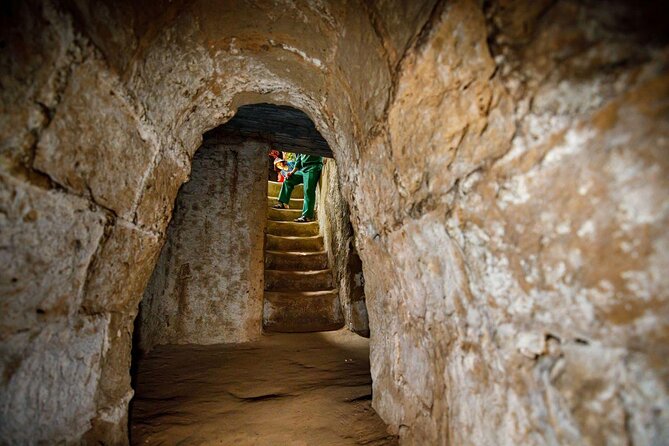
- Guided tunnel exploration for about 4 hours including living spaces, wartime facilities, and security details
- A nearby shooting range option to help you understand what combat training felt like
- Tea and cassava refreshments after you tour the tunnels
- Mobile tickets for easier pick-up (no paper chase)
Cu Chi Tunnels in a half day: what this tour is really built for
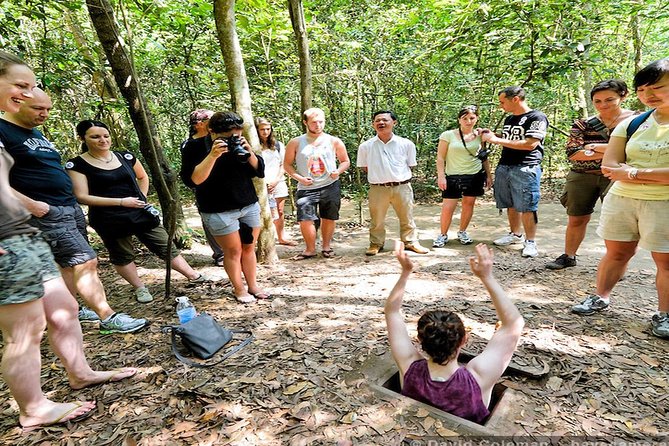
This is the kind of Cu Chi experience that works when you have limited time in Ho Chi Minh City but still want the site to feel direct and well explained. The tour is built around one main mission: get you there, run you through the basics, and then keep you moving through the tunnel complex with a guide.
The big value is that you don’t waste hours planning. You’re dealing with a historical site where the experience depends on interpretation—why certain tunnels were built the way they were, and how people survived underground. With a guided format and an organized schedule, you’ll spend your time learning, not navigating.
You can also read our reviews of more tours and experiences in Ho Chi Minh City



Pickup in Ho Chi Minh City: starting strong with less hassle
The tour starts in District 1, with the meeting point at 112 Đ. Trần Hưng Đạo, Phường Phạm Ngũ Lão, Quận 1, Hồ Chí Minh, Vietnam. Pickup is offered from your inner-city hotel, and you’re taken by tour bus to the tunnels area.
That matters because the road time adds up. Plan on being ready for a longer day than you might expect from the phrase half day—about 6 hours total. If you’re the type who hates wasting vacation time on transfers, this arrangement is a win: you get a straightforward door-to-door style flow without needing to coordinate multiple pieces.
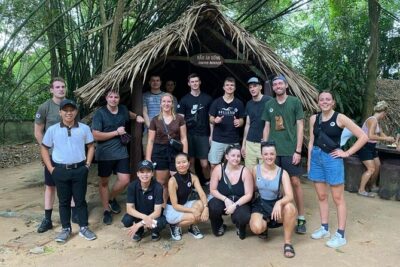
Group size is capped at up to 30 travelers, which keeps the vibe more manageable than very large coach tours. It also usually makes it easier for your guide to answer questions while you’re on the move.
Your tunnel entrance prep: the intro video and what to watch for
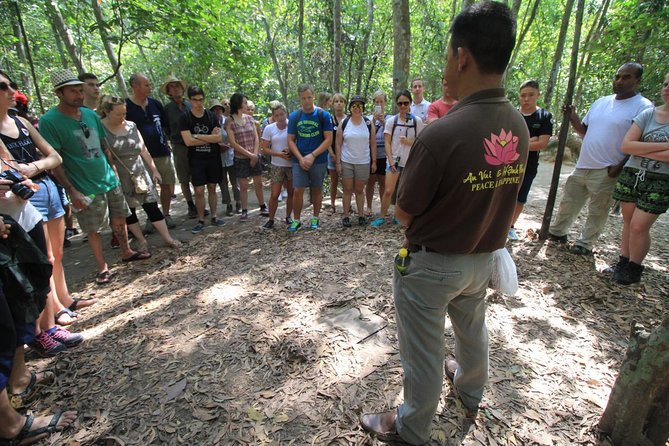
Before you go into the tunnel systems, you’ll get a short introduction and an introductory video on how the tunnels were constructed and how people survived in harsh war conditions. This is not filler—it’s the context layer that makes the rest of the visit make sense.
Pay attention to the themes the video sets up: survival, concealment, and how daily needs were squeezed into underground space. When you later see the living areas, kitchens, and bedrooms set side by side with other wartime functions, you’ll understand this wasn’t just hiding—it was running a whole support system under pressure.
If you’re worried the site will feel confusing or repetitive, this initial guidance is what prevents that. It gives you a mental map before you step into the maze.
Exploring the Cu Chi tunnel system: living areas, hospitals, and command spaces
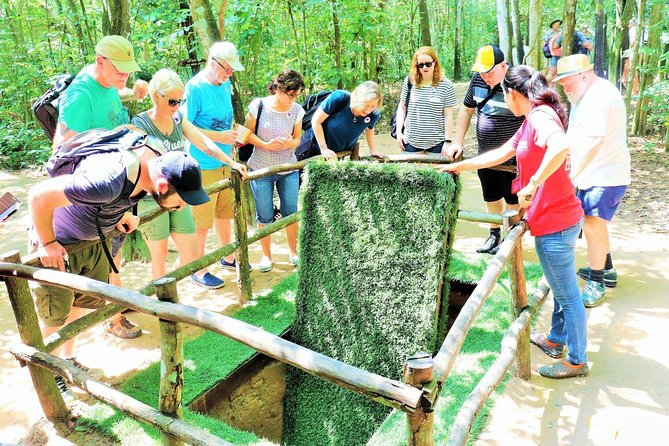
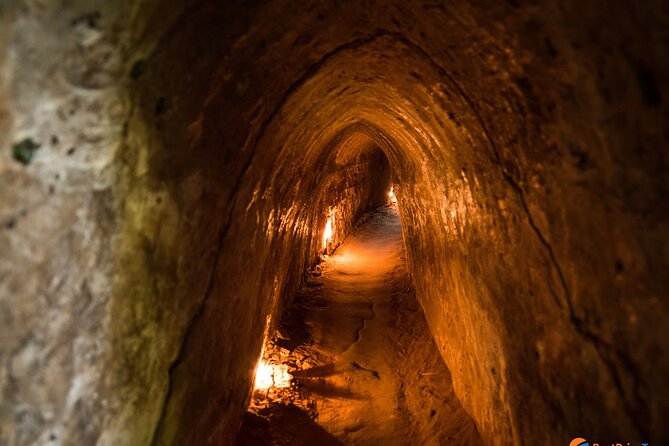
Your main time on-site is about 4 hours, and you’ll explore the remaining tunnel systems and related underground spaces. The tour description breaks the experience into the practical parts of life and work: living quarters with kitchens and bedrooms, plus the supporting facilities that helped the underground community function.
What I like about this section is that it keeps the focus on how people lived, not just what weapons were used. You’ll see areas tied to storage, weapons factories, field hospitals, and command centers. Those stops are important because they show how the tunnels worked as an ecosystem—people weren’t only hiding; they were producing, treating, organizing, and maintaining security.
You should also expect security details. The tunnel maze includes hidden trap doors and dangerous traps. Even if you’re not given tactical details, the presence of these features is part of the point: the tunnels were engineered to protect residents from discovery and intrusion.
The shooting range stop: why it’s included and how to approach it

One of the tour’s highlights is the chance to learn what battle felt like for the Vietcong through a nearby shooting range activity. In practical terms, this is the closest part of the experience to hands-on combat training—limited and structured, but still more physical than simply walking and watching.
Approach it with the right mindset. This isn’t about thrills; it’s about understanding training and pressure. If you want context, listen carefully to what your guide explains alongside the activity. Guides like Son come up as especially helpful for adding Vietnam context, and Jimmy #10 is often credited with making the history lesson feel more alive and less like a lecture.
If you’re uncomfortable with weapons-related activities, you may still enjoy the rest of the tour, since the core of the experience is the tunnel exploration and guided historical framing.




Tea and cassava afterward: small refreshments that help you reset
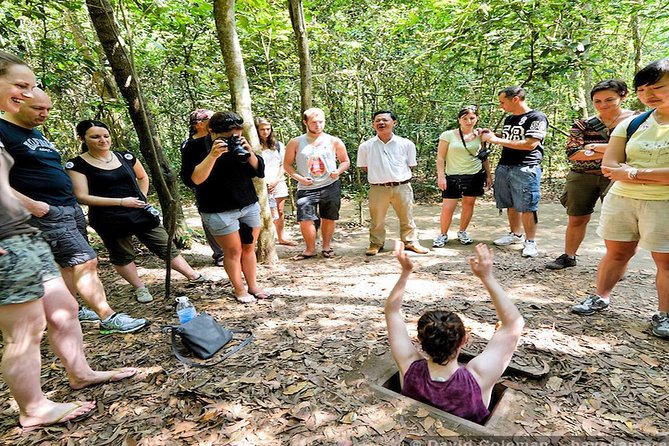
After your tunnel time, you get refreshments: period-appropriate tea and cassava. It sounds simple, but it’s the right kind of end cap for a tour like this. You’ve spent time underground and outdoors in a warsite setting—your body wants basic fuel, and your mind wants a moment to come back up to the surface.
Cassava especially fits the theme of how people survived with what was available. Tea gives you a pause before you head back toward the city. It’s also a practical break for photos, bathroom stops if needed, and regrouping before the return ride.
Price and value: does $35 make sense for Cu Chi?
At $35 per person, this tour sits in an area where value depends on what’s included. Here, the ticket price covers entrance fees and transport costs, so you’re not stuck doing cost math or paying separate on-site charges just to enter and access guided areas.
It also includes pickup from your inner-city hotel and a guided visit with an intro video, which is hard to replicate cheaply if you’re trying to piece together your own plan. When you factor in a guided half-day structure, mobile ticket convenience, and the shooting range component, the price starts looking more reasonable than a basic self-guided entry.
The main trade-off is that you’re paying for organization. If you’re the kind of traveler who loves building a DIY itinerary, you might find cheaper options elsewhere—but you’d be giving up the “everything handled” ease that makes this one work in a limited timeframe.
Timing and pacing: what a 6-hour format feels like
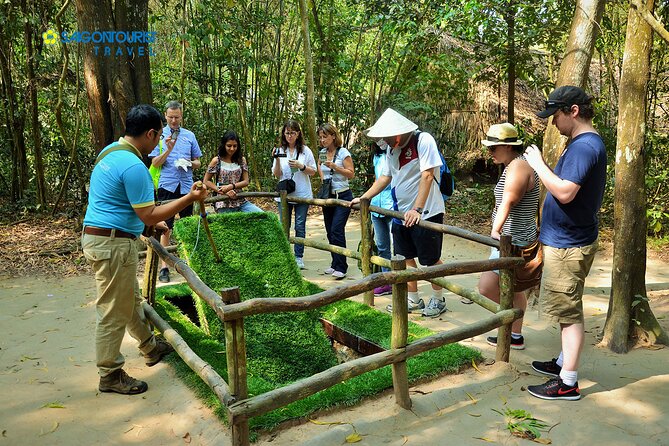
The tour runs about 6 hours total. On paper, it’s simple: you travel out, spend around 4 hours exploring tunnels and related parts, then head back. In real life, that pacing can feel busy because you’ll want to keep moving, not slow down for every photo or question.
You’ll likely appreciate this pacing if you prefer structure. It also helps with energy management: a long drive out can tire you, but once you’re on-site the time is organized so you don’t wander without direction.
If you want a slower, reflective experience, this may feel a bit fast. Still, the guided explanation plus time in key areas is a strong balance for a half-day window.
Mobile tickets and the pickup experience: fewer moving parts
The tour uses mobile tickets for easy pick-up—download to your phone and go. That’s genuinely helpful in a city where last-minute logistics can turn into a scavenger hunt.
This also fits the “luxury-style” promise of fewer hassles. You’re not printing documents, you’re not trying to find a desk with paper forms, and you can focus on being on time and ready.
Just make sure your phone is charged. It’s simple, but you’ll thank yourself when you’re lining up.
Who this tour suits best (and who might not love it)
This is a strong fit if you want a guided Cu Chi Tunnels experience without committing a full day or handling transport. If you’re short on time in Ho Chi Minh City, the pickup + bus format is exactly what you’re looking for.
It’s also a good match for travelers who prefer history with real-world details—living spaces, hospitals, storage, weapons factories, and command centers are all part of the visit structure. If you learn best through explanation and a clear sequence, you’ll likely enjoy how the tour sets you up before you go underground.
Consider passing or adjusting expectations if you dislike claustrophobic environments. The tunnels include areas that are tight and can feel uncomfortable, and there are dangerous trap features built into the maze. You should also be prepared for a longer road time than the phrase half day suggests.
Tips to make the day smoother inside and outside the tunnels
A warsite tunnel visit is not like museum sightseeing. You’re moving through confined spaces where comfort and timing matter more than a relaxed stroll.
Bring wear that you’re okay getting a bit dusty, and plan for heat. Wear shoes with good grip. Keep your phone and camera protected, and use them thoughtfully so you’re not losing time while trying to get shots in every narrow section.
Also, go in mentally ready for intensity. The point of Cu Chi is not entertainment. It’s about survival, strategy, and how people lived and fought close to family spaces and support facilities, underground.
Should you book Cu Chi Tunnels – Half Day Luxury Tours?
I’d book this tour if you want an organized, guided Cu Chi experience with hotel pickup, entrance and transport included, and a schedule that fits into a half-day window without stress. The combination of an intro video, guided exploration of living and wartime facilities, plus tea and cassava at the end is a practical way to make the visit feel complete.
Skip it if you want a slow, self-paced walk or if underground spaces make you feel uneasy. Otherwise, this is a solid value pick at $35, especially because the ticket covers what usually becomes the annoying part: getting there and paying entry costs.
FAQ
How long is the Cu Chi Tunnels tour?
The tour duration is about 6 hours total, with around 4 hours spent at Cu Chi Tunnels.
What is included in the tour price?
Entrance fees and transport costs are covered by the ticket price, and refreshments (tea and cassava) are provided.
Is hotel pickup included?
Yes, pickup is offered from inner-city hotels in Ho Chi Minh City.
Do I need to print a ticket?
No. You’ll use a mobile ticket for pick-up, so there’s no paper ticket to bring.
Is there a shooting range activity?
Yes. The tour highlights include trying shooting at a nearby range as part of the experience.
What do you see inside the tunnels?
You explore areas including living spaces (kitchens and bedrooms), plus wartime facilities like storage, weapons factories, field hospitals, and command centers.
Are there any safety-related features in the tunnels?
Yes. The tunnel systems include hidden trap doors and dangerous traps for security purposes.
How big is the group?
The tour has a maximum of 30 travelers.
What is the cancellation policy?
This experience is non-refundable and cannot be changed for any reason. If you cancel or request an amendment, the amount paid is not refunded.