REVIEW · HO CHI MINH CITY
HCM: Cu Chi Tunnels-Tapioca Small Group Tour Morning or Afternoon
Book on Viator →Operated by KIM TRAVEL · Bookable on Viator
Underground Vietnam teaches fast. This Cu Chi Tunnels tour from Ho Chi Minh City puts the Vietnam War underground experience on a guided timeline you can actually follow, not just random sights. With small-group pacing (up to 25 people) and hotel pickup from central districts, you spend less time figuring out logistics and more time understanding how the tunnel system was used and how people survived inside it.
I really like the tour’s hands-on approach. You don’t just look at artifacts; you get a chance to try small tunnel entry spaces and walk through the tunnel route. I also love the English-speaking guide angle—different guides mentioned in the trip experience (like Bao, Khanh, Phong, Tommy, and Luna) seem to focus on making the context clear while keeping the day moving.
My main caution is physical: the optional tunnel crawling and even the “try it” sections are tight and low, and heat outside can be intense. If you’re not comfortable with claustrophobic spaces, go for the exhibits and the explanation parts and skip the crawl where needed.
In This Review
- Quick hits before you go
- Cu Chi Tunnels: What You’re Really Seeing Underground
- Pickup and Timing: District 1, 3, and 4 Logistics That Save Your Day
- War Exhibits First: Bunkers, Guns, Traps, and How It Becomes Understandable
- The Tunnel Maze Experience: Hiding Entrances, Storage, Kitchens, and Command Areas
- Crawling Through Cu Chi Tunnels: Tight Spaces, Optional Comfort, Real Perspective
- Food and Comfort: Cassava, Tapioca, Tea, and the Small Stuff That Helps
- Guides Matter: How Bao, Khanh, Phong, Tommy, and Luna Influence the Day
- Who This Tour Fits Best (and Who Should Think Twice)
- Price and Value: Why $14.90 Can Make Sense Here
- Should You Book This Cu Chi Tunnels Tour?
- FAQ
- How long does the Cu Chi Tunnels tour take?
- Do I get hotel pickup in Ho Chi Minh City?
- Is this tour in the morning or afternoon?
- What’s included in the tour price?
- Do I have to crawl through the tunnels?
- What group size should I expect?
- Is a mobile ticket used?
- FAQ
- What if the weather is bad?
- Can I get a refund if I cancel?
- How close is the meeting point to public transportation?
Quick hits before you go
- Pickup from Districts 1, 3, and 4 keeps the day simple and stress-free
- War exhibits help you connect names and concepts to real objects
- Tunnel exploration includes maze-like routes, trap doors, and life-in-the-tunnels details
- Cassava and snacks keep energy up during a long half-day to full-day outing
- Optional crawling through tunnels gives you a close-up feel of the size limits
Cu Chi Tunnels: What You’re Really Seeing Underground
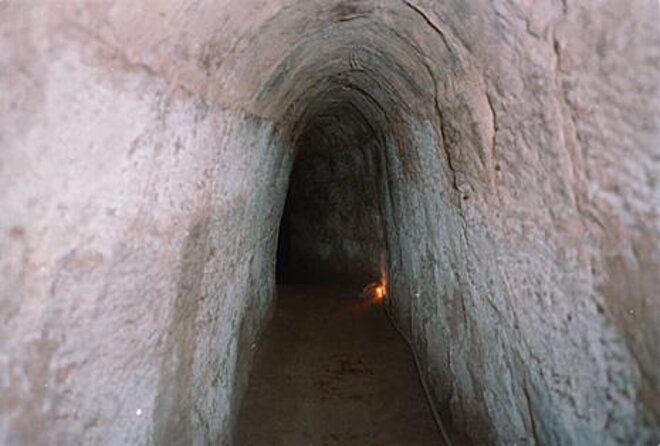
Cu Chi Tunnels is one of those places that can feel either like a theme park or a powerful lesson, depending on how you experience it. This tour steers you toward the lesson.
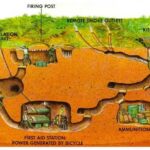
You’ll start by getting the big picture: how soldiers used the tunnel network during the Vietnam War (often called the American War), and how that system supported daily life over many years (between 1961 and 1972 is specifically referenced in the tour flow). The experience is built to translate a massive underground strategy into smaller, understandable moments—like hiding entrances, storage areas, command spaces, kitchens, and field-hospital type areas you can actually picture.
You also get multiple ways to learn, not just walking and reading signs. There’s a documentary element (including an official film screening) and on-site explanation that ties the tunnels to the war’s operational needs. If you’ve ever wondered how people could live and fight while staying hidden for long stretches, this tour is designed to answer that directly.
And yes, you’ll leave knowing why the tunnels were as much about survival as they were about fighting.
You can also read our reviews of more tours and experiences in Ho Chi Minh City


Pickup and Timing: District 1, 3, and 4 Logistics That Save Your Day
This is a day built around convenience. The tour offers pickup from hotels in District 1, 3, and 4, and you’re dropped back in District 1. That matters because Cu Chi is about 60 km from the city, and getting there on your own means planning for traffic, finding the right entrance, and managing the day’s heat.
Departures are available in the morning or afternoon, so you can match it to your energy level. If you’re the type who likes morning starts, pick that. If you’re trying to soften the midday sun, the afternoon option can feel more comfortable—just keep in mind the overall time commitment is still about 7 hours.
You’ll travel in an air-conditioned minivan. That’s not luxury travel, but it’s a big win after a long day outside, especially when Ho Chi Minh City’s weather can swing from warm to sweaty fast.
Two practical tips:
- Bring a hat and something with sleeves for outdoors.
- Wear shoes you can tolerate getting dusty. You’ll be moving through paths and exhibit areas before any underground segment.
War Exhibits First: Bunkers, Guns, Traps, and How It Becomes Understandable
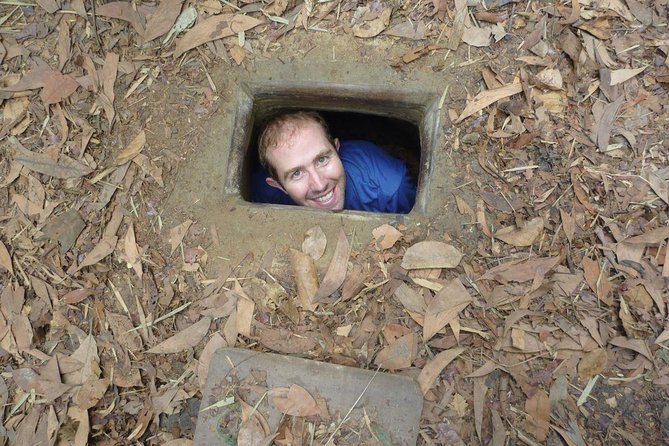
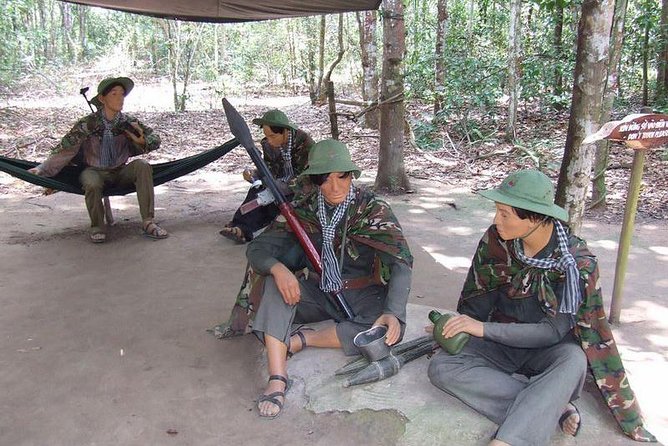
The tour doesn’t dump you straight into tunnels. It gets you ready first with war relics and exhibits—bunkers, guns, and trap setups are part of the experience. This front-loading is smart: if you crawl underground without context, it’s easy to think of it as one long novelty.
Instead, you’re coached to notice how the tunnel network fit into a larger system. You’ll see explanations connected to how fighting worked on the ground, plus how the Cu Chi system functioned as a strategic resource.
There’s also a 3D movie mentioned in the tour flow. Separately, there’s an official documentary film screening during the visit (an on-site film provided for visitors is referenced). Sometimes tours include different film formats or upsells; the key for you is that the tour experience includes a film/documentary component designed to frame what you’re seeing.
At this stage, you’ll likely get a mix of visuals and stories. The best guides use this time to build a timeline so you don’t feel lost when you enter the tunnel route later. Even if you’re not a Vietnam War scholar, you’ll be able to follow what’s going on.
The Tunnel Maze Experience: Hiding Entrances, Storage, Kitchens, and Command Areas
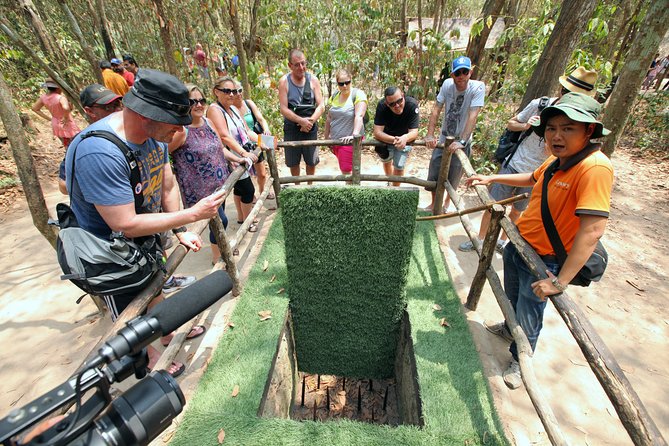
Now for the main event: the tunnel experience itself.
You’ll explore the underground system as a network, not as one tunnel hallway. The tour flow includes learning how it worked and how people lived in it between 1961 and 1972. On the ground level, the site helps you see that the tunnels weren’t only for travel. They connected functional spaces—things like trap-door style access points, storage areas, factories, field-hospital areas, and command centers (all mentioned as part of what you’ll be able to discover and observe).
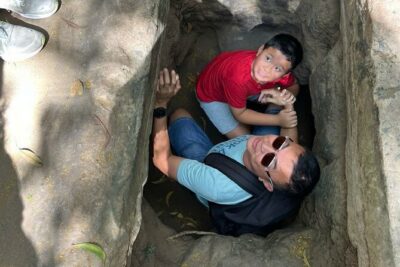
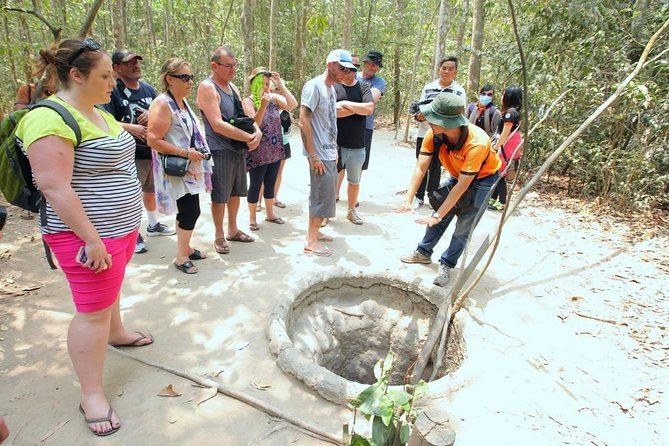
You’ll also try something small and physical early on: a tiny hiding entrance. That’s a short moment, but it’s a big lesson. It forces your body to understand the system’s design: narrow access, quick entry, and movement that depends on hiding, not comfort.
From there, you move through the route where the exhibits and stops help you connect what you’re seeing underground to the war’s practical demands. One highlight in the tour narrative is the time in the forest area with another documentary stop focused on the tunnel system’s strategic role.
The result is that you leave the exhibits with mental images, not just facts. That’s the difference between feeling like you visited a place and feeling like you learned something real.
Crawling Through Cu Chi Tunnels: Tight Spaces, Optional Comfort, Real Perspective
This part is where Cu Chi becomes memorable—and also where you should be honest with yourself.
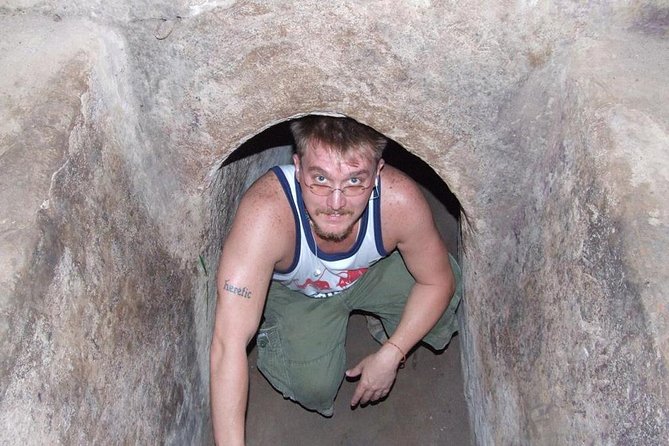
The tour experience includes an opportunity tied to crawling through the Cu Chi Tunnels. The information provided labels that as optional, and the on-site reality is that tunnels here are narrow. One of the clearest remarks from the experience is the sense that a “full experience” involves crawling about 60 meters through a passage around 4 feet high. That lines up with why many people say it’s not just interesting—it changes how you understand the conditions.
So, here’s how I’d approach it:
- If you want the closest physical understanding, consider going in.
- If you’re claustrophobic, short of breath, or you struggle with tight spaces, skip it and focus on the above-ground tunnel displays and the guide explanations. The tour format still delivers value without pushing your comfort too far.
Either way, you should expect the underground segment to feel physically demanding. It’s not a long hike, but it’s not casual either.
Also, the tour notes that the tunnels you crawl today are adjusted for safety. That means you might not experience the underground exactly as it was historically, but you’ll still feel the basic constraints—narrow, low, and built for movement while staying hidden.



Food and Comfort: Cassava, Tapioca, Tea, and the Small Stuff That Helps
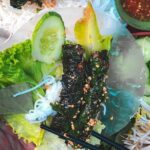
You’ll get breaks that are simple but useful. The tour includes tapioca and Vietnamese hot tea, plus wheat cake and bottled water. There are also wet tissues provided, which might sound minor until you’ve been in the heat and dust all day.
One of the most memorable food references in the tour flow is cassava—specifically called the most popular food during war days at Cu Chi. It’s not a foodie moment, but it’s a meaningful one. Food here connects you to daily survival: what people ate when normal life didn’t exist.
If you’re the type who forgets to eat while touring, this snack plan is worth something. It helps you keep your energy up so you can actually enjoy the tunnel parts instead of zoning out.
Guides Matter: How Bao, Khanh, Phong, Tommy, and Luna Influence the Day
A lot of Cu Chi tours are basically the same stops on paper. The difference shows up in the guide.
From the experiences shared, multiple guides earned strong praise for making details make sense and keeping the group engaged. Names that come up include Mr. Bao, Khanh, Phong, Tommy, Luna, and Ben, plus others. The pattern is consistent: clear explanations, good pacing, and a sense of humor or storytelling that turns facts into something you can remember.
There is also a caution from less satisfying accounts: some participants felt distracted or that key parts of the day didn’t land as expected. That’s not something you can fully predict from reading, but it does suggest something practical: arrive on time for pickup, stay attentive, and ask your guide quick questions if something feels skipped or unclear.
If you’re going to Cu Chi for the lesson—not just the photos—that kind of guide focus is a big part of the value.
Who This Tour Fits Best (and Who Should Think Twice)
This tour is built for most people, and the format supports that. It says most travelers can participate, and children must be accompanied by an adult. The group size is capped at 25 travelers, which usually makes it easier to move as a unit and still feel like a guided experience rather than a busload shuffle.
Here’s who tends to enjoy this most:
- You want a guided understanding of war history and tunnel life, not just wandering
- You like hands-on learning like trying a small entrance and exploring the tunnel maze
- You appreciate a clear schedule with pickup and drop-off built in
- You’re okay with heat and wearing clothes that can handle outdoor humidity
Here’s who should think twice:
- You’re strongly claustrophobic and would rather avoid any underground crawling attempt
- You expect a perfectly spotless vehicle and absolutely quiet ride time (some accounts criticized transport cleanliness and the feel of the van)
- You prefer a very long tunnel time. This experience includes tunnel access, but it isn’t positioned as an all-day endurance crawl
Price and Value: Why $14.90 Can Make Sense Here
At $14.90 per person, this tour is priced like a budget-friendly way into one of the most famous Vietnam sites outside the city center. What makes it feel like value is the mix of included items.
You’re not just buying admission. You get:
- Pickup and drop-off (District 1/3/4 pickup, District 1 drop-off)
- An experienced English-speaking guide
- An air-conditioned minivan
- Entrance fees and time at the Cu Chi tunnels war exhibits area
- Documentary film viewing
- Food and drink: cassava, tapioca, hot tea, wheat cake, bottled water, plus wet tissues
- Travel insurance is listed as included
- A chance for the optional crawling experience
For many visitors, that adds up quickly compared to piecing together transport, entry tickets, and guide services separately. You’re basically buying a planned day with fewer unknowns.
One more practical value note: the tour experience requires good weather. If conditions are poor, you’ll be offered a different date or a refund (noted in the experience details). In rainy season, that matters.
Should You Book This Cu Chi Tunnels Tour?
I’d book it if you want a guided, practical way to understand Cu Chi without spending hours coordinating transport. The $14.90 price works best when you’ll use what’s included—pickup, English interpretation, exhibits, the documentary framing, and the chance to experience the tunnels directly (when comfortable).
I would skip or adjust expectations if you’re expecting a long, comfortable tunnel walk or a fully flexible route that always matches the exact highlights list you had in mind. The underground spaces are inherently limited, and the tour’s value is in how it explains the system more than how long you spend inside.
If you can handle tight spaces for a short segment and you like learning from a clear guide, this is a strong pick for a first (or only) Cu Chi visit from Ho Chi Minh City.
FAQ
How long does the Cu Chi Tunnels tour take?
The duration is listed as approximately 7 hours.
Do I get hotel pickup in Ho Chi Minh City?
Yes. Pickup is offered from hotels in Districts 1, 3, and 4, and drop-off is in District 1.
Is this tour in the morning or afternoon?
It’s offered with both morning and afternoon departures.
What’s included in the tour price?
Included items list an experienced English-speaking guide, air-conditioned minivan, admission/entrance fees, documentary film viewing, tapioca and Vietnamese hot tea, cassava, wheat cake, bottled water, wet tissues, and bottled water, plus travel insurance. Pickup and drop-off are also included.
Do I have to crawl through the tunnels?
Crawling through the Cu Chi Tunnels is listed as an optional experience. Most travelers can participate, but the tunnel sections are physically tight.
What group size should I expect?
The tour has a maximum of 25 travelers.
Is a mobile ticket used?
Yes, a mobile ticket is listed.
FAQ
What if the weather is bad?
The experience notes that it requires good weather; if it’s canceled due to poor weather, you’ll be offered a different date or a full refund.
Can I get a refund if I cancel?
Free cancellation is available up to 24 hours in advance for a full refund.
How close is the meeting point to public transportation?
The tour notes the activity is near public transportation, and it lists a meeting point at KIM TRAVEL – Daily Tours – Cu Chi Tunnels – Mekong Delta Tour (District 1).