REVIEW · HO CHI MINH CITY
Cu Chi Tunnels Guided Tour: Vietnam War History Half-Day
Book on GetYourGuide →Operated by SST Travel · Bookable on GetYourGuide
Underground lessons start above ground. This half-day Cu Chi Tunnels trip is interesting because it turns Vietnam War history into something you can see, walk through, and ask questions about with an English-speaking guide. I especially liked the way the story is grounded in real places (traps, bunkers, kitchens), and the tunnel crawl option gives the site a physical sense. One fair warning: it’s not a good fit for claustrophobia or anyone who feels uneasy with tight underground spaces.
The other thing I liked is the convenience. You get round-trip transportation from central Ho Chi Minh City, plus small comforts like tea, snacks, water, and a wet tissue packet—so you’re not juggling logistics in the heat. Still, it’s a half-day format, so if you want hours and hours at a slower pace, you may wish you had booked a longer option.
In This Review
- Key highlights at a glance
- Half-day timing that fits real travel days
- The A/C bus ride: comfort plus context before you arrive
- Cu Chi arrival: traps, bunkers, kitchens, and the logic of survival
- The optional tunnel crawl: worth it, but it’s real tight spaces
- Weapons and booby-trap displays: connecting tactics to what you saw
- The restroom stop and lacquer art exhibit (purchase optional)
- Guide style matters: what makes the best Cu Chi tourters feel different
- Price and value: why $16 can make sense here
- What to pack and how to behave on the ground
- Should you book this Cu Chi guided half-day tour?
- FAQ
- What time options are available?
- How big are the groups?
- Is the tunnel crawl included, and is it safe for everyone?
- What’s included in the price?
- Is lunch included?
- Will there be a restroom break?
- Are there any extra costs on holidays, and what about cancellation?
Key highlights at a glance
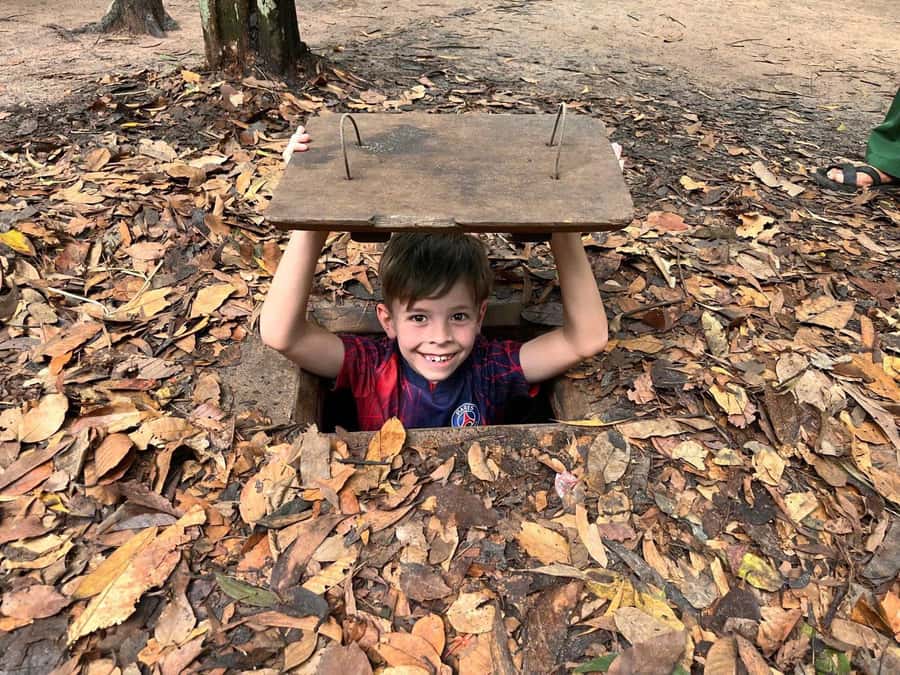
- A/C bus ride out of Ho Chi Minh City, with war context starting before you arrive
- Optional tunnel crawl through an original section, for a real sense of what “underground” meant
- Hands-on viewing of underground life: kitchens, bunkers, trap details, and improvised spaces
- Weapons and booby-trap displays that help connect tactics to daily survival
- Small or big group choices (up to 16 or up to 35) to match your style and budget
- Tea, snack, bottled water, plus a quick restroom stop with lacquer art exhibits (optional buying)
Half-day timing that fits real travel days
This tour is built for the “I have limited time, but I still want the meaning of the place” traveler. You can choose a morning tour (about 7:30 AM–2:30 PM) or an afternoon tour (about 12:30 PM–7:30 PM). That matters because Cu Chi is one of those sites where you’ll remember the drive time and the pacing as much as the tunnels themselves.
The morning slot tends to work best if you want to get the history out of the way early and still have daylight for something else—like the War Remnants Museum later in the day. The afternoon slot suits people who hate morning starts or have plans in the morning and want a later departure. Either way, you’re not stuck for a full day, and you can keep your evening flexible.
One small practical note: pick-up times are approximate, and the guide may arrive a little early or late. Also, the tour is strict about punctuality—if you’re more than 10 minutes late, your booking can be canceled with no refund—so I’d rather you pad your timing than gamble.
You can also read our reviews of more guided tours in Ho Chi Minh City


The A/C bus ride: comfort plus context before you arrive
The best part of starting with transportation is that it buys you mental momentum. On the way out, your guide sets the scene—how the Cu Chi region became a symbol of resistance during the Vietnam War, and how the tunnel system connected to daily needs.
And yes, the bus is air-conditioned, which is not a luxury in Ho Chi Minh City heat—it’s a survival tool. You’ll be traveling outside the city, and the countryside drive helps you shift gears from traffic and noise to a more serious place.
This half-day format doesn’t try to overwhelm you with ten stops. It focuses on one main destination, and that structure helps the tunnel story land. By the time you arrive, you’re not just staring at entrances—you know what to look for when you start seeing traps, underground rooms, and the logic behind the layout.
If you’ve done other war sites in Vietnam, you’ll notice a pattern: history here isn’t abstract. It’s tied to space and engineering and what people had to do every day to stay alive.
Cu Chi arrival: traps, bunkers, kitchens, and the logic of survival
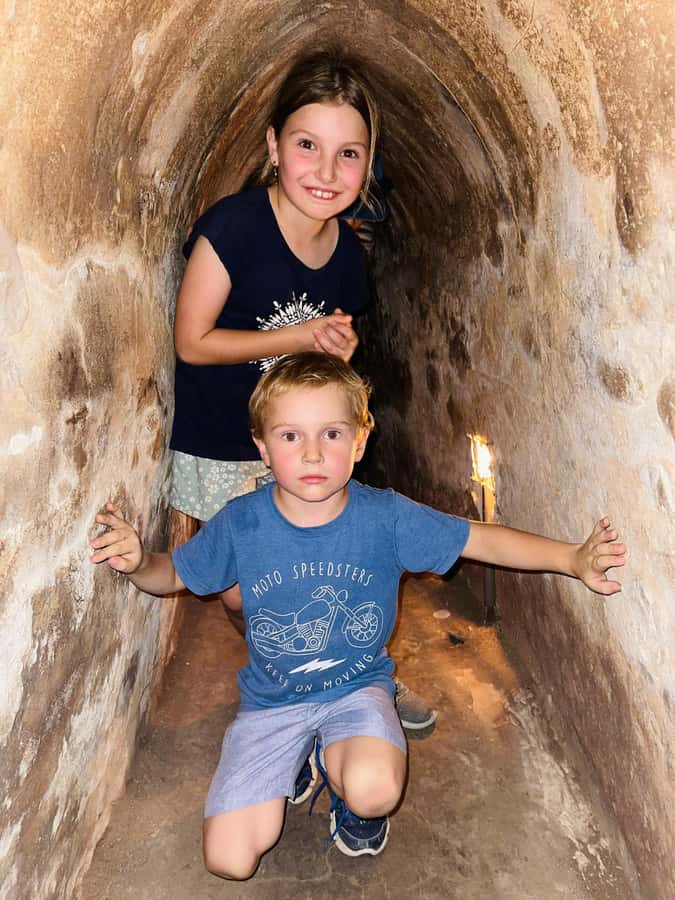
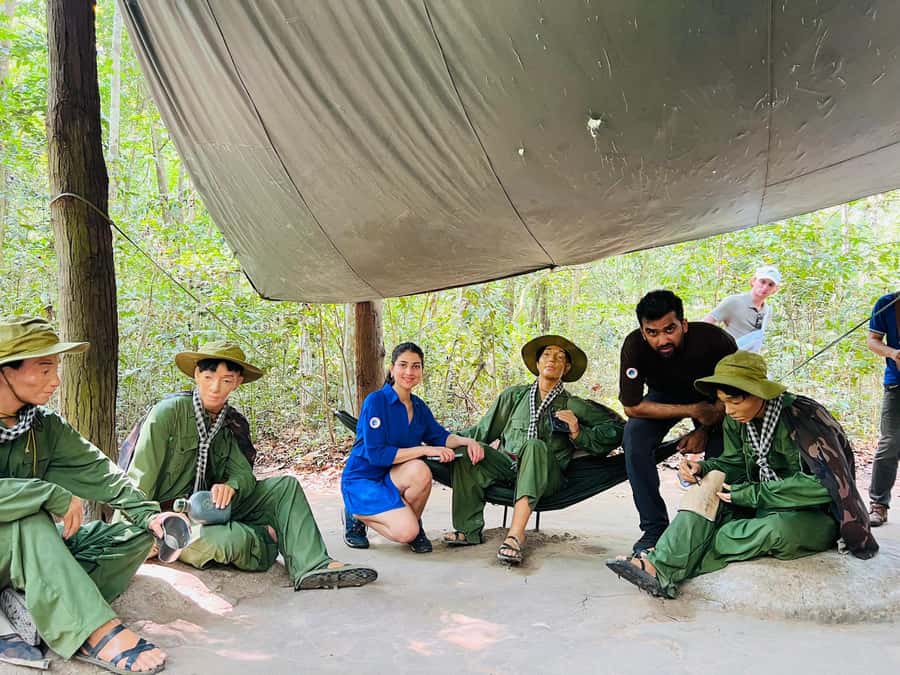
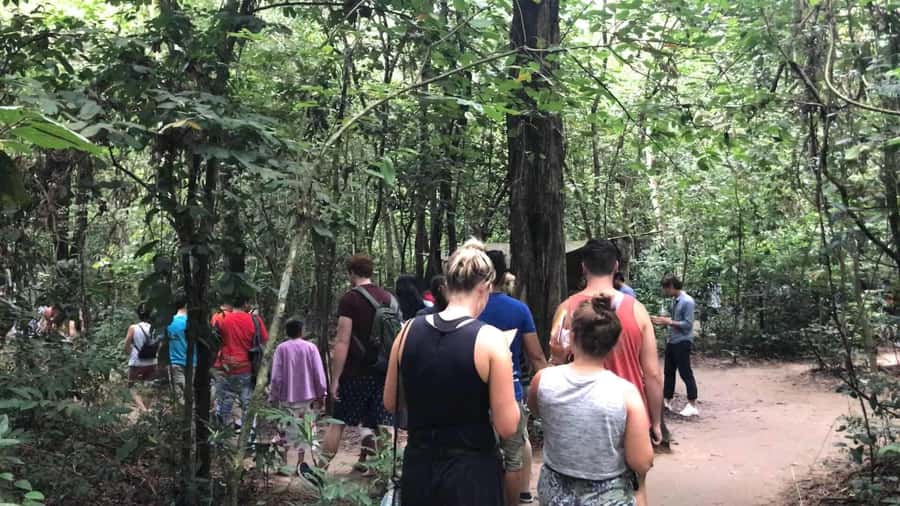
Once you’re at the tunnels, the experience is built around a preserved section of the tunnel network. That matters because you’re not wandering into the wrong hole and hoping for the best—you’re walking through an area designed for visitors, with a clear path and explanations.
What you’ll see centers on how people lived and fought underground:
- Trap details that show how protection worked beyond walls and guards
- Underground bunkers where people could hide and regroup
- Improvised hospital spaces and kitchens, which is the part that often hits hardest
The guide is the key here. Several guides named in customer experiences—like Khoa, Lenny, Bao, Kyle, Robert, Khang, Rick, Sam, Truong, and Jonny—are consistently described as doing more than reciting facts. They explain how these spaces functioned and why the design was practical in wartime conditions.
I like this approach because it stops the tunnel story from becoming only dramatic. Yes, there’s danger and strategy. But there’s also routine: cooking, caring, hiding, and moving when it mattered most.
The optional tunnel crawl: worth it, but it’s real tight spaces
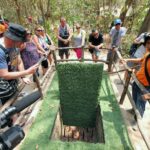
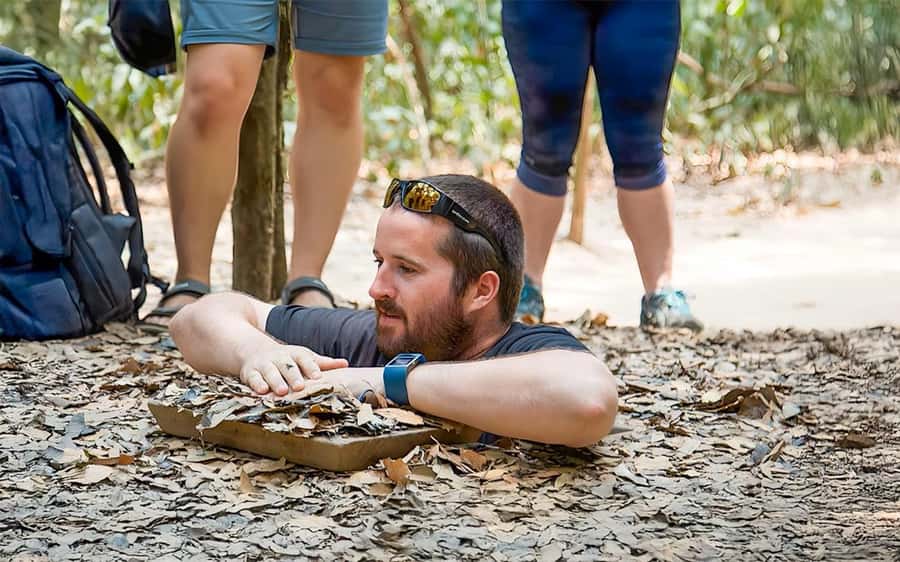
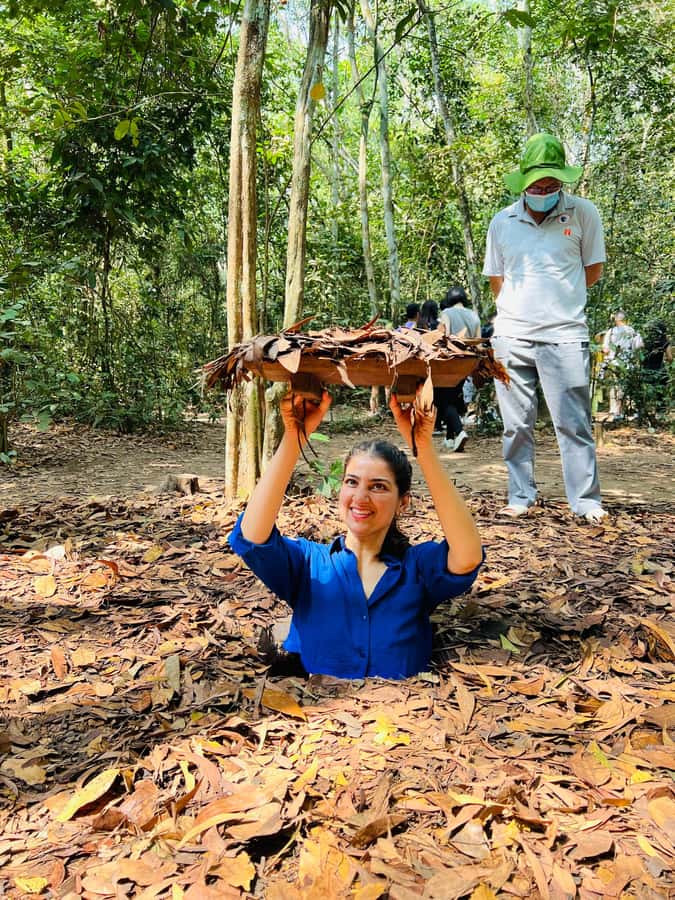
This is the experience’s signature moment: the chance to crawl through an original tunnel section. It’s optional, but it’s also the part that changes how you understand the site. Seeing traps and bunkers is one thing. Moving through a narrow corridor is another.
Here’s the practical reality: the tunnels can involve low ceilings, stairs, and tight turns. One review mentioned a claustrophobic traveler managing the tunnel section, noting it was “well lit” and only a limited portion—but other limits still apply. The tour data explicitly says it’s not suitable for people with claustrophobia, and I’d take that seriously.
So I’d frame it like this:
- If you’re okay with tight spaces and you want “I get it now” understanding, the crawl is often the best value moment.
- If you feel panic building, skip it. You’ll still get the story through the visible sections.
Also bring comfortable clothes and sturdy shoes. You’ll want grip, and you’ll want to move confidently on the stairs and uneven ground.
Weapons and booby-trap displays: connecting tactics to what you saw
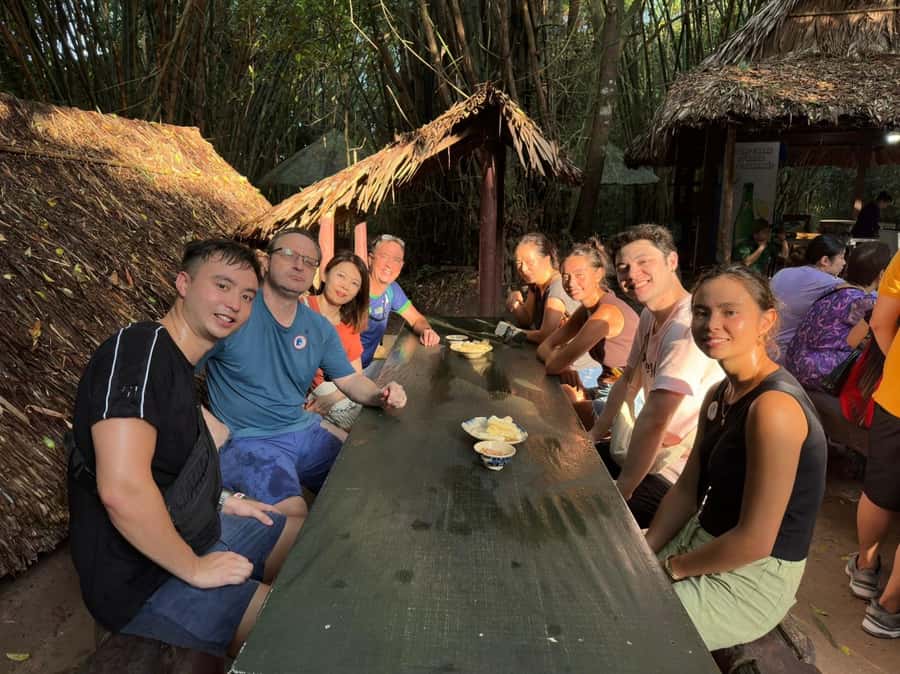
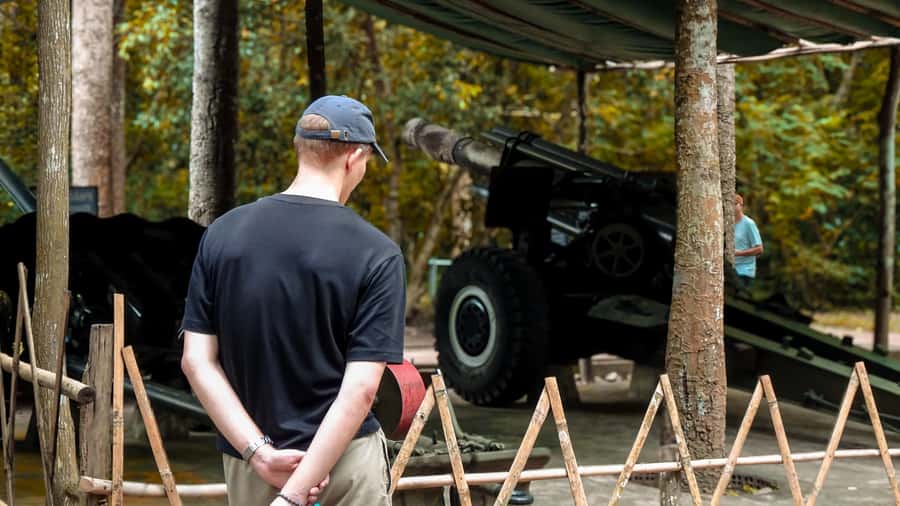
You’ll also have time to view displays around the site—weapons and booby traps—which is where the guide helps you connect what you saw underground to the bigger war picture.
I think this is a strong pairing: underground spaces explain movement and hiding, while the display areas explain threat and engineering. Together, they help you understand not just that the Viet Cong used the tunnels, but why the tunnels were part of a system.
Some experiences also mention additional hands-on options beyond the tunnel itself, like a shooting range add-on where people paid in VND (one account mentioned needing about 600,000 VND for 10 bullets). That’s not listed as a core inclusion in the basic package details you’re given here, so treat it as something you may be offered depending on the day and the operator flow.
If you go in expecting a mix of historical storytelling and visual evidence, you won’t feel like you’re only doing a “walk-and-photos” stop. You’ll leave with sharper questions—and more answers in your head.
You can also read our reviews of more historical tours in Ho Chi Minh City




The restroom stop and lacquer art exhibit (purchase optional)
Between the main tunnel time and the return drive, you’ll have a restroom break. On that stop, there’s an art exhibition featuring traditional lacquer paintings. Buying isn’t required.
This is one of those small, good-to-know details. If you’re the type who dislikes pressure sales, the fact that purchase isn’t mandatory helps. It also gives you a quick reset before the second half of the day.
It’s also a reminder that your half-day isn’t only “tunnel time.” You’re moving between different parts of the experience, and the breaks are part of what keeps the tour feeling manageable.
Guide style matters: what makes the best Cu Chi tourters feel different
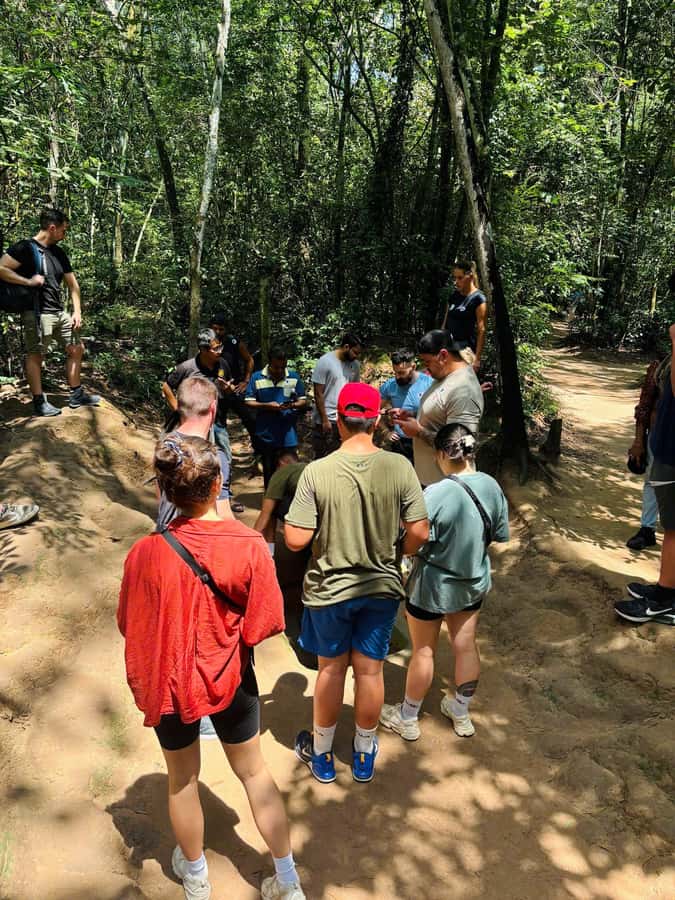
A tour like this is only as strong as the guide’s ability to turn places into meaning. The strongest experiences consistently describe guides who answer questions clearly, speak good English, and keep the atmosphere comfortable even while discussing brutal history.
Names that showed up repeatedly in customer experiences—like Lenny, Khoa, Bao, Robert, Rick, Khang, Truong, Sam, and Kyle—point to a pattern: the guide doesn’t just narrate. They explain daily life in the tunnel world and connect it to the war’s larger context.
I’d look for three things in a guide like this (and it’s easy to spot):
- They explain the “why” behind what you’re seeing
- They can handle questions without sounding like they’re reading a script
- They keep the group moving at a pace that still leaves time for photos and questions
When that clicks, the tour feels less like a checklist and more like a conversation with the site.
Price and value: why $16 can make sense here
At about $16 per person, this feels like a value buy—mainly because the package includes more than just entry. You get:
- Cu Chi entrance ticket
- English-speaking guide
- Hotel pickup and drop-off (as per the selected option)
- A/C transportation (van/bus/limousine depending on option)
- Tapioca and hot tea, snack, bottled water, and wet tissue
A half-day trip that bundles transport + guide + entrance + refreshments is often where the “cheap” tours get sketchy. Here, the inclusions are straightforward. You’re paying for an organized visit that removes the hardest parts of the logistics.
Two group-size options also affect value:
- Small group (max 16) often feels more personal and easier to ask questions
- Big group (up to 35) is usually better for the budget and still works if you’re comfortable sharing space
One more cost note: there can be holiday surcharges of 100,000 VND on specific dates (listed for 01–03/02/2025, 29/04–02/05/2025, 02/09/2025, and 31/12–01/01/2026). If your dates overlap, you’ll pay on-site.
What to pack and how to behave on the ground
For a tunnels day, your packing list is less about fancy gear and more about staying comfortable:
- Comfortable shoes (grip matters)
- Hat (heat outside the tunnels is real)
- Camera (you’ll want photos, but listen first so you photograph the right things)
- Water (you’ll receive bottled water, but bringing extra never hurts)
- Comfortable clothes that can handle stairs and tight spaces
A couple of behavioral notes:
- No smoking is allowed.
- If you’re thinking about the crawl section, decide before you go in. Waiting until you’re already inside can turn a planned experience into stress.
Also, if you have a specific timing goal—like catching another attraction—you should choose the morning vs afternoon option that keeps your day realistic. Some tours have drop-offs that can be more convenient than returning strictly to your hotel, and one experience mentioned a drop-off closer to the War Remnants Museum. Another mentioned dropping near the airport because it was on the route. Don’t count on it, but it’s a nice reminder that the route can be flexible.
Should you book this Cu Chi guided half-day tour?
If you want one strong war-history stop that fits in half a day, I’d say yes. This tour is built for people who want:
- Guided context (not just tunnel photos)
- The chance to see traps, bunkers, kitchens, and hospital spaces
- Optional tunnel crawling if you’re comfortable with tight spaces
- A stress-free plan with A/C transport and simple included refreshments
You might choose something else if you:
- Are sensitive to claustrophobic environments (the tour explicitly isn’t suitable)
- Want a longer, slower visit with more time in displays
- Are traveling with strong mobility or comfort constraints around stairs and underground steps
My practical call: book it if you’re doing Cu Chi as your main history visit from Ho Chi Minh City and you want maximum impact with minimal wasted time. At around $16, with transport, guide, and entrance included, it’s hard to beat on value—just plan for the underground reality and you’ll be fine.
FAQ
What time options are available?
You can choose a morning tour (about 7:30 AM–2:30 PM) or an afternoon tour (about 12:30 PM–7:30 PM).
How big are the groups?
There are options for a small group (up to 16 people) or a big group (up to 35 people).
Is the tunnel crawl included, and is it safe for everyone?
The tour includes time to explore the tunnels, and there is an optional chance to crawl through a tunnel section. The tour is not suitable for people with claustrophobia, and it’s also not suitable for pregnant women.
What’s included in the price?
The package includes hotel pickup and drop-off, A/C transportation, the Cu Chi entrance ticket, an English-speaking guide, tapioca and hot tea, a snack, bottled water, and wet tissue.
Is lunch included?
No. Lunch isn’t included.
Will there be a restroom break?
Yes. There is a restroom break that includes an art exhibition featuring traditional lacquer paintings. Purchasing is not mandatory.
Are there any extra costs on holidays, and what about cancellation?
There may be a 100,000 VND holiday surcharge on specific listed dates, paid on-site. You can cancel up to 24 hours in advance for a full refund.