REVIEW · HO CHI MINH CITY
Private Phu My Port Shore Excursion: Unseen Parts Of Saigon
Book on Viator →Operated by Vietnam Tours Saigon · Bookable on Viator
Eight hours, but it moves fast. This private Saigon shore excursion is designed for cruise-day reality: you get a name-sign greeting, an A/C ride into the city, then a tight loop through Chợ Lớn (Chinatown) and central landmarks. It’s a good way to see more than just the headline stops when you have limited time.
I especially liked two things: the easy port meet-up (2 to 5 minutes by shuttle from ship to gate), and the way the day blends major sights with local atmosphere like the wet market area and Chinatown’s temple.
One thing to consider: this is a full, structured day with a lot of walking inside sites, and it can feel long if you want slow sightseeing or lots of extra time for shopping.
In This Review
- Key Points You’ll Feel Immediately
- Phu My Port Meet-Up: The Part That Usually Stresses You Out
- The Pace: How an 8-Hour Private Tour Fits a Cruise Day
- Chợ Lớn (Chinatown) and Thien Hau Temple: A Side of Saigon People Miss
- What to expect in Chợ Lớn
- Thien Hau Temple and the Mazu connection
- Downtown Saigon: Wet Market, City Hall, Opera House, Post Office, and More
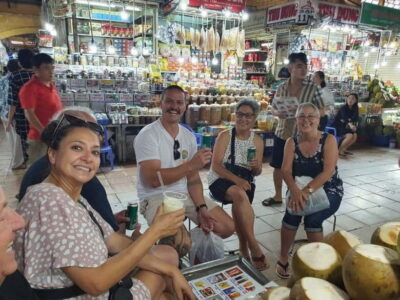
- The wet market stop: practical and sensory
- The Big Call: War Remnants Museum
- Independence Palace and Government Buildings: Vietnam’s Political Turning Points
- Independence Palace
- People’s Committee Building
- Ben Thanh Market: Souvenirs, Snacks, and a Short but Useful Window
- Lunch and Water: Included Basics That Keep the Day Easy
- Price and Value: Is $118 Worth It?
- Who This Tour Fits Best
- Should You Book Unseen Parts of Saigon?
- FAQ
- What time does the tour start from Phu My port?
- How do I get from my cruise ship to the port gate?
- How long is the tour?
- What’s included in the price?
- Is shopping included?
- What stops are included during the day?
- Will I be back in time for the cruise ship?
- What if I need to cancel?
Key Points You’ll Feel Immediately
- Name-sign pickup at Phu My port gate makes it hard to lose time (or your group).
- Chợ Lớn + Thien Hau Temple gives you a different Saigon mood than the downtown core.
- War Remnants Museum is scheduled early enough to set the tone, but it will still hit emotionally.
- Lunch and bottled water are included, so you’re not hunting for basics mid-day.
- FLEXIBLE touring inside the framework means your guide can steer priorities based on your interests.
- Return timing is built in so you can get back to the cruise on schedule.
Phu My Port Meet-Up: The Part That Usually Stresses You Out
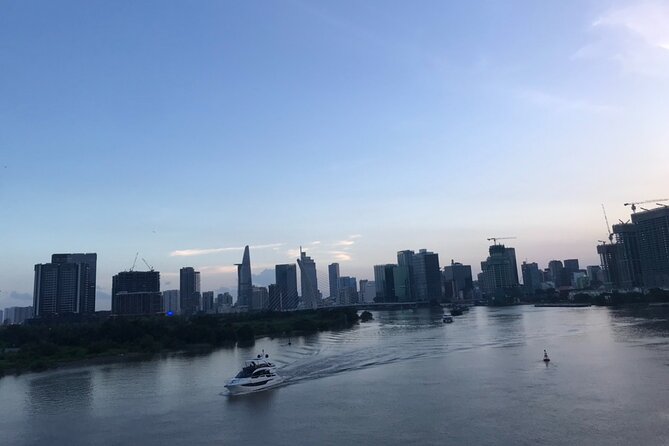
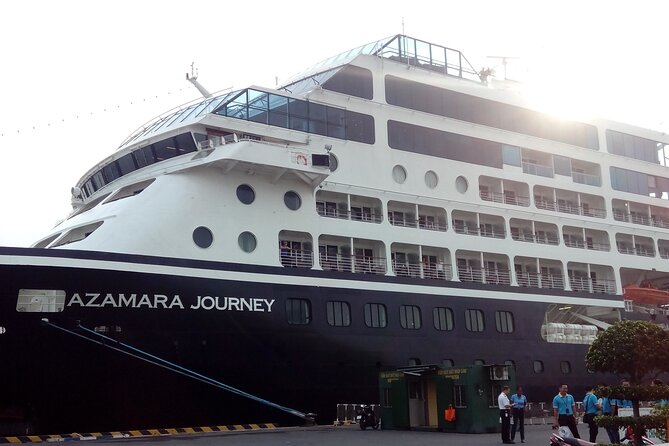
Getting off a cruise and finding your transport can be chaotic. Here, the process is simple: your guide holds a sign with your name at the Phu My port gate, and you transfer from the ship by walking or a short shuttle ride of about 5 minutes. That matters because you lose less time in the in-between moments—getting you into Saigon while the morning is still manageable.
Once you’re met, you head out to Ho Chi Minh City by private mini-van, about 1.5 hours each way depending on traffic and the day. You also get the comfort factor: A/C private transportation is included, plus bottled drinking water in the car.
If you’re the type who likes a plan but hates uncertainty, this is the right setup. You don’t just show up and hope—someone is actually looking for you.
You can also read our reviews of more private tours in Ho Chi Minh City



The Pace: How an 8-Hour Private Tour Fits a Cruise Day
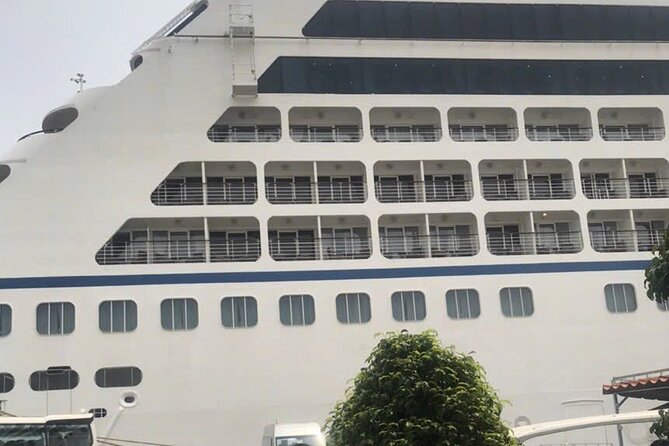
This tour is roughly 8 hours in total, with a structure that stays practical for cruise schedules. The sightseeing stops are timed (for example, 45 minutes at Chợ Lớn and 50 minutes at the War Remnants Museum), so you’re not stuck waiting around while other people browse slowly.
I like that the transport is private. When you’re going into a city with a tight schedule, having your own vehicle means fewer stop-and-go delays. It also keeps the experience calm. You’re not herded with strangers who want different things.
The one trade-off is that it’s still a “see a lot” day. You’ll likely walk through busy areas and move between sites back-to-back. If your ideal vacation is long pauses, this isn’t a slow stroll itinerary.
Chợ Lớn (Chinatown) and Thien Hau Temple: A Side of Saigon People Miss
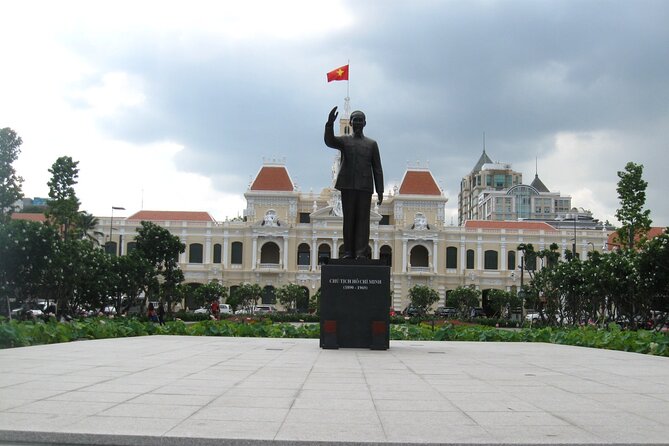
Chợ Lớn is Saigon’s Chinatown and it has deep roots. The area’s origins go back to 1778, and it’s also tied to the way Chinese communities lived through difficult historical periods. For your visit, you’ll experience the atmosphere firsthand at a wholesales market area, plus time at Thien Hau Temple.
What to expect in Chợ Lớn
You get about 45 minutes here. That’s enough time to get oriented, see how the market environment works, and pick out a few things if you want local snacks or small purchases. This stop is one of the best parts of the day for photos because the visual texture is different from downtown.
If you’re shopping, go in with a simple game plan. You only have a short window, so focus on a couple of items you truly want rather than trying to cover everything.
Thien Hau Temple and the Mazu connection
Then it’s on to Ba Thien Hau Temple, about 30 minutes. This temple is dedicated to Mazu, a Chinese sea goddess believed to protect and rescue people at sea—described in terms of flying around on a mat or cloud in traditional belief. Even if you’re not a worshipper, it’s the kind of stop that helps you understand how communities shape their own meaning of safety and community across generations.
The practical upside: temple stops often feel calmer than the market streets. It’s a nice reset before the harder emotional intensity of the war museum later.
You can also read our reviews of more tours and experiences in Ho Chi Minh City




Downtown Saigon: Wet Market, City Hall, Opera House, Post Office, and More
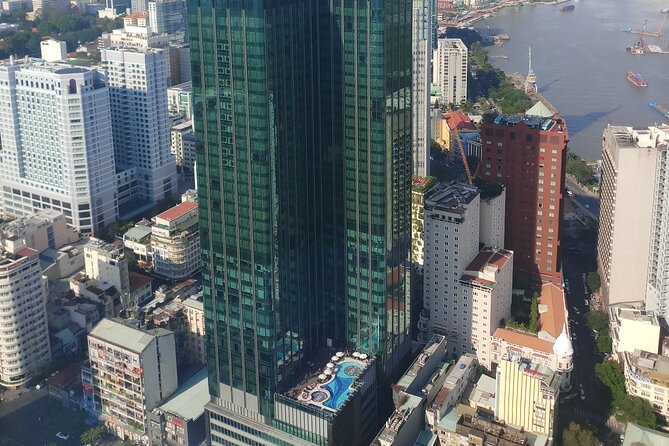
After Chinatown, you move toward the city center and see a cluster of famous addresses in a single efficient loop. This is where the tour earns its name—unseen in the sense that you’re not only rushing to one landmark, you’re getting a full cross-section of Saigon’s core.
Here’s what you’ll see in the downtown area:
- a local wet market
- City Hall
- Opera House
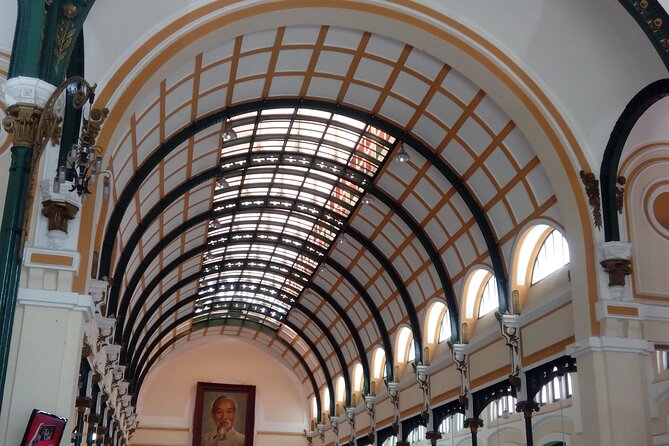
- Central Post Office
- Saigon Notre Dame Cathedral
Even without a lot of extra commentary time, this grouping helps you connect the city’s layout. You start to recognize where key institutions sit, and you get a feel for why Saigon developed the way it did.
The wet market stop: practical and sensory
The wet market is included as a stop during the central loop. You’ll see local daily life up close, not a staged version of it. It can be busy and visually intense, so keep your pace steady and give yourself a second before taking photos—crowds move differently in markets than at museums.
If you tend to be sensitive to strong smells, you might want to keep your time here light and focus on what you can see rather than lingering.
The Big Call: War Remnants Museum
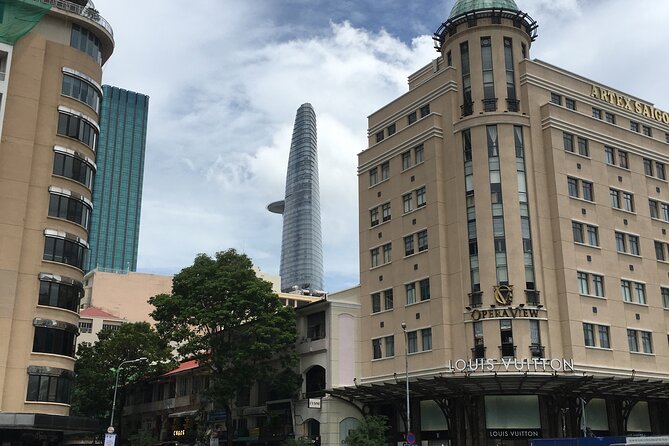
The War Remnants Museum is included with admission and about 50 minutes on-site. It opened to the public in 1975, and it’s known for being called the Museum of American War Crimes in the past. The tour description makes clear that this is a shocking reminder of the Vietnam War, with graphic photos included.
This stop is not about comfort or entertainment. It’s about context—what the war meant, what it left behind, and how the human cost is documented. If you’re traveling with kids, I’d be extra cautious. The museum content is described as graphic and heavy.
Practical tip for your day: if you’re emotionally affected easily, plan a slower pace for the museum and take short breaks outside if the flow is intense. You still have other stops later, and you don’t want to feel wiped out too early.
Independence Palace and Government Buildings: Vietnam’s Political Turning Points
After the museum, the itinerary continues with major sites tied to Vietnam’s modern political history.
Independence Palace
You’ll visit the Independence Palace for about 45 minutes. It’s described as the base of General Ngo Dinh Diem until his death in 1963, and it’s famous globally because it played a role in 1975. The tour also notes a tank belonging to the North Vietnamese Army crashed through the gate area.
Even if you mostly care about architecture, this palace works because it’s a time capsule. You’re walking through a physical place that connects dates, decisions, and dramatic moments in one spot. It also gives you a break from the museum’s photo-heavy intensity—different type of impact.
People’s Committee Building
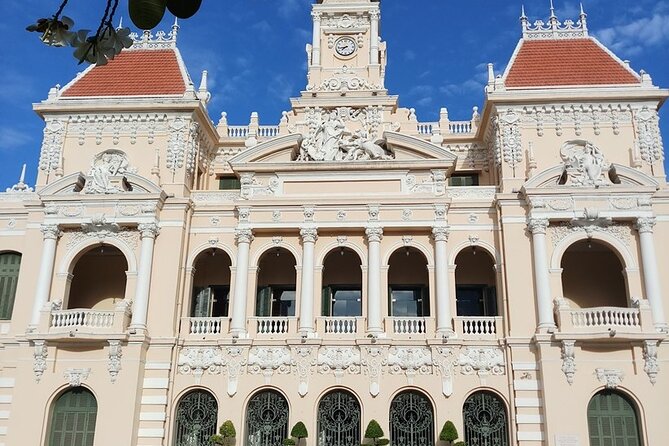
You’ll also stop at the People’s Committee Building for about 15 minutes. The description highlights well-preserved French colonial architecture within a spacious garden setting, and notes the building was originally constructed as a hotel in 1898 by French architects.
This is a short stop, so don’t treat it like a full sightseeing session. Use the time to orient yourself, take a couple of photos, and note how the city’s civic buildings shape the streets around them.
Ben Thanh Market: Souvenirs, Snacks, and a Short but Useful Window
You’ll have about 30 minutes at Ben Thanh Market. The tour description says it’s a great place to buy local handicrafts, branded goods, Vietnamese art, and souvenirs. There are also eating stalls inside the market.
Important detail: admission here is not included, and shopping isn’t included either. The best way to use this stop is to set expectations: it’s not a deep shopping expedition, it’s a chance to grab a few items and maybe something small to eat.
If you want souvenirs, decide before you get there:
- Pick the kinds of gifts you want (art, small crafts, branded items).
- Keep your budget in mind.
- Remember you’re on a schedule back to the port.
Lunch and Water: Included Basics That Keep the Day Easy
One of the most underrated parts of a shore excursion is whether you’re fed and hydrated without stress. Here, lunch at a local restaurant is included, and bottled drinking water is provided in the vehicle.
That’s real value on a day that already starts early and moves between several stops. You don’t need to figure out what’s open, where to eat, or how to translate a menu while you’re trying to make timing work.
About lunch itself: the tour data doesn’t give a cuisine list or menu details, so you should treat it as a typical local-restaurant meal. If you have strict dietary needs, you’ll want to communicate that early to your guide.
Price and Value: Is $118 Worth It?
At $118 per person, the price isn’t “cheap,” but it’s also not trying to be. For a private tour with A/C transport, an English-speaking guide, a full set of included entrance fees, lunch, and bottled water, it adds up in a practical way.
What you’re really paying for is time-saving and stress control:
- Private transportation with A/C
- Admission fees included for the main included sights
- Lunch included
- A guided, timed loop designed for cruise return
You might save money if you DIY it, but DIY usually costs you more in uncertainty—where to go, how long it takes, and whether you’re back on time for the ship. This itinerary is built around being back on schedule.
Also, the day is generally booked about 30 days in advance on average, which usually means the operator is used to handling cruise timing and on-the-ground coordination.
Who This Tour Fits Best
This tour makes the most sense if you want:
- a single-day way to cover Saigon’s key areas
- a guide who can explain what you’re seeing
- comfort-focused transport and an itinerary that won’t leave you scrambling
It’s also a good match for first-timers who want both city landmarks and an area like Chợ Lớn. You get official buildings and famous addresses, but you also get local market energy and a major temple.
The physical demand is described as moderate, so if you can handle walking through crowded public spaces and museum interiors, you’ll be fine.
Should You Book Unseen Parts of Saigon?
I’d book this if you’re on a cruise, you want a guided day that covers a lot without chaos, and you care about seeing more than just one downtown highlight. The included lunch, water, and entrance fees are the kind of extras that make a shore day feel complete rather than rushed.
I would think twice if you’re the type who wants long, slow time in each place, or if heavy war-related content is a deal breaker for you. The War Remnants Museum is scheduled and described as intense for a reason.
If your goal is a balanced Saigon day—with real neighborhood contrast plus major landmarks—and you appreciate a guide-led pace, this is strong value.
FAQ
What time does the tour start from Phu My port?
Start time is 7:30 am. Your guide meets you at the Phu My port gate between 7:30 and 8:00 am with a sign showing your name.
How do I get from my cruise ship to the port gate?
You can walk or take a short shuttle ride of around 5 minutes from the ship to the main gate, where the guide meets you.
How long is the tour?
The duration is approximately 8 hours.
What’s included in the price?
Included are private A/C transportation, lunch at a local restaurant, bottled drinking water in the car, an English-speaking tour guide, and full entrance fees for the included sights.
Is shopping included?
No. Other private expenditures like shopping are not included.
What stops are included during the day?
The tour includes Chợ Lớn (Chinatown) with the wholesales market area and Thien Hau Temple, plus central Saigon stops such as the local wet market, City Hall, Opera House, Central Post Office, Saigon Notre Dame Cathedral, and either the War Remnants Museum or Reunification Palace/Independence Palace depending on timing and your schedule.
Will I be back in time for the cruise ship?
Yes. The tour states that the provider will ensure you return on-time to board the cruise ship.
What if I need to cancel?
You can cancel for a full refund if you cancel up to 24 hours in advance of the experience start time. Free cancellation is available, based on the local cut-off time.