REVIEW · HO CHI MINH CITY
Ho Chi Minh Shore Excursion: Wonderful City Tour with Local Guide
Book on Viator →Operated by Maximus Travel Vietnam · Bookable on Viator
Saigon in one day, without the stress. This private Ho Chi Minh shore excursion packs the big hits—French colonial landmarks, war history, Chinatown, temples, and time at Ben Thanh Market—under the guidance of a real local. I like that you’re not stuck figuring out taxi routes; you get cruise-port pickup and a comfortable ride while a guide like Jasmine or Liam helps connect the dots.
Two other things I really like: the itinerary includes a Vietnamese lunch that keeps you fueled, and the day is planned with real pacing (so you can actually see each place). One thing to consider: Ho Chi Minh traffic can be slow, so you’ll want to stay alert about timing and make sure you’re back at the ship with a buffer—several folks noted that returning on time is the key detail.
In This Review
- Key things that make this shore tour worth it
- Why a private Saigon shore tour makes sense
- Cruise-port pickup, traffic reality, and how the day actually flows
- Notre Dame Cathedral, Central Post Office, and the Opera House area
- Independence Palace: a history stop that changes the air
- War Remnants Museum: powerful, and plan your emotional breaks
- People’s Committee Building and the French architectural thread
- Cholon Chinatown: walking into older Saigon
- Ba Thien Hau Temple: Mazu, the sea goddess, and calm inside noise
- Ben Thanh Market: souvenirs, snacks, and finishing strong
- Price and value: what $115 buys on a shore day
- Who this shore tour fits best
- Should you book this Ho Chi Minh shore excursion?
- FAQ
- How long is the Ho Chi Minh shore tour?
- Does the tour include pickup and drop-off from the cruise port?
- Is this tour private or shared with other groups?
- What’s included in the tour price?
- Are entrance fees included?
- Is lunch included, and what kind is it?
- How does confirmation work after booking?
- Can I cancel and get a full refund?
- Closing thought
Key things that make this shore tour worth it
- Private guide + private car means you can move at the right speed instead of waiting on strangers.
- Cruise pickup and drop-off removes the hardest part of a port day: transportation logistics.
- Entrance fees are included, so you’re not counting small ticket costs all day.
- War Remnants Museum is built into the schedule, with short stop time that helps you choose your emotional pace.
- Chinatown (Cholon) plus Ba Thien Hau Temple gives you a different side of the city than District 1 monuments.
- Ben Thanh Market time is included, so you’re not stuck just looking from outside.
Why a private Saigon shore tour makes sense
A port day is short. That’s the core problem here—and private touring fixes it. Instead of bargaining with drivers, guessing routes, or losing time to wrong turns, you get a guide and a vehicle that handle the “how do we get there?” part. It also helps that the tour runs long enough to matter: about 8 to 12 hours, depending on how your day is shaped.
This tour also has a useful mix. You’re not just ticking photos. You start in District 1 with iconic French-era buildings (Notre Dame, the Central Post Office, and views around the Opera House). Then you shift into modern Vietnam history with stops like Independence Palace and the War Remnants Museum. Finally, you end in the city’s older, crowded textures: Cholon’s Chinatown and a temple dedicated to Mazu, then a practical stop at Ben Thanh Market.
That mix matters because Ho Chi Minh City is not one vibe. It’s a city of layers—colonial planning, wartime scars, and immigrant trade neighborhoods. A shore excursion like this is at its best when you treat it like an orientation day, not a full replacement for a multi-day stay.
You can also read our reviews of more guided tours in Ho Chi Minh City


Cruise-port pickup, traffic reality, and how the day actually flows
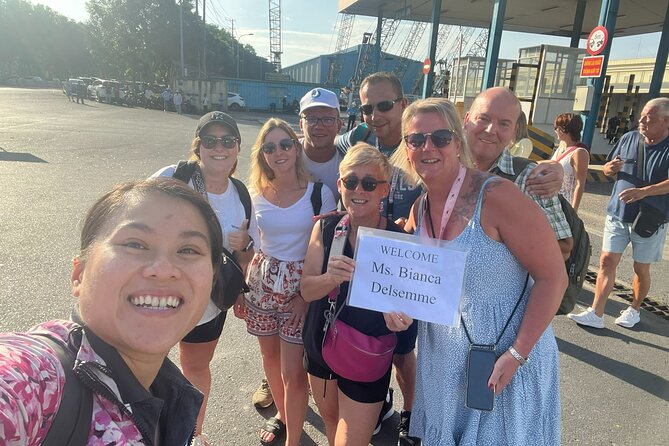
This is built as a true shore excursion: pickup and drop-off from the cruise port with a private vehicle. In practice, that means the schedule has two competing forces—time in the city and time stuck in traffic. One experience specifically called out about 1.5 hours each way to the city when they did it, so I’d plan mentally for long travel legs and not just the sightseeing minutes.
The good news is that the private format helps you react. If your guide thinks a stop will take longer—or you want more or less time—there’s flexibility. One reply from the provider also emphasized that guides discuss interests before starting: history, culture, people, and the amount of time you want at key points. That’s how private touring stays real, not scripted.
Still, here’s the practical drawback to keep in mind: this type of day can feel like it moves fast. Even with good pacing, you only get so many 15- to 45-minute windows. If your priority is slow wandering (especially at markets or inside museums), tell your guide early and adjust your expectations.
Also, I’d set your own small rule: when you’re nearing the end of the day, keep track of time even if you feel fine. Traffic can change quickly, and the ship schedule won’t.
Notre Dame Cathedral, Central Post Office, and the Opera House area
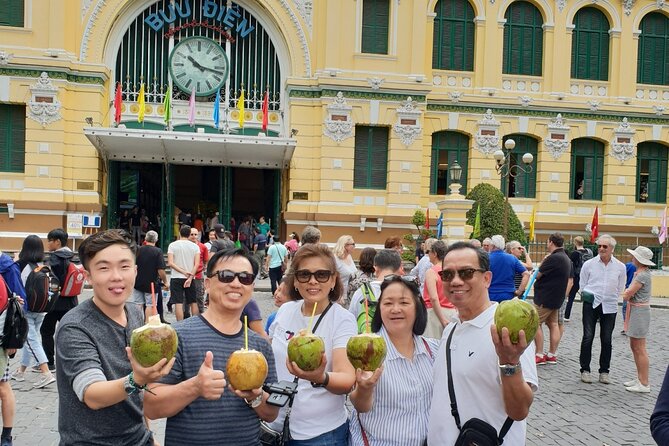
You start with two standout French colonial landmarks that sit close together, which is smart on a short day.
Saigon Notre Dame Cathedral is a late-1880s French-colonial Catholic church on Paris Square. It’s one of the remaining big Catholic strongholds in a country where Buddhism is deeply visible in everyday life. Even if you’re not religious, this stop is useful because it shows how colonial planners left durable symbols behind—stonework, layout, and the sheer confidence of the architecture.
A short walk brings you to the Central Post Office, often described as grand for the region. It’s well-preserved, and the building is the attraction as much as what’s inside. If you like old public buildings—places built for movement, messaging, and official life—this one lands.
Then you’re in the area where the Saigon Opera House sits near Le Loi and Dong Khoi. Your time is short at the Opera House itself, but it matters because it anchors the theme: French-era Saigon wasn’t only churches and offices. It was also about culture, ceremonies, and public performance.
Practical tip: these stops are relatively quick (around 15 minutes each). Bring a mindset for short stops: look first, then listen. If your guide is good at explaining, you’ll feel more from a 15-minute visit than you would from staring silently at a building for 30.
Independence Palace: a history stop that changes the air
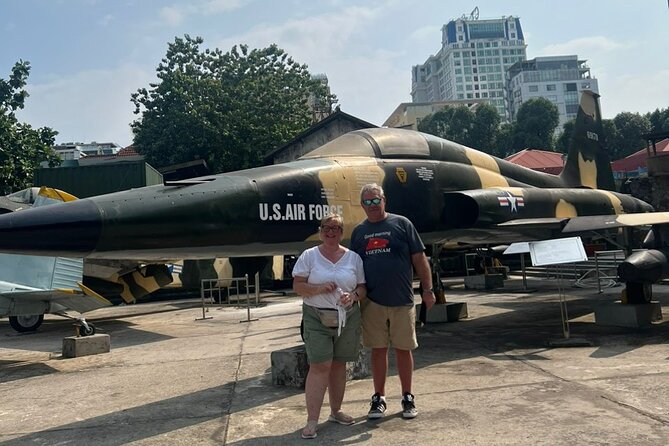
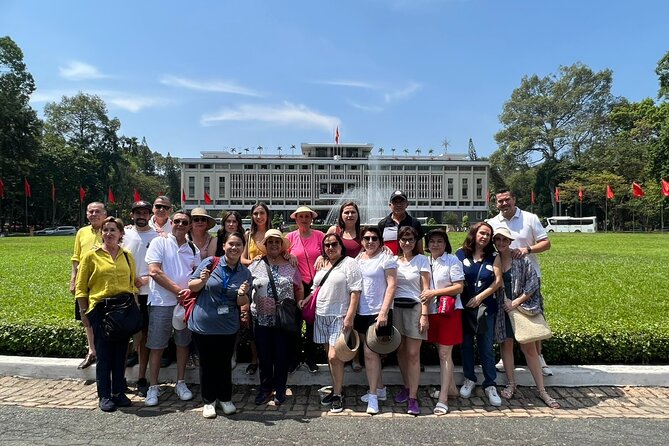
Next comes Independence Palace (also known as the Reunification Palace). This is not just architecture—it’s a historical control room.
The key story here: it served as the base of Vietnamese General Ngo Dinh Diem until his death in 1963, and it became internationally famous in 1975. That timeline helps you understand why people react to this place with emotion. You’re walking through rooms that once mattered at the highest level of decision-making.
The tour gives you about 45 minutes here, which is a decent amount for a shore excursion. It’s long enough to see the key areas without turning it into a marathon. If you have strong interest in Vietnam’s modern era, this stop often feels like the “turning point” on the day: the buildings stop being just scenic and start being historical evidence.
One consideration: if you’re also doing a war-focused museum later (and you are), pace your attention. You may want to move through faster at Independence Palace and slow down later, or vice versa. Either way, you control your own mental bandwidth.
War Remnants Museum: powerful, and plan your emotional breaks
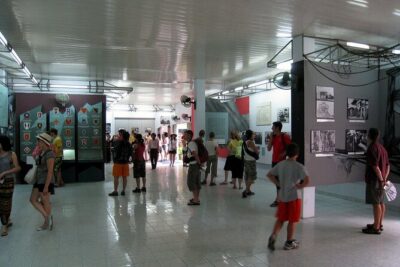
The War Remnants Museum is the heavy hitter on this itinerary. It first opened in 1975, and it’s known for its hard, graphic portrayal of the Vietnam War. The museum has a reputation for being shocking, and that’s not just hype—it’s part of why it exists.
The stop time is about 30 minutes. That’s actually helpful. When content is intense, shorter time windows can help you avoid feeling mentally wiped. If you want to linger, you can do it in a targeted way: focus on the themes your guide highlights, and don’t feel obligated to read every panel cover-to-cover.
This is also where having a good guide matters. Several guides in the experiences shared on this tour have been praised for explanations and keeping the day on track. If your guide talks through context without sensationalizing, you’ll get more out of the museum and spend less time confused about what you’re seeing.
My practical advice: if you’re sensitive to graphic images, tell your guide before you enter. You can still visit and learn, but you can also choose how much time you spend looking.
You can also read our reviews of more city tours in Ho Chi Minh City




People’s Committee Building and the French architectural thread
Between the bigger history stops, you also get an architectural pause at the People’s Committee Building. It features preserved French colonial style within a landscaped garden setting.
This stop is brief—about 15 minutes—but it works because it reinforces a theme: Saigon’s built environment still carries colonial-era planning. Even when you’re not inside a museum, you’re learning what was designed to last. A city’s history doesn’t always show up as a battlefield. Sometimes it shows up as a building that never got demolished.
Then you’re back to the broader “French-era institutions” pattern around the Opera House area. The takeaway is simple: these are not random photo stops. They’re part of the story of how Saigon functioned—religion, administration, culture, and public life—before and during periods of upheaval.
Cholon Chinatown: walking into older Saigon
After District 1 monuments, the tour shifts to Cholon, or Chinatown. The stop is in Phố Tau Sai Gon (Chợ Lớn, District 5), and it’s positioned as one of the city’s most important Chinese heritage areas. The neighborhood has roots dating back to 1778, and it’s closely tied to historical migration and community life, including periods when Chinese minorities hid locally during conflict.
You get about 30 minutes here, which is plenty to feel the rhythm without getting stuck. This is the kind of stop where you’ll probably notice more than you can photograph: the shopfront energy, the street activity, and the way the neighborhood feels like it has its own internal rules.
If you like people-watching and small-scale street commerce, this is where your day starts to feel more alive. If you don’t enjoy crowds, you can still enjoy it by sticking near calmer edges and letting your guide explain what you’re seeing.
Ba Thien Hau Temple: Mazu, the sea goddess, and calm inside noise
Next is Ba Thien Hau Temple, dedicated to the Chinese sea goddess Mazu. The belief is that Mazu protects and rescues ships and people at sea, often described with protective imagery. Even if you don’t know the mythology ahead of time, temples like this help you understand how immigrant communities preserved identity through religious practice.
Your time here is short—about 15 minutes—so treat it like a focused visit: look at the worship space, notice the symbolism, and listen for what your guide says about who visits and why it matters locally.
This stop balances the day. Earlier you saw hard history. Here you get a different emotional register: continuity, ritual, and community faith in daily life.
Ben Thanh Market: souvenirs, snacks, and finishing strong
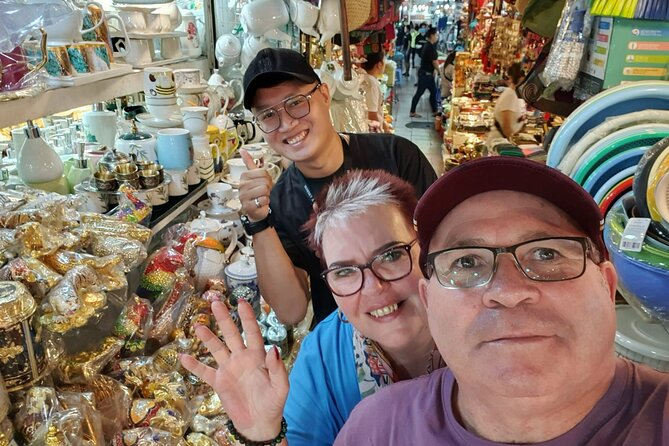
The last major stop is Ben Thanh Market in District 1. It’s one of the city’s best-known markets for handicrafts, souvenirs, and also branded goods. You’ll also find eating stalls inside, which means you can grab a snack if your lunch doesn’t fully hold you.
The stop time is about 30 minutes. That’s enough to buy a few things without getting lost for an hour. It’s also enough to compare prices in your head if you enjoy shopping—but if you don’t, a simple strategy works: walk the aisles once, pick one or two items you actually want, then buy and move on.
Practical note: if you also want coffee, this is often the window to do it, since many guides build in coffee time and local flavor stops on these days. One guide experience highlighted Vietnamese iced coffee as a favorite.
If you want a smoother end to your day, ask your guide before you arrive at the market: how much time should we set aside for shopping versus just walking? That one question can save your energy.
Price and value: what $115 buys on a shore day
At $115 per person, this tour sits in the mid-range for a private shore excursion that includes a guide, a private air-conditioned vehicle, cruise pickup/drop-off, lunch, bottled water, tissues, and entrance fees. That’s the key value point: entrance fees are not an extra surprise cost later.
You also get flexibility with a private guide. In a city where traffic can derail schedules, paying for time and logistics matters. If you try to DIY with taxis, you might spend similar money on transport alone—and still risk wasting time.
Here’s a realistic way to judge it: if you want to see a tight set of top sights without stress and you’re not traveling with a group that can coordinate its own driver, the private structure can be worth it. If you already know exactly how you’ll get around, and you don’t care about a guided narrative, then the value depends on how much you personally enjoy interpretive explanations.
One more timing note: this tour is commonly booked well ahead of time (about 125 days on average). If your cruise date is fixed, don’t wait until the last minute.
Who this shore tour fits best
This works best if you:
- want a guided, efficient day instead of map-and-taxi management
- care about both architecture and modern history
- like mixing major sights with a cultural stop in Cholon and a practical market finish
- value having cruise-port timing handled, not guessed
It may be less ideal if you:
- need lots of time in one museum or want long, slow wandering
- strongly prefer avoiding any graphic war imagery (you can still visit, but War Remnants Museum is part of the schedule)
Should you book this Ho Chi Minh shore excursion?
Yes, if you want a confident first look at Ho Chi Minh City and you’d rather spend your energy understanding the places than fighting logistics. The combination of private pickup, a comfortable car, included entrance fees, lunch, and a guide-led route through French colonial icons, Independence Palace, the War Remnants Museum, Cholon, Ba Thien Hau Temple, and Ben Thanh Market is built for short days.
My decision rule: book it if you’re happy with a guided highlights plan and you can keep an eye on ship-return time. Skip it if your ideal day is slow, quiet, and museum-heavy without any pressure.
FAQ
How long is the Ho Chi Minh shore tour?
It runs about 8 to 12 hours, depending on the day’s timing and how your route fits.
Does the tour include pickup and drop-off from the cruise port?
Yes. You get cruise port pickup and drop-off using a private vehicle.
Is this tour private or shared with other groups?
It’s a private tour for your group only.
What’s included in the tour price?
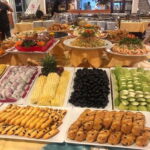
The tour includes a private professional guide, private vehicle pickup/drop-off, a Vietnamese traditional lunch, bottled water and tissues, and all fees and taxes.
Are entrance fees included?
Yes. Entrance fees are included for the stops that require tickets.
Is lunch included, and what kind is it?
Lunch is included as Vietnamese traditional lunch. In some cases, guides have arranged meals with choices such as pho or chicken/beef soup.
How does confirmation work after booking?
Confirmation is received at the time of booking.
Can I cancel and get a full refund?
Yes. You can cancel up to 24 hours in advance for a full refund.
Closing thought
If you want your one shore day to feel guided, organized, and worth your time, this is a strong fit. You’ll leave with a clearer picture of Saigon across colonial architecture, Vietnam’s modern turning points, and the street-and-temple side of the city.