REVIEW · HO CHI MINH CITY
War Remnants Museum – Ho Chi Minh City Half Day Tours
Book on Viator →Operated by Asia Travel Legend · Bookable on Viator
Fast history, big emotions.
This half-day style tour is a smart way to cover major HCMC sights without the logistics headache. You’ll spend real time at the War Remnants Museum, then stitch in standout landmarks like the Independence (Reunification) Palace and French-era architecture. It’s built for people with limited time who still want context from a guide, and for me, that mix of museum impact plus city landmarks is the main draw.
I especially like the small-group setup, capped at 15, which makes it easier to actually hear your guide and ask questions. I also like the convenience of hotel pickup and drop-off for selected District 1 hotels, because doing this part of the city by taxi can eat up your morning.
One thing to plan for: the War Remnants Museum experience can get painfully hot. Several visitors note there’s little or no air conditioning in the galleries, so wear breathable clothes and take it slow when you need a break.
In This Review
- Key things to know before you go
- Why this War Remnants Museum-focused day makes sense
- Price and logistics: what $39 really buys
- Independence (Reunification) Palace: tanks, design, and a turning point
- French colonial hits: Notre Dame Cathedral and the Central Post Office
- War Remnants Museum: three floors of images and meaning
- The heat issue: plan clothing and pacing for a no-AC museum
- Lunch and the rhythm of a guided morning
- Shop stops: how not to let them hijack your day
- Should you prefer DIY instead of a guided route?
- Who this tour is best for
- Should you book this War Remnants Museum half-day tour?
- FAQ
- How long is the War Remnants Museum half-day tour?
- What time does the tour start?
- Is hotel pickup included?
- Is the War Remnants Museum admission included?
- Does the tour include lunch and drinks?
- Is the tour refundable if plans change?
Key things to know before you go
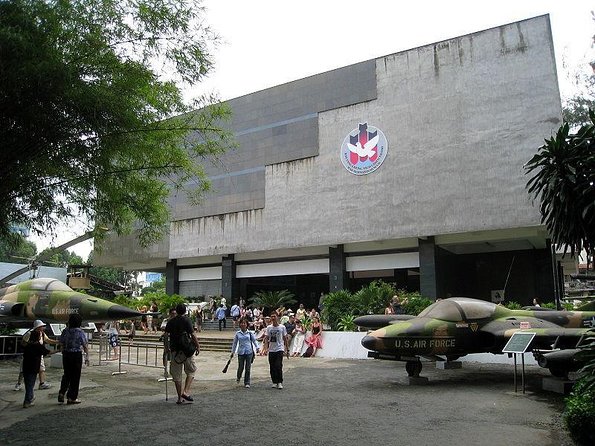
- War Remnants Museum is the anchor: admission is included, and it’s the main time block.
- Max 15 in the group: small enough for questions, not so big you lose the guide.
- District 1 hotel pickup only: if you’re staying outside that area, you’ll likely use the meeting point instead.
- Drinks cost extra: drinks are not included, even though lunch is part of the day.
- It can feel like an indoor sauna: the museum’s comfort level is a real factor in how enjoyable it is.
Why this War Remnants Museum-focused day makes sense
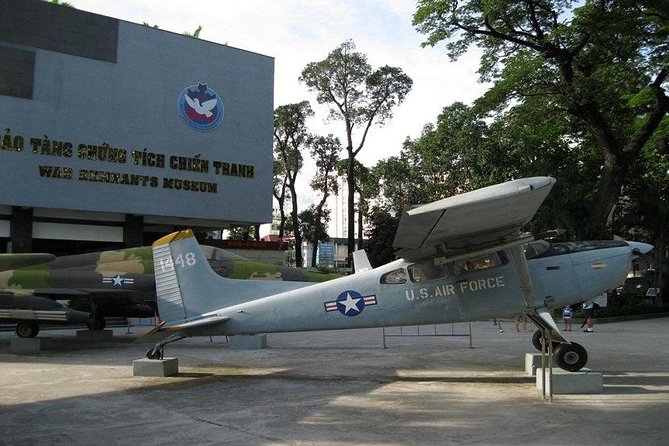
Ho Chi Minh City can feel like a place where you either go hard all day or you end up rushing. This tour gives you a middle path. You get a guided route that hits the biggest must-sees, while the museum section still leaves time to take things in.
The War Remnants Museum isn’t a casual stop. The exhibits focus on the Vietnam War’s suffering and aftermath, including the role of photography and documented evidence. That means you’ll want more than a quick photo-and-go visit, and this format helps because it places the museum in the center of the day instead of squeezing it between far-flung errands.
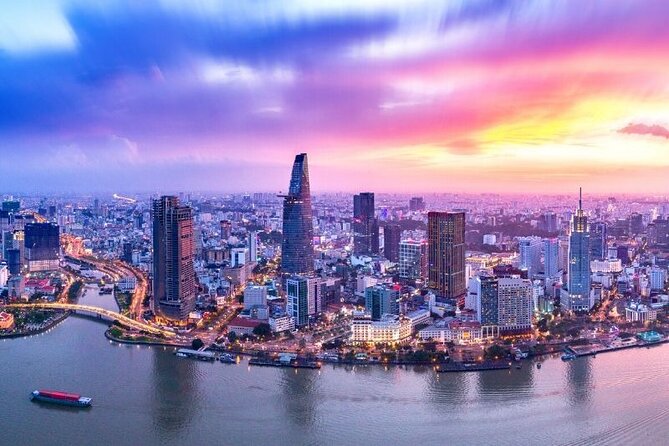
Also, you’re not just walking into one site. You’ll see how the city’s modern identity sits next to older layers: French colonial buildings, landmark state architecture, and places tied directly to 1975. That combination helps you build a mental map fast.
You can also read our reviews of more city tours in Ho Chi Minh City



Price and logistics: what $39 really buys
At $39 per person, the value comes down to the bundle. You’re getting:
- guided transport through several major sights
- hotel pickup/drop-off for selected District 1 hotels
- War Remnants Museum admission included
- a day that runs about 6 hours, starting at 7:30 am
- lunch included, with drinks not included
If you’re staying in District 1, pickup can be a big deal. Taxis and ride-hailing are easy in HCMC, but time is the hidden cost. Reducing that friction is exactly where a half-day tour earns its keep.
A couple practical notes:
- The group is limited to 15, which usually means fewer delays than larger tours.
- Your ticket is mobile, and you get confirmation at booking.
- The meeting point is in Quận 1 (112 Đ. Trần Hưng Đạo, Phường Phạm Ngũ Lão, Quận 1), near public transportation.
One more cost tip: since drinks aren’t included, you may want to budget for bottled water or iced drinks once you’re done with lunch. In the heat, hydration becomes part of your comfort strategy.
Independence (Reunification) Palace: tanks, design, and a turning point
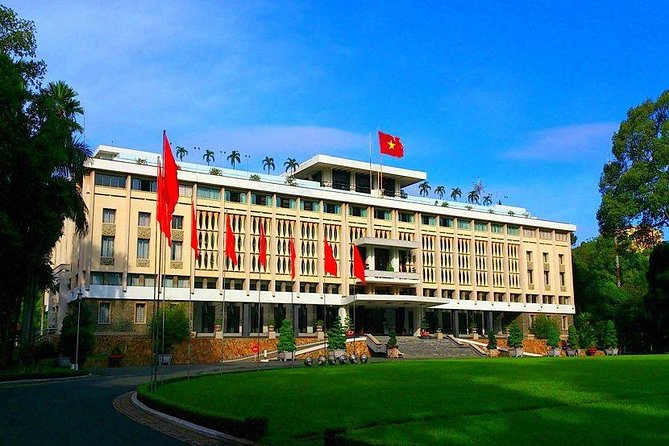
The day begins with the big political stage: Independence Palace, also known as the Reunification Palace. This place is famous for the physical reminder of April 1975, when a North Vietnamese army tank crashed through the palace gates. The tank is still on the property, so you’re not only reading history—you’re standing next to a very literal artifact of it.
What I find useful here is that the palace also connects to earlier architecture layers. Independence Palace was built on the site of the former Norodom Palace, and the design is credited to architect Ngo Viet Thu. That detail matters because it frames the building not just as a one-moment event, but as a long-lived piece of city structure that changed roles over time.
In practical terms, this stop is a great early anchor. It sets the historical timeline for what you’ll see next at the War Remnants Museum. You’ll likely be more prepared to understand the museum’s themes once you’ve already visited a place tied to the end of the war in 1975.
French colonial hits: Notre Dame Cathedral and the Central Post Office
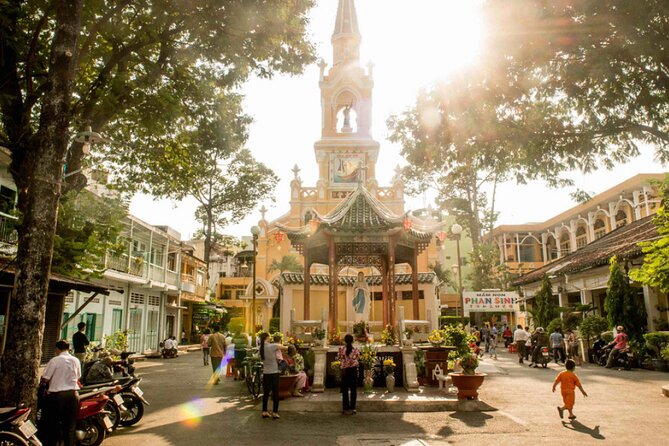
After the palace, you’ll move into some of HCMC’s most photogenic “old city” landmarks. The route typically includes the Notre Dame Cathedral and the Central Post Office—both tied to the French colonial era.
Even if you’re not a hardcore architecture person, these stops do two jobs:
1) They break the emotional intensity after the palace.
2) They give you a quick visual reminder that HCMC’s history isn’t only war—it’s also about layers of external influence and city-making.
The Central Post Office is especially good for a quick, satisfying “I get it now” moment. It feels like a place you can understand instantly from walking around: big public space, classic design language, and a strong sense of where people moved and gathered.
Just keep expectations realistic. These are usually timed stops, so go in planning to enjoy the buildings from the outside and in key interior moments rather than trying to do a deep architectural study.
War Remnants Museum: three floors of images and meaning
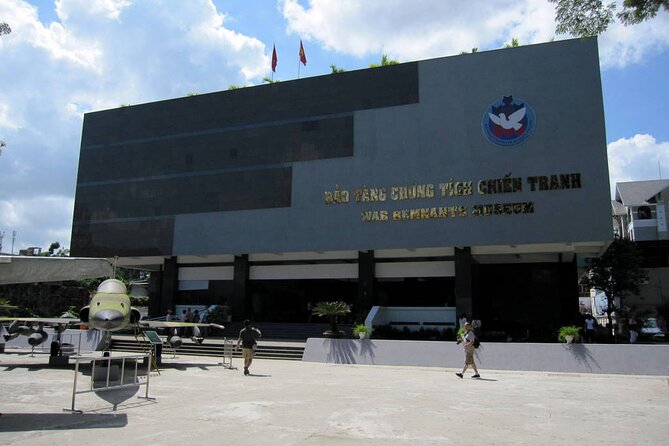
Then comes the main event: the War Remnants Museum. Admission is included, and the museum is listed as a major time segment, about 4 hours as part of the overall 6-hour day.
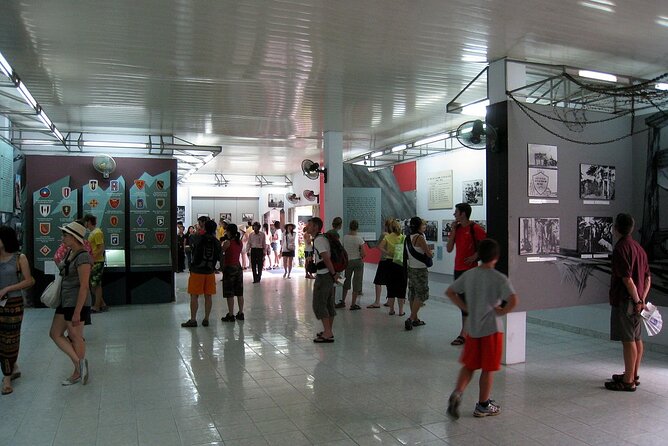
Here’s the key: most of what you’ll experience is visual—photographs and labeled displays. Many visitors say the photos carry the story clearly, so you don’t necessarily need extra help to understand what’s happening. Still, if you like to read every label slowly, you’ll have enough time to do that.
The museum’s tone is also worth knowing before you walk in. It can be confronting and emotional. The war crimes sections are often described as especially upsetting, and the displays focus on the atrocities committed during the conflict. One thing to keep in mind for your own mental balance: the presentation is firmly from the Vietnamese perspective, and some people feel it doesn’t address every side of the conflict equally. That doesn’t make the museum any less important—it just means it’s doing a job with a point of view.
What you should aim for inside:
- take breaks between floors instead of powering through
- give yourself time in the photo-heavy rooms; that’s where the impact lands
- expect to feel uncomfortable at times, and treat that as part of what you came for
You can also read our reviews of more museum experiences in Ho Chi Minh City





The heat issue: plan clothing and pacing for a no-AC museum
One of the most repeated comments is comfort: the museum can be extremely hot, with little or no air conditioning mentioned. People describe standing by fans during exhibit viewing. That doesn’t mean you should skip the museum—it just means you should travel smarter.
I’d pack for this like you’re going to a humid summer greenhouse:
- lightweight, breathable layers
- a hat or cap
- water you can keep refilling during breaks
- a slower pace than you might use for other museums
If you’re the type who gets frustrated when you’re uncomfortable, this stop can test that. On the other hand, if you’re steady and willing to pause, the heat becomes more manageable, and you can focus on the content.
Lunch and the rhythm of a guided morning
The tour includes lunch, which matters because this route is built around walking and museum time, and you’re not just going sightseeing for fun. Drinks aren’t included, so think of lunch as your main fuel stop.
A lot of people appreciate the rhythm of a guided day like this: you see major sights in order, then you settle into the museum without having to plan transportation between each one. And since the group is capped at 15, transitions tend to feel less chaotic than with larger bus groups.
Small practical suggestion: eat, then take a breather before you jump back into more walking. Your brain processes heavy information better when your body isn’t running on empty or overheated.
Shop stops: how not to let them hijack your day
Some versions of this kind of city tour route include brief shopping stops. One common example is a lacquer shop stop where it’s worth checking upper levels, not just the ground floor showrooms.
If shopping isn’t your thing, you can still make those moments useful:
- treat them as short breaks rather than mandatory spending
- look for items you genuinely like, not what you’re pressured to buy
- keep your time awareness; you’re here for the War Remnants Museum, not for a shopping spree
If shopping feels like distraction, you can choose to watch, browse, and pass. You don’t need to buy to enjoy the cultural side of a storefront.
Should you prefer DIY instead of a guided route?
A fair point that comes up is that the War Remnants Museum can be visited on your own with an audio guide. Some people even suggest skipping the guide and just using the museum’s own materials.
Here’s the balanced take I’d give you:
- If you love going at your own pace and reading everything line by line, DIY plus audio can work well.
- If you want a fast timeline and help connecting the palace, colonial landmarks, and the museum into one story, the guided format saves you brainpower.
This tour’s value is in stitching it together. Even if you decide to go DIY later in your trip, the guided route can still act like a primer.
Who this tour is best for
This is a strong fit if you:
- have limited time in Ho Chi Minh City and want a tight plan
- want guided context without a huge group
- care more about understanding than checking off random sights
- plan to spend meaningful time at the museum rather than treating it like a quick stop
It may be less ideal if you:
- hate heat and struggle in non-air-conditioned indoor spaces
- want total historical neutrality and multiple competing narratives in the same room
- prefer long, unstructured museum wandering with no scheduled transitions
Should you book this War Remnants Museum half-day tour?
I’d book it if your goal is simple: see the major HCMC landmarks and leave with a clearer understanding of the war’s impact, without spending your morning figuring out transport and timing.
Skip or reconsider if you know you’re very sensitive to heat, or if you prefer to build your own museum experience from scratch with audio and slower pacing. In that case, DIY is a valid option.
If you do book: dress for the temperature, bring water, and give yourself permission to slow down at the museum. This is the kind of day where your best souvenir is what stays with you after you’re back on the street.
FAQ
How long is the War Remnants Museum half-day tour?
It runs for about 6 hours.
What time does the tour start?
The start time is 7:30 am.
Is hotel pickup included?
Hotel pickup and drop-off are included for selected hotels in District 1 in Ho Chi Minh City only.
Is the War Remnants Museum admission included?
Yes, admission is included as part of the museum visit.
Does the tour include lunch and drinks?
Lunch is included. Drinks are not included.
Is the tour refundable if plans change?
No. This experience is non-refundable and cannot be changed for any reason.