REVIEW · HO CHI MINH CITY
Ho Chi Minh City Private Tour: Half Day, Full Day, Cu Chi Tunnel
Book on Viator →Operated by Saigon Foody Tour · Bookable on Viator
One day, Saigon’s biggest stories, in one route. This private tour strings together classic French colonial landmarks, major war sites, and spiritual stops, with an air-conditioned car plus pickup and drop-off in District 1. You’ll also get photo breaks and time inside museums and temples, so it feels like a curated circuit rather than random hopping.
What I like most is the way it starts with the political heart of the old Saigon power story at the Independence Palace, then quickly grounds you in place with the Saigon Central Post Office. I also love the balance between education and atmosphere, especially with the War Remnants Museum and the quieter spiritual moments at the Jade Emperor Pagoda.
One possible drawback: it’s a long day (about 10 hours), and the war-focused stops are heavy. If you want downtime or you’re sensitive to graphic context, plan your energy accordingly.
In This Review
- Key takeaways before you go
- Your Saigon route: private pickup, air-conditioned comfort, and a full-day pace
- Independence Palace, Notre Dame, and the Central Post Office: the French-era story in walking distance
- War Remnants Museum: when the photos do the talking
- Jade Emperor Pagoda: how belief shows up in daily worship
- PHUONGNAM Lacquerware: watching craft turn into color
- Cholon detours: Ba Thien Hau Temple and Binh Tay Market
- Secret Weapon Cellar of the Saigon Rangers: a wartime slice in a quiet alley
- Value and timing: why this costs about $33.54 per person
- Who this tour suits best (and who should rethink it)
- Should you book this Ho Chi Minh City Private Tour?
- FAQ
- How long is the tour?
- Is pickup and drop-off included?
- What stops are included on this itinerary?
- Are entrance fees included?
- Is there an English-speaking guide?
- Is bottled water included?
- Is this a private tour?
- Is tipping included in the price?
- Can I cancel for free?
Key takeaways before you go
- District 1 pickup and air-conditioned vehicle keep the logistics easy in heat and traffic.
- Admission fees and bottled water included, so you can focus on the sights instead of budgeting on the fly.
- Independence Palace + Central Post Office + Notre Dame give you a strong French-era framework fast.
- Jade Emperor Pagoda connects you to local belief systems through how people worship.
- War Remnants Museum pairs exhibits with images tied to both American and Vietnamese conflicts.
- Cholon add-ons like the Ba Thien Hau Temple and Binh Tay Market add real neighborhood texture.
Your Saigon route: private pickup, air-conditioned comfort, and a full-day pace
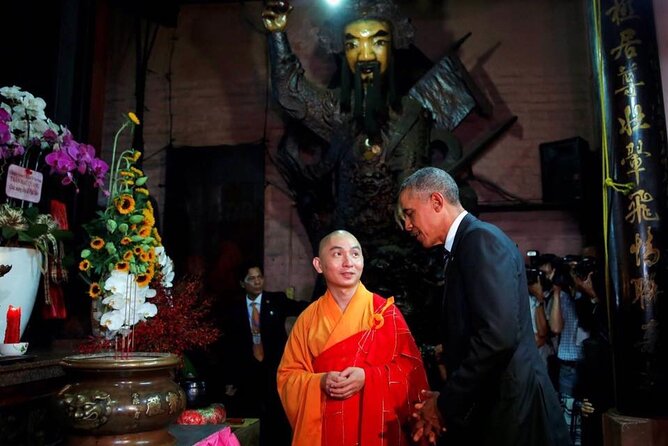
This is a private tour, meaning it’s just your group, not a big bus herd. That matters in Ho Chi Minh City, where the difference between smooth and stressful can come down to timing and getting dropped off close to the door.
You’re picked up (and dropped back) within District 1, specifically the central city area. That’s a big value point if you’re staying centrally, because it saves you from spending your day on local transport. The car is air-conditioned, and that’s not a luxury when you’re stacking multiple stops that can run back-to-back.
The schedule is about 10 hours for the full run. It’s not a slow stroll. You’ll move from landmark photos to museum time to temple visits and market browsing. Think of it like a guided storyline: one setting leads to the next.
Also: the tour includes an English-speaking guide, entrance fees, and bottled water. Tipping is not included, so you’ll want to decide what feels fair for your group.
Finally, note that the tour title mentions the Cu Chi Tunnel, but the stop list you shared focuses on city sights (palaces, cathedrals, temples, museums, and markets). If your exact booking version adds Cu Chi, your guide will adjust the day. Either way, this city circuit is packed.
You can also read our reviews of more city tours in Ho Chi Minh City


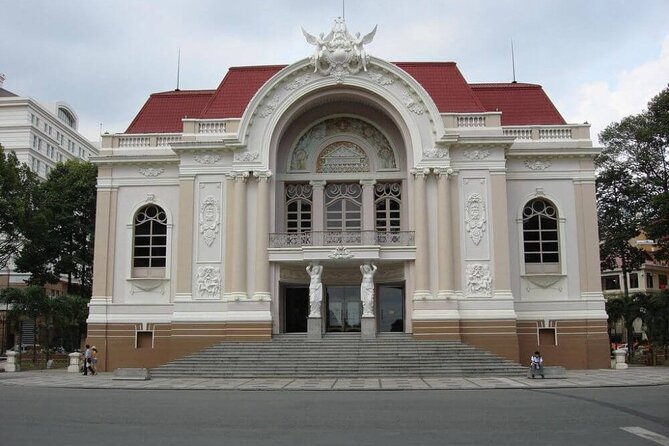
Independence Palace, Notre Dame, and the Central Post Office: the French-era story in walking distance
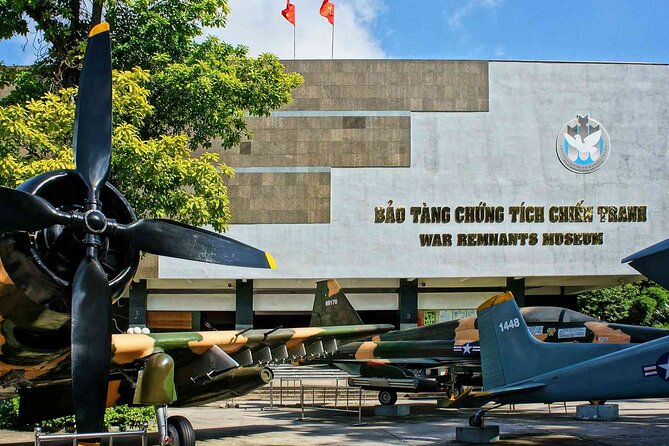
The itinerary begins at the Independence Palace, with about 40 minutes on-site. Historically, this place served as the residence and office of South Vietnamese President Nguyen Van Thieu during the war period. Even if you don’t study history dates, you’ll feel the significance quickly because the site was built to function as a command center—so you’re not just looking at architecture, you’re looking at how power operated.
From there, you move to the Saigon Central Post Office (around 15 minutes). This is one of those places where short time is still useful because it’s so recognizable and so functional. It’s a French colonial-era building in the city center, and you’ll get admission time inside rather than just a quick street view. If you love details, this stop can be surprisingly satisfying because it blends history with daily life at a working address.
Then you get a photo stop at Notre Dame Cathedral of Saigon, about 5 minutes. It’s quick by design, and that’s okay. The goal isn’t to linger forever—it’s to help you orient to the city’s French colonial character early, before the day turns to war and local worship sites.
A practical tip: because these stops are close together in the broader central-area flow, you’ll likely spend less time waiting than you would if you planned it on your own with separate tickets and transport. The guide also helps you connect what you’re seeing to the bigger story, which is where “just buildings” starts to feel like place-based history.
War Remnants Museum: when the photos do the talking
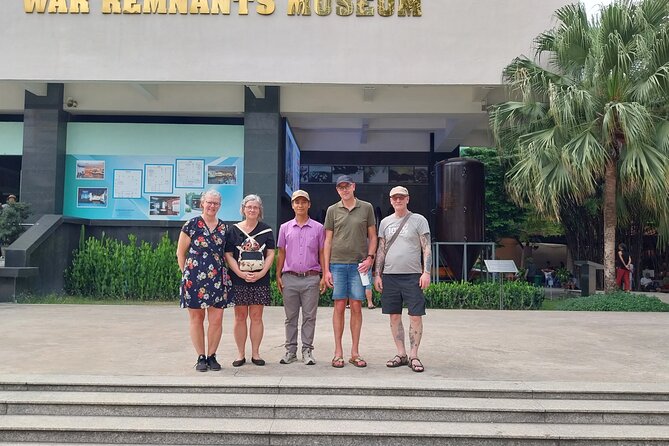
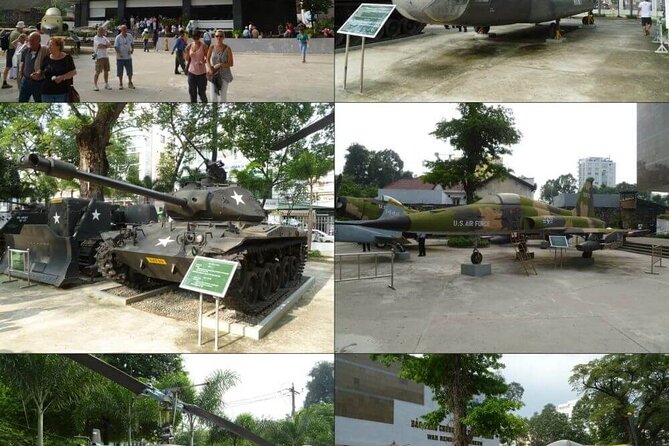
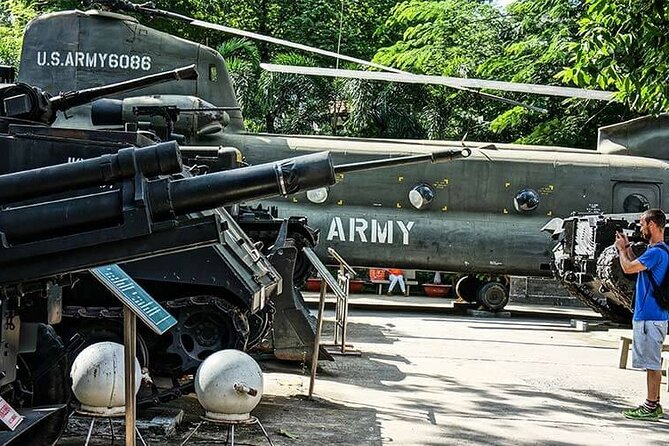
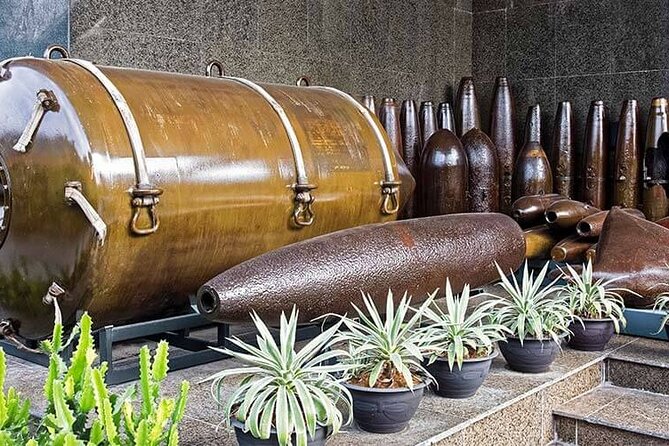
The War Remnants Museum is one of the most serious stops on the route, with about 50 minutes included. It was established in 1975, and the experience is designed as a stark look at the impact of war.
What makes it especially meaningful in this itinerary is the exhibit framing around images by deceased American and Vietnamese photographers and journalists tied to French and American conflicts. That matters because it’s not only about artifacts; it’s about the people who documented the war and what they chose to record. If you care about how history gets told through media, you’ll feel the weight of that almost immediately.
This is also one reason the tour’s “value” is more than convenience. You’re paying for guided context in a place where raw information can feel overwhelming. A good guide helps you focus on what’s being communicated, without sanitizing it.
One caution: this isn’t the kind of museum where you’ll want to rush. About 50 minutes can still feel fast if you read everything, so go in expecting to skim some elements and slow down where your attention naturally lands.
Jade Emperor Pagoda: how belief shows up in daily worship
Next up is the Emperor Jade Pagoda (Chùa Ngọc Hoàng), with about 30 minutes. The pagoda was built from 1892 to 1900 by a Chinese man named Luu Minh, who moved to Vietnam for living and business. The emphasis here is on how local people believe and how they worship.
In other words, this stop isn’t only about sightseeing. It’s about observing a living religious practice. You’ll see how devotion is expressed in the space, and it’s a useful counterpoint after the heavier war context.
Because this stop is time-limited, don’t try to read every sign like a scholar. Instead, focus on what you can actually see and process: the flow of visitors, the offerings and devotional gestures, and the way the site feels integrated into the city.
PHUONGNAM Lacquerware: watching craft turn into color
The schedule then shifts to the PHUONGNAM LACQUERWARE stop (about 30 minutes). The basic idea is simple: lacquerware is made by using lacquer as a decorating medium, and the lacquer comes from resin of a tree mixed with colored pigments.
This is a good moment in the day because it changes the pace and the tone. After history and war sites, a craft workshop can help your brain reset. You’ll experience the daily lives of craftsmen and see how traditional handmade products are made.
What makes this stop worth it on a tour like this is that it gives you a real-world connection to “Vietnamese culture” beyond a monument photo. You’re not just being told that things are traditional—you’re watching how the process turns into a finished product.
If you’re the kind of traveler who likes to buy one meaningful souvenir instead of five generic ones, this is the part to focus on. Even if you skip shopping, it’s the best stop on the route for understanding how labor becomes art.
You can also read our reviews of more private tours in Ho Chi Minh City




Cholon detours: Ba Thien Hau Temple and Binh Tay Market
After the lacquer workshop, the tour moves into Cholon for two stops that add neighborhood texture: Ba Thien Hau Temple and Binh Tay Market.
Ba Thien Hau Temple (around 30 minutes) is one of the oldest Chinese temples in Ho Chi Minh City, built around 1760 by the Cantonese congregation. It’s also described as a spiritual masterpiece, and the point here is to see another slice of belief and community life—different from the Jade Emperor Pagoda but still rooted in Chinese-Vietnamese religious tradition.
Then you head to Binh Tay Market for about 30 minutes. This is the largest wholesale trading center in Ho Chi Minh City, and it’s a contrast to more tourist-centered markets like Ben Thanh. The value of Binh Tay on a guided itinerary is that you can look beyond the shopping and focus on how commerce actually works here: the scale, the density of goods, and the feeling of a place built for supply rather than performance for visitors.
This segment is also where your tour balance shows up. You get city-center monuments, a war museum, and pagodas, but you still finish with something closer to everyday life.
Secret Weapon Cellar of the Saigon Rangers: a wartime slice in a quiet alley
The day ends with the Hầm Vũ Khí Bí Mật Secret Weapon Cellar, about 20 minutes. The stop is described as one of the most incredible hidden wartime sites from the Vietnam War era, and it’s located in a narrow alley in District 3.
From the outside, it looks like an ordinary house—then you’re taken to a part of the city that speaks to how wartime operations stayed off the obvious map. The “cellar” concept is simple, but the effect can be strong because it turns a normal-looking street into a history lesson.
This is a good final stop because it ties the theme together. Earlier, you saw official power (Independence Palace) and public storytelling (museums and colonial buildings). Here, you get something more private and concealed—still tied to the war.
Value and timing: why this costs about $33.54 per person
At $33.54 per person, this tour is priced in a way that usually only works if several things are included—otherwise you’d pay those costs separately. Here, entrance fees and bottled water are included, and you also get English-speaking guidance plus air-conditioned transport within District 1.
The biggest part of the value isn’t only the admissions. It’s the way the route groups high-interest stops: Independence Palace, Central Post Office, Notre Dame photo stop, War Remnants Museum, Jade Emperor Pagoda, a lacquer workshop, plus Cholon temples and market time. In a city where traffic can scramble your plans, paying for an organized route can save enough time to be worth it even before you think about the money.
It’s also booked ahead of time on average (about 58 days), which is a clue that this kind of route is a common fit for visitors who want structure without planning every ticket and route.
Who this tour suits best (and who should rethink it)
This tour fits you best if you want a guided route that covers major parts of Ho Chi Minh City in one day: French-era landmarks, war context, local worship, and a craft stop. The private format helps if you want your group to move at a comfortable pace and ask questions without feeling rushed.
It’s also a strong pick if you like the idea of learning through connected stops—palace to colonial buildings to war museum to pagoda to craft—rather than treating each place as a standalone.
Rethink it if:
- You hate long museum time or you’re sensitive to war imagery and messaging.
- You prefer a slower pace with more free time for wandering without structure.
- Your hotel is outside District 1, because pickup/drop-off is specified for the central District 1 area.
Should you book this Ho Chi Minh City Private Tour?
If your goal is simple—get a guided, well-organized overview of Saigon’s big themes with less planning stress—this is an easy yes. You’re getting included admissions, bottled water, an English-speaking guide, and a route that doesn’t just throw random sights at you.
The part that tends to impress most people is the way the day feels personal and well explained, especially around places like the Central Post Office, the Jade Emperor Pagoda, and the War Remnants Museum. If those are on your list, you’ll likely feel you used your time well.
Book it if you want structure, history framing, and meaningful variety in one day. Just be ready for the war museum content and give yourself a little extra patience for a full-day schedule.
FAQ
How long is the tour?
The experience runs for about 10 hours.
Is pickup and drop-off included?
Yes. Pickup and drop-off are provided within District 1 (central city area) as mentioned.
What stops are included on this itinerary?
The itinerary includes Independence Palace, Saigon Central Post Office, Notre Dame Cathedral of Saigon (photo stop), Emperor Jade Pagoda, PHUONGNAM Lacquerware, War Remnants Museum, Ba Thien Hau Temple, Binh Tay Market, and the Secret Weapon Cellar.
Are entrance fees included?
Yes. Entrance fees are included.
Is there an English-speaking guide?
Yes. An English speaking tour guide is included.
Is bottled water included?
Yes. Bottled water is included.
Is this a private tour?
Yes. It’s a private tour/activity, so only your group participates.
Is tipping included in the price?
No. Tipping/gratuities for the guide and driver are not included.
Can I cancel for free?
Free cancellation is offered. You can cancel up to 24 hours in advance for a full refund.