REVIEW · HO CHI MINH CITY
Private Cu Chi Tunnels Half Day Tour
Book on Viator →Operated by Ginkgo Voyage · Bookable on Viator
Cu Chi Tunnels can be hard to picture. That is exactly why a private half-day works so well: you get the story behind the underground network and a chance to see parts of it up close, including the Ben Dinh section. I like that this tour is built for real context, not just photos—so the French-era origins and the later expansion for the Vietnam War make sense in your head as you walk through. One thing to consider: the tunnels are hot, narrow, and dark enough that claustrophobia is a real issue for some people.
Here is where the private format pays off. You’ll ride out in an air-conditioned vehicle with an English-speaking guide, and the pace stays flexible for your group. If you choose to go inside, you can crawl through short stretches yourself, with a local guide using a torch since there aren’t lights. You also get a simple end-of-tour break—boiled tapioca and hot tea—so the day doesn’t feel like pure intensity.
The main drawback is physical, not intellectual. The tunnels are small and you are moving through confined spaces, and there is an optional shooting range that costs extra. If you hate tight spaces or you want zero add-on surprises, plan accordingly.
In This Review
- Key things I’d plan for
- Cu Chi Tunnels: Why this half-day hits harder than you expect
- The drive out of Ho Chi Minh City: less stress with a private vehicle
- Arrival and the Ben Dinh start: documentary first, then exploring
- Going into the tunnels: crawl options, heat, and the torch routine
- Learning the tunnel logic: living, hiding, communicating, recovering
- The shooting range add-on: fun for some, extra cost for everyone
- Tapioca and hot tea: the reset you didn’t know you needed
- Price and value: why $72 can be a smart buy here
- Who this private tour is best for (and who should think twice)
- Should you book this private Cu Chi Tunnels tour?
- FAQ
- How long is the Cu Chi Tunnels private tour?
- Do I get picked up in Ho Chi Minh City?
- Is an English-speaking guide included?
- Are admission tickets included?
- Is tapioca and hot tea included?
- Can I crawl through the tunnels?
- Is the shooting range included?
- What costs extra besides the tour price?
- Is there free cancellation?
Key things I’d plan for
- Private pickup and air-conditioned vehicle for the ride out of Ho Chi Minh City and back
- Ben Dinh tunnel visit starts with a short documentary to set the scene fast
- Crawl option through short tunnel sections (hot, narrow, and dim)
- Optional shooting range is pay-as-you-go, so budget extra if you want it
- Tapioca and hot tea included to cool down after the underground portion
Cu Chi Tunnels: Why this half-day hits harder than you expect
If you’ve only seen war history through books or museum labels, Cu Chi can feel unreal. The tunnels fix that. Even when you only see one section, you start to grasp how soldiers could live, hide, communicate, and recover underground across years of conflict.
This tour is also built around the timeline. You’ll hear how the network began in the 1940s during the fight against the French, then expanded in the 1960s into a bigger underground system for the Viet Cong during the Vietnam War (often called the American War). That long view matters. You’re not just looking at one “war relic.” You’re seeing how people adapted infrastructure as pressure increased.
I also like the tone. It is not a gore show, but it is not a sightseeing bubble either. The experience leans into practical details—living and cooking areas, storage, field hospitals, command centers, and weapons production—so the place feels functional, not mystical.
You can also read our reviews of more private tours in Ho Chi Minh City


The drive out of Ho Chi Minh City: less stress with a private vehicle
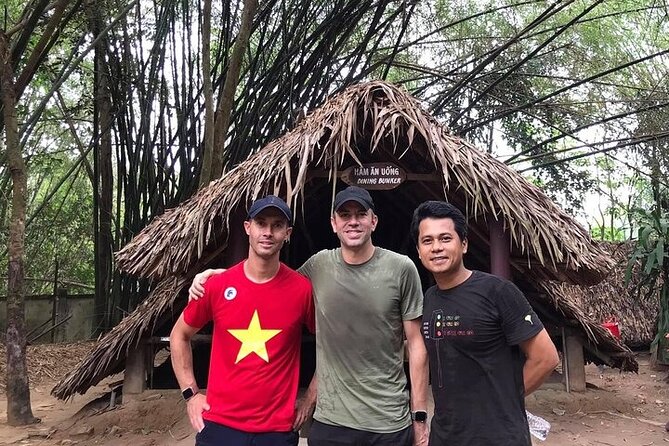
A private Cu Chi tour is mostly about control. You avoid the chaos of packing into a large group bus and hoping the schedule cooperates. Here, you get a private air-conditioned vehicle and an English-speaking guide, plus mineral water and wet tissue to make the ride out more comfortable.
The distance is meaningful. The tunnels are about 40 km from Ho Chi Minh City, but the tunnel network itself is described as stretching 250 km (155 miles). In other words, you’re traveling a short way from the city, but stepping into a system that extended far beyond it.
On the way, the countryside usually shows up clearly—some tours even pass past rubber tree farms and open views outside the city. It helps your brain shift modes. City noise fades, and by the time you arrive, the day feels like it has a purpose.
Arrival and the Ben Dinh start: documentary first, then exploring
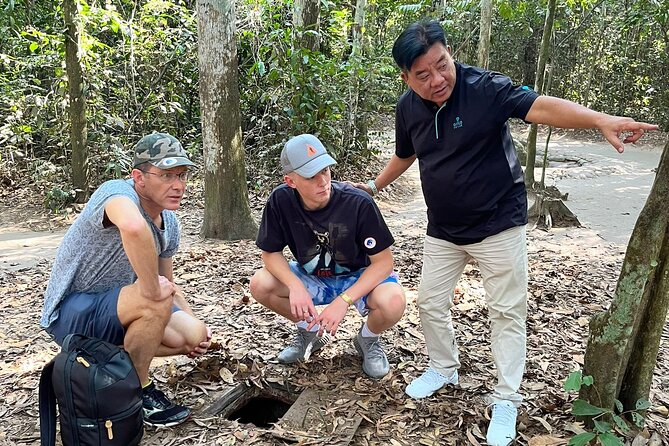
Once you get there, your visit begins with a short documentary. This is a smart setup. It gives you a simple framework before you start walking and pointing. You’ll then explore the Ben Dinh section, which is the area most tied to the story of the underground living network.
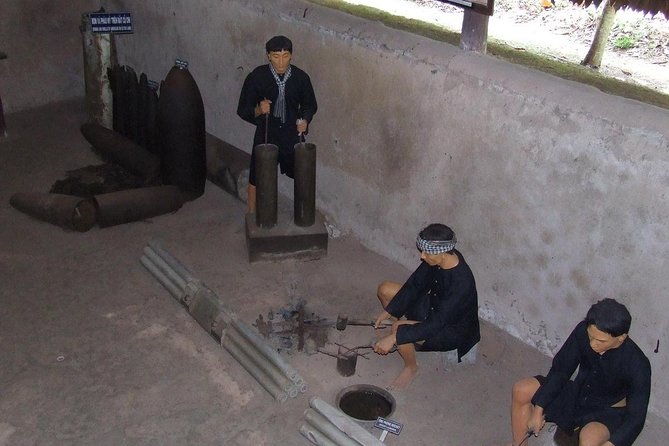
At Ben Dinh, you’re focusing on how the tunnels functioned day-to-day. The site explains connections between living and cooking spaces, plus storage facilities and other underground roles like field hospitals and command centers. You also see the defensive side: trap doors and hidden access points designed for survival and movement.
A practical note: the site can be busy. With a private tour, you still won’t control everything at the site, but your guide can steer your timing and your path. In reviews, guides like Han, Tam, and Jack are praised for keeping things moving at the right moments and for answering questions in a way that clicks.
Going into the tunnels: crawl options, heat, and the torch routine
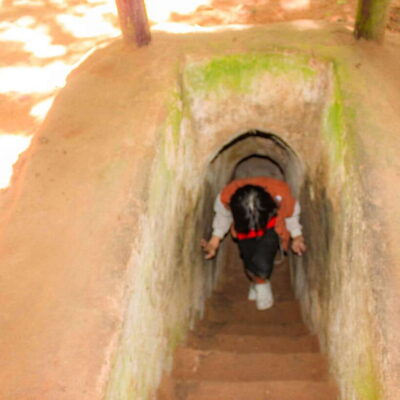
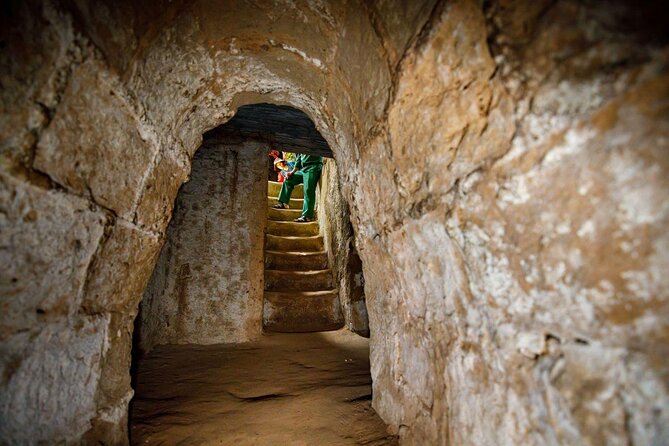
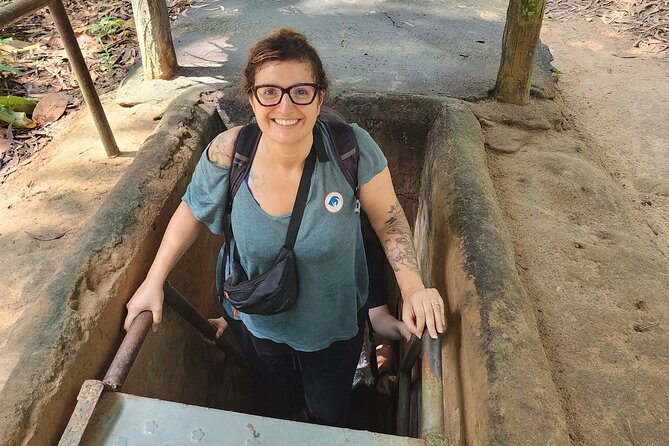
The signature moment is optional: you can crawl through the tunnels if you want. This is where the “history” becomes physical. The tunnels are narrow and you are moving through an area that was designed for people to function underground, not for comfort.
Here’s what to expect based on how the experience is described:
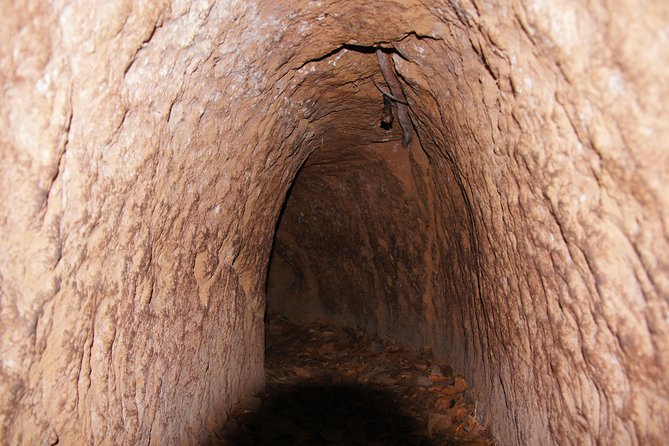
- There are no lights in the tunnels.
- A local guide accompanies you and uses a torch.
- The tunnels are small, with an intense feel because of the tight space and limited light.
This can be amazing—or uncomfortable—depending on your body and mindset. Reviews include clear warnings about hot conditions, claustrophobia potential, and the difficulty of fitting through some sections. If you tend to get anxious in small spaces, consider whether you want to go in at all. “Most travelers can participate” is true, but that doesn’t cancel out real feelings in tight quarters.
One detail I found useful: you can often crawl into different sections and choose how far you go. Reviews mention options like coming out at different lengths, including around 20–100 meters, depending on the segment and your comfort. The key idea is simple: you don’t need to prove anything to enjoy the experience.
Learning the tunnel logic: living, hiding, communicating, recovering
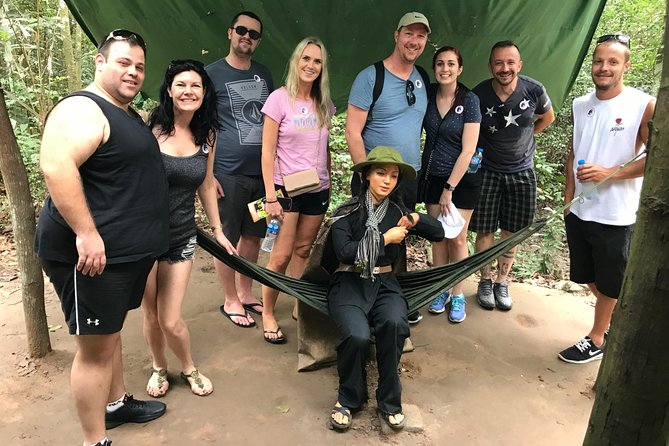
The best guides here don’t just recite facts. They translate tunnel design into human behavior. You’ll learn how Viet Cong soldiers used the underground areas for living, hiding, cooking, storage, and even recovery.
The tour description also highlights an important point: the tunnels weren’t only hiding places. They were operational spaces. Underground channels helped movement, while the wider system supported field hospitals, command centers, and weapons production. When you understand that, the trap doors and layout stop looking random. They feel like tools.
English-language interpretation is part of the value. Multiple guides named in reviews—like Tam, Cuong, and Roy—are praised for clear explanations, humor, and handling questions without making you feel rushed. That matters in a place where it’s easy to get overwhelmed by the scale.
If you like big-picture history, you’ll get the arc from French conflict roots in the 1940s to expansion in the 1960s. If you care more about daily life, you’ll focus on food, storage, and underground medical spaces. Either way, you leave with a clearer idea of how this system supported long periods of resistance.




The shooting range add-on: fun for some, extra cost for everyone
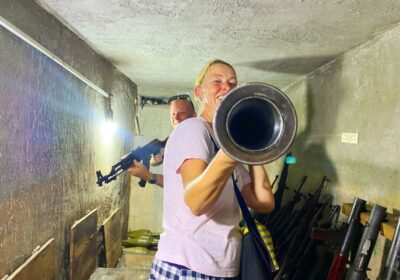
There is an optional shooting range. If you choose it, you can fire rounds from an assault rifle at the range, but it comes with additional fees that are not included.
If you want this part, plan ahead:
- Bring extra money, since shooting has extra costs.
- Expect it to be “at your own expense,” not bundled in the tour price.
One review mentions a cost range for ammunition (around 40,000–50,000 VND per round) and even describes a small prize for hitting a target. That’s not something you should count on, but it does suggest the range is treated as a short activity that some people find memorable.
If you prefer the tour to stay purely on history and the underground experience, skip this add-on. The main site visit and tunnel crawl option already deliver the core experience.
Tapioca and hot tea: the reset you didn’t know you needed
After the tunnels, you get a simple tasting—boiled tapioca and hot tea—before the drive back to Ho Chi Minh City. This matters more than it sounds.
After walking, heat, and dark tunnel air, your body usually wants something warm and easy. The tapioca is filling but not heavy. Tea helps you slow down and feel human again. Then you’re back in the private vehicle for the ride home.
This is also a good moment to ask one last question. In reviews, guides like Ben and Xung are praised for good English and for recommending other spots to see or things to watch out for. A short end-of-day meal is the perfect time to use that local perspective.
Price and value: why $72 can be a smart buy here
At around $72 for a private half-day, the price makes sense when you look at what’s bundled. You’re paying for:
- A private air-conditioned vehicle
- An English-speaking guide
- Sightseeing and relevant admission fees
- Tapioca and tea
- Mineral water and wet tissue
So you’re not just buying a “bus to a site.” You’re buying translation, route management, and time efficiency—especially valuable if you want to move through Ben Dinh without feeling like you’re stuck in a slow parade.
What’s not included is also clear, and that’s part of the value logic. If you skip the shooting range, you avoid the extra variable cost. If you do want it, you can decide in the moment and budget accordingly.
Private tours also tend to feel better at a war-history site. You can ask questions without shouting, and your guide can tailor your pace to your group. In reviews, people repeatedly praise how guides adjust the flow to match the group, including on cruise days where timing matters.
Who this private tour is best for (and who should think twice)
This tour fits best if you want more than a quick stop. I’d especially recommend it if:
- You like history but want it explained in a practical way
- You want time inside the Ben Dinh area and the option to crawl
- You prefer a small-group feel with a guide who can answer questions
- You’d rather not deal with big bus crowds at the site
It may be less ideal if:
- You get claustrophobic or struggle with tight spaces (the tunnels are narrow, hot, and dim)
- You want a totally relaxed, non-intense outing
- You don’t want any add-on temptation like the shooting range
If you’re traveling as a single person, the reviews also suggest a private setup can still feel cost-effective while giving you that one-on-one guidance. If you’re with parents, couples, or a small family, the private approach often helps everyone stick together and move at a comfortable pace.
Should you book this private Cu Chi Tunnels tour?
I’d book it if you want a structured half-day with a guide, meaningful history context, and a real chance to experience the tunnels yourself—without the stress of coordinating with a big group.
Skip it (or at least talk to your guide before crawling) if you know you’ll struggle with confined spaces. In that case, you can still enjoy the story and the Ben Dinh exploration, but going far inside might not be worth the discomfort.
If you care about value, this one is fairly clean: major items are included, and the optional parts (like shooting) are clearly extra. For most people, that’s the sweet spot.
FAQ
How long is the Cu Chi Tunnels private tour?
It runs about 5 to 6 hours total, with around 2 hours at the Cu Chi Tunnels site.
Do I get picked up in Ho Chi Minh City?
Pickup is offered. The tour also lists a meeting point in District 1, Ho Chi Minh City, and the tour returns to the same meeting point.
Is an English-speaking guide included?
Yes. An English-speaking guide is included as part of the private tour.
Are admission tickets included?
Yes. All relevant admission fees for the sightseeing included in the tour are covered.
Is tapioca and hot tea included?
Yes. You’ll have a tasting of traditional boiled tapioca and hot tea as part of the tour.
Can I crawl through the tunnels?
You can go through the tunnels if you want. The experience notes that you may crawl through them yourself, and there are no lights, with a guide using a torch.
Is the shooting range included?
No. The shooting range is optional and shooting fees are not included.
What costs extra besides the tour price?
Personal expenses and beverages are not included, and the shooting range fees are also not included. Tips are not included either.
Is there free cancellation?
Yes. You can cancel up to 24 hours in advance for a full refund. If you cancel less than 24 hours before the start time, the amount paid is not refunded.