REVIEW · HO CHI MINH CITY
Private Ho Chi Minh City Tour
Book on Viator →Operated by Vietravel Asia · Bookable on Viator
One private day can feel like three days worth of sights. This Ho Chi Minh City tour is built for your pace, with hotel pickup options and entrance fees included. I like that it pairs heavyweight history with the everyday city—pagodas, French-era buildings, and a final stop at Ben Thanh. One thing to weigh: while most experiences sound smooth, there is at least one report of the tour not happening as scheduled when pickup was confirmed, so it’s smart to double-check your meeting plan the day before.
The route is practical too. You’ll move efficiently across District 1 landmarks and get just enough time at each place—about 8 hours total—so you don’t end up rushing through the most important stops. I also appreciate the included lunch and bottled water, which keeps the day from turning into a constant cost add-on.
There’s another consideration if you’re not into shopping areas. The tour finishes at Ben Thanh Market and gives you market time, so you’ll want to plan for crowds and bargaining energy in the final stretch—especially if your focus is strictly museums and monuments.
In This Review
- Key Highlights Worth Planning For
- Private Ho Chi Minh City: A Day You Can Shape
- Pickup, Timing, and How the 8 Hours Actually Works
- Independence Palace: Where the City Freezes in Time
- War Remnants Museum: Honest, Uncomfortable Civilian Impact
- Emperor Jade Pagoda: Incense, Statues, and Smoke-Washed Details
- Notre Dame Cathedral and the French Government Quarter Feel
- Central Post Office: A French-Era Building Still in Use
- People’s Committee Building and the Opera House at Night
- Dong Khoi, Nguyen Hue, and the City Streets That Tell the Story
- Ben Thanh Market: Last Stop for Souvenirs and Snack Energy
- Lunch at a Vietnamese Restaurant: Included, With Limits to Know
- Price and Value: Is $100 a Good Deal?
- Who Should Book This Private Ho Chi Minh City Tour
- Should You Book This Private Ho Chi Minh City Tour?
- FAQ
- FAQ
- How long is the Ho Chi Minh City private tour?
- How much does this private tour cost?
- Is hotel pickup offered, and where do I meet the guide?
- Is lunch included?
- Are entrance fees included?
- What are the main stops during the day?
- Is the tour wheelchair accessible?
- Does the tour include private transportation and a private guide?
- What is the cancellation policy?
Key Highlights Worth Planning For
- Hotel pickup or meet at Independence Palace so your morning starts with less hassle
- All entrance fees included, including major ticketed sites
- Guides like Thai Nguyen and Mr. Tai are noted for being prepared and caring
- A balanced mix of power, religion, and French colonial architecture in one day
- Evening-friendly photo stops like the People’s Committee Building and nearby illuminated facades
- Ben Thanh Market as the finish line, ideal for last-minute snacks and souvenirs
Private Ho Chi Minh City: A Day You Can Shape
This is a true private setup: just you and your group, with a driver and a guide. That matters in Ho Chi Minh City because you’re not stuck with a fixed group schedule. You can spend more or less time at the places that grab you and move faster past the ones that don’t.
I also like the way the day is structured. It’s not only about checking boxes. The guide’s job is to explain what you’re seeing—why it matters, what changed over time, and what the building or temple represents in everyday life. In the best versions of this tour, that storytelling lands because the guide is described as thoughtful and well prepared (names like Thai Nguyen and Mr. Tai show up in the accounts tied to this experience).
The tour is also “whole-day practical.” You’re given bottled water, you get lunch, and you finish in a central area where it’s easy to keep exploring on your own afterward.
You can also read our reviews of more city tours in Ho Chi Minh City


Pickup, Timing, and How the 8 Hours Actually Works
Expect about 8 hours on the clock. That’s a sweet spot: long enough to hit the big sights without feeling like a whirlwind bus tour, but short enough to keep your energy for walking inside museums and temples.
You have two common start options:
- Hotel pickup (when available)
- Meet at Independence Palace in District 1
The tour ends at Ben Thanh Market, which is convenient if you want a final shopping or snack stop. It’s also a good location to catch a ride or continue exploring nearby neighborhoods without needing to backtrack.
Two practical tips based on how this kind of day typically runs in District 1:
- Wear comfortable shoes. Even “short” museum and temple visits add up.
- Keep a light bag. You’ll move between indoor sites and outdoor streets like Ð Dong Khoi and ÐL Le Loi, plus the market area at the end.
And one caution: there’s at least one recorded issue where the tour didn’t happen despite pickup being confirmed. I can’t tell you why that happens, but I can tell you how to protect yourself—confirm your pickup details clearly (time, location, and contact method) the day before.
Independence Palace: Where the City Freezes in Time
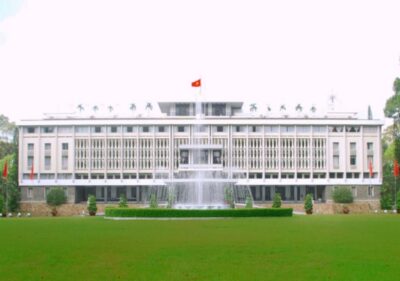
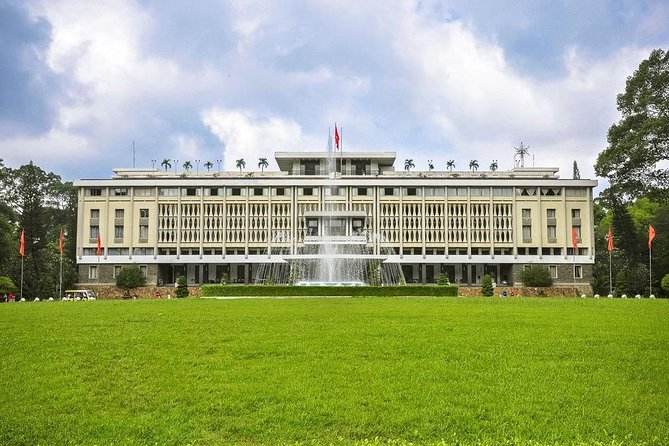
Independence Palace (also known as Reunification Palace) is the kind of place that hits you in the stomach before your brain catches up. The grounds are lined with royal palm trees, and then you walk into a building with 1960s-era government architecture—part historical artifact, part scene from a film.
What makes it special is the feeling of stillness. Even though the site is tied to major events in 1975, the mood can feel eerily preserved. You’ll see the type of rooms and spaces where decisions happened, and you’ll be able to connect what you’ve read about the fall of Saigon to the actual physical layout.
This stop is about 1 hour with admission included. It’s enough time to get your bearings, walk the key areas, and take in the period details without feeling like you’re sprinting.
Practical note: if you’re sensitive to heavy history, this is still worth visiting, but give yourself a little extra calm time at the end—don’t schedule anything intense right after.
War Remnants Museum: Honest, Uncomfortable Civilian Impact
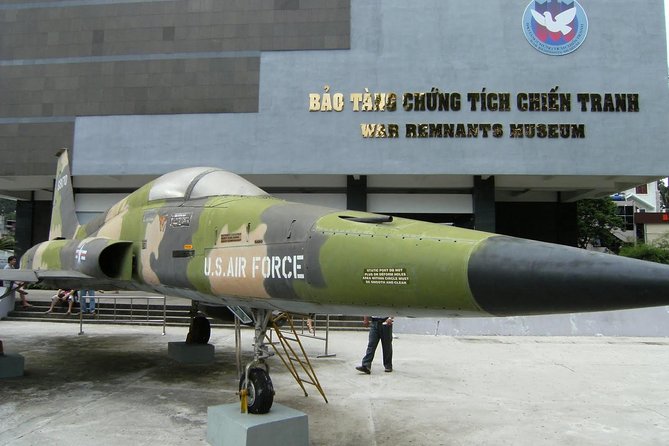
The War Remnants Museum is one of Ho Chi Minh City’s most visited sites for a reason. It documents the brutal effects of war on civilian life, and it includes accounts and images tied to U.S. military actions, including the well-known My Lai Massacre.
This isn’t a “light” museum. The strongest part is the way it focuses on the human cost—photographs and displays that push you to look at suffering directly rather than as abstract strategy. It’s also the sort of museum where the guide matters. Good guiding helps you understand context without trying to sugarcoat what you’re seeing.
Expect about 1 hour 30 minutes, with admission included. Build in a slower pace here. If you try to treat it like a quick photo stop, you’ll miss what the museum is trying to communicate.
A balanced way to approach it: plan to spend your energy on understanding the key sections, then don’t cram other emotional stops immediately afterward. You’ll feel the difference.
Emperor Jade Pagoda: Incense, Statues, and Smoke-Washed Details
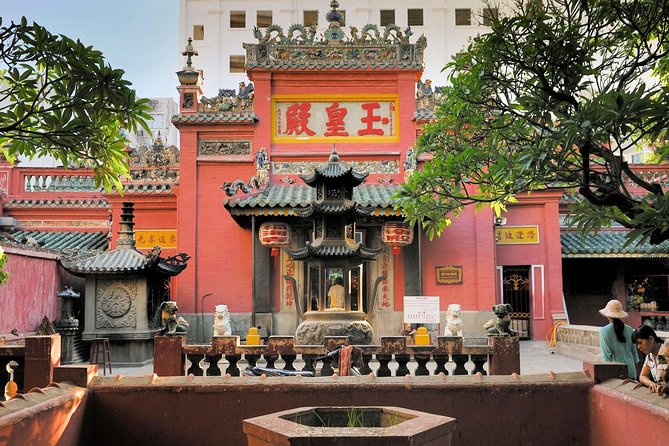
The Emperor Jade Pagoda (built in 1909) is one of the most atmospheric religious stops in the city. You’ll walk into a temple filled with statues tied to Taoist lore and the Jade Emperor, and the air carries the pungent scent of incense.
What I like here is how sensory it is. The incense smoke can blur the details, but it also makes the carved woodwork and the temple’s interior feel alive. You’re surrounded by faces, figures, and characters—some described as grotesque or otherworldly—along with tilework on the roof.
This stop is shorter—about 30 minutes—and it’s a perfect reset after the more heavy museum content. It also gives your day a “real life” element: religion you can experience rather than just read about.
If you visit, keep your camera ready but don’t ignore the room itself. The best photos come after you spend a few minutes just looking.
You can also read our reviews of more private tours in Ho Chi Minh City






Notre Dame Cathedral and the French Government Quarter Feel
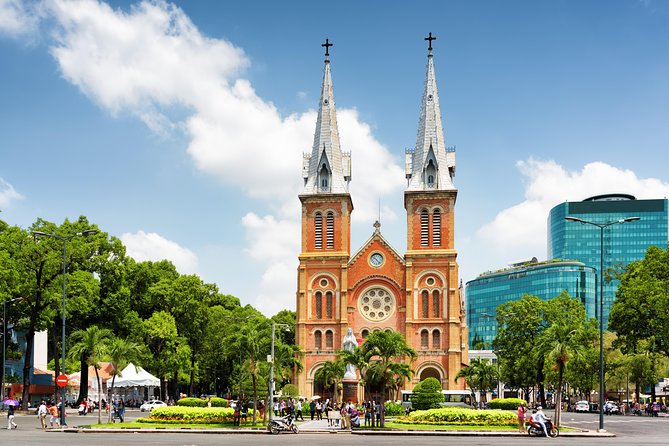
Saigon Notre Dame Cathedral sits in the government-quarter atmosphere of Ð Dong Khoi. Built between 1877 and 1883, it’s a brick neo-Romanesque church with tall square towers (about 40 meters) and iron spires.
This is more of a quick “pause and appreciate” stop than a long interior visit. Admission is free here, and you’ll likely spend around 20 minutes—enough time to see the exterior and get a look inside.
What’s worth noticing:
- The way it anchors the central area near other French-era buildings
- Interior devotional details and any surviving stained glass
If you’re into architecture, this stop makes the rest of the French colonial walk make more sense.
Central Post Office: A French-Era Building Still in Use
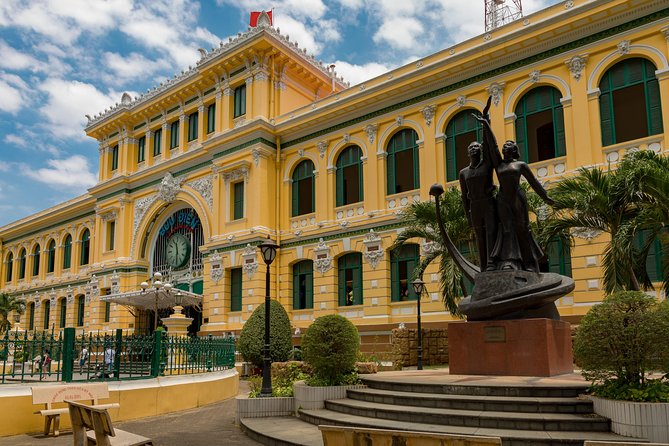
Right across from Notre Dame, you’ll find Ho Chi Minh City’s Central Post Office. This is a design classic built between 1886 and 1891, credited to Marie-Alfred Foulhoux (even though you may hear Eiffel mentioned).
The reason to care isn’t just the facade. The interior is the show: barrel-vaulted space, tiled floors, green-painted wrought iron, and historic maps painted right on the walls. There’s also a mosaic featuring Ho Chi Minh.
You’ll spend about 30 minutes with admission included. It’s long enough to walk the concourse, check the maps, and take in the scale of the hall.
And here’s the practical part: post offices tend to be working places. If you want, you can send a postcard or just watch the rhythm of everyday errands while you stand in a landmark space.
People’s Committee Building and the Opera House at Night
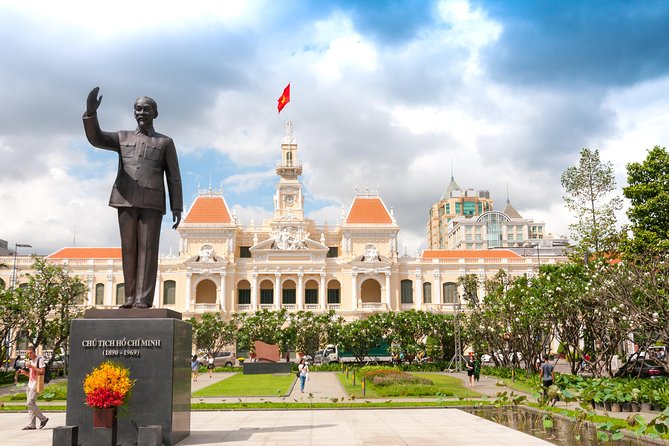
The People’s Committee Building sits at the end of the Nguyen Hue walking promenade, along a stretch of major city-center architecture. The building’s facade includes embossed statues of animals and people, bas-reliefs, and a statue of Ho Chi Minh in front.
A smart detail is timing. The features are described as best in the evening, when LED lights illuminate parts of the facade and surrounding area. If your day includes the right time window, this stop becomes a photo-friendly moment without feeling forced.
Admission is free, and your time is about 20 minutes.
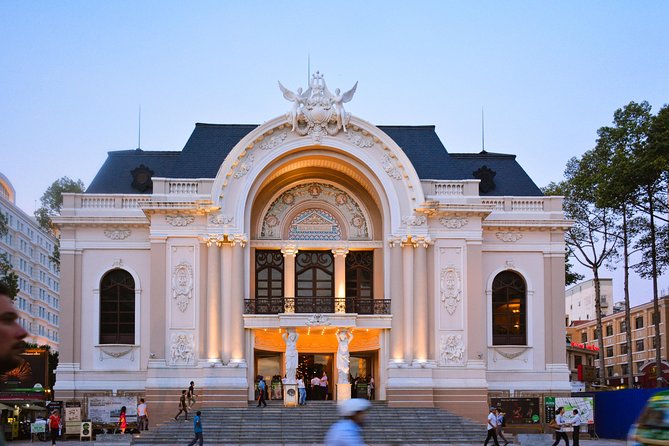
Then you’ll head toward the Saigon Opera House (Ho Chi Minh Municipal Theater), built in 1897. This is a classic colonial-era structure with a dramatic staircase and an old-world “France belle époque” vibe. Admission is also free, and you’ll likely get around 20 minutes to view the exterior and appreciate the building form and placement at the intersection of key streets.
Together, these two stops add a nighttime-ready feel to the day, even if you didn’t plan your schedule specifically for it.
Dong Khoi, Nguyen Hue, and the City Streets That Tell the Story
Not every stop is a single building. Some of the value here is simply moving through the city center streets that layer different eras.
- Ð Dong Khoi Street was once called Rue Catinat during French occupation and was known as a glamorous hub.
- Nguyen Hue Street is a broad pedestrian-style promenade in District 1, flanked by French colonial architecture like the People’s Committee area and other landmark facades.
This street time is useful because it helps your brain connect the monuments into a real map. You stop thinking of each site as a separate tourist checkbox and start seeing how the city reorganized itself over time.
Ben Thanh Market: Last Stop for Souvenirs and Snack Energy
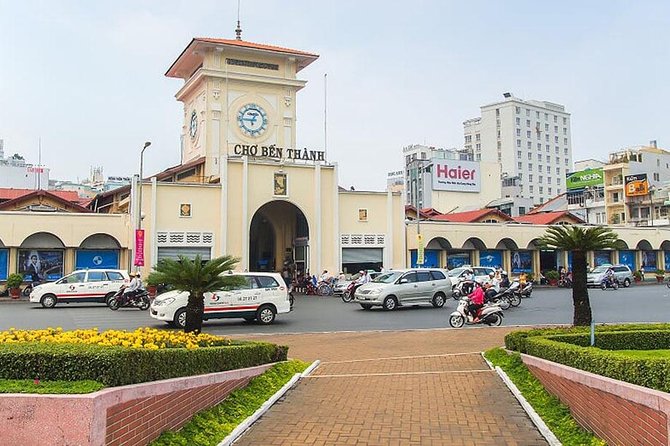
The tour finishes at Ben Thanh Market, one of the city’s most central and lively shopping areas. The place feels like an organized swirl—everything you might eat, wear, or use gets piled high, and souvenir options seem endless.
The practical reality is that vendors often price higher here than you’ll see elsewhere. Plan to bargain and don’t rely on fixed price signs, especially for souvenirs. For food and simple items from stall-style eateries, it tends to be more reasonable than the souvenir zone.
You’ll get about 30 minutes. That’s enough time to:
- buy a small set of gifts,
- grab a quick snack if you want,
- or just walk the aisles and pick up a sense of the city’s daily texture.
If you hate crowds, you’ll still be fine if you treat this as a controlled sprint rather than a long shopping trip. After that, you can easily head out toward quieter streets.
Lunch at a Vietnamese Restaurant: Included, With Limits to Know
Lunch is included at a Vietnamese restaurant, plus bottled water. Drinks during the meal are not included, so if you want juice, tea, or something stronger, budget for it separately.
This lunch stop matters for value because it removes one of the biggest “tour day” headaches: where you eat. You also won’t have to trade time on the most important stops to hunt for food.
Also, since the tour ends in a shopping area, having lunch earlier in the day is a smart way to avoid getting stuck in the market zone with empty energy later.
Price and Value: Is $100 a Good Deal?
At $100 per person for about 8 hours, the value mostly comes from what’s included, not the headline price.
You get:
- private transportation
- a private tour guide
- lunch (Vietnamese restaurant)
- bottled water
- all fees and taxes
- entrance fees included for the ticketed sights
That’s important because multiple stops are paid attractions, and some of the architecture stops are free. When the pricing includes entrances, you don’t face surprise add-ons at each building.
This tour tends to make the most sense if:
- you want the private experience (not a crowded group)
- you value having a guide handle the “why this place matters” part
- you’d otherwise spend time and effort building your own route across District 1
The only cost surprises you should plan for are typical personal expenses and tips for your guide and driver, since those aren’t included.
Who Should Book This Private Ho Chi Minh City Tour
I’d recommend this tour if you:
- want a one-day hit list of major District 1 sites
- like having a guide explain what you’re seeing instead of guessing
- want flexibility to spend more time where you care most
- prefer private transport through the busiest areas
It’s also a good choice for people with limited time who still want both historical context and city-center atmosphere—without switching taxis repeatedly.
I’d think twice if you:
- dislike museums tied to violent conflict (War Remnants Museum is intense)
- can’t handle markets or shopping energy at the end of the day
- need wheelchair access (this tour is not wheelchair accessible)
Should You Book This Private Ho Chi Minh City Tour?
If your priority is a well-paced, private District 1 day with included tickets and a guided mix of war history, temples, French colonial landmarks, and a strong finish at Ben Thanh, this tour is a solid choice for the money.
Just do two things to make it safer: confirm your pickup details clearly the day before, and decide how much market time you actually want since the day naturally ends there. If you can handle that, you’ll likely come away with a stronger sense of how Ho Chi Minh City layers different eras into one walkable core.
FAQ
FAQ
How long is the Ho Chi Minh City private tour?
The tour is approximately 8 hours.
How much does this private tour cost?
It costs $100.00 per person.
Is hotel pickup offered, and where do I meet the guide?
Hotel pickup is offered. If you prefer to meet instead, the meeting point is Independence Palace in District 1. The tour ends at Ben Thanh Market.
Is lunch included?
Yes. Lunch at a Vietnamese restaurant is included, and bottled water is also included. Beverage during the meal is not included.
Are entrance fees included?
Yes. Entrance fees are included, and it’s also noted that entrance at some stops is free.
What are the main stops during the day?
You’ll visit Independence Palace, the War Remnants Museum, Emperor Jade Pagoda, Saigon Notre Dame Cathedral, the Central Post Office, the People’s Committee Building, the Saigon Opera House, and you’ll finish at Ben Thanh Market.
Is the tour wheelchair accessible?
No, the tour is not wheelchair accessible.
Does the tour include private transportation and a private guide?
Yes. The tour includes private transportation and a private tour guide.
What is the cancellation policy?
You can cancel for a full refund up to 24 hours in advance of the experience start time, based on local time.