REVIEW · HO CHI MINH CITY
Market to Farm to Table Cooking Class in saigon
Book on Viator →Operated by HCM Cooking Class · Bookable on Viator
Farm food starts with a wet market. This Ho Chi Minh City market-to-farm-to-table cooking class turns everyday ingredients into a full food lesson, with a small group size capped at 15 so you actually get personal help, not just a seat and a recipe card. You’ll also see the chain from wet market to farm to your plate, not the shortcut version.
What I like most is how much you cook, not just watch. You get hands-on time to make four authentic Vietnamese dishes, and the day keeps moving at a learn-by-doing pace. One consideration: it’s a 7:30 am start and runs about 8 hours, so plan your other sightseeing around a long morning.
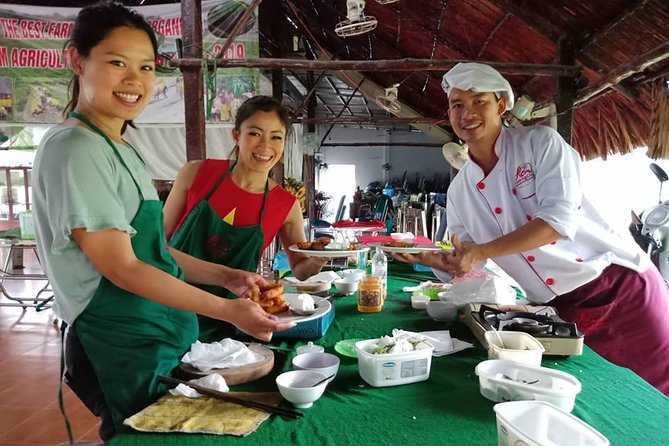
If you’re lucky, you’ll meet instructors like Chef Tan and Chef Daisy, who come across warm, patient, and tuned in to what each person wants to cook. You’ll leave with recipes plus a certificate of completion, so this feels more like a real skill-building workshop than a casual demo.
In This Review
- Key highlights at a glance
- Market-to-farm-to-table in Saigon: why this class is worth your time
- 7:30 am starts at the wet market: seafood, herbs, and quick fruit stops
- What to watch for (and why it matters)
- The organic farm visit: picking your own vegetables like a farmer
- A small note on expectations
- Hands-on cooking: four dishes, real technique, no passive sitting
- Lunch, snacks, and tea/coffee: you eat your work
- Drinks: the one thing to budget for
- Vegetarian options and dietary needs: what you can ask for
- Price and value: is $70 fair for Saigon?
- Logistics that actually matter: time, group size, and comfort
- Who this class is best for (and who might want something else)
- FAQ
- What time does the cooking class start?
- How long does the market-to-farm cooking class last?
- Is hotel pickup and drop-off included?
- How many dishes will I cook?
- Is lunch included, and what does it include?
- Are vegetarian or vegan options available?
- Does the tour include coffee and tea?
- Are drinks included?
- Should you book this Saigon market-to-farm cooking class?
Key highlights at a glance
- Limited to 15 people for close-up coaching and better kitchen time
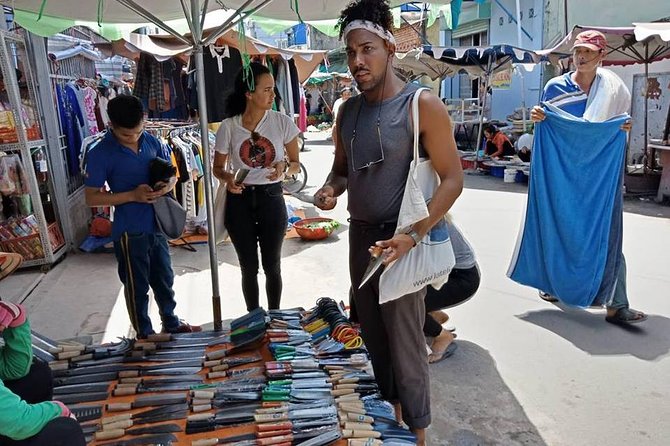
- Wet market ingredient tour with lots of fresh produce and seafood to see up close
- Organic farm picking where you choose vegetables and herbs yourself
- 100% hands-on cooking making four Vietnamese dishes you can actually eat right after
- Tea and coffee with your meal, plus lunch/snacks included
- Recipes and a completion certificate so you can repeat the dishes later
Market-to-farm-to-table in Saigon: why this class is worth your time
Ho Chi Minh City is packed with food options, so it’s easy to think a cooking class will just be another way to eat. This one is different because it starts at the source: you go to a wet market, then you move to an organic-style farm, and only then do you cook.
That order matters. In Vietnam, flavor is built on herbs, aromatics, and the balance of sauces and textures. If you’ve only ever tasted dishes on the street, you might know what you like, but you may not understand why it tastes that way. This class gives you the “why,” while you’re touching the ingredients and learning how different plants behave in cooking.
The small-group limit is also a practical win. With a maximum of 15, questions don’t get lost in the noise, and you’re more likely to get feedback on chopping, seasoning, or timing—especially important in a hands-on format where everyone is cooking at once.
You can also read our reviews of more shopping tours in Ho Chi Minh City


7:30 am starts at the wet market: seafood, herbs, and quick fruit stops
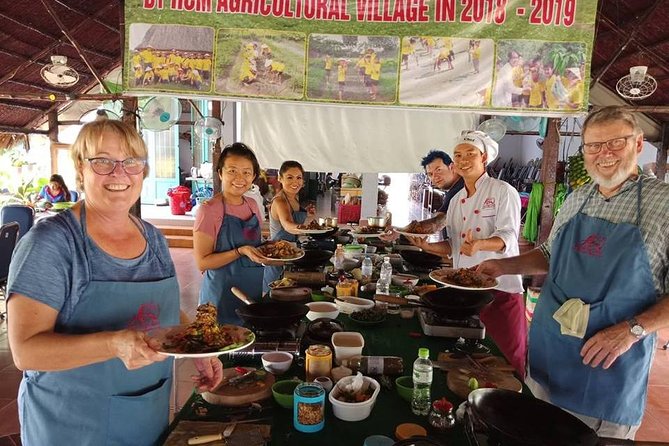
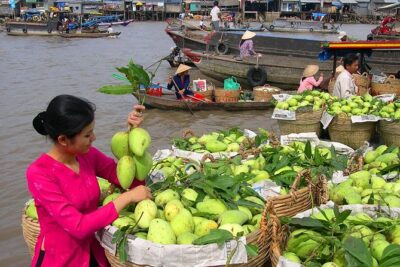
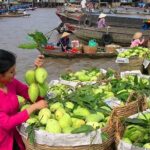
The day begins early, typically at 7:30 am, with hotel pickup offered and the option of a mobile ticket. Then you head straight to a local wet market, where the goal is to help you recognize ingredients like an ingredient hunter, not just a hungry tourist.
This part is built around variety. Expect to see lots of different produce and learn how common Vietnamese ingredients work in the cuisine. One of the most interesting details here is the market’s focus on freshness—there’s a strong “alive seafood” presence, so you get that real, not-a-photoshoot reality check that makes the rest of the day feel grounded.
You’ll also sample fresh fruit from the market. This isn’t just a snack break. Fruit in Vietnamese cooking culture isn’t only dessert-style. Learning how to notice sweetness, acidity, and ripeness helps you understand why the finished dishes taste “balanced” instead of one-note.
What to watch for (and why it matters)
Wet markets can feel intense: smells, noise, and constant motion. The upside is you learn faster when you’re in the real environment. If you’re the type who freezes when menus change languages, this is a good format because your guide helps you connect names to what you’re actually seeing.
The organic farm visit: picking your own vegetables like a farmer
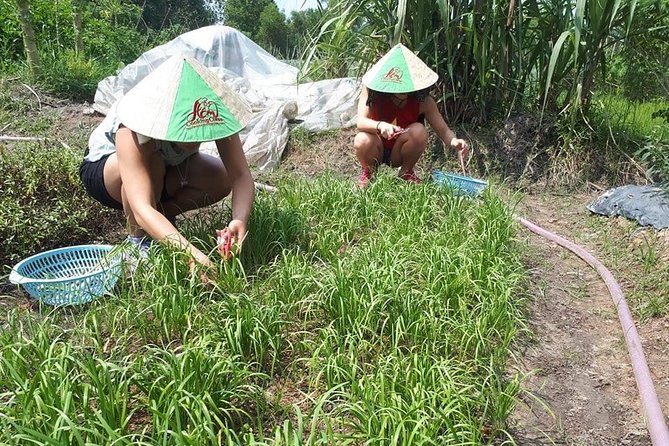
After the market, you move to the farm. This is where the day shifts from “shopping” to “understanding.” You’ll be greeted in a traditional style—welcomed with a hat and basket—and you’ll get a sense of what it’s like to farm rather than just buy food.
The farm portion is especially focused on plants. You’ll see vegetables, mints, mushrooms, and other produce, and you’ll learn how different plants contribute nutrition and flavor. That’s a subtle but important educational piece: once you know which herbs are aromatic versus which are more cooling or earthy, you can recreate flavors with more confidence later.
Then comes one of the best practical moments: picking your own ingredients. Choosing what goes into the dishes changes your relationship to the cooking process. Instead of following instructions blindly, you’re making decisions based on what you saw and learned earlier.
A small note on expectations
The term organic is used in the experience description, but you shouldn’t expect to see a lab-like certification process during a farm visit. What you can count on is hands-on access, plant-focused teaching, and a real picking component that makes the day feel earned.
You can also read our reviews of more tours and experiences in Ho Chi Minh City


Hands-on cooking: four dishes, real technique, no passive sitting
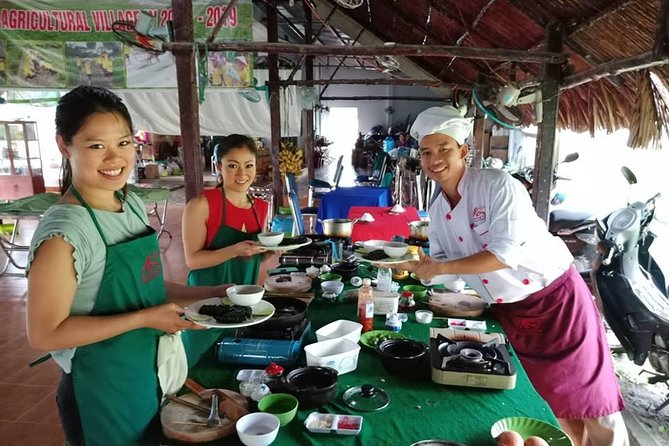
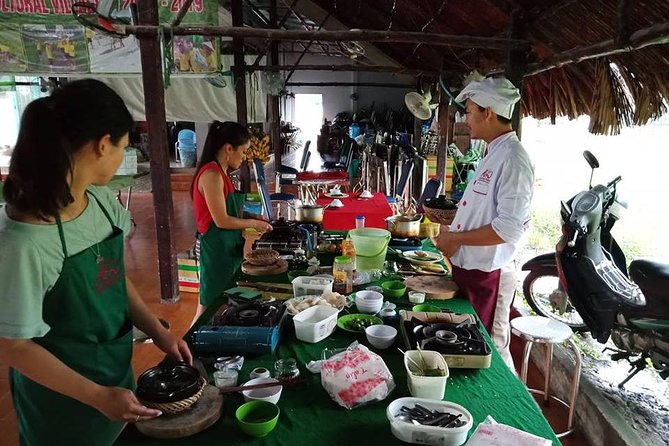
Now you get to the heart of it: you’ll cook. The experience is designed for 100% hands-on participation, and the class is limited to 15 people, so the kitchen setup is meant to keep you active.
You’ll prepare four different Vietnamese dishes. The exact menu isn’t listed here, so plan to trust your instructor’s plan and focus on technique rather than memorizing dish names. Still, based on the way the chefs teach, you can expect an emphasis on classics and on understanding the steps that create Vietnamese flavor—aromatics, herbs, balance of seasonings, and texture.
A few practical observations from the way the class is described and taught:
- You’ll learn what each ingredient is for, not just where it goes.
- The pacing is built to let you finish and eat what you make, not to abandon dishes mid-step.
- The kitchen time is intimate enough that dietary requests can be handled with care when you’ve given them up front.
One of the nice parts: you’ll have a chance to adjust or request dishes you’ve enjoyed before. That doesn’t mean every single request will match perfectly, but it does signal that the instructor team is used to accommodating different preferences and comfort levels.
Lunch, snacks, and tea/coffee: you eat your work
This isn’t a “cook for show” class. You enjoy what you make afterward with tea and coffee included.
Meals are part of the value here:
- Lunch is included
- Snacks are included
- The lunch is described as a four-course lunch
- Bottled water is included
- Coffee and/or tea is included
That four-course structure is what makes the day feel like more than just a cooking lesson. Even if you’re not the world’s fastest chopper, you’ll still get a full food experience out of the day.
Drinks: the one thing to budget for
Drinks are listed as not included. Coffee and tea are included, but if you want additional beverages beyond that, have a little cash or card plan in mind.
Vegetarian options and dietary needs: what you can ask for
If you’re vegetarian, you’re covered: a vegetarian option is available. The best move is to advise at booking.
The experience also says to let them know any specific dietary requirements in advance. In the real world, that matters because Vietnamese cooking often includes fish sauce or shrimp-based ingredients. When dietary needs are stated early, chefs can steer the dishes toward safe ingredients while still keeping the flavor logic intact.
There’s also a useful clue from a vegan/meat split experience: when one person wanted vegan and another wanted meat, the class ran in a way that still felt personalized. That doesn’t guarantee every group will be split the same way, but it’s a good sign that the team understands how to teach veg and non-veg versions without turning it into a stressful scramble.
Price and value: is $70 fair for Saigon?
At $70 per person, this is not a bargain-basement activity. But when you break down what you get, it’s easier to see why it’s priced where it is.
You’re paying for:
- Wet market tour
- Farm visit including ingredient picking
- Hands-on cooking for four dishes
- Lunch plus snacks (including a four-course lunch)
- Hotel pickup and drop-off
- Local guide and professional guide
- Recipes and a completion certificate
- Fuel and facility fees
- Bottled water
- Coffee/tea
For many people, the biggest hidden cost on Vietnamese day tours is transportation plus food plus instruction. Here, those pieces are bundled together. Also, the small-group setup matters. If you’ve ever been in a bigger class where you’re just waiting your turn, you know why limiting size can justify a higher price.
Also, this class tends to get booked well ahead (it’s shown as booked around 161 days in advance on average). If Saigon is busy during your dates, booking early helps you lock in your start time and availability.
Logistics that actually matter: time, group size, and comfort
This is an 8-hour experience with a 7:30 am start. That means you should treat it like your main event that day. If you try to stack it with late-night plans, you’ll probably feel it.
The day includes pickup and drop-off, which is a relief if you’re not keen on sorting out rides first thing in the morning. The class is capped at 15, so you’re likely to have a smoother flow between market, farm, and cooking station than you would on large group tours.
You’ll also be moving through two very different environments: a wet market and a farm. Wear something comfortable and practical for walking and handling ingredients. You’re not listed as being given special equipment, so sensible shoes and clothing are your best friends.
Who this class is best for (and who might want something else)
This tour fits best if you want more than eating. Choose it if:
- You like learning through hands-on cooking
- You want to understand ingredients (especially herbs and vegetables)
- You want a structured day with pickup, meals, and instruction handled
- You’re comfortable with a long morning start
It might be less ideal if:
- You hate early starts or long guided days
- You only want a quick street-food tasting with no farm/market walking
- You’re looking for a super-expensive restaurant style experience rather than practical cooking
FAQ
What time does the cooking class start?
The experience starts at 7:30 am.
How long does the market-to-farm cooking class last?
It runs for about 8 hours.
Is hotel pickup and drop-off included?
Yes. Hotel pickup and drop-off are included.
How many dishes will I cook?
You’ll prepare and enjoy four different authentic Vietnamese dishes.
Is lunch included, and what does it include?
Yes. The experience includes lunch and snacks, with lunch described as a four-course lunch.
Are vegetarian or vegan options available?
A vegetarian option is available. You should advise any dietary needs at the time of booking.
Does the tour include coffee and tea?
Yes. Coffee and/or tea are included.
Are drinks included?
Other drinks are not included.
Should you book this Saigon market-to-farm cooking class?
If you want to understand Vietnamese cooking instead of just tasting it, this is a strong choice. The combination of a wet market ingredient tour, an organic-style farm with ingredient picking, and hands-on cooking for four dishes makes it feel like you’re learning a system—how flavors get built.
The only real reason to skip is the early wake-up and long day. If you can handle that, the price looks fair for what’s included, especially with pickup, a four-course lunch, recipes, and a certificate. Book ahead for your dates, and send your dietary needs early so the chef can plan the right dishes for your group.