REVIEW · HO CHI MINH CITY
Saigon: City Sightseeing Hop-On Hop-Off Bus Tour
Book on GetYourGuide →Operated by City Sightseeing Worldwide · Bookable on GetYourGuide
Saigon from the top is a fast win. This hop-on hop-off bus is an easy way to get your bearings and see major landmarks without planning every route day-by-day. I like that you get free Wi-Fi on board and a handy guidebook with maps and timetables, so you’re not stuck guessing where to go next.
Your big win is flexibility: choose the Red or Blue route, hop off near the sights you care about, then ride on when you’re ready. The main thing to consider is that the headphone audio isn’t always perfectly matched to what you’re seeing, so treat it as useful context, not a pinpoint narration of every building.
In This Review
- Key things that stand out
- What This Hop-On Hop-Off Bus Really Solves in Saigon
- One practical drawback to keep in mind
- Red vs Blue: Which Route Fits Your Day (and Your Photos)
- Red Route: Colonial District 1 to District 1 hotspots
- Blue Route: District 5/Cholon flavor and market-and-pagoda energy
- Red Route Stop by Stop: What to See, Where to Hop, What to Watch For
- 1) Saigon Opera House (Stop 1)
- 2) Nguyen Hue Street
- 3) Nha Rong Wharf
- 4) Tran Hung Dao Statue
- 5) Museum of Vietnamese History
- 6) War Remnants Museum
- 7) Pham Ngu Lao Street
- 8) Ben Thanh Market
- 9) Independent Palace
- 10) Saigon Notre Dame Cathedral / Central Post Office
- Blue Route Stop by Stop: Markets, Flower Energy, and Temple Stops
- 1) Beer Street – Pham Ngu Lao Street
- 2) Ben Thanh Market
- 3) War Remnants Museum
- 4) Ho Thi Ky Flower Market
- 5) Phuoc An society’s premises
- 6) Ong Bon Pagoda
- 7) Binh Tay Market
- 8) Thien Hau Pagoda
- 9) Van Phat Pagoda
- On-Board Comfort and Audio: The Stuff That Makes or Breaks the Ride
- Top deck vs lower deck
- Don’t trust the audio timing blindly
- Timing: How to Use the Pass Like a Pro (1 Day or 2 Days)
- If you have 1 day
- If you have 2 days
- Switching lines (where it’s advised)
- Price and Value: Does $21 Make Sense?
- Who This Tour Suits Best (and Who Might Be Happier Elsewhere)
- Should You Book the Saigon Hop-On Hop-Off Bus?
- FAQ
- How long are the Red and Blue routes?
- Which stops are included on the Red route?
- Which stops are included on the Blue route?
- Do I need to pay extra for museum or attraction entry?
- What languages are available for the audio guide?
- Can I use a mobile voucher on this tour?
Key things that stand out

- Two full routes that help you cover more ground in less time
- Free Wi-Fi plus a printed guidebook with maps, recommendations, timetables, and coupons
- Audio in 9 languages with headphones, so you can travel at your own pace
- Good stop placement for the big-photo sites like Notre Dame Cathedral/Central Post Office and the War Remnants Museum
- Top-deck views with an air-conditioned option below when it’s hot or raining
What This Hop-On Hop-Off Bus Really Solves in Saigon
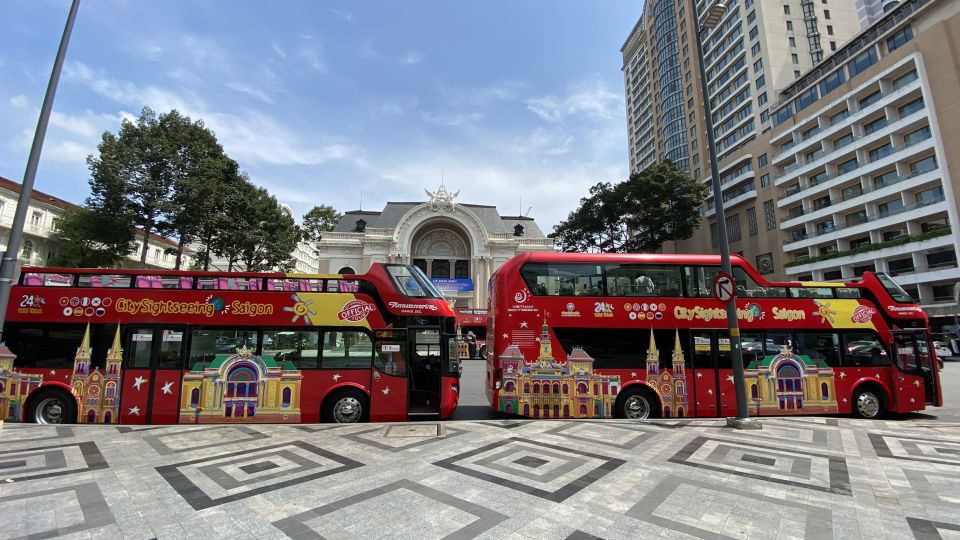
Saigon (Ho Chi Minh City) can feel like two cities at once: wide boulevards and colonial facades in District 1, then busy markets and temple areas as you travel outward. This tour’s real job is to make those distances manageable. Instead of timing taxis all day—or walking until your feet file a complaint—you ride a loop with frequent departures and clear stop names.
I also like how the stops are built around landmarks you’ll actually want to return to. Notre Dame Cathedral/Central Post Office and the War Remnants Museum are the kind of places where it helps to pause, look, and decide if you want extra time. And because you can ride either route on a 1- or 2-day pass, it’s simple to match the tour to your energy level.
You can also read our reviews of more city tours in Ho Chi Minh City



One practical drawback to keep in mind
Some buses have audio that can be slightly out of sync with the scenery, and there can be the occasional sound hiccup. That doesn’t ruin the tour, but it’s smart to keep your eyes on the street-level landmarks and use the audio as a guide, not a strict GPS for history.
Red vs Blue: Which Route Fits Your Day (and Your Photos)
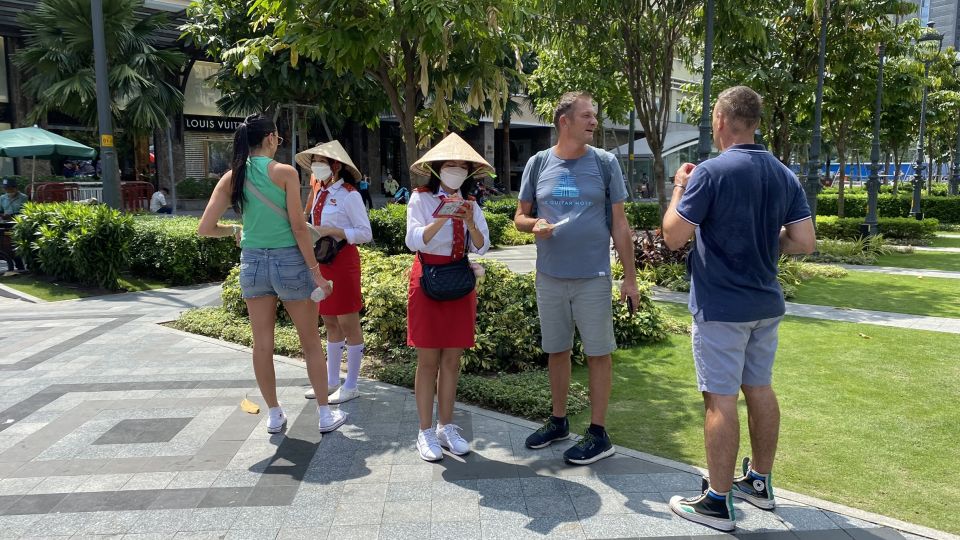
You get two routes with different styles and time windows. Think of them like “core sights” versus “markets and temples.”
Red Route: Colonial District 1 to District 1 hotspots
Timing
- First departure: 9:00am (from Stop 1)
- Last departure: 4:00pm
- Frequency: every 30 minutes
- Tour duration: 75 minutes
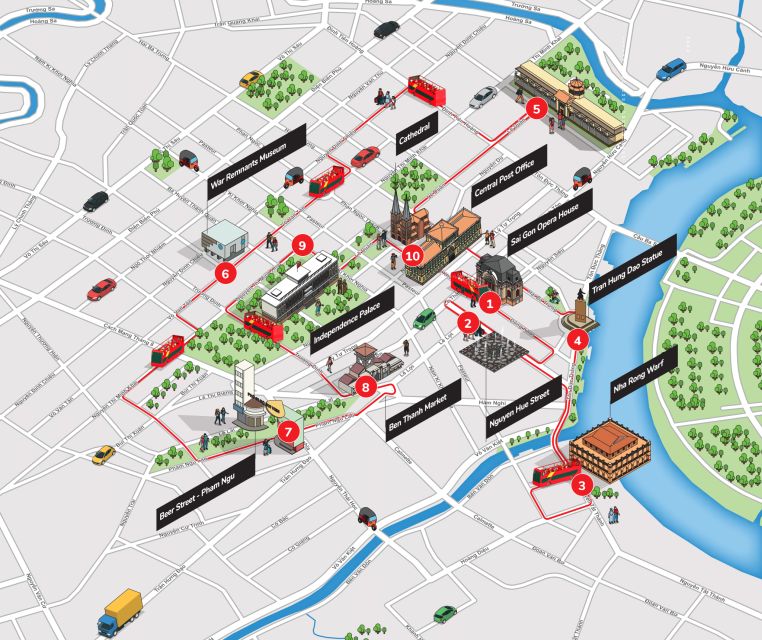
Red Route stops (in order)
1) Saigon Opera House
2) Nguyen Hue Street
3) Nha Rong Wharf
4) Tran Hung Dao Statue
5) Museum of Vietnamese History
6) War Remnants Museum
7) Pham Ngu Lao Street
8) Ben Thanh Market
9) Independent Palace
10) Saigon Notre Dame Cathedral / Central Post Office
Why I like Red: it strings together the “first-time Saigon” hits in a way that’s easy to plan around. If you’re staying near District 1, this route also helps you limit long taxi rides.
Blue Route: District 5/Cholon flavor and market-and-pagoda energy
Timing
- First departure: 9:00am (from Stop 1)
- Last departure: 3:45pm
- Frequency: every 45 minutes
- Tour duration: 80 minutes
Blue Route stops (in order)
1) Beer Street – Pham Ngu Lao Street
2) Ben Thanh Market
3) War Remnants Museum
4) Ho Thi Ky Flower Market
5) Phuoc An society’s premises
6) Ong Bon Pagoda
7) Binh Tay Market
8) Thien Hau Pagoda
9) Van Phat Pagoda
Why I like Blue: it gives you a broader “everyday Saigon” picture—flowers, pagodas, and markets—plus it still loops through major anchors like Ben Thanh Market and the War Remnants Museum.






Red Route Stop by Stop: What to See, Where to Hop, What to Watch For
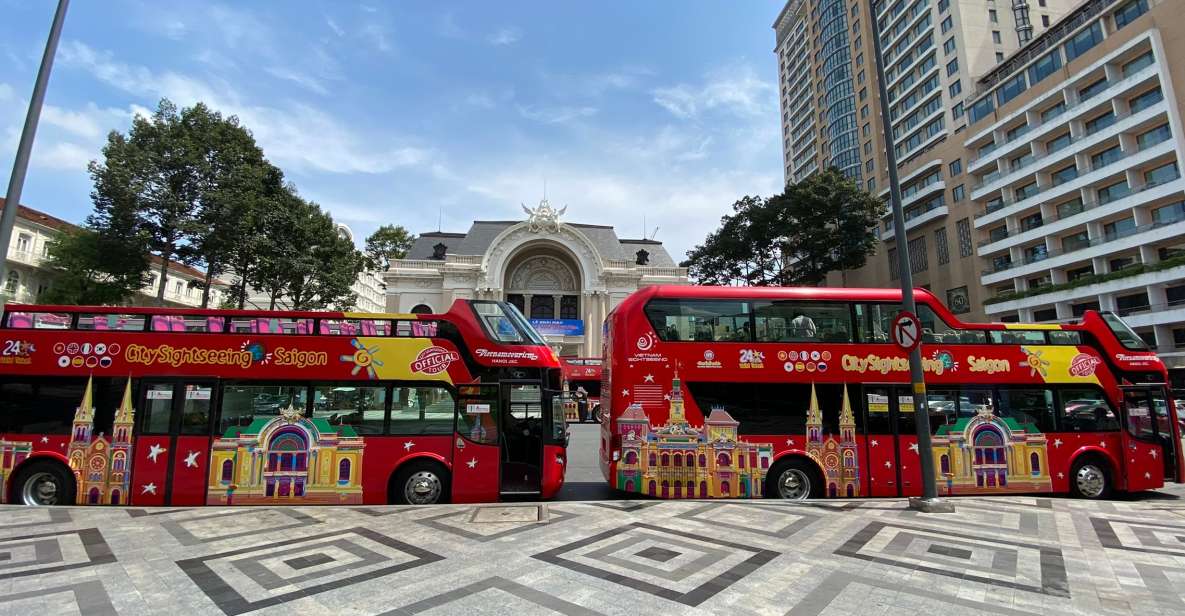
The Red route is your District 1 backbone. If you want a clean overview, do this first day and use the second day to return to the stops that grabbed you.
1) Saigon Opera House (Stop 1)
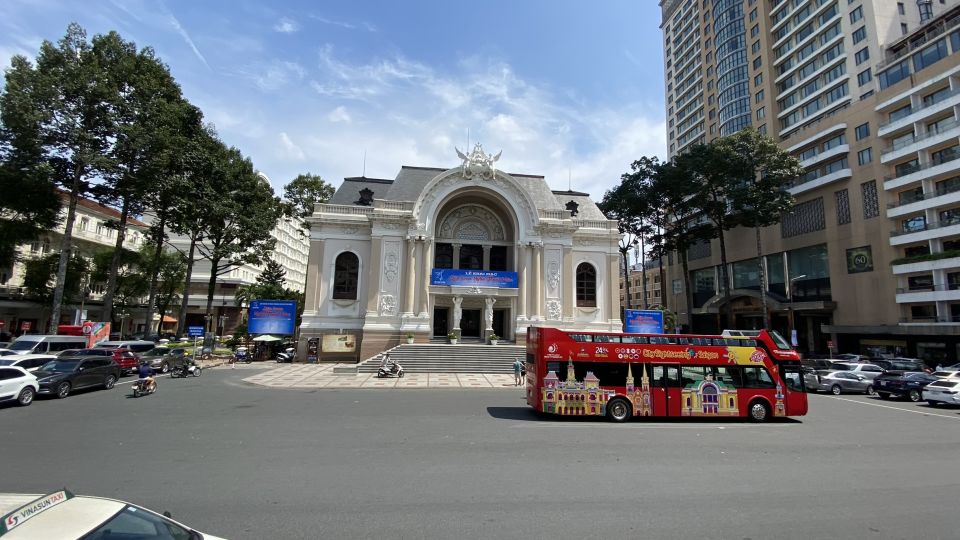
This is a strong starting point because it’s central and easy to orient around. It also matters for logistics: you’ll find the ticket counter area tied to the Opera House, so it’s a handy place to sort out your voucher before you ride.
Hop off tip: If you want photos without fighting crowds, early departures tend to be calmer.
2) Nguyen Hue Street
This is where you’ll feel the city’s pulse—broad streets and big-city energy. It’s a good “look, then move” stop. You can take in the view from the top deck, then decide if you want to spend time on foot.
Watch for: If it’s extremely hot, don’t underestimate how quickly you’ll want the air-conditioned lower deck.
3) Nha Rong Wharf
The name alone tells you it’s a riverfront moment. Even if you don’t hop off, it’s a useful visual change of pace.
Hop off tip: If you’re curious about the water area, hop off briefly to see the surroundings, then re-board at the next opportunity.
4) Tran Hung Dao Statue
Another quick “landmark check” stop. It’s worth noting because the bus route keeps moving, and these shorter stops help you stay oriented without committing to a long detour.
5) Museum of Vietnamese History
A museum stop is great for when your brain wants context. If you’re the kind of traveler who likes to pair architecture with background, this is a solid pick to visit longer—just remember, entry isn’t included, so plan that time and any ticket cost separately.
6) War Remnants Museum
This is one of the most important anchors on the entire tour. You can hop off to visit, or stay on to get a visual “sense of place” before you decide.
Important routing note: This is also one of the points where switching between lines makes sense. The tour advises switching lines around the mid-route stops (including this one), so you can build your day efficiently.
7) Pham Ngu Lao Street
This is your “social and street scene” zone. It’s often associated with lively walking areas and casual browsing.
If you like to people-watch: this is a good place to step off for an hour, not just five minutes.
8) Ben Thanh Market
Ben Thanh Market is one of those places you’ll hear about for a reason: it’s a classic shopping-and-snacking stop. It’s also a great option even if you’re not shopping hard—you can still soak up the atmosphere.
Value note: Since entry to the market itself is not described as included, I’d treat this as a chance to shop or grab food at your own pace.
9) Independent Palace
This is a major “big-ticket” sight on the Red route. If you want a structured visit, hopping off here is smart because it’s not just a photo-stop type of place.
Planning reality: If you have limited time, prioritize this over smaller stops. It’ll give you the best payoff for your day.
10) Saigon Notre Dame Cathedral / Central Post Office
This is a top photo pairing: the cathedral and the post office are connected in the way the tour frames the stop. Even from the street, it’s a standout moment, and it’s also easy to pair with other District 1 sights nearby.
Best use: Jump off here and linger longer than you think. The area rewards slow walking.
Blue Route Stop by Stop: Markets, Flower Energy, and Temple Stops
Blue is for when you want Saigon beyond the main boulevard postcard view. It’s still efficient, but the stops tilt more toward daily life.
1) Beer Street – Pham Ngu Lao Street
This is a practical starting point because it’s tied to a well-known lively area. Even if you don’t drink, it’s a good “feel of the district” introduction.
2) Ben Thanh Market
Yes, it appears on Blue too. That’s a feature, not a bug. It gives you an easy re-entry point if you’re building a two-day plan and want to revisit shopping after exploring elsewhere.
3) War Remnants Museum
Another anchor repeated on Blue. Having it on both lines makes it easier to line up with your schedule, especially if you decide to do the museum early or later.
4) Ho Thi Ky Flower Market
This is a great stop for sensory variety. Flowers make the whole area feel different from the rest of the city stops, and it’s often where you get colorful photos without needing to “go looking.”
Hop off tip: If you want pictures, stand near stalls briefly and don’t rush—your eyes need a minute to adjust.
5) Phuoc An society’s premises
This is more specific and less “mainstream famous” than some stops, which can be a plus if you like quieter sights. It’s also a reminder that this route goes beyond only the standard monuments.
6) Ong Bon Pagoda
A pagoda stop gives you a strong contrast to colonial-era scenes. You’ll likely see more local-style architecture and worship spaces—exactly the kind of change that makes a city feel real.
7) Binh Tay Market
Another big market stop. This is ideal if you like walking through everyday commerce and browsing without having a strict shopping list.
What to expect: Markets can be crowded and busy, so if you want photos, pick moments when foot traffic slows down.
8) Thien Hau Pagoda
Again, you get temple time. This stop is a good match if you want to keep your day moving but still include at least two or three “sit and look” pauses.
9) Van Phat Pagoda
This final stop wraps up the temple-and-market style. If you’re doing a 1-day pass, decide in advance how much time you want to spend outside the main core.
On-Board Comfort and Audio: The Stuff That Makes or Breaks the Ride

This tour includes headphones and an audio guide in 9 languages: English, Spanish, German, French, Chinese, Japanese, Korean, Vietnamese, and Russian. That’s genuinely useful in a city where you might not always catch English explanations on-site.
I also like the practical touches:
- Free Wi-Fi helps with maps, messaging, and ride-hailing
- The guidebook includes maps, recommendations, timetables, and coupons
- There are usually helpful staff on the ground and on buses, including quick assistance when weather turns
Top deck vs lower deck
If it’s sunny, the top deck is where the photos happen. If it’s hot or raining, switch to the lower deck—some rides have air conditioning, and it keeps the day from feeling exhausting.
Don’t trust the audio timing blindly
One clear caution: on some buses the audio may not match what’s right outside your window, and sometimes headphone sound can cut out. Keep a backup habit: glance at the stop list and street landmarks so you can orient yourself even if audio is imperfect.
Timing: How to Use the Pass Like a Pro (1 Day or 2 Days)
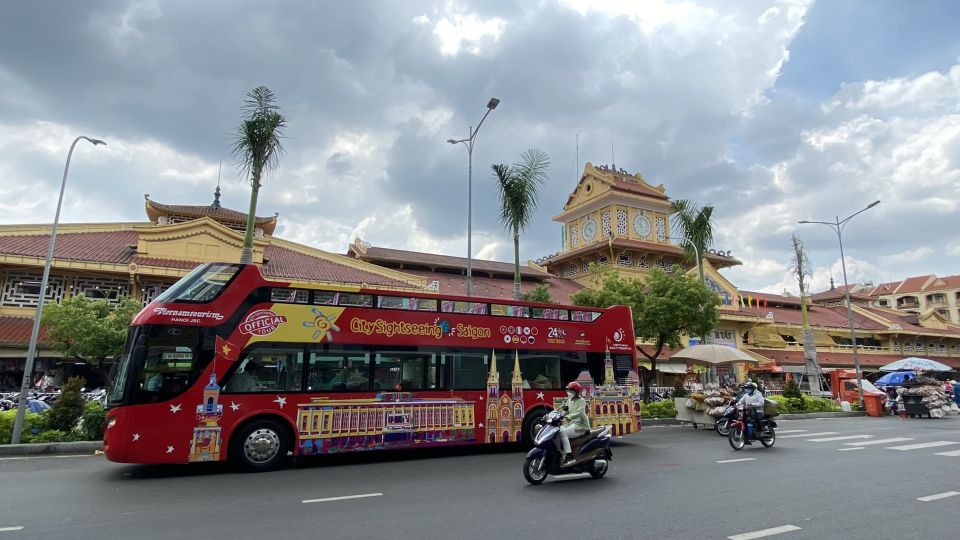
Your schedule matters because each line has a last departure time.
If you have 1 day
- Choose one main route (Red or Blue) to avoid feeling rushed.
- Plan one “long stop” (a museum or a major palace) plus one “browse stop” (market).
- Use the rest as orientation time: ride, watch, decide.
For example: Red + Independence Palace + Ben Thanh Market gives you a strong first-day mix of big sights and real street life.
If you have 2 days
This is where the hop-on hop-off idea shines. Do one full pass on Red, then use Blue the next day for markets and pagodas—or reverse it if you’re more curious about outer districts.
A smart strategy is to re-visit your favorite stop areas. That’s how you turn a bus ride into a day you actually remember.
Switching lines (where it’s advised)
The tour specifically advises switching lines at key Red-route stops—around Stops 6, 7, and 8—which align with different Blue-route stops. This matters because switching at the right moments prevents awkward backtracking and keeps your day fluid.
Price and Value: Does $21 Make Sense?
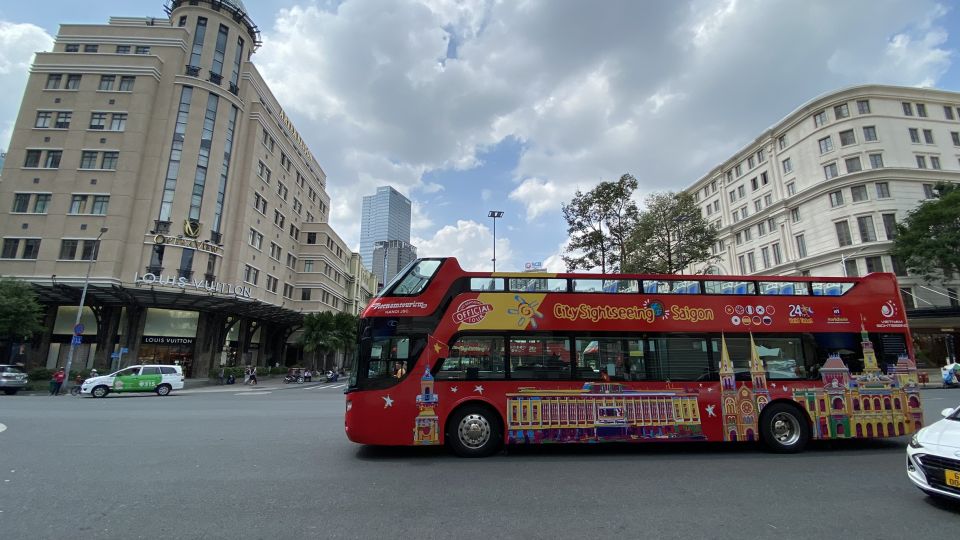
At $21 per person for the hop-on hop-off pass (valid 1–2 days), the value depends on how you usually get around.
If you’re planning to take a lot of short taxi rides across District 1, this bus often wins on simplicity. You pay once, then ride while you decide where to spend time. You also get free Wi-Fi and multi-language audio, which saves you time and hassle compared with using maps and guessing where to stop.
Where the price won’t magically cover everything:
- Entry to attractions is not included. Museums and paid sites cost extra.
- If you only hop off once or twice, you might feel like a taxi could have been cheaper. That’s the tradeoff with any fixed-route hop-on bus.
My rule: treat it as your city “index.” If it helps you choose your must-dos and prevents wasted transit time, it’s worth it.
Who This Tour Suits Best (and Who Might Be Happier Elsewhere)
This is best for:
- First-time visitors who want an overview fast
- Travelers who prefer to decide on the fly
- Families who need built-in pacing (hop off when kids want snacks, re-board when you’re ready to move)
- Anyone who doesn’t want to wrestle with traffic and multiple pick-up/drop-off points
It may be less ideal if:
- You already have a tight, pre-planned itinerary and plan to walk most places anyway
- You want live narration that perfectly times to exact viewpoints (since this is audio-based and can be imperfect)
Should You Book the Saigon Hop-On Hop-Off Bus?

If you’re trying to maximize your time and minimize stress, I’d book it. The two-route setup gives you a lot of coverage, and the combination of headphones + 9 languages + free Wi-Fi makes it easier to travel independently even if your Vietnamese is limited. At around $21, the math often works out when you factor in time saved and the convenience of frequent departures.
Do it early in your stay if you can. Ride, get oriented, and then come back to the stops that feel meaningful to you—especially the big anchors like Notre Dame Cathedral/Central Post Office, the War Remnants Museum, and Ben Thanh Market. If you want flexibility, this one fits.
FAQ
How long are the Red and Blue routes?
Red runs for about 75 minutes with departures every 30 minutes (first at 9:00am, last at 4:00pm). Blue runs for about 80 minutes with departures every 45 minutes (first at 9:00am, last at 3:45pm).
Which stops are included on the Red route?
The Red route includes: Saigon Opera House, Nguyen Hue Street, Nha Rong Wharf, Tran Hung Dao Statue, Museum of Vietnamese History, War Remnants Museum, Pham Ngu Lao Street, Ben Thanh Market, Independent Palace, and Saigon Notre Dame Cathedral/Central Post Office.
Which stops are included on the Blue route?
The Blue route includes: Beer Street (Pham Ngu Lao Street), Ben Thanh Market, War Remnants Museum, Ho Thi Ky Flower Market, Phuoc An society’s premises, Ong Bon Pagoda, Binh Tay Market, Thien Hau Pagoda, and Van Phat Pagoda.
Do I need to pay extra for museum or attraction entry?
Yes. Entry to attractions is not included, so plan for tickets separately.
What languages are available for the audio guide?
The audio guide is included with headphones and is available in English, Spanish, German, French, Chinese, Japanese, Korean, Vietnamese, and Russian.
Can I use a mobile voucher on this tour?
Yes. Mobile and paper vouchers are both accepted. You can also exchange tickets at the counter on the side of the Saigon Opera House, facing the Continental Hotel.