REVIEW · HO CHI MINH CITY
Ben Duoc ‘Less-Crowded’ Cu Chi Tunnels Half-Day Tour
Book on Viator →Operated by Joy Journeys · Bookable on Viator
Ben Duoc tunnels feel human-scale, not a theme park. This half-day styled outing from Ho Chi Minh City focuses on the Ben Duoc Cu Chi Tunnels area, with a small group capped at 10 so the day feels calmer and easier to manage. You’ll get war-history context, then the experience moves underground—complete with traps, tunnels you can crawl, and even a chance to touch an ex-US Army tank.
I especially like two parts: first, the tour is built around hands-on time underground instead of quick photo stops, including crawling through the tunnels and seeing booby traps. Second, the guide quality seems consistently high, with English-forward storytelling and a sense of humor (I’ve seen guides named Leo, Ken, Safa, and Tommy praised for making the history clear without turning it into lectures).
One drawback to plan for: the tunnels are tiny. Expect hunching, crawling, and close space. If you dislike claustrophobic environments, this is the key consideration before you go.
In This Review
- Key highlights worth aiming for
- Small-group logistics: getting from Districts 1, 3, and 4 to Cu Chi
- Why Ben Duoc feels different from the usual Cu Chi stop
- Underground war realism: booby traps, crawl space, and the ex-US tank
- Beyond tunnels: propaganda stops and the Hoang Cam underground kitchen
- The craft stop: thoughtful mission, tricky pricing
- How the guides (Leo, Ken, Safa, Tommy) steer the day
- Practical tips for a smoother crawl-through
- Price and value: is $34 a fair deal for Ben Duoc?
- Should you book this Ben Duoc Cu Chi Tunnels tour?
- FAQ
- Where does pickup happen, and where is the meeting point?
- How long is the Ben Duoc Cu Chi Tunnels tour?
- What does the tour price include?
- Is admission to the tunnels included?
- Does the tour include crawling inside the tunnels?
- Is there any food tasting?
- Are there any museum or sightseeing stops besides the tunnels?
- What if the weather is bad or the tour needs to be canceled?
Key highlights worth aiming for
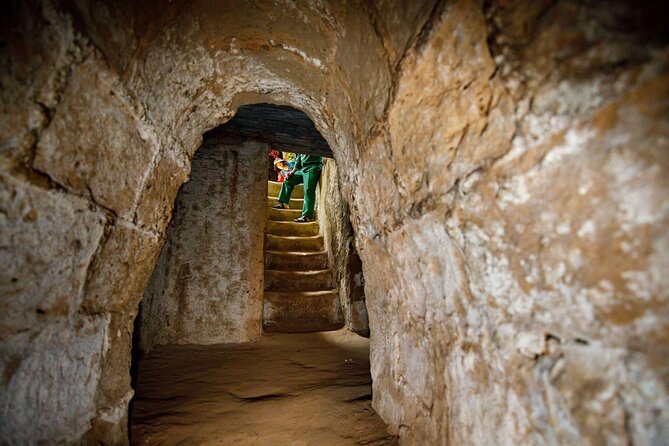
- A small group (max 10) at Cu Chi, designed to feel less packed than the headline tunnel sites
- Ben Duoc focus for a quieter, more authentic Cu Chi outing
- Hands-on underground time, including crawling and seeing/learning about booby traps
- Touch an ex-US Army tank as part of the war-history presentation
- Viet Cong food tastings like locally grown tapioca near the tunnels
- War-era realism beyond tunnels, including propaganda displays and an underground Hoang Cam kitchen stop
Small-group logistics: getting from Districts 1, 3, and 4 to Cu Chi
This tour runs long enough that I’d mentally file it as a full day, not a quick half-day sprint. The posted duration is about 6 to 7 hours, and that includes pickup, driving, and the time inside the Ben Duoc tunnels complex.
Pickup is straightforward. The experience offers pickup from accommodations in District 1, District 3, and District 4, and the transfer usually takes around 30 minutes. If you’re not in those districts, you’ll need to plan around the meeting point near Notre Dame Cathedral of Saigon. Either way, the transfer happens in an air-conditioned vehicle, which matters because the drive out to Cu Chi is not a short hop.
A practical detail: because Ben Duoc is farther out than the most famous Cu Chi stop, plan for a longer road ride than you might expect. One review specifically called out an approximately 2-hour drive to get there, so build in patience. The upside is that the extra travel tends to pay off with a calmer tunnel visit once you arrive.
Finally, bottled water is included (two bottles per guest). That’s a simple thing, but on a long outing in Vietnam’s heat, it helps keep the day comfortable and low-stress.
You can also read our reviews of more tours and experiences in Ho Chi Minh City

Why Ben Duoc feels different from the usual Cu Chi stop
Cu Chi has a reputation for being busy, with long lines and crowds that turn part of the visit into a waiting game. This tour tries to solve that by emphasizing Ben Duoc, described as less-crowded, less-busy, and more authentic than the more touristy tunnels.
What that means for you on the ground is easier movement. With a group capped at 10, you’re less likely to get stuck behind other people every time the tour slows down for explanations or photo moments. It also tends to make the crawling section feel more manageable, because the guide can get your timing right without juggling a huge crowd.
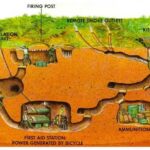
You’ll also get a broader sense of the tunnels as a system, not just a single attraction. Part of the Ben Duoc draw here is that it’s presented as a war location with many layers—tunnels, traps, underground kitchens, and the visual propaganda world around it. In other words, it’s not only about squeezing into a tunnel corridor for a quick thrill.
The tone is also different. Reviews highlight that guides bring strong context and often use humor to keep the day moving. That balance matters at Cu Chi, where the subject is grim. A tour that can explain without turning heavy history into a slog makes a difference.
Underground war realism: booby traps, crawl space, and the ex-US tank
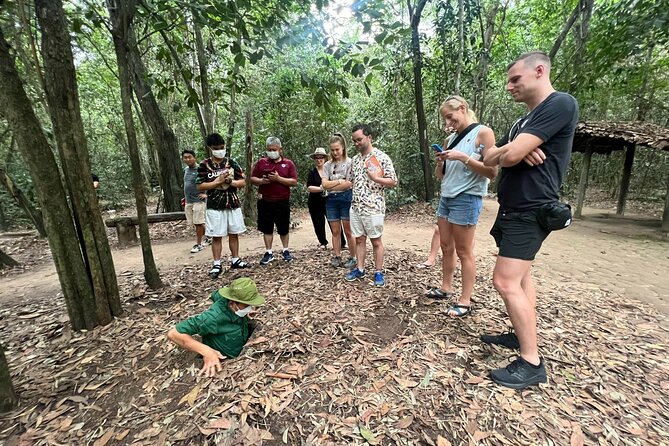
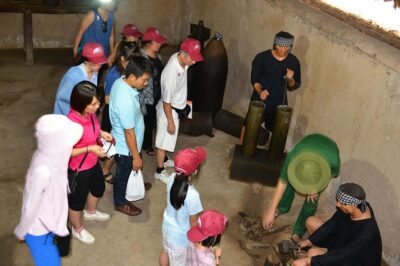
The heart of the day is the Ben Duoc tunnel complex, where you spend around 2 hours 30 minutes focused on the tunnels themselves. This is not the kind of stop where you just look at a model and move on. The experience includes multiple “you can see it with your own eyes” moments.
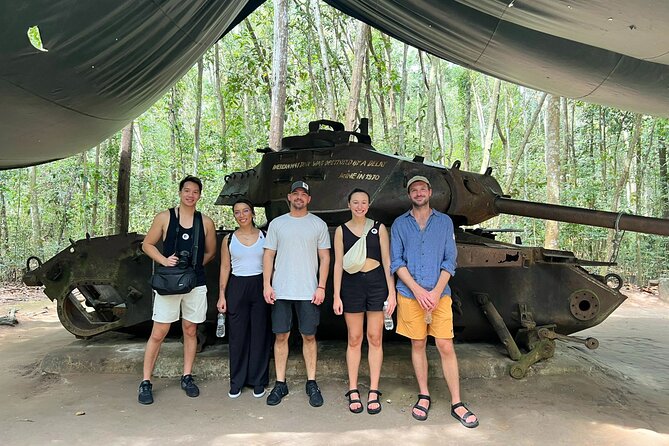
You’ll start with the war-history setup. The tour includes viewing booby traps used during the conflict, presented as part of the tunnels’ defensive strategy. Then you get a tactile moment: you can touch an ex-US Army tank tied to the Vietnam War era. That hands-on contact helps the story feel less abstract.
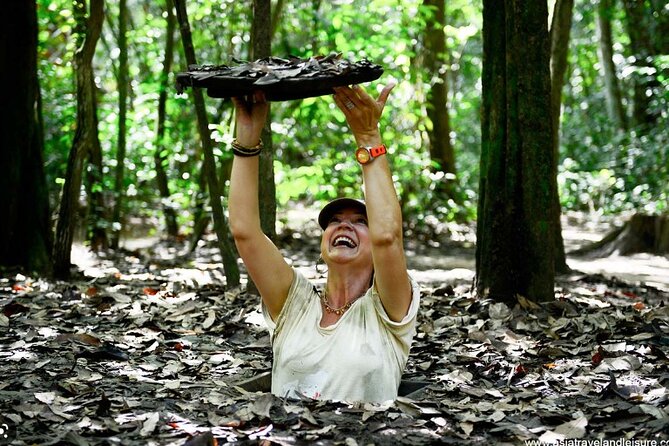
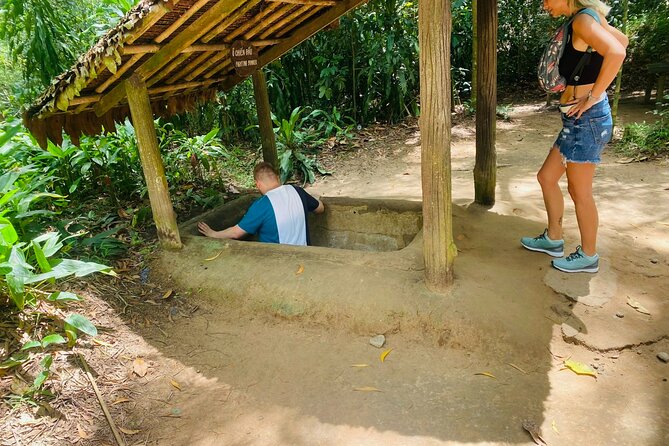
Then comes the part you should mentally prepare for: crawling inside the tunnels. The tour explicitly highlights the chance to crawl into the tunnels so you can feel what it was like during the war. Reviews reinforce that this is not a casual walk-through. One person described the tunnel space as very small and noted they had to double over and move along about 50 meters before feeling ready to exit.
So yes, it’s an educational experience—but it’s also physical. I recommend treating it like an obstacle you do with your body, not a photo opportunity. Take your time. Let the guide set the pace. And remember: the point is empathy and understanding, not athletic accomplishment.
Beyond tunnels: propaganda stops and the Hoang Cam underground kitchen
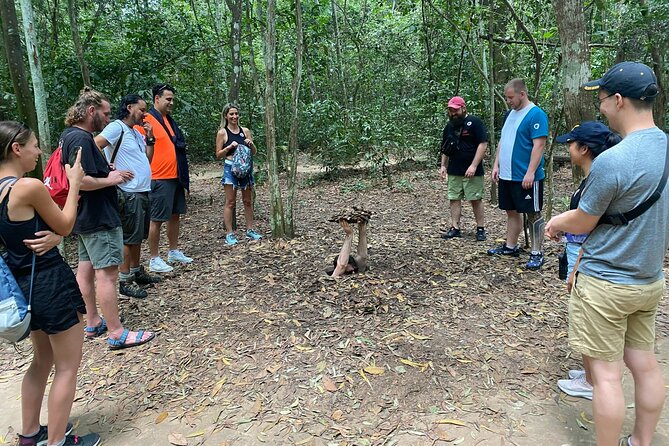
Cu Chi is often described as tunnels, tunnels, tunnels. This tour mixes that tunnel focus with a few related elements that add context.
One of the highlights in the description is seeing propaganda of Viet Cong soldiers in Tan Phu Trung Ward. That kind of stop matters because it shows how information, morale, and messaging were part of the conflict, not just weapons and engineering.
You’ll also experience the underground Hoang Cam kitchen. Even if you’ve read about guerilla life before, seeing a kitchen setting built for underground survival helps you connect the dots. It turns the tunnels from a structure into a lived environment—somewhere people tried to eat, keep routines going, and function while hiding.
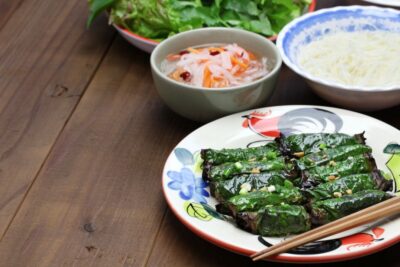
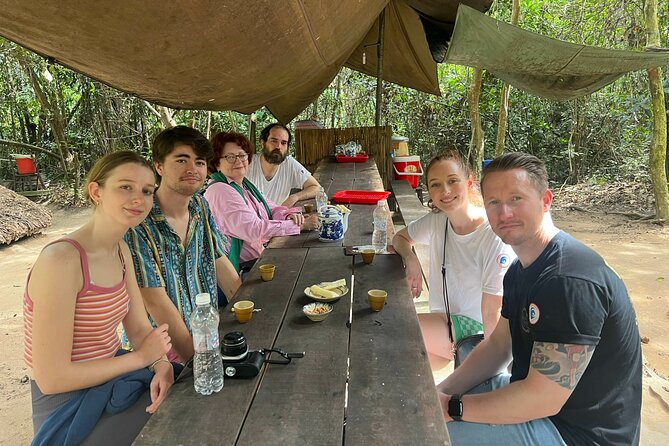
And don’t miss the food moment. The tour includes tasting locally grown Viet Cong food, specifically tapioca, served near the tunnels. I like this part because it’s not staged like a restaurant meal; it’s offered as a small taste connected to the war story. It can make the day feel more human, not only mechanical.
The craft stop: thoughtful mission, tricky pricing
A common part of many Cu Chi-style tours is a stop connected to souvenirs and local crafts. In this case, one review mentioned a stop at an art/craft shop where handicapped people affected by the war create handmade items.
That’s a meaningful mission, so I’d treat it as a chance to support workers with real circumstances—not a quick tourist pit stop. But here’s the practical caution: one reviewer specifically said the items felt expensive, and that similar products were available cheaper at the main Cu Chi tunnels market area.
So what should you do? If you want to buy something, browse with your eyes open. Decide based on the item, not the story alone. And if your priority is the tunnels experience, you can simply treat this stop as a look and keep your shopping budget focused elsewhere.



How the guides (Leo, Ken, Safa, Tommy) steer the day
Cu Chi history can be heavy. The difference between a good tour and a forgettable one is often the guide’s ability to explain clearly while staying respectful.
In the feedback for this tour, multiple guides are named as standouts—Leo, Ken, Safa, and Tommy—with praise for being funny, well-informed, and able to answer questions. I’d call that a big deal. When you’re dealing with booby traps, underground living, and propaganda, you want context that makes the details click.
I also like that the tour format supports back-and-forth questions. With a small group, your guide isn’t forced into constant one-way talking. That tends to make it easier to ask what the tunnel system was designed to do, how traps worked in practice, and how people lived day to day under pressure.
One more practical point: since crawling and tunnel movement takes focus, a guide who can keep the pace organized makes the difference between a smooth experience and a chaotic scramble. The reviews emphasize ease of movement at Ben Duoc, and a major reason is the guide pacing and group size.
Practical tips for a smoother crawl-through
You can’t control the tunnel size, but you can control how prepared you are. Based on the experience style here—especially the crawling—you’ll enjoy the day more if you plan for comfort first.
Wear clothes that handle friction. Tight spaces mean you’ll brush walls and floor surfaces. Loose, sturdy clothing is usually easier than anything delicate.
Bring a mindset for close space. Expect to move in a hunched posture. Even if you’re not claustrophobic, the tunnel layout is meant for hiding and movement under constraint, not for standing tall.
Plan for photos, but don’t chase them. The tunnel experience is hands-on and time-limited. If you spend every moment filming, you’ll rush and miss explanations. Let the guide point out traps and features before you start crawling.
Use the included water. It’s provided (two bottles per guest). Take a drink between segments so you don’t feel dehydrated when you’re active underground.
Go at a respectful pace. This is war history. You don’t need to treat it like a thrill ride. Slow down where the guide slows down, and you’ll get more out of the storytelling and the tunnel features.
Finally, a small reality check on expectations: this is described as a half-day tour, but the day runs 6–7 hours. You’ll be happier if you treat it like a full itinerary, not a short excursion you squeeze into lunch plans.
Price and value: is $34 a fair deal for Ben Duoc?
At $34 per person, this is priced like a budget-friendly excursion, especially when you factor in what’s included. You get an air-conditioned vehicle, two bottles of water, and all fees and taxes. The admission ticket for the Ben Duoc tunnel complex is also included.
The value question isn’t only money—it’s how much real experience you buy for that money. Here, you’re paying for:
- small-group access (max 10),
- time inside the Ben Duoc complex (about 2.5 hours),
- and the hands-on elements (crawling, traps, tank touch, plus tastings and underground kitchen/propgaganda stops).
Compared with the typical Cu Chi “see it fast” approach, the less-crowded focus can also make the visit feel longer in a good way—less waiting, more time with the guide, fewer interruptions.
One thing to keep in mind: the longer drive and the crawl component mean you’ll spend energy. If you’re hoping for a very low-effort, mostly standing tour, you may find the physical part not worth your time. If you want understanding through doing, this price feels fair.
Should you book this Ben Duoc Cu Chi Tunnels tour?
Book it if you want a small-group, less-crowded Cu Chi experience with meaningful, hands-on time. This is especially a good match if you care about understanding how the tunnels functioned as a whole system—traps, underground life, and the messaging around the conflict.
Skip it (or at least think twice) if you hate tight spaces and you’re not comfortable with crawling in very small tunnel conditions. The tunnels are real-world narrow, and you should plan for that before you go.
If you do book, pick the right mental frame: go to learn, not to conquer. Bring comfortable clothes, take breaks when the guide builds them in, and ask questions while you still have time topside. That’s how you turn Ben Duoc from a box-check into a story you’ll actually remember.
FAQ
Where does pickup happen, and where is the meeting point?
Pickup is offered from accommodations in Ho Chi Minh City’s District 1, District 3, and District 4, and the pickup usually takes about 30 minutes. The tour start is listed at Notre Dame Cathedral of Saigon, and the experience ends back at the meeting point.
How long is the Ben Duoc Cu Chi Tunnels tour?
The tour duration is listed as approximately 6 to 7 hours.
What does the tour price include?
The price includes an air-conditioned vehicle, bottled water (two bottles per guest), and all fees and taxes.
Is admission to the tunnels included?
Yes. Admission is listed as included for the Ben Duoc tunnel complex segment.
Does the tour include crawling inside the tunnels?
Yes. The tour description specifically highlights the chance to crawl inside the Cu Chi Tunnels.
Is there any food tasting?
Yes. You’ll taste locally grown Viet Cong food, including tapioca, next to the tunnels.
Are there any museum or sightseeing stops besides the tunnels?
Yes. In addition to the Ben Duoc tunnels, the tour description includes stops connected to Viet Cong propaganda in Tan Phu Trung Ward and an underground Hoang Cam kitchen.
What if the weather is bad or the tour needs to be canceled?
The experience requires good weather. If it’s canceled due to poor weather, you’ll be offered a different date or a full refund. There is also free cancellation up to 24 hours in advance for a full refund.