REVIEW · HO CHI MINH CITY
Cu chi tunnels Tour (Group and Private)
Book on Viator →Operated by Vietnam Travel Tour · Bookable on Viator
Cu Chi Tunnels pulls history straight out of the ground. This tour is interesting because you don’t just read about the wartime tunnel system—you see how a vast underground network worked, then you experience the famous narrow crawl firsthand. I like the combo of guided storytelling and practical on-site time, especially the history context on the way. I also like that entrance fees and a light snack are included, so you can keep your budget calm. One thing to consider: the tunnel portion is tight, so if you hate cramped spaces, you’ll want to think twice.
This is set up for an easy half-day out of Ho Chi Minh City, with free pickup and drop-off in central Saigon and a good English-speaking guide. In small-group formats (up to 10, sometimes fewer), guides like Leon and Xuyen have been praised for making the drive to Cu Chi feel educational and real, not just a ride to a stop. For a private option, you only share the day with your group—and you may get extra time for countryside scenery on the way, including rubber tree plantations.
In This Review
- Key Things I’d Focus On
- Why Cu Chi Tunnels Still Matters Right Now
- Pickup, AC Car, and Time Plan: How 5–6 Hours Works
- From the 1940s to the Underground Village: What You Learn First
- Secret Network Tour: Seeing More Than One Tunnel Entrance
- Crawling the Hand-Made Tunnels: What You Should Anticipate
- Tapioca and Pandanus Tea Break, Plus the Documentary Film
- Private vs Group: When the Small Details Matter
- Price and Value at About $35: What You’re Actually Buying
- Tips to Get More From the Tunnels (Without Overthinking It)
- Should You Book This Cu Chi Tunnels Tour?
- FAQ
- How long is the Cu Chi Tunnels tour?
- Do you get pickup and drop-off from Ho Chi Minh City?
- Is the Cu Chi Tunnels entrance fee included?
- What food is included during the tour?
- Is a documentary film included?
- Is the tour offered as a group or private experience?
- What’s the cancellation policy?
- Can most people participate?
Key Things I’d Focus On
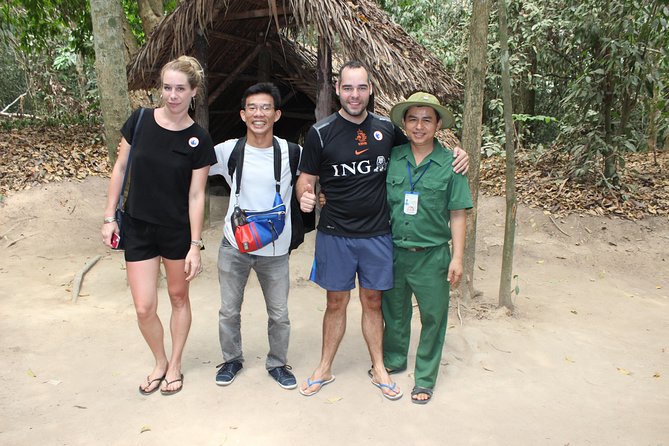
- History you can picture: you learn how the tunnels formed in the 1940s and took over 20 years to build.
- A real underground village feel: the system is described as connected passages, like a miniature settlement.
- Hands-on tunnel crawling: you can crawl through very narrow, hand-made wartime tunnels.
- Included food break: boiled tapioca with hot pandanus tea, plus a short documentary on the tunnels.
- Guide-led context matters: guides such as Leon and Xuyen are noted for strong English and clear history explanations.
Why Cu Chi Tunnels Still Matters Right Now
Cu Chi Tunnels are famous because they weren’t just hiding places. They were a full survival system. The tunnels formed in the 1940s, during the struggle for independence, and the larger network took more than 20 years to create through the effort of local communities. That scale changes how you see the site: it stops being one attraction and turns into a lived world.
What makes the tour feel different is the sequence. You start with the story and purpose, then move toward the tunnel areas. The goal is to help you understand how people used this underground network as a way to resist and keep operating under pressure. You’ll hear the system described as connected like a miniature underground village, which is a helpful mental picture when you’re looking at entrances and planning your route inside.
You can also read our reviews of more private tours in Ho Chi Minh City



Pickup, AC Car, and Time Plan: How 5–6 Hours Works
This is built as a half-day trip, usually 5 to 6 hours total, with pickup and drop-off offered in the center of Saigon. Price-wise, that matters because transport is part of what you’re buying, not an afterthought. You’re also using a good quality AC private car, which makes the ride more comfortable—especially if your day in Ho Chi Minh City already involves a lot of walking.
Here’s what the timing implies for your planning: you’ll want to treat this as your “structured morning or afternoon” outing. It’s long enough to feel like you left the city and had a full experience, but short enough that you can still enjoy dinner in town the same day.
Also, the tour is listed as having mobile ticket support and being near public transportation. That’s useful if you’re flexible about where you start your day, but since pickup is included (center of Saigon), you can also travel with less hassle.
From the 1940s to the Underground Village: What You Learn First
Your first big “aha” moment comes before you’re crawling. The guide sets the background: tunnels formed in the 1940s, built for independence efforts, and expanded over decades. You’ll get the sense that this was not random digging. It was planning under extreme conditions.
One of the more powerful parts of this style of tour is how the “underground village” idea gets explained. Instead of thinking of tunnels as separate holes, you’ll hear about the way the network connected areas. That connection is what makes later stops—like looking at sections and moving through tight passages—feel logical rather than shocking for shock’s sake.
The best tours also weave in Vietnam’s traditions and culture as they go. Here, the itinerary points to learning not just facts, but context—so you understand why this story is told the way it is today, not only what happened.
Secret Network Tour: Seeing More Than One Tunnel Entrance
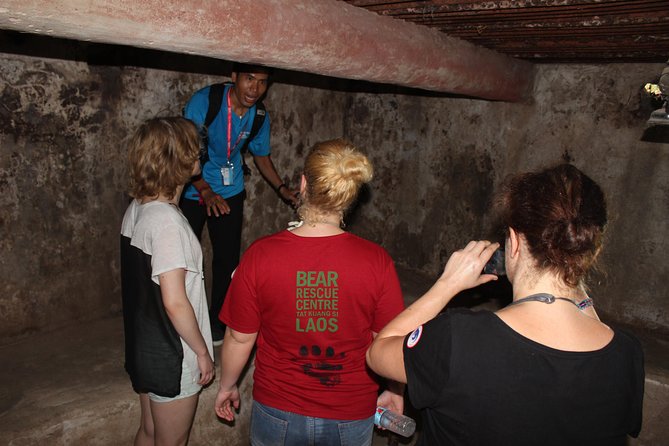
Once the story is set, the visit turns practical. You’ll discover the incredibly secret network of Cu Chi Tunnels, and the guide’s job is to help you track what you’re seeing: how the system functioned, how people moved, and how the tunnels were part of daily life during wartime.
This is where a strong guide earns their keep. Guides Leon and Xuyen have been specifically praised for taking the drive to Cu Chi and using it for history education in clear English. In practical terms, that means when you step into the tunnel areas, you’re not just relying on signage. You’re hearing interpretation that connects the physical space to what it was designed to do.
A small group also helps. One review mentioned a group size up to 10 people with 6 on the day—small enough that questions don’t vanish and the pace feels less rushed.
Crawling the Hand-Made Tunnels: What You Should Anticipate
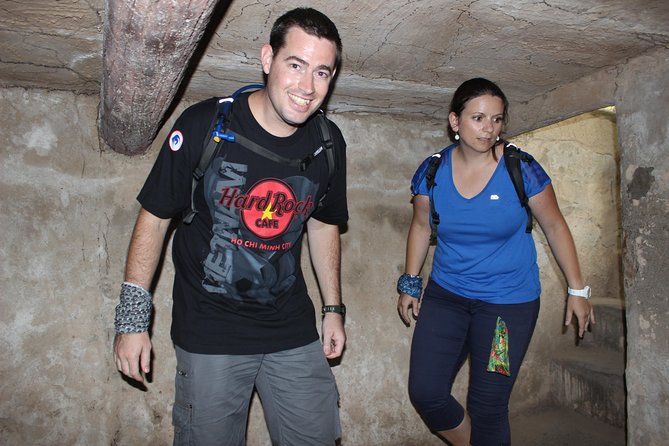
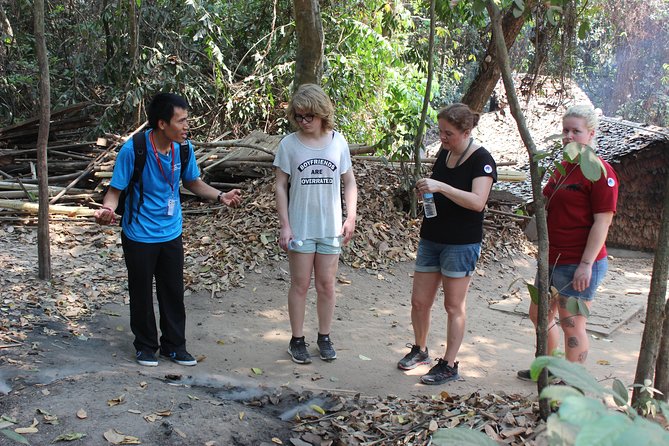
Then comes the famous part: you can crawl through very narrow tunnels that were made by hand during the wartime. This is the part most people remember, and it’s not because it’s comfortable. It’s memorable because your body suddenly understands the concept of underground movement.
If you’re deciding whether you’ll do the crawl, focus on the “narrow and hand-made” description. Those two details are the best indicators of what kind of experience to expect. It’s not presented as a stroll. It’s presented as going through tight passages that were built to survive wartime needs.
A realistic way to prepare mentally: think of the crawl as a short experience inside a much bigger story. You’re there to understand the system, not to test athletic ability. If you’re traveling with kids or anyone who gets stressed in confined spaces, it’s worth checking expectations with your guide on the day—especially if you’re booking a group option.




Tapioca and Pandanus Tea Break, Plus the Documentary Film
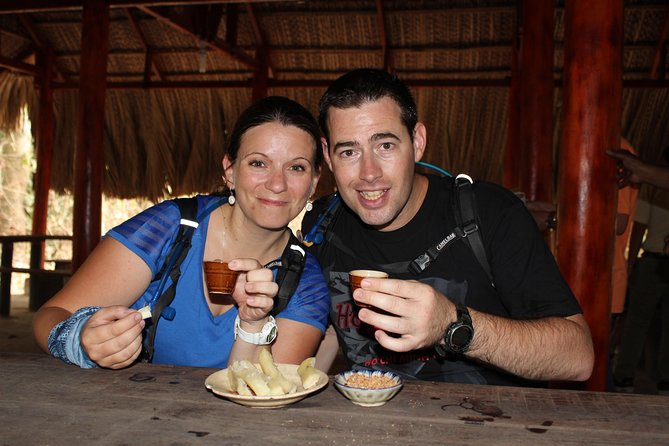
One of the nicest surprises in this tour format is the food stop. You’ll taste the local food Vietnam soldiers ate during the war time: boiled tapioca with hot pandanus tea. It’s included as a light snack at the tunnels site, and it’s part of the value because it connects the history to everyday survival rather than treating food like a random add-on.
Then you’ll watch a short documentary film about Cu Chi Tunnels, shown in multiple foreign languages. This is valuable because it gives you a different learning style than talking and walking. After you’ve seen tunnel areas, a short film can help tie visuals to explanation.
One more practical point: the tour also includes a bottle drink and tissue. That helps you stay comfortable and not hunt for essentials right in the middle of the day.
Private vs Group: When the Small Details Matter
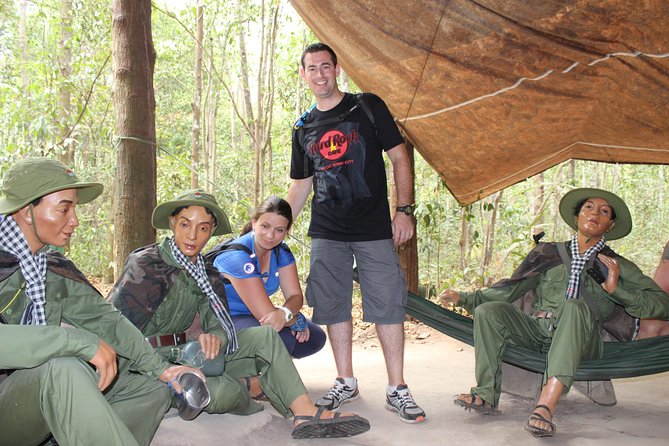
You can choose a group tour or a private tour. Both are built around the same core experience—Cu Chi history, tunnel exploration, and the food and documentary—but the feel changes.
For private Cu Chi Tunnels Tour options, only your group participates. That’s a big difference if you’re trying to travel with friends or family and want less waiting around. A review also highlighted that the private option added exploration of a hidden local area, with countryside views along the way and rubber tree plantation scenery.
That “on the way” part matters more than people think. The drive isn’t filler. When guides use the journey to explain history and context, you arrive already oriented. Reviews singled out Leon and Xuyen for making the ride educational, not just transportation.
If you’re a solo traveler or short on time, a group tour can be good value, especially if the group stays small. If you want flexibility in pace and fewer pauses, private is often the smoother choice.
Price and Value at About $35: What You’re Actually Buying
At $35 per person, this is positioned as a budget-friendly day trip from Ho Chi Minh City. The real question isn’t the sticker price—it’s what’s included.
Here’s what you’re getting that typically costs extra on DIY trips:
- Entrance fee to Cu Chi Tunnels
- English-speaking guide
- Free pickup and drop-off in the center of Saigon
- AC private car
- A light snack (boiled tapioca and hot pandanus tea)
- A bottle drink and tissue
That package explains why it’s popular for first-time visitors. You’re not only paying for the site. You’re paying for interpretation, convenience, and the stuff that keeps the day moving.
Not included are tips and personal expenses, which is standard. The only cost you should watch besides that is what you choose to do after the tour. Since this is a half-day, you’ll likely want a plan for the rest of the time in Ho Chi Minh City.
Tips to Get More From the Tunnels (Without Overthinking It)
If you want a better experience, focus on how you handle three things: comfort, attention, and expectations.
First, comfort. The crawl is described as through very narrow tunnels. Wear clothing that allows you to move in tight spaces and don’t bring anything fragile or bulky. You’re provided a bottle drink, but still treat the day like a full on-site block.
Second, attention. The itinerary includes both tunnel exploration and explanations that connect history, tradition, and culture. If you drift, you lose the point. Ask your guide questions while you’re in motion—guides like Leon and Xuyen have been praised for making history clear and easy to follow.
Third, expectations. This is a wartime site. It’s powerful. It’s also physical. Go in knowing the experience is not a “quick look around,” and you’ll be less likely to feel disappointed about how tight or intense it is.
Also, remember it’s typically booked about 7 days in advance on average. If your dates are flexible, you can sometimes find options closer in, but planning ahead helps.
Should You Book This Cu Chi Tunnels Tour?
I think you should book it if you want a guided, structured trip where the “why” comes before the “wow.” The combination of history context from your guide, the chance to crawl through narrow hand-made tunnels, and the included food break (tapioca and hot pandanus tea) makes this a strong value use of half a day.
Choose group if you’re cost-conscious and don’t mind sharing the day. Choose private if you want quiet pacing, your own group dynamic, and the added chance to see countryside and rubber tree plantations en route.
Skip or reconsider if confined spaces are a hard no for you. The tour is designed around that tunnel crawling moment, and it’s part of what makes Cu Chi unforgettable.
FAQ
How long is the Cu Chi Tunnels tour?
The tour typically runs 5 to 6 hours.
Do you get pickup and drop-off from Ho Chi Minh City?
Yes. Free pick-up and drop-off in the center of Saigon is included.
Is the Cu Chi Tunnels entrance fee included?
Yes. The entrance fee to Cu Chi Tunnels is included.
What food is included during the tour?
You get a light snack at Cu Chi Tunnels: boiled tapioca with hot pandanus tea, plus a bottle drink and tissue.
Is a documentary film included?
Yes. You’ll watch a short documentary film about the tunnels in a number of foreign languages.
Is the tour offered as a group or private experience?
Both options are available. The private version means only your group participates.
What’s the cancellation policy?
You can cancel for a full refund up to 24 hours before the start time. Canceling within 24 hours doesn’t get refunded.
Can most people participate?
The tour notes that most travelers can participate, and it’s described as being near public transportation.