REVIEW · HO CHI MINH CITY
Using Medium Format film camera to discover Saigon
Book on Viator →Operated by Bui Hoang Tu · Bookable on Viator
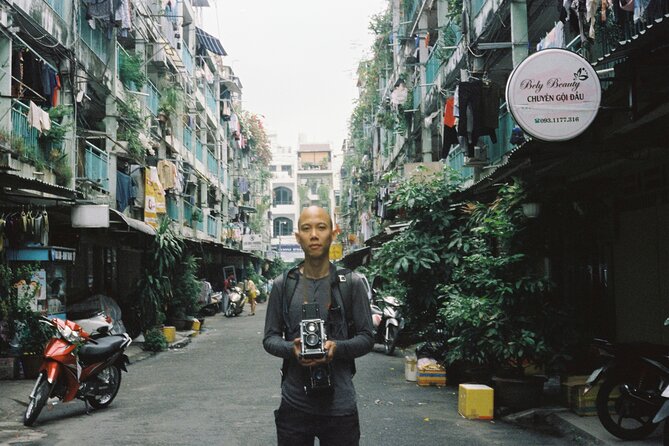
Saigon through a film viewfinder feels different. You start with a medium format TLR camera and one roll of B&W film, so the city slows down and your choices matter. I like how the day mixes photo time with real local routine, starting at a 90-year-old coffee shop rather than a staged stop.
I especially like the camera lesson style. You learn how to handle a classic TLR, then you practice immediately while walking through narrow alley markets where you actually need to watch, wait, and frame. With Bui Hoang Tu handling translation and introductions, the walk feels less like sightseeing and more like you’ve been allowed into the neighborhood rhythm.
One consideration: the experience requires good weather, and there’s no private transportation included. Also, you’ll move through the city on foot and end at Chợ Bàn Cờ, so plan your ride home before you get wrapped up in the photos.
In This Review
- Key highlights you should care about
- Starting at 73/8 Hồ Hảo Hớn, then switching your pace
- Learning a TLR medium-format camera the old-school way
- Stop 1: Coffee culture at a long-running shop and a 1968 landmark
- The alley markets photo walk: practice where the action is
- The oldest apartment hidden in town: a change of scale
- Bui Hoang Tu as translator: the real “break the ice” tool
- What’s included, and why the price can make sense
- Timing and duration: why 3 to 4 hours is the right container
- Weather matters, so bring a sensible plan
- Tips to get better photos on one roll of film
- Who this experience is best for
- Should you book the Medium-Format Film Saigon experience?
- FAQ
- What does the tour cost?
- How long is the photography and coffee walk?
- What’s included in the price?
- Do I need to arrange transportation?
- Where do I meet the guide, and where does the tour end?
- What happens if the weather is bad?
Key highlights you should care about
- One roll of B&W film: fewer frames, better attention, and more thoughtful shots
- TLR medium-format camera basics: a real lesson in focusing, winding, and composing
- Coffee as culture, not scenery: sit-down coffee at a long-running spot
- Alley street markets practice: photography time happens where people actually live and shop
- Bui Hoang Tu as translator: a practical way to break the ice with locals
Starting at 73/8 Hồ Hảo Hớn, then switching your pace
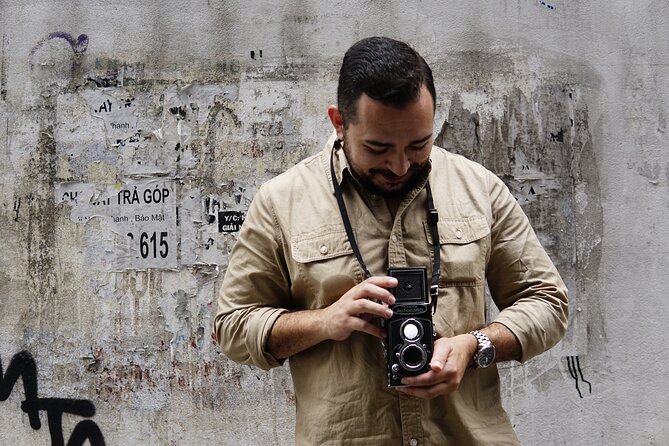
The tour begins at 73/8 Hồ Hảo Hớn, Phường Cô Giang, Quận 1. From the start, it’s clear this is built for people who want less noise and more observation. You come to Bui Hoang Tu’s store, pick up a TLR camera, and get one roll of medium-format B&W film. Then you get a short brief on how to use it before heading out into the streets.
This matters because film photography is not a casual mode. The camera you hold is physical and mechanical, and the process makes you slow down. You wind the film, you compose with a viewfinder, and you wait for the moment. That alone changes how you move through Saigon.
You’ll also get small talk about the city. It might sound minor, but it sets a tone: you’re not “dropping into” a neighborhood for photos. You’re learning how to talk, ask, and respond while you’re there.
You can also read our reviews of more tours and experiences in Ho Chi Minh City.

Learning a TLR medium-format camera the old-school way
You’re not just handed equipment. You’re shown how to use it, and you practice right away instead of saving learning for later. The TLR design means you compose using a waist-level view and then take the photo with a simple, deliberate action. For many people, it’s surprisingly calming.
What you learn is practical and transferable. You get the feel for how a medium-format camera changes your approach: you can’t spray-and-pray. You have limited frames on one roll, so each click has consequence. That’s why this tour tends to create photos that feel considered, not accidental.
The camera is also a relic in the best way. It’s old, sturdy, and straightforward—no app, no instant results, no ego boost. You end up thinking more about timing and composition. If you’ve ever felt annoyed at how fast digital photography encourages you to move, this is the antidote.
Stop 1: Coffee culture at a long-running shop and a 1968 landmark
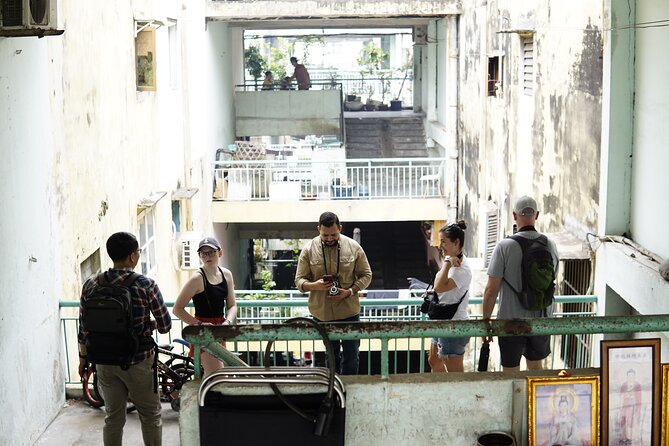
The first major moment is coffee. You’ll explore one of the oldest coffee shops in town and then see the 1968 building of Ho Chi Minh City. The coffee part is more than caffeine. You sit down and enjoy it in a way that follows local rhythm.
I like how the schedule respects the fact that coffee is social here. It’s not just a quick taste between photo spots. You get a short pause where you can watch how people order, talk, and settle in. Even if you’re not a big coffee person, this is a great way to get your senses ready for street photography.
The 1968 building adds a different kind of context to your first hour. Instead of jumping straight into markets and murals, you start with a recognizable city touchpoint. That gives your photos a stronger sense of place because you’ve already anchored yourself in the city’s timeline.
A small caution: coffee is included, but you’re still starting the day with walking energy. Wear comfortable shoes. You’ll want your legs fresh before alley photos start.
The alley markets photo walk: practice where the action is
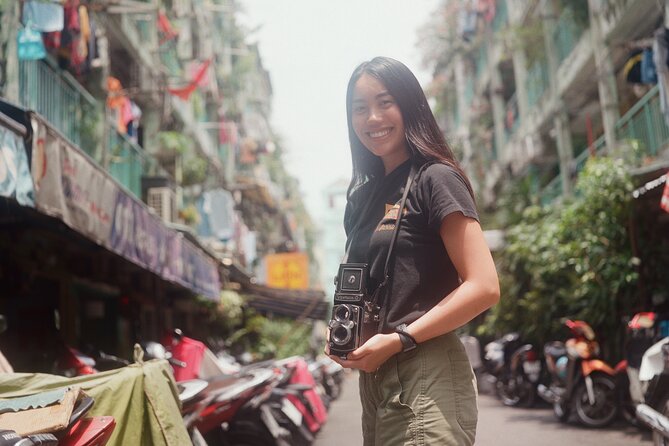
After the coffee stop, the tour turns into a real assignment. You wind your way through nearby alley street markets—areas where people shop, talk, and pass by at their own pace. This is ideal for film photography because there’s always something happening, but nothing is designed for the camera.
You’ll use your one roll and keep working with your frame discipline. That’s the point: you start to notice light angles, faces at the right distance, hands holding objects, and the tiny bits of daily life that don’t pose. And because you can’t take unlimited shots, you’re more likely to wait for the right moment instead of chasing every scene.
The potential drawback here is also part of the charm. If you’re the type who loves capturing everything, film will feel slow at first. Give yourself permission to miss shots. You’re learning to see, not to collect.
The oldest apartment hidden in town: a change of scale
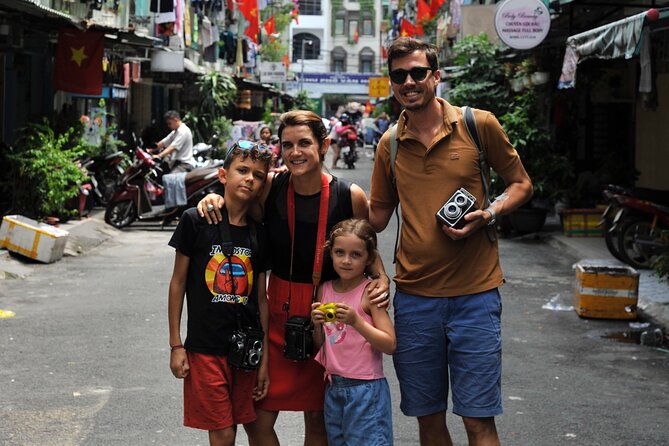
One of the stops includes an oldest apartment hidden in town. The exact feel of a place like this is hard to fake. Apartments like that often create small corridors of everyday life—more intimate than a street view, less performance than a tourist landmark.
For photography, the benefit is simple. You get different compositions: doorways, stair edges, shadow lines, and glimpses of people moving in and out of their routines. These are the kinds of shots that work well in black and white, because texture and contrast do the storytelling.
This part also gives you a chance to slow down again after the energy of alley markets. It’s not just about chasing crowds. It’s about building a visual conversation with the city: street to doorway, public to semi-private.





Bui Hoang Tu as translator: the real “break the ice” tool
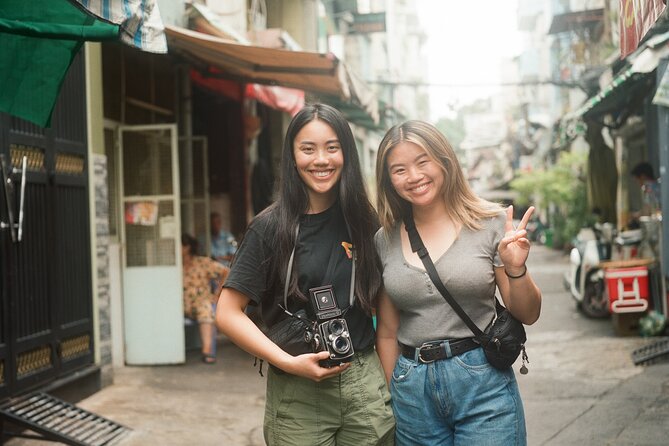
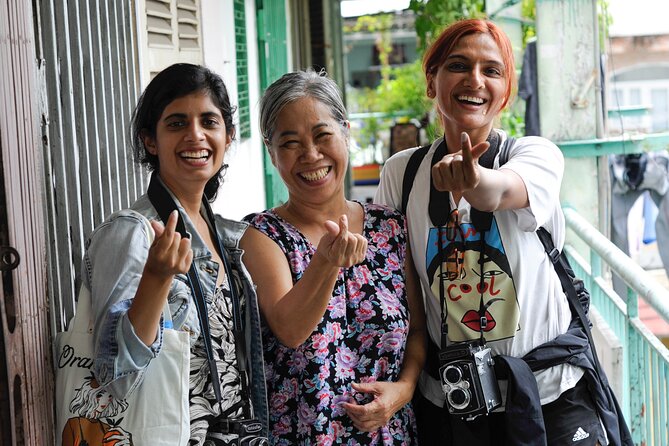
A key part of this experience is how Bui Hoang Tu helps you break the ice. You’re not left alone with a camera and hope. You get support connecting through local people, especially when you want to ask questions or simply engage normally while you photograph.
This changes everything. Street photography can feel awkward if you don’t know how to approach people. With translation, you can keep interactions respectful and natural. You’re more likely to get permission when you want it, and you’re less likely to misunderstand body language.
Even if you don’t plan to talk much, the translator role still matters. It improves the tone of the walk. People respond differently when there’s a bridge in place, and the neighborhoods feel less guarded.
What’s included, and why the price can make sense
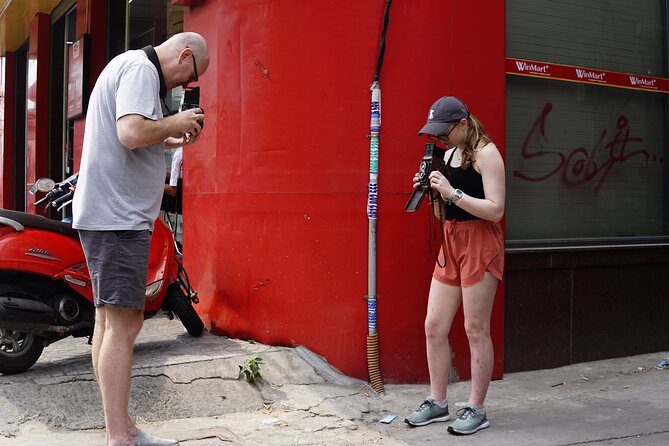
Price is listed at $148.27 per person for about 3 to 4 hours. Here’s what you get that’s meaningful: coffee and/or tea, an analog camera (a TLR) and one roll of B&W medium format film.
That inclusion part matters because film days add costs in the real world: equipment rental, film, and the time it takes to learn how to use it without frustration. You’re also paying for guidance in a very specific skill set: using a particular type of camera with a limited frame count.
Is it expensive? Depending on how you travel, it can feel like it. But the value is in the combination—food pause + real camera handling lesson + guided access to neighborhood streets with local interaction support.
Things you should factor in:
- No private transportation is included.
- You’ll be moving on foot and ending at Chợ Bàn Cờ, so consider your next stop before you start.
If you enjoy photography and you want a day that’s not just a checklist, this format tends to feel fair.
Timing and duration: why 3 to 4 hours is the right container
Most tours promise a “short” time and still feel rushed. This one uses the time well because film imposes natural limits. You spend the early part learning and getting settled. Then you shoot while walking. Then you wrap up in an area that makes sense for continuing your day.
The tour duration of around 3 to 4 hours is long enough to get multiple photo moments and experience coffee culture. It’s also short enough that you don’t feel trapped if you’re slower with film. You can always adjust how many frames you choose to use.
One more practical note: the meeting and ending points are different. You start near Quận 1 and end in Quận 3 at Chợ Bàn Cờ. That’s good for exploring, but you’ll want a ride plan for after.
Weather matters, so bring a sensible plan
The experience requires good weather. That’s not a small detail. Film street walks become annoying if it’s rainy and the camera gear has to be protected. If bad weather happens, you’re offered a different date or a full refund.
So if you’re booking, pick a day when you actually trust the forecast. And bring a light layer and a small bag that can keep your hands dry. You’ll be handling the camera more than you think.
Tips to get better photos on one roll of film
You’re learning in real time, but you can make the most of the day with a few habits.
- Slow down for one second longer than you want. Film rewards patience more than speed.
- Think in frames, not in scenes. One doorway can be a whole story.
- Use the viewfinder intentionally. Don’t rush the composition just because you can’t take many photos.
- Shoot what you can’t photograph easily on your phone. Texture, hands, shadows, and quiet moments work especially well in black and white.
- Accept that you won’t capture everything. That limitation helps you remember what you saw.
If you follow those ideas, the day stops being stressful. It becomes a guided photo workshop inside a neighborhood you can actually feel.
Who this experience is best for
This tour is a strong fit if you:
- like analog photography and want to learn a TLR in practice, not theory
- care about street food and local coffee culture, not only landmark photos
- enjoy a smaller, more personal tour format (it’s private for your group)
- want a translator role so interactions stay easy and respectful
If you hate waiting, dislike slower pacing, or need constant instant results, film can feel limiting. But that’s also why it’s rewarding. You trade quantity for intention.
Most travelers can participate, and it’s near public transportation. If you’re comfortable walking for a few hours and handling a camera carefully, you’ll be fine.
Should you book the Medium-Format Film Saigon experience?
I’d book it if you want Saigon to feel human and specific instead of checklist-driven. The mix of coffee culture, neighborhood alley walks, and the practical medium-format camera lesson is the kind of travel day that changes how you look at a city.
I would hesitate if you need a flexible schedule for weather, or if you prefer tours that rely on quick stops and lots of viewing photos on demand. This one asks you to commit to the process: fewer frames, more attention, and a real walk with a guide.
If that sounds like your style, this is one of those rare tours where the camera isn’t a prop. It’s the point.
FAQ
What does the tour cost?
The experience costs $148.27 per person.
How long is the photography and coffee walk?
It runs about 3 to 4 hours.
What’s included in the price?
Coffee and/or tea are included, along with an analog camera and one roll of B&W medium format film.
Do I need to arrange transportation?
Private transportation is not included. The meeting point is near public transportation, and the tour ends at Chợ Bàn Cờ.
Where do I meet the guide, and where does the tour end?
You start at 73/8 Hồ Hảo Hớn, Phường Cô Giang, Quận 1, Thành phố Hồ Chí Minh. The tour ends at Chợ Bàn Cờ, Phường 3, Quận 3.
What happens if the weather is bad?
The experience requires good weather. If it’s canceled due to poor weather, you’ll be offered a different date or a full refund.