REVIEW · HO CHI MINH CITY
3D2N Mekong – Floating Market – Chau Doc – Boat To Phnom Penh
Book on Viator →Operated by SST TRAVEL · Bookable on Viator
Mekong Delta travel can feel chaotic, so it’s nice when the pieces fit. This 3D2N route links Vietnam’s river life—pagodas, orchards, floating markets, and Cham weaving—with a guided push toward Cambodia via Vinh Xuong border procedures and a boat connection toward Phnom Penh around 1pm.
I really like the variety of water-and-land scenes, from the Cai Rang floating market at its busiest to small canal rowing. I also liked how guides keep things moving and clear, with standout personalities like Quyen, Lily, Mikey (plus Travis), and Le Linh showing up in the feedback as friendly, organized, and genuinely helpful.
One consideration: you’re paying for convenience and structure, but the pace is full, and the extra costs still exist. Expect to budget for the Cambodia visa fee ($40 per person) and note the single supplement if you’re traveling solo.
In This Review
- Key things I found most compelling
- Starting at Bui Vien: the fast way to get onto Mekong time
- Vinh Trang Pagoda in My Tho: a calmer start before the river gets loud
- Unicorn, Dragon, Phoenix, Turtle Islands: orchards and sweet samples on the river
- Coconut candy workshop and folk music: where souvenirs become a story
- Small canal rowing and fruit breaks: the quieter side of the delta
- Cai Rang Floating Market: best seen when boats are in motion
- Chau Doc floating life: fish farms and the Cham weaving village
- Vinh Xuong border procedures and the boat to Phnom Penh
- How the guides make (or break) this kind of tour
- Price and value: what you get for around $200
- Who should book this Mekong-to-Phnom Penh experience
- Should you book it
- FAQ
- Is the tour guided, and in English?
- What’s included in the meals?
- Do I need a Cambodia visa?
- Is pickup available from Ho Chi Minh City?
- How big is the group?
- What extra costs should I plan for?
Key things I found most compelling
- Cai Rang Floating Market in the morning when boats are most active and you can see how buying and selling really happens
- A mix of transport styles: bus, motorboat, and a rowing-boat segment through small channels
- Hands-on snack-and-craft stops like coconut candy making and fruit tasting, plus honey tea at a bee-farm
- Chau Doc’s floating life and Cham weaving through a fish farm and a traditional weaving village visit
- A guided language bridge with professional English speaking support throughout key segments
- Multi-day value with A/C lodging included for two nights, plus two lunches and one breakfast
Starting at Bui Vien: the fast way to get onto Mekong time
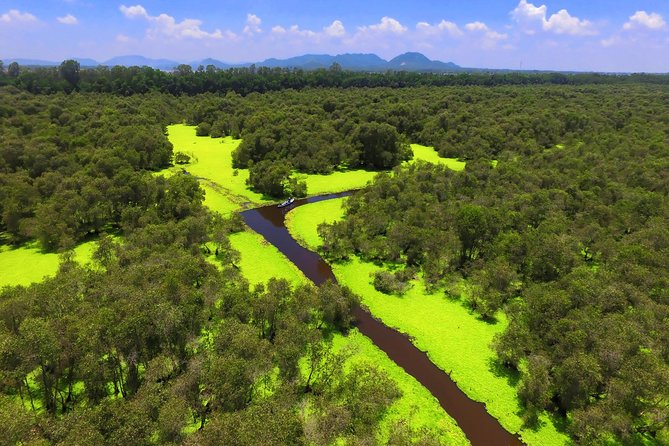
Your day begins in Ho Chi Minh City’s Bùi Viện area (Bùi Viện, Phạm Ngũ Lão, Quận 1), with the start time listed as 7:30am. That early start matters. The Mekong Delta looks best when you’re not fighting late-day crowds and heat, and it also helps you reach the floating market when it’s at its busiest.
The tour includes pickup and drop-off by modern air-conditioned bus, which you’ll appreciate if you’re using this as a break from constant scooter navigation and phone-map guessing. It’s also a smaller-group experience, with a maximum of 20 travelers, so you’re not stuck waiting forever while everyone figures out where to stand.
You’ll also see the practical touches: the package is described with a mobile ticket, so it’s likely designed to be simple on the day. And with the itinerary packed, the time you spend traveling efficiently is time you get back for the river scenes that actually sell this trip.
You can also read our reviews of more boat tours in Ho Chi Minh City
Vinh Trang Pagoda in My Tho: a calmer start before the river gets loud
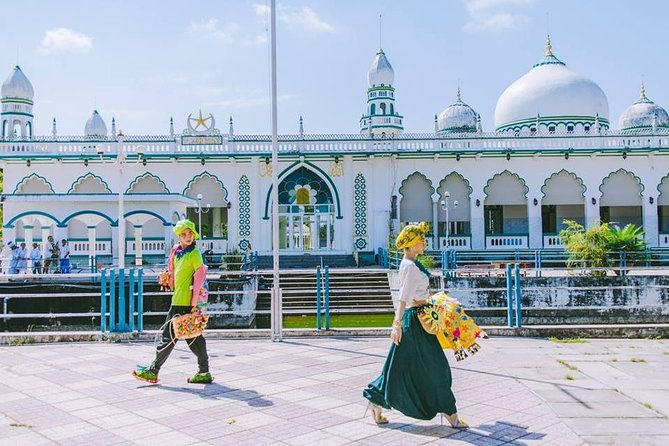
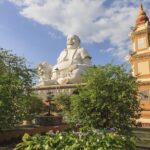
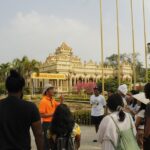
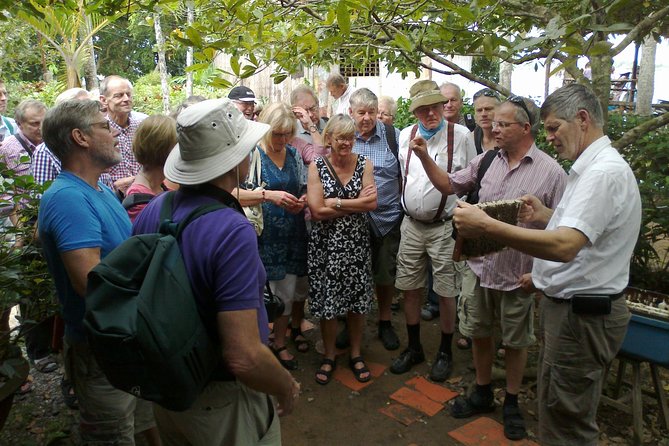
The route begins with Vinh Tràng Pagoda, built in 1849, which gives you a solid cultural anchor before the boats and markets. Even if you’re not a hardcore temple person, it’s a good warm-up. You get a sense of how Buddhism and daily life sit side by side here, especially when later you’ll be watching how communities work along the water.
From there, the drive to My Tho includes a smooth one-and-half hour bus ride, with rice fields along the way and a stop along the national highway. You don’t need to stretch your legs every five minutes, but it’s long enough that you’ll want water ready and something to snack on if you’re the type who gets hungry early.
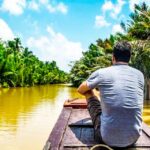
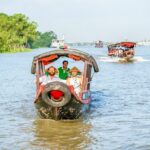
Then comes the first big “Mekong” moment: in My Tho, you take a motorboat that joins the flow of everyday river activity. This is where the trip stops being a “tour of stops” and starts feeling more like a moving window into local routines. You’re not just looking at scenery; you’re riding through it.
Unicorn, Dragon, Phoenix, Turtle Islands: orchards and sweet samples on the river
The next shift is toward the upper river, with time spent visiting the islands linked to the Unicorn, Dragon, Phoenix, and Turtle names. These stops are part scenery, part “this is how people live and earn here.”
One of the smartest parts of this segment is that it doesn’t stay theoretical. You visit an orchard garden and then move into production-style experiences, including a bee-farm where you can enjoy honey tea. For many people, that honey tea is the kind of tasting stop that makes the whole day feel less like a checklist. You get something you can actually remember beyond photos.
You’ll also have a chance to interact with local animal culture in a tourist-friendly, supervised way, since a python photo is listed as part of the experience. I’d treat this as “optional fun,” not a main highlight, and remember to go in with patience if people queue—moments like that always attract attention.
Overall, this island-and-garden portion is where the trip earns its “Mekong Delta” identity. It’s not only about boats. It’s about food, farming, and the small industries that support the region’s economy.
Coconut candy workshop and folk music: where souvenirs become a story
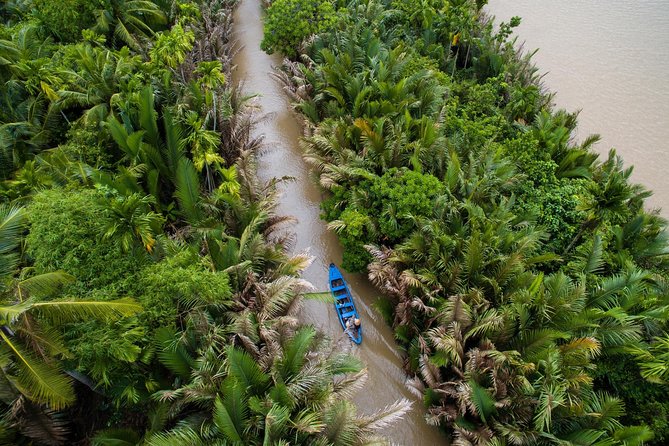
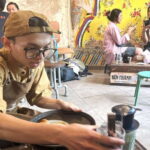
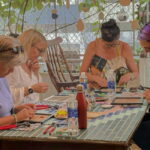
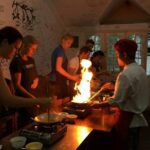
After the river and orchard time, the route shifts to a coconut candy workshop, with fruits and Southern Vietnamese folk music included. This matters because Mekong travel can go two ways: either you just watch boats all day, or you learn something about what the region actually turns into goods.
Coconut candy is one of those foods that feels simple until you watch how it’s made. Even if you don’t love sweets, the workshop format helps you see the “why” behind the shopping. Candy isn’t just a souvenir here. It’s a local product linked to ingredients grown in the delta.
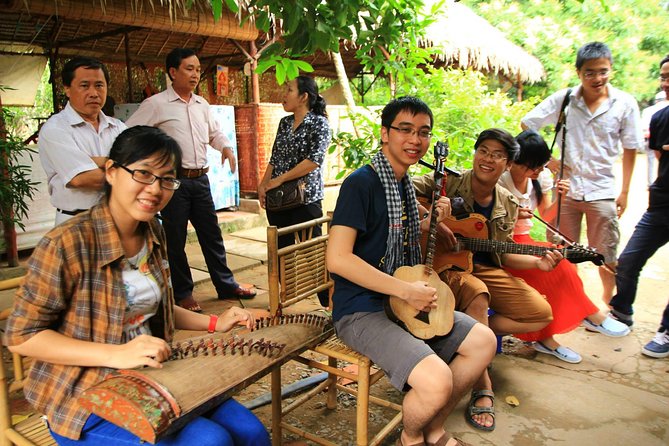
The addition of folk music also helps the day breathe. You get a break from sun and motor noise, and it becomes a moment to slow down. If you’re traveling with someone who worries about “boring cultural stops,” this is a good place to show them that culture can be active and tasty, not stiff.
Small canal rowing and fruit breaks: the quieter side of the delta
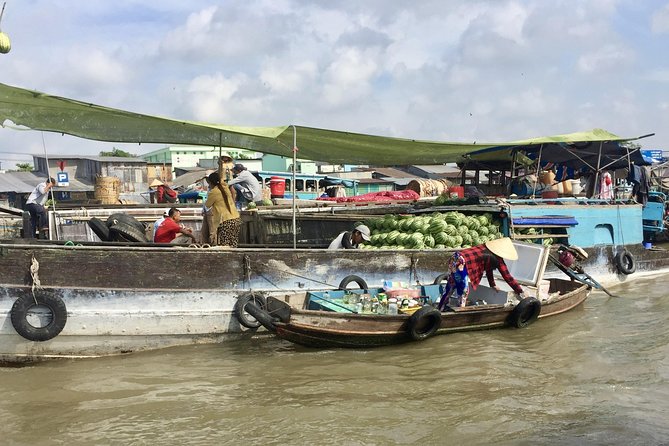
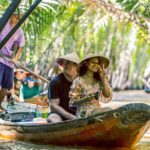
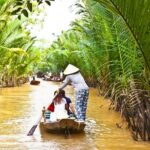
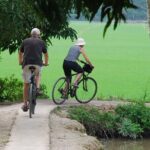
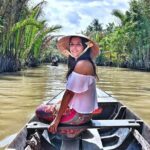
Not everything in this tour is large-boat theater. You also get an amazing rowing boat trip on small canals. This is a nice balance against the busy floating market later in the day (or on the next day, depending on how the schedule plays out). Small channels can feel more intimate and slower, and they often show the delta’s green edges and everyday water contact in a way larger waterways don’t.
The tour also includes fruits and other tasting moments throughout. In a full-day structure, this kind of food pacing can make the difference between “fun day” and “I’m tired and cranky.” When you’re moving between villages, boats, and workshops, you’ll burn energy just from the heat and the stop-and-go schedule, so having planned snack breaks is not a luxury.
If you want good photos here, keep your expectations grounded: you’re on a small boat, not a studio set. But the payoff is that the canals feel real, not staged.
You can also read our reviews of more shopping tours in Ho Chi Minh City
Cai Rang Floating Market: best seen when boats are in motion
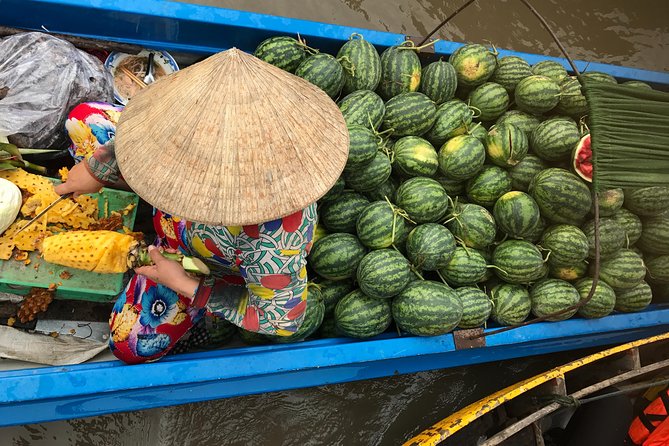
This is the big “don’t miss” moment for many people, and it’s scheduled as a morning boat trip to visit Cai Rang Floating Market, described as being at its busiest at that time of day.
Going early is smart for two reasons. First, the market looks more alive when boats are actively arranging goods and sellers are busy. Second, you’re more likely to get clearer views without the heavy late-day glare and fatigue that can hit fast in southern Vietnam.
On the water, you’ll cruise through the small channel system to reach the market area. Then you move through related stops that keep the momentum going. A rice noodle making village is included as a continuation of the “how things are made” theme, and it’s paired with the market experience so you see the delta’s food chain, not just its shopping stalls.
Here’s the practical tip: in floating markets, it’s easy to get photo-hero focused and forget to actually look at what’s being sold. Give yourself a moment to watch how people coordinate, how products are stored on boats, and how buying happens. That small shift turns the market from a scenic postcard into real observation.
Chau Doc floating life: fish farms and the Cham weaving village
After the earlier delta feel, the trip moves into Chau Doc, where you’ll take a nice boat trip through the floating village. One key included stop is a fish farm, where you can see how Mekong Delta people raise fish in floating houses. This is the kind of visit that helps you understand the region’s logic: the water isn’t just for travel—it’s part of the workplace.
Then the tour includes a cultural visit to the Cham minority, focusing on a traditional weaving village. The important value here is that you’re not only seeing “craft for tourists.” You’re visiting an ongoing cultural skill tied to community identity. If you’re the kind of traveler who likes to learn what hands actually do, weaving stops often land better than generic souvenir markets.
Chau Doc also gives you a different flavor than My Tho or the islands. Instead of orchards and orchard snacks, you get the water-based economy view through fish farms and the human detail of a weaving tradition.
Vinh Xuong border procedures and the boat to Phnom Penh
Cambodia is built into this trip through car transfer to the Vinh Xuong border gate to complete Cambodian entry procedures. This is one of the most practical reasons to book a guided route. Borders are stressful when you’re doing them alone, and paperwork can eat your time.
After that, the package includes the final move: the boat departs for Phnom Penh around 1pm, with the tour ending as the connection is made toward Cambodia. I’d plan your onward day with buffer, because border crossings and boats are not the kind of thing you want to schedule tightly with other commitments.
If you’re traveling to Phnom Penh next, this is a straightforward way to connect from the Mekong Delta without turning your vacation into a transportation puzzle. If you’re not going to Cambodia, you might still appreciate the structure, but you should double-check whether your own plans align with the planned timing of that 1pm boat departure.
How the guides make (or break) this kind of tour
The Mekong Delta is beautiful, but it’s also a “many moving parts” destination. This is exactly where the guide quality matters.
In the feedback tied to this route, guides like Quyen and Lily are praised for being friendly and making the day feel organized and educational. Mikey is noted as a strong operator, and Travis is also mentioned alongside Mikey. Le Linh is described as professional, informative, and high-energy.
One of the more memorable signals of solid operations is that when something was forgotten on the return journey, the guide was quick to act and coordinate so the bag was safely handled. That’s not something you can “see” on a brochure, but it tells you the team is paying attention to real-life issues, not just ticking off landmarks.
If you care about smooth communication and clear guidance, this tour’s guide emphasis is one of its best reasons to choose it.
Price and value: what you get for around $200
The price listed is $200 per person, and on average it’s booked about 66 days in advance. That timing detail isn’t essential, but it often hints at steady demand for a route like this.
Here’s what I’d weigh when deciding if the value feels fair:
- You get pickup and drop-off by modern air-conditioned bus, not just “arrive on your own.”
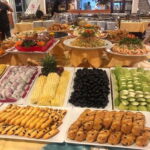
- Meals are partially covered: 1 breakfast and 2 lunches, plus included tastings like fruits, honey tea, and candy.
- You get real on-the-water activities: motorboat and boat trips, plus the rowing-boat canal segment.
- You get two nights in A/C lodging with a double or twin room included.
- You get a professional English speaking guide, which matters most at border steps and in places where local context helps you understand what you’re seeing.
Your costs that are explicitly not included are also clear: Cambodia visa fee ($40 per person), plus a single supplement of 800,000 VND if you need a solo room. Tips and other expenses aren’t included, as expected.
So the value math is simple: if you would otherwise pay separately for transport out to the delta, guide time, some meals, and two nights, the package becomes more reasonable fast. If you already have lodging covered and you’re set on DIY transport, then $200 may feel like you’re paying for someone else’s planning. But most people booking this are choosing convenience, and the package is built around that.
Who should book this Mekong-to-Phnom Penh experience
This tour is a good fit if you want:
- A structured Mekong Delta highlight path without arranging every segment yourself
- Boat scenes beyond just one stop, including floating market time and canal rowing
- A mix of culture and food: pagoda, islands, orchard time, bee-farm honey tea, coconut candy, folk music, weaving
- English speaking guidance through the more complex parts, including border procedures
It may not be the best choice if:
- You hate busy schedules and want long periods of free time
- You prefer only one or two “big sights” and nothing else
- You’re highly sensitive to extra costs and don’t want to budget for the Cambodia visa
Should you book it
I think this is worth booking if you want Mekong Delta variety plus a guided push toward Phnom Penh. The best part is that the day-to-day experience is built around practical “watch, taste, ride” moments: Cai Rang at peak morning, boat travel through small channels, honey tea and coconut candy, and then Chau Doc’s fish farm floating life paired with the Cham weaving village.
Book it if you like having someone handle timing and logistics, especially with border steps in the mix. Skip it only if you’re trying to keep costs ultra-low or you want a slow, unstructured trip.
If you do book, bring patience for crowded market areas, and plan your Cambodian paperwork so you’re not stressed at the border.
FAQ
Is the tour guided, and in English?
Yes. The tour includes a professional English speaking guide.
What’s included in the meals?
The package includes 1 breakfast and 2 lunches, plus other included items such as fruits, honey tea, and candy.
Do I need a Cambodia visa?
Yes. The Cambodia visa fee is not included and is listed as $40 per person.
Is pickup available from Ho Chi Minh City?
Yes. Pickup and drop-off by a modern air-conditioned bus is included, starting from the Bùi Viện area in Quận 1.
How big is the group?
This tour has a maximum of 20 travelers.
What extra costs should I plan for?
Besides the Cambodia visa fee ($40 per person), there is a single supplement listed at 800,000 VND per person for single occupancy. Tips and other expenses are not included.