Saigon’s Chinatown can feel like a blur of signage unless someone slows you down and points things out. On this 3-hour Chinatown walking tour, Thang guides you through narrow lanes and key community buildings, then gives you time in the market area so you can see what daily life looks like in Chợ Lớn.
What I liked most was how Thang connects street scenes to the bigger story of Vietnam’s past, including the Chinese-era links and how that history still shows up today. I also liked the mix of stops: a long-used alley, a community hall (hoi quán), and a Cantonese temple—then a practical chunk of time in the commercial district.
One thing to plan around: this is mostly outdoors and you’re walking for about 3 hours, and the tour price doesn’t include snacks or drinks—so bring water and decide in advance how you want to handle tips.
In This Review
- Key Things to Know Before You Go
- Why This Ho Chi Minh City Chinatown Tour Works
- Meeting Point: Saigon Skydeck and a Simple Start
- Stop 1: Hao Si Phuong Alley and Saigon’s Old-Style Street Life
- Stop 2: Hội Quán Nghĩa An (Nghĩa An Hoi Quan) and Community Architecture
- Stop 3: Ba Thien Hau Temple and Cantonese Details You Can Spot
- Stop 4: Chợ Lớn Market Area and the District as a Living Economy
- Price and Tips: The Real Cost Breakdown
- The Tour Style: Pacing, Language, and What’s Included
- Practical Comfort Tips for a 9:00 am Walk in Saigon
- Who This Chinatown Tour Is Best For
- Should You Book This Chinatown Hidden Treasures Free Walking Tour?
- FAQ
- How long is the Ho Chi Minh City Chinatown hidden treasures free walking tour?
- What is the meeting point for the tour?
- What time does the tour start?
- Is admission required for the stops?
- Do I need a printed ticket?
- What is included in the tour price?
- What should I expect to pay for tips?
- Are coffee, tea, or snacks included?
- What is the maximum group size?
- What is the cancellation policy?
Key Things to Know Before You Go
A guide named Thang who explains the why, not just the what.
Free entry at each stop, including a community hall and a Cantonese temple.
Enough time in Chợ Lớn to feel the district as a working neighborhood.
Small group size (up to 30), which helps you ask questions.
Tips are the main payment method, with a suggested 15–25 USD/person.
Why This Ho Chi Minh City Chinatown Tour Works
Chinatown in Ho Chi Minh City is not a theme park. It’s a real working part of the city where religion, local identity, and commerce overlap in the same few blocks. That’s exactly why a walking tour pays off here. You start noticing patterns fast: the way doorways, rooftops, and meeting halls signal who lived there, what they valued, and what still matters.
This tour is built around four stops that each show a different layer of the area. You begin with a narrow alley that feels like a time capsule of everyday movement. You then shift to a hoi quán, where community life is organized and remembered through architecture. Next comes the Ba Thien Hau Temple, which is Cantonese in flavor and full of details. Finally, you spend a longer stretch in Chợ Lớn, where the neighborhood’s commercial side becomes the focus.
And the biggest payoff for me was how the tour’s stories land in an easy-to-follow way. Thang’s style is practical: he doesn’t just recite dates. He ties history to the physical space you’re standing in, so you understand what you’re looking at before you move on.
You can also read our reviews of more walking tours in Ho Chi Minh City


Meeting Point: Saigon Skydeck and a Simple Start
The walk starts at Saigon Skydeck, at 36 Hồ Tùng Mậu, in Bến Nghé, Quận 1, at 9:00 am. It’s a good choice because you’re in a central area where you can usually get there without heroic planning. The tour also uses a mobile ticket, which is handy if you prefer keeping everything on your phone.
Here’s what I think is the smartest way to show up: arrive a few minutes early, scan your phone for the ticket, and take 2 minutes to get your bearings. Chinatown streets can twist quickly, and once you’re deep into the lanes, you’ll appreciate having the first location in your head.
The tour ends back at the meeting point. That matters because you’re not guessing how to get out of the neighborhood after a few hours of walking. You can plan the rest of your day with more confidence.
Stop 1: Hao Si Phuong Alley and Saigon’s Old-Style Street Life

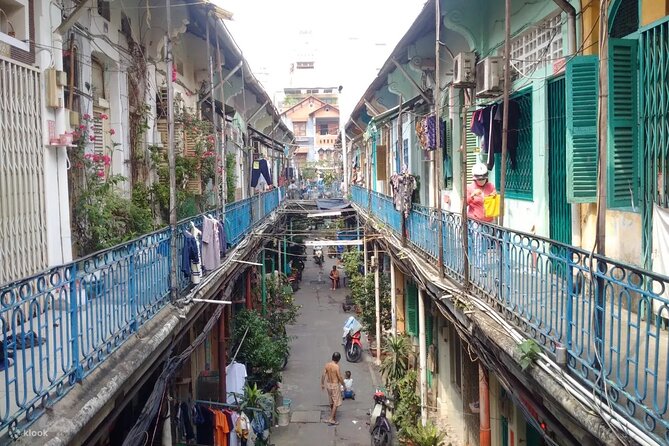
Your first stop is Hao Sy Phuong Alley (Hao Si Phuong Alley) in the heart of Saigon’s Chinatown. The standout detail here is the alley itself—narrow, tucked into the neighborhood, and built for daily use rather than sightseeing. The tour frames it as a passageway with a history spanning over 100 years, which is the kind of timeline that makes you look differently at something as simple as a tight corridor of buildings.
What you’re really learning at this stop is how people historically moved through the district and how communities formed around small, repeat-used routes. When an alley has lasted this long, it usually means the neighborhood’s routines kept going—generation after generation—despite the city changing around it.
The practical upside: you get oriented early. Even if you’re not a “read every plaque” person, you’ll start to notice how side lanes function like shortcuts, social spaces, and business back-doors all at once.
Stop 2: Hội Quán Nghĩa An (Nghĩa An Hoi Quan) and Community Architecture
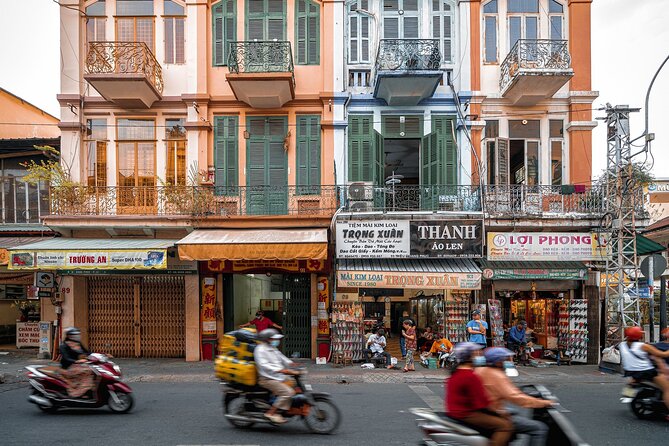
Next you visit Hội Quán Nghĩa An (Nghĩa An Hoi Quan). This hoi quán was constructed before the 19th century, and after reconstruction several times, the building has a unique, old-looking character sitting amid modern surroundings.
This is where the tour steps beyond “nice buildings” and explains why they matter. Hoi quán halls were tied to community organization—often linked to shared roots, language, and mutual support. Even without a deep background, you can see the intention in the architecture: it’s built to last, built for gatherings, and designed to signal identity in a district that includes many different eras and influences.
What I like about this stop is that it gives you contrast. You’re no longer just walking past Chinese-influenced details; you’re seeing a dedicated community structure that still feels like it belongs to the neighborhood, not like a monument placed for tourists.
Potential drawback here: if you’re expecting a long interior visit, plan for more of a look-and-learn style. The tour keeps each stop around 30 minutes, so it’s focused rather than slow and museum-like.
Stop 3: Ba Thien Hau Temple and Cantonese Details You Can Spot
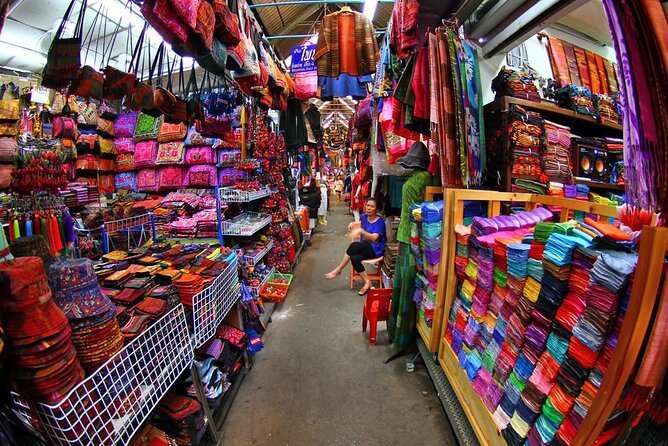
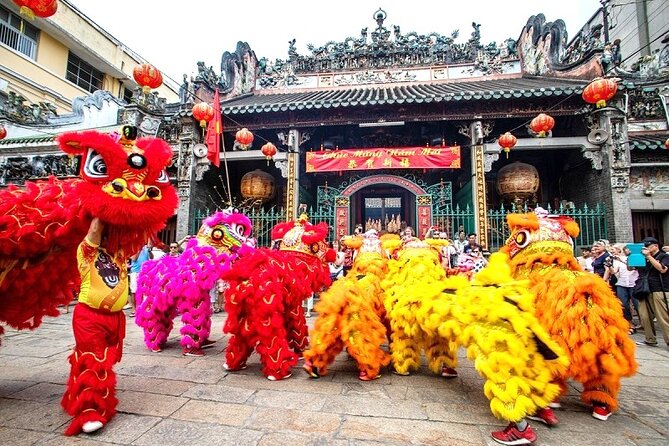
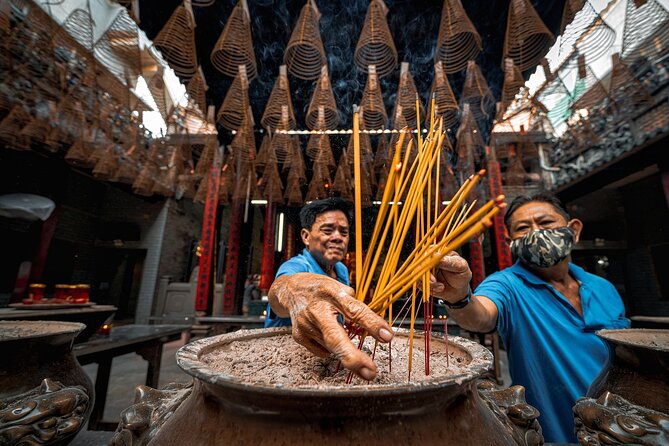
Then comes Ba Thien Hau Temple, described as a Chinese-style architectural heritage built in the late 19th century by the Cantonese community in Saigon. The temple’s design is a visual lesson on style and symbolism, including an yin-yang tiled roof and an ancient look that anchors the area around it.
This is one of those stops where the guide’s storytelling helps you see what you might otherwise miss. Temple architecture can look decorative until someone points out the cultural logic behind the choices. Thang’s explanations are particularly useful because they translate the meaning of features into something you can recognize later as you keep walking around the city.
My suggestion: take a slow moment here. Stand back, then walk closer. Look at the roofline and the edges of the structure, because that’s where the craftsmanship is easiest to notice. Also, keep your pace respectful—temples are religious spaces as well as historic ones.
You can also read our reviews of more city tours in Ho Chi Minh City





Stop 4: Chợ Lớn Market Area and the District as a Living Economy
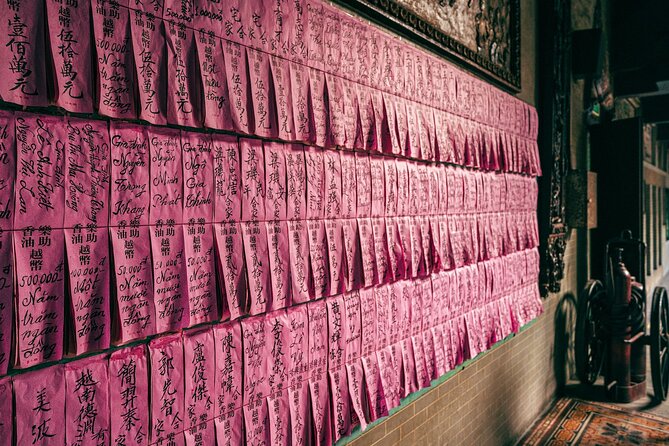
The last stop is Chợ Lớn, which the tour describes as a significant commercial center for Chinese communities in Ho Chi Minh City. The point isn’t just that it’s busy; it’s that the district still preserves cultural, religious, and architectural values that trace back thousands of years.
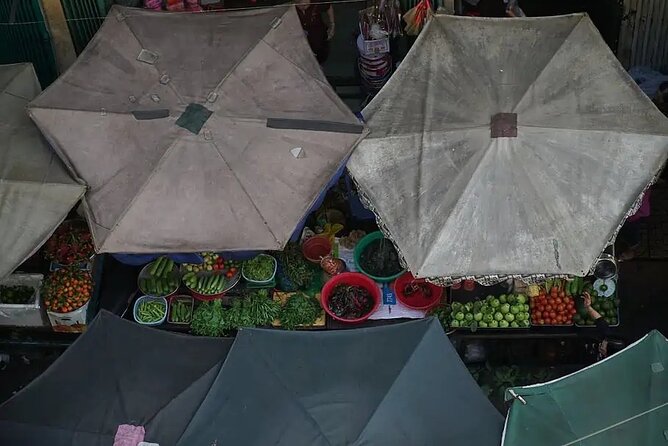
You get about 1 hour here, which is long enough to do two useful things. First, you can watch how the market area works—what people buy, what storefronts emphasize, and how goods and services cluster. Second, you can ask the guide to point out what you should pay attention to as a visitor, so you don’t just pass through without gaining anything.
The practical value of this final segment is that it reframes the whole tour. The alley, the hoi quán, and the temple are all connected to community identity. Chợ Lớn shows how that identity lives in trade and daily routines. It’s the “now” part of the story.
A small note: if you’re sensitive to crowds or heat, this is the stretch where you’ll feel it most. Go slow, drink water, and treat this as free time inside a neighborhood, not a formal sightseeing stop.
Price and Tips: The Real Cost Breakdown
This tour’s price is listed as $0.71 per person, which sounds almost too good to be true. The key detail is how it’s structured: it works as a tips-only basis, and the tour includes a suggested extra tip of 15–25 USD/person.
So what’s the value? You’re not paying for expensive transport or packaged tickets. Instead, you’re paying for a guide who can read the district for you and connect the dots between architecture, community life, and the city’s larger story. In a neighborhood like Chinatown, that interpretive layer is often the difference between a “walk with photos” and an actual understanding of place.
If you’re on a tight budget, the low booking price is still useful, but you should budget for a tip if you want the experience to be fair to the guide. If you’re someone who likes history and enjoys asking questions, tipping in that suggested range will feel like the right match for the effort involved.
The Tour Style: Pacing, Language, and What’s Included
This walking tour is about 3 hours, with each of the first three stops taking roughly 30 minutes and the market area taking about 1 hour. The maximum group size is 30 travelers, which usually keeps things from turning into a slow conga line.
It includes an English-speaking guide—and that matters because Thang’s strength is explanation. The stories are described as digestible and entertaining, with the guide able to answer questions and tie the old and new together.
Also, admission tickets at the stops are listed as free, so you’re not juggling extra entrance fees mid-walk. That makes the schedule feel easier to follow.
Not included: the tour notes no air-conditioned vehicle, and it also doesn’t include coffee/tea or snacks. Still, the guide may take you to a coffee break spot during the day (that’s a common pattern for this kind of tour). If you do stop for drinks, just expect to pay on your own.
Practical Comfort Tips for a 9:00 am Walk in Saigon
Plan for walking first. This is a street tour, not a bus-only overview, and your comfort will depend on what you bring.
Here’s what I recommend:
- Wear light shoes with grip. Sidewalks and alley edges can be uneven.
- Bring water, especially if you’re doing this in hotter months.
- Expect sun in open stretches, with less cover near market lanes.
- Have small cash ready for snacks or drinks if you choose them.
- Keep your phone handy for the mobile ticket, but also keep it out of the way when you’re focused on buildings.
The route is short enough to enjoy without feeling exhausted, but long enough that you’ll want a relaxed attitude. You’ll get more out of the tour if you slow down with the guide instead of rushing to “tick off” each stop.
Who This Chinatown Tour Is Best For
This tour is a strong fit if you:
- Want a walkable way to understand Chinatown beyond restaurant names and store signs.
- Like history that connects to what you see—especially if you enjoy how communities form and keep their identity.
- Prefer a guide who can answer questions and keep the pacing friendly.
It’s also a good match for people who want a manageable group experience. With a maximum of 30, you can still hear explanations and feel included.
You might want to think twice if you:
- Want lots of indoor time or museum-style exhibits.
- Have trouble with walking for around three hours outdoors.
- Don’t want to take part in a tips-based model (because that’s how the tour is designed to be valued).
Should You Book This Chinatown Hidden Treasures Free Walking Tour?
If your goal is to understand Ho Chi Minh City’s Chinatown through its streets and community buildings, I’d book this. The tour’s biggest strength is the guide’s ability to make the district readable—so you don’t just walk around, you learn how the place works.
The value comes from three things: free entries, a focused route that covers multiple identity markers (alley, hoi quán, temple, market), and a guide named Thang who explains history in a way that actually sticks. If you’re okay with a few hours of walking and you’re willing to tip fairly, this is a smart way to spend a morning in Quận 1.
FAQ
How long is the Ho Chi Minh City Chinatown hidden treasures free walking tour?
It lasts about 3 hours.
What is the meeting point for the tour?
The tour starts at Saigon Skydeck, 36 Hồ Tùng Mậu, Bến Nghé, Quận 1, Thành phố Hồ Chí Minh, Vietnam.
What time does the tour start?
The start time is 9:00 am.
Is admission required for the stops?
The tour notes free admission at the listed stops.
Do I need a printed ticket?
No. The tour uses a mobile ticket.
What is included in the tour price?
It includes an English-speaking guide. The tour also mentions a suggested extra tip as part of the tips-only basis.
What should I expect to pay for tips?
The suggested extra tip is 15–25 USD per person.
Are coffee, tea, or snacks included?
No. Coffee/tea and snacks are not included.
What is the maximum group size?
The tour has a maximum of 30 travelers.
What is the cancellation policy?
You can cancel for a full refund if you cancel at least 24 hours before the experience’s start time. If you cancel within 24 hours, the amount paid won’t be refunded.