REVIEW · HO CHI MINH CITY
Ho Chi Minh City private walking tours with young local volunteers
Book on Viator →Operated by Saigon Hotpot · Bookable on Viator
Saigon looks different when you walk with students. This private walking tour uses young local volunteers to guide you from big landmarks to quieter back streets, with time to ask questions and move at your speed. I especially love the hotel pickup option, so you start early and lose less time to logistics.
Guides like Linh and Duyen bring student-led local stories that feel personal, not like a script, from war-era corners to street-food nights. One thing to consider: the tour depends on volunteer availability, and there’s at least one account of a last-minute cancellation.
In This Review
- Key highlights worth circling
- Why this Saigon walking tour hits the sweet spot on value
- Price and logistics: what $36 includes (and what it does not)
- District 1: Independence Palace and the classic landmark chain
- Quận 5 Chinatown: temples, pagodas, and the quieter side streets
- District 3 inside-out: café time and war-era storytelling
- District 10 at night: flower market energy and apartment-block life
- How the student volunteers shape the day (Huy, Linh, Duyen, My My)
- Building your ideal route: customize instead of accept a script
- Timing and practical comfort: plan around the walking hours
- Who should book this (and who might want a different style)
- Quick reality check: the one drawback to keep in mind
- Should you book this private walking tour?
- FAQ
- How much does the Ho Chi Minh City private walking tour cost?
- How long is the tour?
- Is pickup from my hotel included?
- Where do I meet the guide?
- Does the tour include entrance fees?
- Are coffee or tea included?
- Is this a private tour?
- Do I receive a ticket on my phone?
- What are the tour hours?
- What happens if the weather is bad?
Key highlights worth circling
- Private pace, private group: only your group walks together, and your guide adjusts the route to you
- District-hopping themes: District 1 landmarks, Quận 5 Chinatown, District 3 history and cafés, District 10 night food
- Young local guides with real English: multiple guides are noted for clear communication and patience
- You choose your focus: ask to emphasize history, markets, cafés, or food stops instead of being rushed
- Low base price, real flexibility: $36 covers the guide service, while add-on costs stay optional
Why this Saigon walking tour hits the sweet spot on value
At $36, this is the kind of Ho Chi Minh City tour that makes sense when you want more than a quick photo loop but you do not want to spend like it is a private car day. The best part is the format: you walk, you stop, and your guide talks while you go. That matters in a city like Saigon, where context changes everything.
I also like that you can keep the tour practical. The core value is the guide service, plus the structure to hit the key neighborhoods. When you build in optional add-ons (like coffee, meals, or any entrance tickets), you can shape the day without losing control of your budget.
And because the guides are young local volunteers, you often get a perspective that feels current. In the stories I saw from past guests, guides such as Linh, Huy, Duyen, and My My were praised for being friendly, patient, and willing to work around the pace of the group.
You can also read our reviews of more walking tours in Ho Chi Minh City


Price and logistics: what $36 includes (and what it does not)
Here is the math that helps you plan calmly. The price starts at $36, and the tour duration is listed as 2 to 8 hours (approx.) depending on the route and how your guide stretches the stops.
What you get:
- Tour-guide service
- Pickup offered (starting from your hotel, when available)
- Mobile ticket
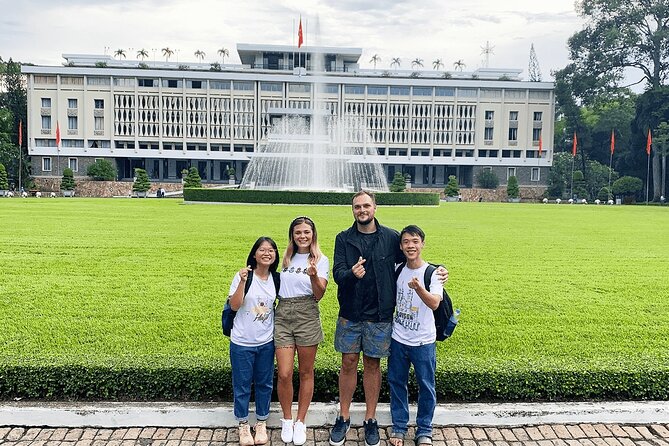
- A meeting point at Independence Palace / Ben Thanh, District 1, with the tour ending back at the meeting point
What you should expect to pay separately:
- Coffee and/or tea
- Private transportation
- Attraction entrance fees (if you choose sites that require tickets)
This separation is actually a good thing. It lets you keep the base cost low, then decide day-of what matters most to you. If you only want free viewpoints and walk-by landmarks, you can keep spending tight. If you want one or two paid stops, you can add them without feeling like the whole day is locked behind an all-in price.
District 1: Independence Palace and the classic landmark chain
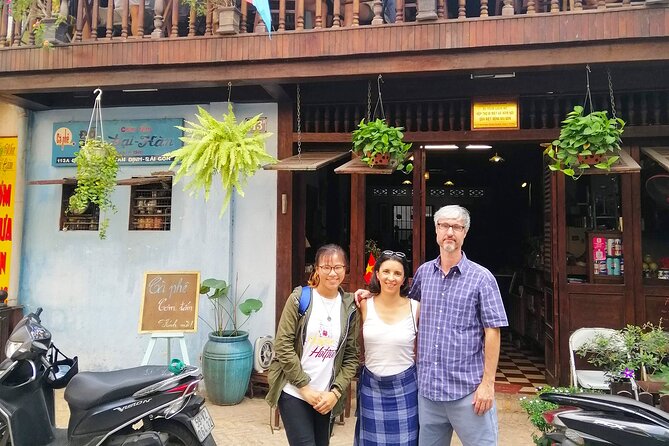
If you want a first-day route that gives you “I get the city now” momentum, District 1 is the place to start. The District 1 option centers on big civic landmarks, including Independence Palace, Notre Dame Cathedral of Saigon, and the Central Post Office, plus additional stops in the area.
Why this works on foot:
- You can understand how Saigon’s political and cultural identity sits side-by-side with colonial-era architecture.
- The landmarks are close enough that you can walk between them and still have time for questions.
- Your guide can slow down when you want more context, or speed up if you prefer quick stops and photos.
What to watch for:
- Cathedral-and-post-office areas can be visually crowded, so having a guide helps you focus on details that you would otherwise miss.
- If you already know these sights, you can ask your guide to spend more time on the streets around them instead of repeating the obvious.
In the feedback I read, guides were repeatedly praised for mixing the “main sites” with lesser-seen local corners. That is especially useful here, because District 1 can otherwise feel like a checklist.
Quận 5 Chinatown: temples, pagodas, and the quieter side streets
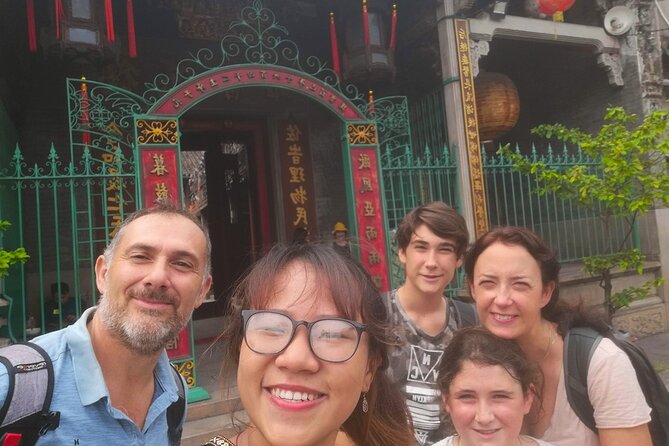
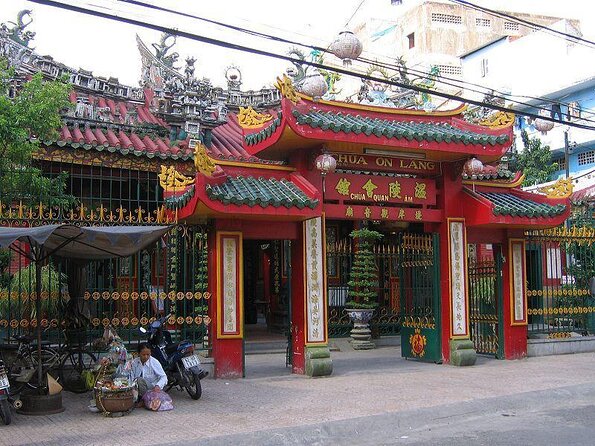
The Quận 5 (Chợ Lớn) option is one of the most interesting ways to shift gears from District 1’s official landmarks. This route leans into the area’s older Cantonese and community roots, with stops such as Ba Thien Hau Temple, Ong Bon Pagoda, and Father Tâm Church, plus more around the same neighborhood.
What you get on this walk:
- A culture-focused route where you spend more time noticing how people use these spaces.
- Religious sites that show Saigon’s layered identity, not just its modern skyline.
- Side streets where your guide can explain what things mean and how the community functions.
A big practical point: this part of the city feels different, so it helps you avoid the “all districts blur together” problem. Pairing District 1 with Quận 5 is a strong combo because it balances government-scale history with everyday community life.
District 3 inside-out: café time and war-era storytelling
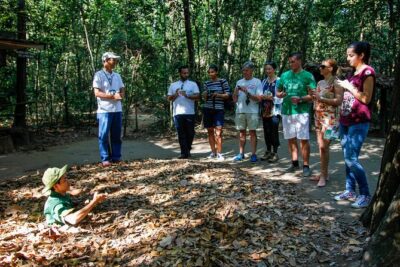
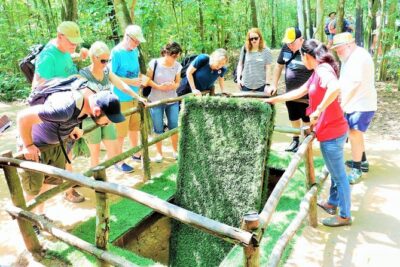
District 3 is where the tour starts to feel more personal and less like a postcard route. The District 3 option includes places such as Cheo Leo / Do Phu Cafes, the Secret Weapon Cellar, and Tan Dinh (pink) Church, along with other stops nearby.
Why District 3 is a smart pick:
- You get a mix of ordinary life and heavier context.
- Café stops give you a natural rhythm break, which matters when you are walking for hours.
- The history stop (like the Secret Weapon Cellar) pairs well with the rest of the day, because your guide can connect the past to what you see now.
One detail that stands out from guide praise: some guides were described as patient and accommodating with how long people wanted to linger. That is important here, because a history site can feel rushed if your guide is only moving on a strict schedule.
If your group likes a mix—coffee plus context, architecture plus stories—District 3 is often the best “balance district.”
You can also read our reviews of more city tours in Ho Chi Minh City




District 10 at night: flower market energy and apartment-block life
The District 10 option shifts the focus toward food and night scenes, with stops that include Ho Thi Ky Flower Market and Nguyen Thien Thuat apartment buildings, plus local dishes during the night food route.
This is the tour choice I recommend if:
- You want a break from landmark overload.
- You like street-food-style eating with guidance on what is local.
- You prefer a more neighborhood-feeling walk at night.
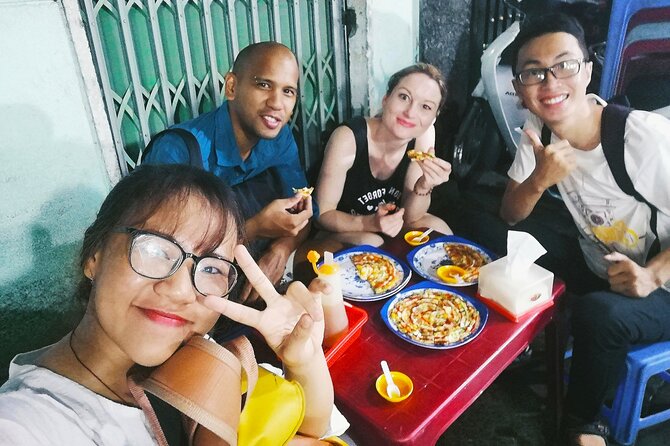
In the accounts I read, guides were praised for helping people experience local food without making it feel like a chore. The base tour does not include meals or drinks, but your guide can steer you toward what fits the group’s tastes.
One practical consideration: night walking is still walking. The tour also notes that it requires good weather, so if rain is in the forecast, plan for an alternate schedule or a reschedule.
How the student volunteers shape the day (Huy, Linh, Duyen, My My)
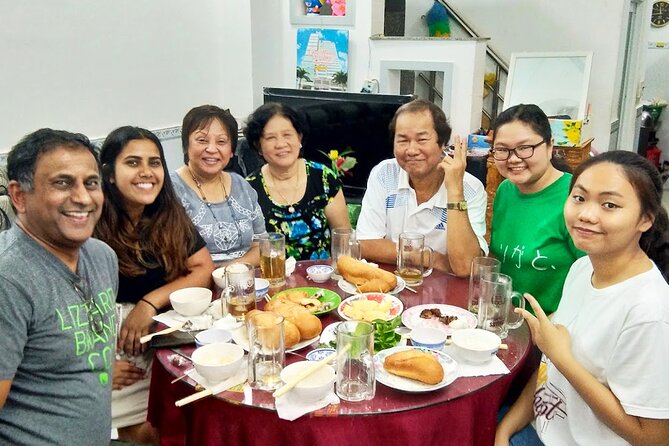
This tour’s personality comes from the guide, and the guide is a volunteer student. That sounds “lightweight” on paper, but in practice it tends to change the tone.
In particular, several names came up in positive feedback:
- Linh was highlighted for being friendly, enthusiastic, and speaking English clearly.
- Huy was specifically thanked for patience around local markets.
- Duyen was praised for strong history context, especially around the Vietnam War, and for answering lots of questions.
- My My was described as highly flexible with what the group chose to see, including a longer day that stretched into the evening.
There is also a recurring theme of guides being proactive when the day needs adjusting. One guide was credited with planning around coffee-shop access by taking steps in advance for the group. Another example: some guides helped people find alternative interests when they had already seen certain spots.
So yes, you are booking a walking tour. But you are also tapping into a person who lives nearby and can translate what you see into something you actually understand.
Building your ideal route: customize instead of accept a script
A big selling point is that this is a private tour, so your guide does not have to force everyone into one pace. You can customize the itinerary, and the routes are built around neighborhood themes. That means you can mix and match based on what you care about on a given day.
How to use that flexibility:
- If you feel overwhelmed by history, start with District 1, then pick the lighter cultural stops in the next district.
- If your group likes war-era context, prioritize the District 3 option that includes the Secret Weapon Cellar.
- If you want a day that ends with food and atmosphere, add the District 10 night food option and keep earlier stops efficient.
Also, notice the tour length range: 2 to 8 hours. That is not just marketing. It means you can pick a shorter “great hits” walk or a longer day that gives you time to pause, eat, and return to your top priorities.
Timing and practical comfort: plan around the walking hours
The tour runs within a broad window—9:00 AM to 9:00 PM. That gives you options: an early start if you want cooler light and easier mobility, or an evening start if you prefer the night food vibe.
Because it is a walking tour, comfort matters. One theme from the positive feedback was that guides gave time for practical breaks, including time to eat and cool off. If you want a similar experience, tell your guide your preferred rhythm at the start.
Two more tips that help:
- Wear shoes that handle long streets and sidewalks.
- If you care about one specific place, say so early. Private guiding works best when the guide can build the walk around your priorities.
Who should book this (and who might want a different style)
This tour fits well if you:
- Want a budget-friendly way to get orientation in Ho Chi Minh City
- Like learning from local voices rather than only reading signage
- Prefer a private, walk-and-talk pace
- Want a route that can adapt to your interests (history, cafés, markets, street food)
It might not be the best fit if:
- You need guaranteed access to every paid attraction stop, since entrance fees are not included
- You are planning around tight timing and cannot handle any changes caused by volunteer availability
- You dislike walking for multiple hours, even though the pace is adjustable
Most travelers can participate, and it is positioned as a practical introduction to multiple districts rather than a single-site deep dive.
Quick reality check: the one drawback to keep in mind
The reviews include a rare but serious issue: at least one booking did not take place because the provider canceled last minute. That does not erase the strong overall rating, but it is worth factoring in.
If your schedule is flexible, you can usually absorb a change. If it is not, keep a backup plan for your day.
Should you book this private walking tour?
I think you should book it if your goal is a first strong feel for Saigon without spending big on transportation, and you like the idea of walking with young local volunteers who can explain what you are seeing in plain language. At $36, it is a good deal when you want District 1 landmarks, Quận 5 Chinatown culture, District 3 café-and-history context, or District 10 night food all in one flexible format.
Skip it (or at least plan carefully) if your plans are fragile or you rely on paid attractions inside a tight timeline. Since entrances and transport are not included, you should also budget for the extras you actually want.
If you want, tell me which day you are going and what you care about most—war history, temples and pagodas, cafés, or night street food—and I can suggest the best district theme to match your vibe.
FAQ
How much does the Ho Chi Minh City private walking tour cost?
The price is listed as $36.
How long is the tour?
It runs 2 to 8 hours (approx.) depending on the route and your pace.
Is pickup from my hotel included?
Pickup is offered at the start of the tour.
Where do I meet the guide?
The meeting point is Independence Palace, Ben Thanh, District 1, Ho Chi Minh City.
Does the tour include entrance fees?
No. Attractions entrance fees are not included.
Are coffee or tea included?
Coffee and/or tea are not included.
Is this a private tour?
Yes. It is private, meaning only your group participates.
Do I receive a ticket on my phone?
Yes. The tour uses a mobile ticket.
What are the tour hours?
The activity is listed as running Monday to Sunday from 9:00 AM to 9:00 PM.
What happens if the weather is bad?
The tour requires good weather. If it is canceled due to poor weather, you will be offered a different date or a full refund.