REVIEW · HO CHI MINH CITY
Top Home Cooking Class with Stunning River View AC Kitchen
Book on GetYourGuide →Operated by Lua's Kitchen · Bookable on GetYourGuide
River views and home cooking, right in HCMC. This class feels like family time, not a factory lesson, and you’re doing it in an air-conditioned apartment kitchen with serious skyline and river views from the 24th floor. I like that the teaching is step-by-step and the menu can be customized to your diet without turning it into a compromise.
What I also like is the focus on real technique with fresh ingredients, plus the reassurance of no MSG (and you’ll taste the difference). One consideration: there’s no pickup, and everyone cooks the same dishes together, so you should be okay working as part of the group rather than having a totally separate setup.
If you want a practical, hands-on way to learn Vietnamese home cooking in a small group, this is a strong choice.
In This Review
- Key highlights worth packing for
- Inside Lua’s AC kitchen on the 24th floor
- The real meaning of small-group home cooking (3 hours)
- How the menu works: pick your favorites from Bun, Banh, Phở, and more
- Fresh ingredients, no MSG, and real diet tailoring
- Teaching that sticks: step-by-step cooking plus after-class recipes
- What you actually eat (and why the tasting is part of the value)
- Price and value: $38 for 3 hours with ingredients included
- Getting there: Copac Square in District 4, step-by-step
- Who should book this class (and who might not love it)
- Should you book Lua’s Kitchen?
- FAQ
- How many dishes will I cook?
- How long is the cooking class?
- Is pickup service included?
- What’s the meeting point?
- Is there an option to visit a market?
- Does the class accommodate dietary restrictions?
- Will the class use MSG?
- What’s included in the price?
- What languages is instruction offered in?
- Is alcohol included?
Key highlights worth packing for
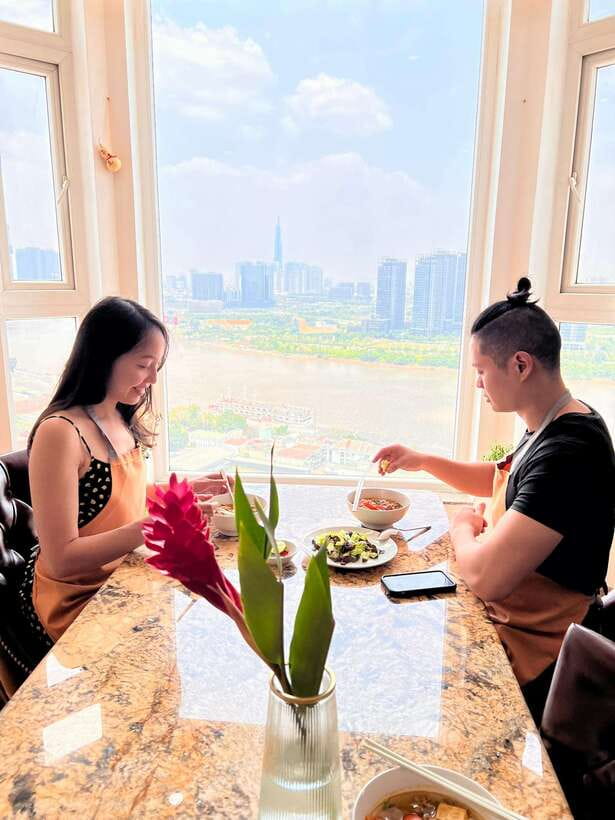
- River-view kitchen on the 24th floor: AC comfort while you cook, with a view you’ll remember.
- Small group (up to 10): more hands-on time and a calmer, family-friends atmosphere.
- Cook 3 dishes from scratch: step-by-step guidance so you can repeat it later at home.
- Fresh, high-quality ingredients with no MSG: less heavy flavoring, more real food taste.
- Menu customization for dietary needs: vegetarian/vegan, gluten-free, lactose-intolerant options can be handled.
- English-friendly teaching from Le Thi Lua: easy explanations and plenty of chances to ask questions.
Inside Lua’s AC kitchen on the 24th floor
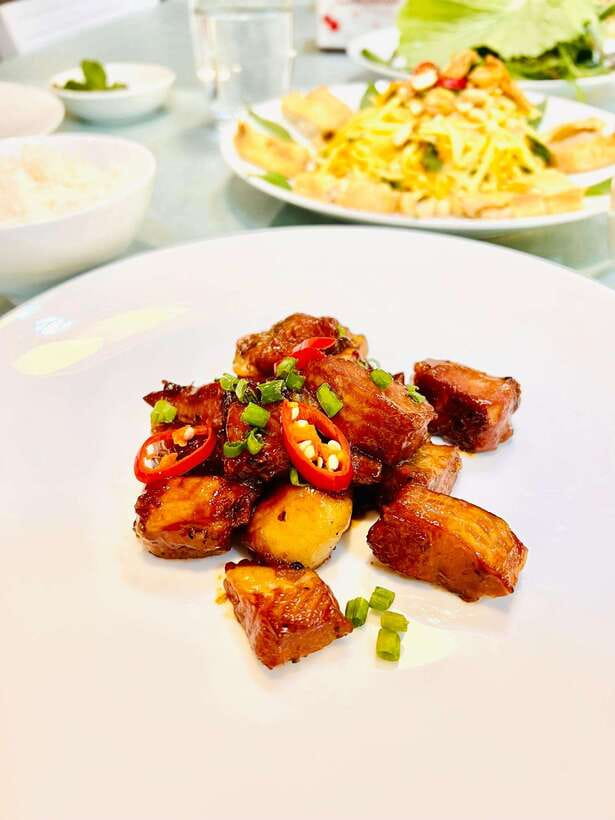
You start at Lua’s Kitchen in Copac Square, Unit 24-A8, Block A, in District 4. The best part is the setting: you’re cooking high up on the top 24th floor, and the kitchen is air-conditioned, which matters in Ho Chi Minh City when the weather gets punchy.
From the street, the building entrances are on the left side. You’ll want to ask the security guard to open the elevator to the 24th floor, Block A (Unit A8). It’s also convenient because your place is close enough to the city center that you can walk along the riverside to get oriented first.
This matters for value. A lot of cooking classes claim to be “local,” but you still feel like a guest sitting in someone else’s workflow. Here, the home setup plus AC comfort makes it easier to focus on what you’re learning instead of just surviving the heat.
You can also read our reviews of more cooking classes in Ho Chi Minh City

The real meaning of small-group home cooking (3 hours)
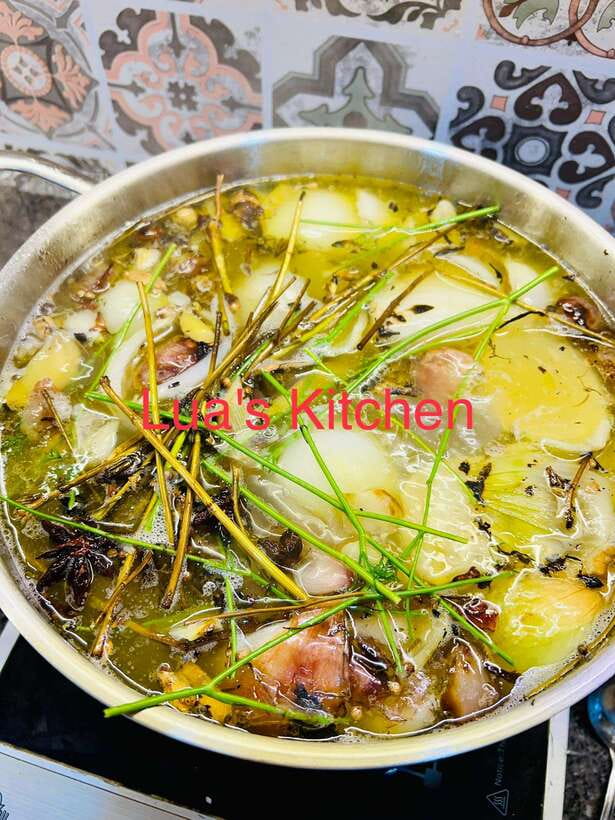
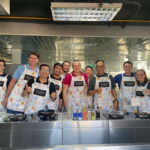
This is built for a small group of up to 10, and that changes the whole vibe. Instead of watching, you do. Everyone gets tasks during prep and cooking, and the teacher keeps the pace friendly so you’re not standing around waiting for the next step.
You’re cooking together with the group, not on separate stations. That can be a drawback if you like total independence while you cook. But if you like learning by doing alongside other people, it’s a plus: you get a sense of how Vietnamese home kitchens actually run—shared counter space, shared timing, and lots of small questions.
Your class runs for 3 hours, and the core promise is clear: you’ll make three dishes from scratch. The teacher guides you step by step through the process, so even if Vietnamese cuisine is new to you, you’re not left guessing.
How the menu works: pick your favorites from Bun, Banh, Phở, and more
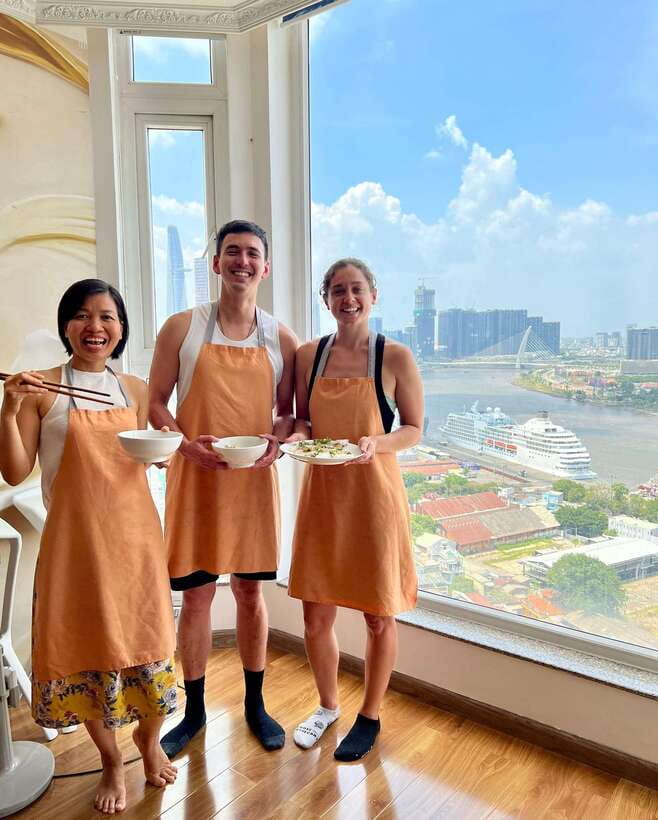
The menu is flexible, and you can choose what you want to learn when you book. You cook three dishes, but the specific dishes come from a list that covers the classics—so you’re not stuck with a single “standard set.”
Here are some of the options offered:
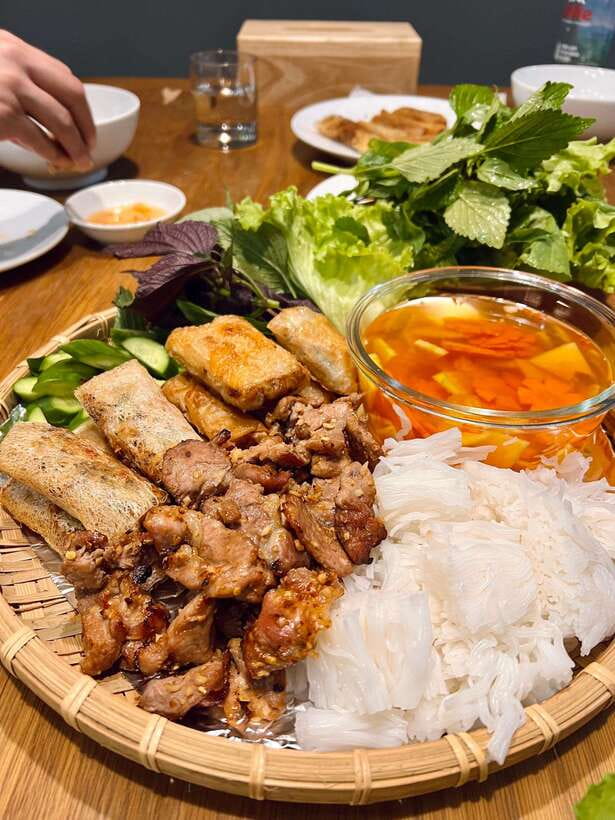
- Bún thịt nướng / Bún chả / Bún bò Nam Bộ: stir-fried beef or grilled chicken/pork noodle bowls
- Bánh mì: Vietnamese sandwich
- Bánh xèo: Vietnamese savory pancake (chicken/pork/prawn choices)
- Phở gà: chicken noodle soup
- Chả giò: fried spring rolls (chicken/pork)
- Bún cá: fish noodle soup
- Mì xào bò: stir-fried noodles with beef
- Bánh cuốn: rice crepe rolls
- Gỏi: mango/papaya/pomelo/cabbage salads
- Cơm tấm: grilled pork with broken rice
- Cá kho: braised fish
- Thịt kho: braised pork
- Gà sả ớt: chicken with lemon grass
For me, the smart move is to pick dishes that represent different techniques. For example, pair something quick and fresh (like a salad) with something braised (like cá kho or thịt kho), plus one noodle or fried dish. You’ll end up with a toolkit for flavors and methods, not just three separate recipes.
If you have a specific dish you want, tell Lua at booking time. She can tailor the traditional menu so it fits you—more on that next.
Fresh ingredients, no MSG, and real diet tailoring
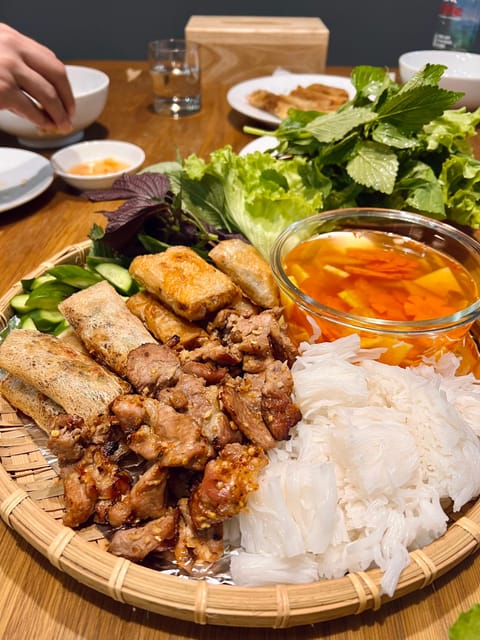
A lot of classes advertise “fresh” but you still end up with sauces that taste overly processed. Here, the emphasis is on high-quality, fresh ingredients and no MSG. That’s the difference between food that tastes like it’s built around seasoning and food that actually tastes like itself.
Even better, the teacher can adjust the menu for different diets, including vegetarian/vegan, gluten-free, and lactose-intolerant needs. This isn’t just a polite offer; it’s part of how she designs the class, which makes your dishes more likely to feel like Vietnamese food rather than a generic substitute.
A small practical tip: when you book, be specific about what you avoid (for example, dairy but what about eggs). The class is small, and you’ll get better results if your needs are clearly spelled out early.
Teaching that sticks: step-by-step cooking plus after-class recipes
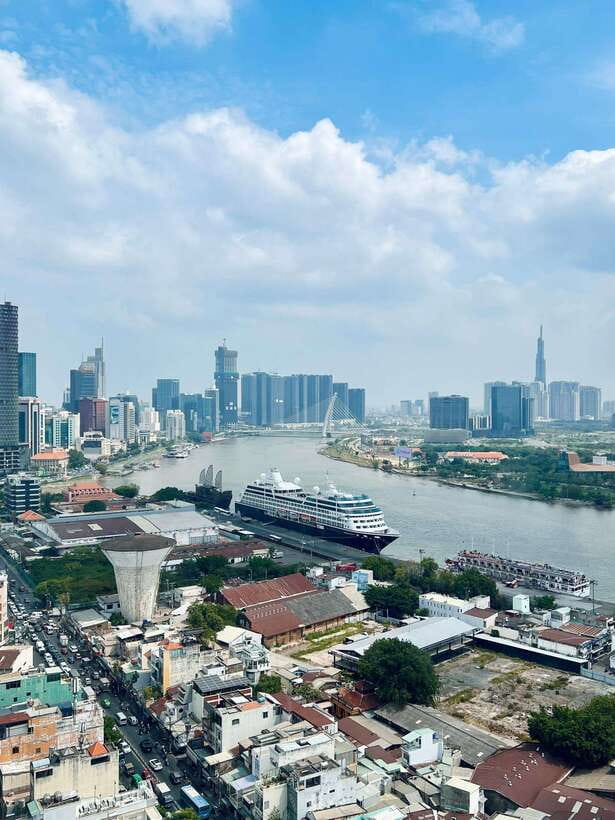
Lua, Le Thi Lua, has a decade-long background and brings strong English to the teaching. In a home setting, that matters because you’re not just hearing instructions—you’re using them right away.
During the cooking, you get step-by-step guidance through the process. You’ll also get cooking tips and context, including stories and regional perspective. Lua grew up in the north of Vietnam and later lived in the south for decades, so she can explain why dishes taste different depending on region and habits at home.
One detail I like from the experience: you don’t just leave with a full table and a happy memory. You’ll also get recipes you can use later, so you’re not stuck trying to recreate food from vague recollection.
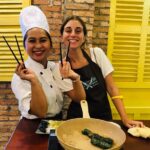
And because this is a home with family participation, you may cook alongside Lua and her family members (including her niece Huyen, based on what people have said). That adds a warm, human layer, and it makes the whole thing feel less scripted.
You can also read our reviews of more tours and experiences in Ho Chi Minh City
What you actually eat (and why the tasting is part of the value)
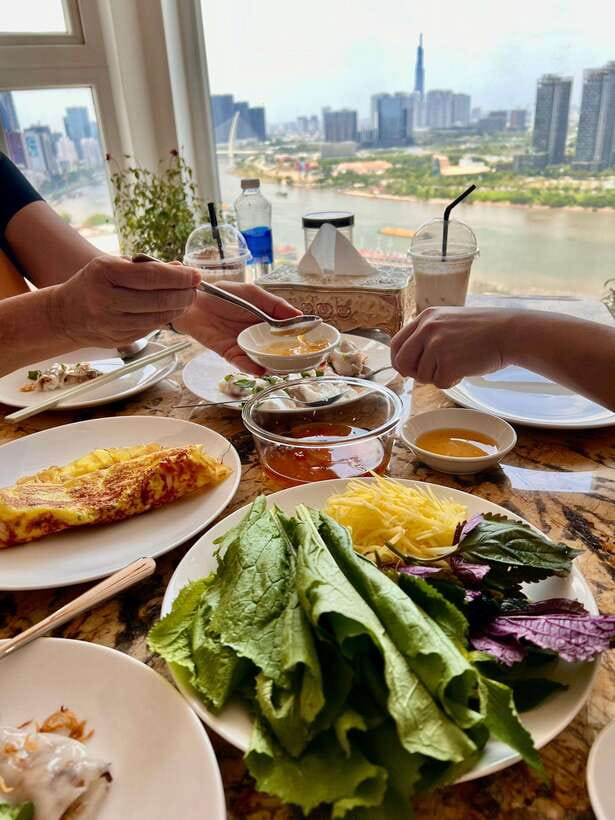
The class includes a meal, plus drinking water. That’s a big deal because you’re paying for learning and eating, not just watching someone else cook and then leaving hungry.
Since you cook three dishes from scratch, your meal is basically your own work—plus the satisfaction of seeing how the dishes come together as a table of flavors. In Vietnamese meals, sauces, herbs, and textures all play off each other, so cooking multiple dishes helps you understand how the components work as a set.
One warning that’s also a compliment: the portions can be generous. If you’re the type who usually eats light on tours, bring your appetite anyway. You may not finish everything, but you’ll understand the foods better if you taste properly.
Price and value: $38 for 3 hours with ingredients included
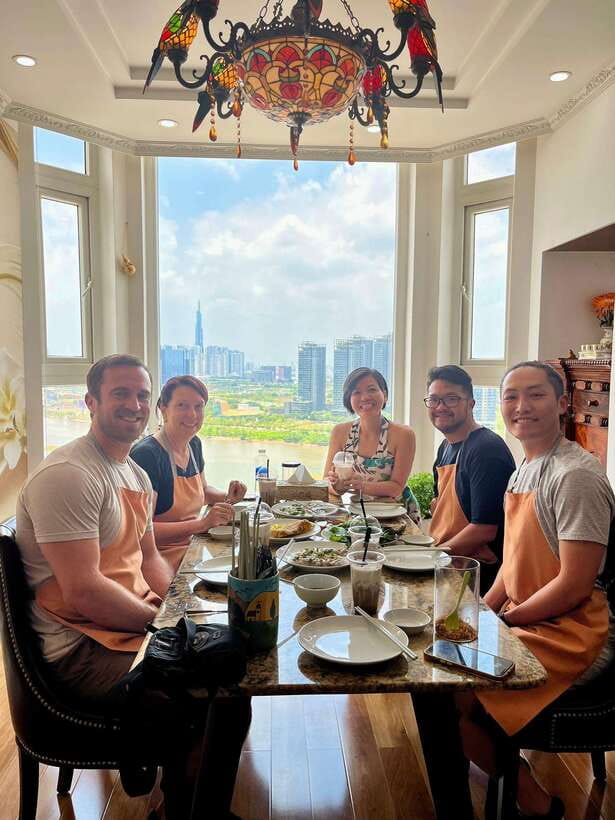
The price is $38 per person for about 3 hours, and your money covers:
- All ingredients
- A meal
- Drinking water
- Good company
You pay extra only for specific add-ons. A market visit is offered as requested with an extra fee, and alcohol drinks are not included. Also, there’s no pickup service, so you’ll want to plan your own trip to Copac Square.
Is it worth it? For the setting and the teaching style, yes—especially if you like hands-on learning in a real home kitchen. You’re not paying extra for AC comfort or views; they’re part of the experience. And in a small group, you get enough attention to learn the steps you’ll need later.
If you’re comparing, look past the dollar amount and compare what’s included. Here, ingredients and the meal are included, and the class is designed for active participation.
Getting there: Copac Square in District 4, step-by-step
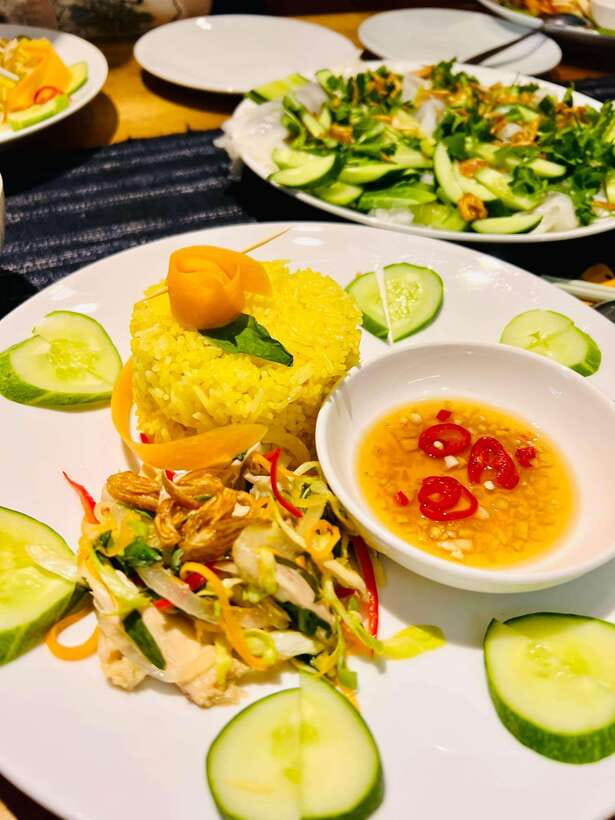
Meeting point: Unit 24-A8, 24th Floor, Block A, Copac Square, 12 Ton Dan St., Dist 4, HCMC.
If you’re coming by foot from the city center, it’s doable and you can walk along the riverside for orientation. When you arrive at the building, watch for the residential entrance on the left side of the street view.
Then, when you find the security area, ask the guard to open the elevator to the 24th floor for Block A (Unit A8). It’s an easy checklist moment, but it saves time if you’re tired from travel.
No pickup service is offered, so build in a little buffer for navigation the first time. Once you find it once, the next trip is simple.
Who should book this class (and who might not love it)
This class is a great fit if you:
- Want hands-on Vietnamese cooking instead of a demo
- Like small-group learning (max 10)
- Care about ingredient quality, including no MSG
- Enjoy home-kitchen atmosphere and conversation
- Need dietary accommodations
It might be less ideal if you:
- Rely on pickup transfers and don’t want to navigate on your own
- Prefer fully separate cooking stations where everyone has their own tools
- Want a huge buffet-style menu with lots of dishes beyond three
If you’re building a short list of Vietnam skills to take home, this one teaches you techniques you’ll actually repeat: noodle bowls, soups, fried items, and braises.
Should you book Lua’s Kitchen?
If you want an honest taste of Vietnamese home cooking with a real teacher, I’d book this. The combination of fresh ingredients, no MSG, and an AC kitchen with a river view makes the experience comfortable and memorable. Plus, the small group and step-by-step approach mean you’re not just eating well—you’re learning how to cook.
Before you book, do two things: pick your three dishes when you can, and plan how you’ll get to Copac Square without pickup. If you do those, you’ll spend your time cooking instead of troubleshooting logistics.
FAQ
How many dishes will I cook?
You’ll cook 3 dishes from scratch during the class.
How long is the cooking class?
The class runs for 3 hours (starting times depend on availability).
Is pickup service included?
No. Pickup service is not offered.
What’s the meeting point?
You meet at Lua’s Kitchen in Copac Square: Unit 24-A8, 24th Floor, Block A, 12 Ton Dan St., Dist 4, HCMC.
Is there an option to visit a market?
A market visit can be offered as requested with an extra fee.
Does the class accommodate dietary restrictions?
Yes. The menu can be tailored for diets such as vegetarian/vegan, gluten-free, and lactose-intolerant needs.
Will the class use MSG?
The class states it uses no MSG and focuses on high-quality fresh ingredients.
What’s included in the price?
Included: all ingredients, a meal, drinking water, and good company.
What languages is instruction offered in?
Instruction is available in English and Vietnamese.
Is alcohol included?
No. Alcohol drinks are not included.