REVIEW · HO CHI MINH CITY
Bean to bar Chocolate Workshop in Ho Chi Minh City
Book on Viator →Operated by Ban Cacao - Vietnamese chocolate maker · Bookable on Viator
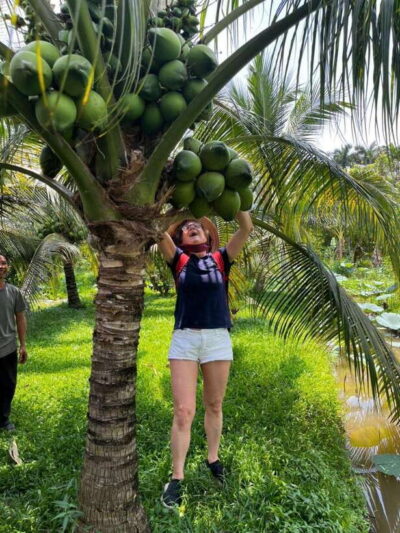
Chocolate starts with a cacao pod.
This bean-to-bar workshop in Ho Chi Minh City walks you through the full journey from pods to finished chocolate, with a clear look at how cacao becomes chocolate in Vietnam. The class happens at Ban Cacao, a Vietnamese chocolate maker, so it feels grounded in real local production instead of a demo-only show.
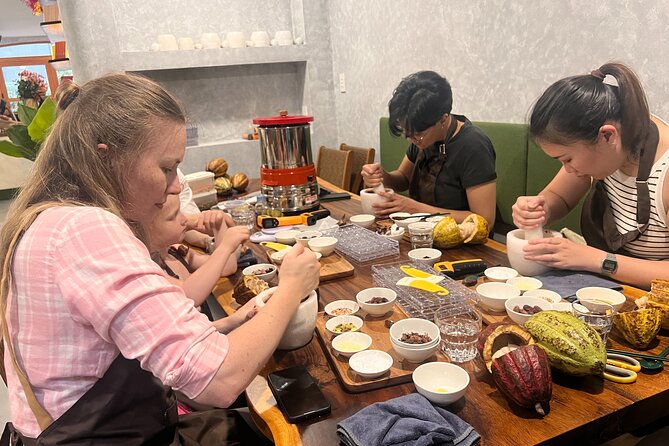
I especially like the hands-on parts, from tasting fresh cacao pods to husking your own cacao beans. You’re not just watching chocolate happen—you’re making it, step by step, with the tools laid out in front of you.
One thing to consider: the traditional grinding with a granite stone mortar takes real effort. If you’re bringing younger kids, plan for some patience and keep expectations realistic—this isn’t a gentle, sit-and-sip activity for everyone.
In This Review
- Key things to know before you start
- Ban Cacao in Quận 1: where the workshop actually feels local
- The cacao story: how Vietnam turns local ingredients into chocolate
- Tasting fresh cacao pods: the reality check before chocolate
- Husking your own beans: the part that makes it feel real
- Grinding cacao paste with a granite stone mortar
- From paste to a decorated chocolate bar you can take home
- The included drink and small moments that add up
- Price and value: is $32 worth it?
- What type of traveler should book this workshop?
- Practical tips before you go
- Should you book the Bean-to-Bar workshop in Ho Chi Minh City?
- FAQ
- How long is the bean-to-bar chocolate workshop in Ho Chi Minh City?
- How much does the workshop cost?
- Where does the workshop start in Ho Chi Minh City?
- Is this workshop small group size?
- What will I do during the class?
- What materials and tools are used for making chocolate?
- Do I get anything to drink during the workshop?
- Can children participate?
Key things to know before you start
- Pods to bars process in a tight 2 hours so you leave with a finished bar, not just a worksheet
- Fresh cacao pod tasting gives you a real sense of what the fruit tastes like before it becomes chocolate
- You husk your own cacao beans, which makes the whole process feel earned
- Granite mortar cacao paste uses traditional methods that can be tiring (in a good way)
- You assemble the bar and decorate the wrapping, so it leaves with a personal touch
- Small group size (max 10) keeps it easy to ask questions and get help
Ban Cacao in Quận 1: where the workshop actually feels local
The workshop meeting point is at 89/14 Hàm Nghi, Phường Nguyễn Thái Bình, Quận 1. That neighborhood is handy for moving around Saigon, and the location being near public transport matters because a 2-hour experience can disappear fast if you waste time commuting.
What I like about starting at a working chocolate maker (Ban Cacao) is that the class doesn’t feel like a museum talk. It feels like you’re getting behind the scenes of a real craft. Even before you start making anything, you get the vibe that cacao is the main character here—not tourism props.
Also, with a max group size of 10, you’re less likely to get stuck in a long line or wait for instructions. In a hands-on workshop, that’s a big deal.
You can also read our reviews of more city tours in Ho Chi Minh City



The cacao story: how Vietnam turns local ingredients into chocolate
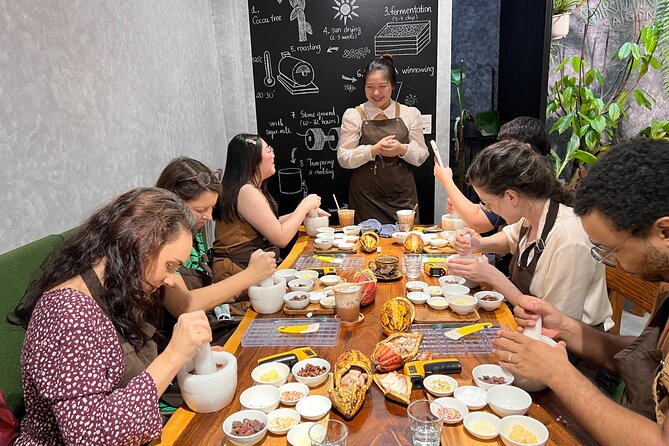
Right away, you get an explanation that connects the entire process to Vietnam. You’ll hear about the pods to bars journey and the history of cacao in Vietnam, plus how Vietnamese makers use local ingredients to produce chocolate.
For me, this part is more than background. It helps you understand why the later steps matter. When someone explains what you’re about to do—then you actually do it—you remember it. You also taste and compare with better judgment, because you’re not guessing what good cacao should feel or taste like.
You also get insight into what changes as you move from cacao fruit to beans, then to cacao nibs, then to paste, butter, and sugar-based chocolate. The class keeps those ideas practical, not academic.
Tasting fresh cacao pods: the reality check before chocolate
One of the most memorable moments is tasting the fresh cacao pods. This is important because it anchors your expectations in what cacao actually is at the start.
Chocolate people often come in thinking cacao tastes like chocolate. It doesn’t, at least not immediately. Pod tasting shows you the raw character of cacao fruit before it’s processed into something sweet and mellow. That makes the later steps feel like transformation, not just mixing ingredients.
If you’re the kind of person who likes to know why flavors happen, this tasting stage will click with you. It’s a small step in time, but it adds a lot of meaning.
Husking your own beans: the part that makes it feel real
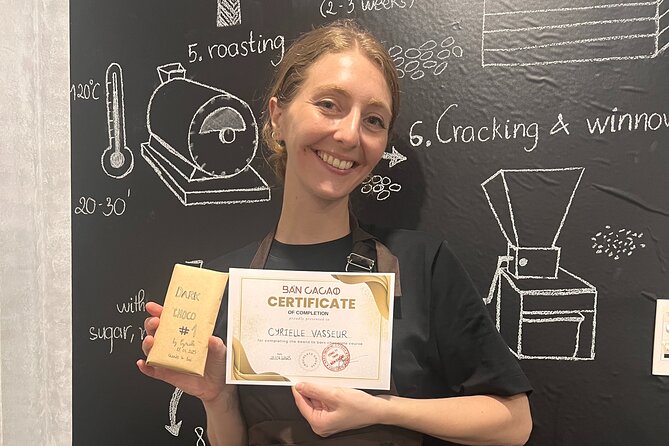
Next comes the tactile work: husking your own cacao beans. This is one of those tasks that sounds simple until you’re doing it. It slows you down in a good way, and you start noticing texture, resistance, and the difference between the fruit and the bean inside.
This step also changes your perspective. When you husk the beans yourself, you’re no longer treating cacao as a chocolate bar ingredient. You see cacao as a product with a messy, real beginning.
And it builds confidence for the rest of the class. By the time you move into paste-making, you’ve already done the part that most people usually skip.
Grinding cacao paste with a granite stone mortar
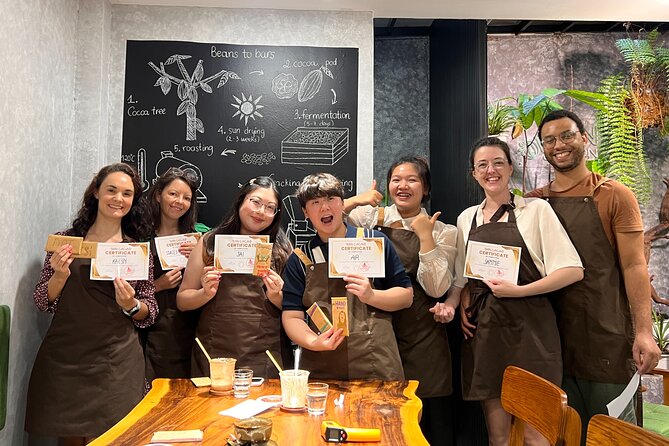
Now you get the traditional-style paste step. You’ll make cacao paste using a granite stone mortar. This is the workshop’s physical heart.
Why it’s worth it: grinding is one of the key techniques that turns cacao into something workable. Watching it happen is one thing. Doing it yourself means you feel how paste texture changes as time and pressure build.
It can also be a little tiring—especially if your group includes kids or if your hands aren’t used to this kind of repetitive work. One common piece of practical advice from families is that the grinding can be quite tiring, so if you’re bringing children, I’d aim for ages where they can focus through manual work. (Feedback I’ve seen suggests children over 8 handle it best.)
If you’re an adult traveler, you’ll likely find this step oddly satisfying: part workout, part craft, and part “wait, I made this” moment.
You can also read our reviews of more drinking tours in Ho Chi Minh City





From paste to a decorated chocolate bar you can take home
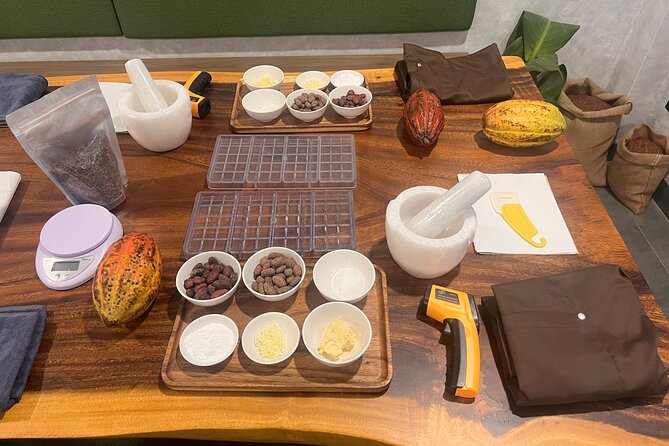
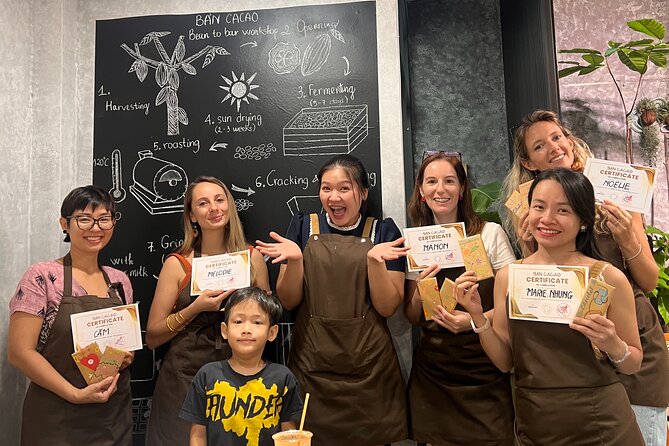
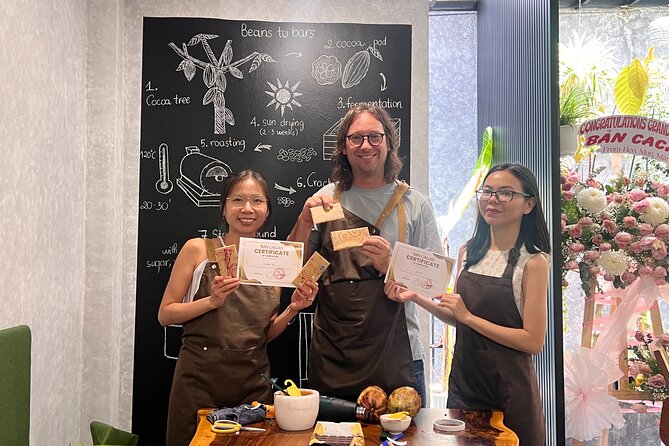
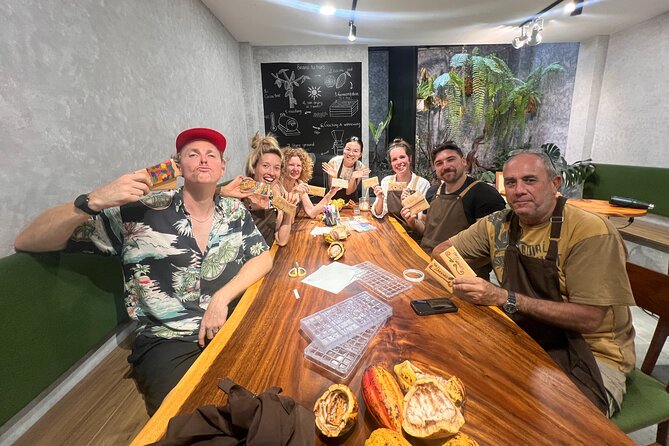
After cacao paste, you’ll move into the main finish: making your own chocolate bar from the early steps to the final bar. You’ll also get a decorating moment—then you take your creation home.
The ingredients and tools are laid out clearly:
- Materials include fresh cacao fruits, cacao beans, cacao nibs, cacao butter, and cane sugar
- Tools include a granite mortar, thermometer, scale, chocolate mold, and wrapping paper
That thermometer and scale matter because they signal the workshop isn’t just about play. You’re learning that chocolate is controlled. Small changes in heat and ratios can affect the final result, and you’ll feel that “process thinking” as you work.
Then there’s the fun part: decorating your bar and wrapping it. The wrapping is where the experience becomes giftable. People often think chocolate workshops end at tasting, but here the final product includes your own design choices.
Some families have shared that they left with more than one finished bar after decorating—so while you should expect at least the bars you make as part of the class, it’s also worth asking at booking if you’re hoping for multiple bars to take home.
The included drink and small moments that add up
Even a great workshop can feel like effort without a breather. Here, you get a drink each as part of the experience—hot or iced chocolate depending on what’s offered. That makes sense: you’re working with cacao and turning it into something sweet, so a cacao-based drink helps you reset.
These small moments matter. They keep the energy up during the middle steps when grinding and measuring take over your focus. And they give you a chance to pause before you finalize your bar.
Price and value: is $32 worth it?
At $32 per person for about 2 hours, this is priced like a hands-on activity, not a cheap tasting session. The value comes from two things you usually don’t get together:
1) You do the labor (husking beans and grinding paste)
2) You leave with a finished, decorated product you made yourself
You also get a structured lesson that includes cacao tasting and an explanation of the pods-to-bars process and Vietnam’s cacao story. If you’ve done typical food tours where you taste a few items but don’t touch the craft, this will feel more satisfying.
Also, the small group size (max 10) improves value in a real way. In small classes, instructions aren’t rushed and you’re more likely to get help when you need it.
If you’re looking purely for the cheapest chocolate experience, you might find cheaper tastings around Saigon. But if your goal is to walk away with a skill and a real bar you made, this is one of the better allocations of time.
What type of traveler should book this workshop?
This workshop fits best if you:
- Want a hands-on food activity instead of a passive tour
- Like practical skills and want to understand how chocolate is made
- Are traveling with family and want something engaging in the middle of the day
Families often ask whether kids can handle it, and here the honest answer is: there’s a real grinding component. If your child is older and patient, it can be a fun father/child or parent/kid project. If your child is very small or easily frustrated, expect that grinding with a mortar takes time and effort.
As for solo travelers: you’ll likely enjoy the structure and the quiet focus of doing each step in sequence. Small group size also makes it easier to connect with the instructor and others without feeling crowded.
Practical tips before you go
This is a craft class, so treat it like one.
- Bring curiosity and expect you’ll get messy at least a little during paste-making.
- If you’re bringing kids, plan for focus time more than play time—the mortar work is the long pull.
- Wear comfy clothes you don’t mind getting cacao dust or residue on.
- Expect the class to move at a steady pace: the best attitude is to jump in and follow the next step rather than trying to go at your own rhythm.
You’ll have access to everything you need in the workshop itself, including the molds and wrapping paper, so you don’t need to pack tools.
Should you book the Bean-to-Bar workshop in Ho Chi Minh City?
I’d book it if you want something more meaningful than another chocolate tasting stop. The best reason is simple: you’ll make real chocolate, you’ll understand the process behind it, and you’ll take home a decorated bar that feels like your own work—not a souvenir.
Skip it if you’re looking for a totally hands-off experience or if grinding work sounds like a dealbreaker. The traditional granite mortar step is the reality check.
If you’re on the fence, here’s the tiebreaker: a lot of chocolate tours end at tasting. This one ends with you producing a bar.
FAQ
How long is the bean-to-bar chocolate workshop in Ho Chi Minh City?
The class runs for about 2 hours.
How much does the workshop cost?
The price is $32.00 per person.
Where does the workshop start in Ho Chi Minh City?
It starts at 89/14 Hàm Nghi, Phường Nguyễn Thái Bình, Quận 1, Thành phố Hồ Chí Minh, Vietnam.
Is this workshop small group size?
Yes. It has a maximum of 10 travelers.
What will I do during the class?
You’ll learn the pods-to-bars process, taste fresh cacao pods, husk your own cacao beans, make cacao paste with a granite stone mortar, then make and decorate a chocolate bar to take home.
What materials and tools are used for making chocolate?
Materials include fresh cacao fruits, cacao beans, cacao nibs, cacao butter, and cane sugar. Tools include a granite mortar, thermometer, scale, chocolate mold, and wrapping paper.
Do I get anything to drink during the workshop?
Yes. The class includes a drink each, which can be hot or iced chocolate.
Can children participate?
The experience is described as having grinding that can be tiring, and families have recommended it most for children over 8.