REVIEW · HO CHI MINH CITY
Explore HCMC by US Army Jeep: History & Food
Book on Viator →Operated by Vietnam Tours VIP · Bookable on Viator
Ho Chi Minh City by Jeep feels like time travel with better seats. This private, open-air former US Army Jeep tour mixes major landmarks with smaller, memorable moments like the Jade Emperor Pagoda and the lacquer artists at Sơn Mài Đại Việt, and the guide storytelling (Luc, Trung, Thuy, Nhat) is a big part of why it works. I like that you get an easy orientation through District 1 while still stopping long enough to feel the places, and I like the mix of history + food time rather than only sightseeing. One drawback to plan for: it’s an older-style jeep, so expect an open-air ride and street-level traffic energy, not a quiet, climate-controlled tour.
You’ll cover key sights in about four hours, with English-speaking guidance, bottled water, entrance fees where listed, and pickup/drop-off in District 1 or at Ben Thanh Market. The best value comes if you want a half-day plan that connects French colonial landmarks, war-era sites, and Vietnam’s modern city rhythm without you having to stitch it all together yourself.
In This Review
- Key highlights you’ll actually feel during the ride
- Why a vintage US Army Jeep makes Saigon feel different
- Price and time value for a 4-hour former Jeep tour
- Reunification Palace and Central Post Office: the political story starter
- Notre-Dame Cathedral Basilica and the French-colonial street rhythm
- Nguyen Hue’s pedestrian energy, plus a modern Saigon contrast
- Jade Emperor Pagoda and the former US Embassy: spiritual and war-era perspective
- Sơn Mài Đại Việt lacquer artists: where souvenirs turn into stories
- War Remnants Museum: the most serious hour on the route
- What you can expect from pickup, guides, and the open-air ride
- Who should book this Jeep tour in Ho Chi Minh City
- Should you book this Ho Chi Minh City US Army Jeep tour with history and food time?
- FAQ
- What’s the total duration of the Ho Chi Minh City US Army Jeep tour?
- How much does the tour cost per person?
- Is pickup offered, and where are you dropped off?
- What’s included in the price?
- What are the main places the tour stops at?
- Is tipping included?
- Is this tour private or shared with other groups?
Key highlights you’ll actually feel during the ride
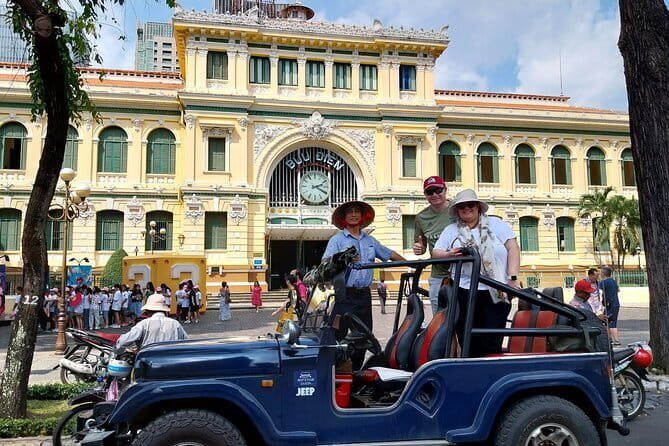
- Open-air vintage US Army Jeep for street-level views and great photo angles
- Guides like Luc, Phat, Nam, Trung, Thuy, and Nhat show up often and focus on stories tied to each stop
- Sơn Mài Đại Việt lacquer workshop time gives you something real to watch before you buy souvenirs
- War Remnants Museum stop for a serious look at Vietnam’s conflict history
- District 1 hotel pickup or Ben Thanh drop-off keeps this tour simple and time-efficient
Why a vintage US Army Jeep makes Saigon feel different
Saigon can be overwhelming at first. The lanes are busy, the streets change character fast, and it’s easy to miss what you’re looking at. This tour solves that with one practical move: you ride in a vintage military-style Jeep that gets you into the flow of the city while your guide keeps the meaning of each stop clear.
The open-air part matters more than you’d think. You get direct sightlines for things like church facades, old postal architecture, and big-city views from major roads. It also makes the tour feel like a moving walking tour, only you’re not constantly burning time getting from place to place.
Because this is private, you’re not squeezed with strangers or rushed through decisions. That’s especially useful for photo stops and for asking questions when the guide makes a specific point about something you’re seeing right then.
You can also read our reviews of more food & drink experiences in Ho Chi Minh City



Price and time value for a 4-hour former Jeep tour
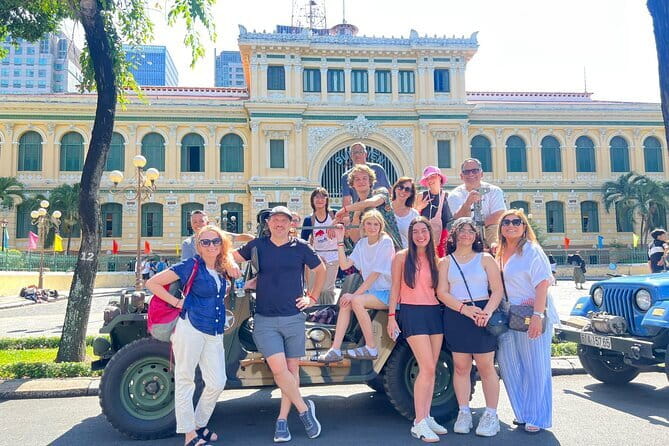
At $69 per person for about four hours, the price isn’t just about transportation. It’s also about the fact that you’re getting guided time at multiple paid or ticketed sites plus a ride that would take you longer to coordinate on your own.
Here’s how I think about the value:
- You save planning time. You’re not building a route across District 1 and deciding which stops are worth your attention.
- Entrance fees and bottled water are included in what’s listed, so you don’t get hit with surprise add-ons at each location.
- Pickup and drop-off in District 1 or at Ben Thanh Market reduces the “where do I meet?” hassle that can eat half your afternoon.
The only real “cost” is your own expectations. You’re not spending the whole day in one museum, and you’re not doing a slow, deeply detailed lecture. You’re getting a smart half-day route that aims to give you bearings fast and leave you with places you can return to if you want more.
Reunification Palace and Central Post Office: the political story starter

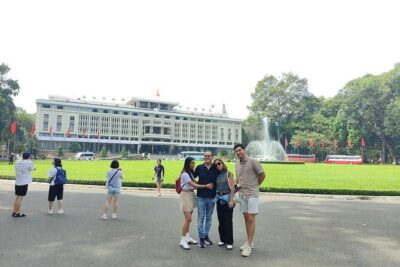
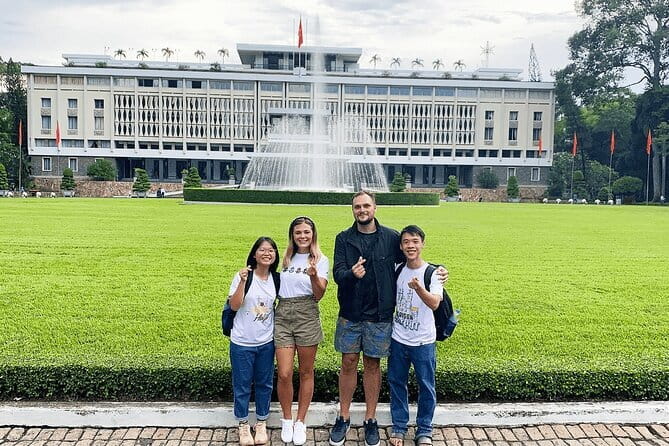
Your first major anchor is the Reunification Palace (also called the Independence Palace). Plan for about 30 minutes there, and use that time like a sprint, not a stroll. This site is the kind where the rooms, layout, and signage help you understand what happened and why it mattered. Even if you’re not an architecture expert, you’ll probably notice how the place is designed to communicate authority and decision-making.
A good guide makes this stop click because they don’t just name dates. They connect what you’re walking past to what it meant for the people living through it. Guides mentioned in feedback, including Luc, Trung, and Khoa, are praised for turning these stops into clear stories rather than a list of facts.
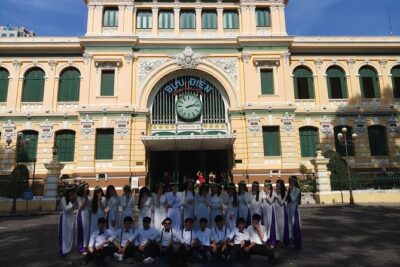
Next is the Saigon Central Post Office for about 10 minutes. This stop is less about lingering and more about hitting the most iconic part of the building and its vibe. The tour description also frames it as a dining adventure around the grandeur of the post office space. If you’re the type who likes a snack break that still feels tied to the place, this fits your style.
Possible drawback here: with a tight 10-minute window, you’ll want to keep your priorities straight. If you care more about photos than food, focus on the front architecture and take your time on pictures outside or in the most photogenic areas you spot first.
Notre-Dame Cathedral Basilica and the French-colonial street rhythm

After the post office, you’ll pass by and stop near Notre-Dame Cathedral Basilica of Saigon, built in the late 1870s by French colonists. Expect around the time it takes to see the structure properly, even if you don’t have a long stay.
This is a place where the details reward you. Watch the exterior proportions, the stone-like massing, and the way it sits in the middle of the modern city. The contrast is part of the point: you’re seeing how colonial-era design still dominates key sightlines in District 1.
Then your route shifts into street-level context with stops like Đồng Khởi Street, followed by Nguyễn Huế Street. These are ideal for two things:
- quick orientation for where you are in the city
- photo breaks when the architecture lines up nicely with the road
If you’re sensitive to crowds, keep in mind these are central streets, and your tour time is short. But that’s also why they work in a half-day format: you get the “this is the city’s center” feeling without spending hours fighting for space.
Nguyen Hue’s pedestrian energy, plus a modern Saigon contrast

Nguyễn Huế Boulevard (pedestrian-focused) is where the city shifts from older landmark framing to a more everyday Saigon atmosphere. If you want a feel for what life looks like in the daytime center, this stop gives it to you in minutes.
Then the tour moves toward the modern side with big skyline and engineering highlights. You’ll have a stop connected to Bitexco Financial Tower (262.5 meters tall), and then you’ll also see Ba Son Bridge (Thu Thiêm 2 Bridge), which connects District 1 with the Thu Thiêm New Urban Area.
Why I like this mid-tour contrast: it keeps you from treating the city like a single-era museum. Ho Chi Minh City has that push-and-pull of old structures, war-era memories, and newer growth. Seeing Bitexco and the bridge during the ride helps you understand why the same day you see colonial architecture can also show you modern infrastructure.
Don’t over-plan your expectations for these stops. They’re short. You’re mainly using them for view and context, not for a long ticketed visit.
You can also read our reviews of more tours and experiences in Ho Chi Minh City






Jade Emperor Pagoda and the former US Embassy: spiritual and war-era perspective

At about 20 minutes, the Emperor Jade Pagoda (Chùa Ngọc Hoàng) is one of the most interesting “switch-ups” on the route because it’s more atmosphere than monument. It’s a Taoist temple built in 1909 and dedicated to the Jade Emperor. When the guide explains what you’re looking at, you start noticing patterns in the decorations and how the space functions for worship.
This stop tends to be a favorite for people who want more than exterior photos. Even if you only have a short time inside, you can usually spot enough to understand why this place is still meaningful.
Then comes a war-era stop: the former U.S. Embassy in Saigon, now part of Ho Chi Minh City. This location sits in the Vietnam War era narrative, and it pairs well with what you’ll see later at the museum. If your goal is understanding the city through conflict history, this is a smart setup because it shifts you from landmark sightseeing into “why these places exist” thinking.
Possible consideration: if you’re easily overwhelmed by war-related content, pace yourself. The tour doesn’t go soft on history later, so you’ll want to decide how much emotional weight you can handle in one half-day.
Sơn Mài Đại Việt lacquer artists: where souvenirs turn into stories
This is the stop I’d circle if you care about buying gifts that feel connected to real craft. Sơn Mài Đại Việt (Dai Viet Lacquerware Factory) is where you spend about 30 minutes.
What makes it special is that you’re not just browsing finished items. The idea is to watch artisans work, and that changes how you shop. In feedback, watching the lacquer artists at work is highlighted as a major moment, and it’s the reason many people feel good about souvenirs they buy there. You can still purchase items, but you’re buying with context: what technique is used, how long it takes, and why the piece looks the way it does.
Practical advice: set aside a few minutes to check quality and details instead of only grabbing the most eye-catching item. If you’re budget-minded, ask questions about the difference between looks and craftsmanship so you don’t overpay for something that’s mostly decorative.
If you’re not interested in lacquer at all, you might find this stop a little “different” from the monument-heavy schedule. But even then, it’s a calm break from intense history stops.
War Remnants Museum: the most serious hour on the route
Next is the War Remnants Museum, about 40 minutes with entrance included. This is the stop where you’ll feel the weight of the tour. It’s established in 1975 and focuses on the impact of Vietnam’s turbulent conflict period.
I recommend you treat the museum like an intentional stop, not a quick glance. Even in 40 minutes, you can pick a few galleries or themes and focus on what connects them. If you try to see everything, you’ll leave with less understanding and more overload.
A good guide matters here. People often come away remembering how a storyteller connected what they saw to the city’s later days. The museum can be emotionally heavy, so a guide who explains without rushing you helps you process the information.
Possible drawback: if your travel style is “short and light,” this may feel like the emotional center of your day. It’s not a casual museum, so plan the rest of your evening for something easy, like a stroll near your hotel or a simple dinner.
What you can expect from pickup, guides, and the open-air ride
This is a private tour, so your group stays together. Pickup is offered at district 1 hotels, and the tour ends with drop-off at your hotel or at Ben Thanh Market. That flexibility is handy when you want to keep your evening open.
You’ll have an English-speaking tour expert, and bottled water is included. The ride itself is in an open-air former Jeep, so you’ll want sun protection and a light layer if you’re sensitive to wind.
Also, the tour notes that you should call via WhatsApp for instant support and that you might need to wait so the Jeep and guide can come to you. In practical terms, keep your phone charged and be ready a few minutes early at the pickup point.
Who should book this Jeep tour in Ho Chi Minh City
This tour makes sense if you:
- want a half-day plan that covers a lot without you designing the route
- enjoy photo-friendly viewpoints from a moving open-air vehicle
- like history, but also want it connected to everyday Saigon spaces
- care about craft shopping with real on-site viewing at Sơn Mài Đại Việt
You might choose something else if you:
- only want deep museum time and don’t like shorter stops
- prefer air-conditioned comfort and quiet
- don’t enjoy war-era content and want lighter themes
Should you book this Ho Chi Minh City US Army Jeep tour with history and food time?
I think this tour is a good bet if you want a memorable “first Saigon” experience. The value is strong because you’re paying for more than driving: you get guided time at major landmarks, a serious museum stop, and a lacquer workshop that adds a tangible souvenir angle. At $69 for four hours, it’s especially worth it when you’re staying in District 1 and you want pickup, entrance coverage where listed, and a ride that feels like a story.
Book it if you want your day to feel well paced: palace, cathedral, streets, modern contrast, temple, war context, then art and a museum. Skip it if you already know exactly which one or two sites you want to focus on and you’d rather plan them yourself with longer time inside.
If you do book, I’d suggest you bring a shortlist of what you care about most: palace vs museum vs lacquer. That way, when the schedule moves quickly, you’ll get more from your limited time instead of trying to do everything.
FAQ
What’s the total duration of the Ho Chi Minh City US Army Jeep tour?
The tour runs for about 4 hours.
How much does the tour cost per person?
The price is listed as $69.00 per person.
Is pickup offered, and where are you dropped off?
Pickup is offered at district 1 locations in Ho Chi Minh City. You’ll be dropped back at your hotel or at Ben Thanh Market.
What’s included in the price?
Included items are an English-speaking tour expert, an open-air former Jeep car, entrance fees and bottled water, and district 1 pickup and drop-off.
What are the main places the tour stops at?
Stops include Reunification Palace, Saigon Central Post Office, Notre-Dame Cathedral Basilica of Saigon, Đồng Khởi Street, Nguyễn Huế Street, Bitexco Financial Tower area, Ba Son Bridge, Emperor Jade Pagoda, the former U.S. Embassy in Saigon, Sơn mài Đại Việt, and the War Remnants Museum.
Is tipping included?
No. Tipping and gratuities are not included.
Is this tour private or shared with other groups?
It’s private. Only your group participates.