REVIEW · HO CHI MINH CITY
Discover Saigon Main Sights by Walking
Book on Viator →Operated by LV Tours · Bookable on Viator
Saigon makes more sense on foot. This small-group walking tour strings together big landmarks with enough context to help the city click, from the War Remnants Museum to French-era buildings and a book-street coffee break. You get an English-speaking guide, a short, practical route, and the kind of on-the-ground Saigon chaos that only feels manageable when someone shows you where to look.
I love how the War Remnants Museum stop includes admission and a full hour, so you can actually work through the exhibits rather than speed-walking past them. I also like the way the route connects Independence Palace (Reunification Palace), Notre-Dame Cathedral, and the Central Post Office into one coherent story, with your guide sharing what to notice as you go.
One possible drawback: the stops are brief, so the whole thing moves at a “quick orientation” pace. If you want long, quiet time inside the palace or the cathedral, you may feel a bit rushed, and the Vietnamese coffee stop means you’ll still pay for your drink since coffee is not included.
In This Review
- Quick hits you’ll feel in your day
- Meeting near the Saigon Opera House, then jumping into the city center
- War Remnants Museum: the stop that frames everything else
- Independence Palace (Reunification Palace) without the pressure to rush
- Notre-Dame Cathedral: French architecture as a living backdrop
- Central Post Office: a European-style building in Vietnamese daily life
- Book Street: the walk that feels like a local hangout
- Vietnamese coffee stop: budget for the classic drink
- The walking style: short stops, road crossings, and staying on schedule
- Guide quality makes the difference: Kevin, Justin, and the others
- Price and value: $35 for four hours of structure
- Who this walking tour is best for
- Should you book this tour?
Quick hits you’ll feel in your day
- Small-group size (up to 15) keeps questions flowing and makes it easier to cross busy roads safely.
- English-speaking guide means you get more than photos and signage; you get practical context and on-the-street tips.
- Admission tickets included for each main stop, including the museum and several landmark interiors.
- Route built for walking through the city center, with short landmark visits and a logical flow.
- Vietnamese coffee stop, not included so budget a little extra if you want the classic drink.
Meeting near the Saigon Opera House, then jumping into the city center
Most days, you start at the Saigon Opera House area for an easy meetup with your guide, then get moving through central Ho Chi Minh City. The tour is designed to be beginner-friendly: it’s short (about 3 to 4 hours) and limited to a small group, so you’re not stuck watching a big crowd shuffle along.
One smart touch is the use of private transportation within the plan. You still do plenty of walking, but having some support keeps you from burning time on logistics when the streets get chaotic.
Also check the timing of where you finish. This tour ends near the city center at Nhà Sách Phương Nam (Phương Nam Bookstore), which is a very convenient place to continue exploring on your own afterward.
You can also read our reviews of more walking tours in Ho Chi Minh City



War Remnants Museum: the stop that frames everything else

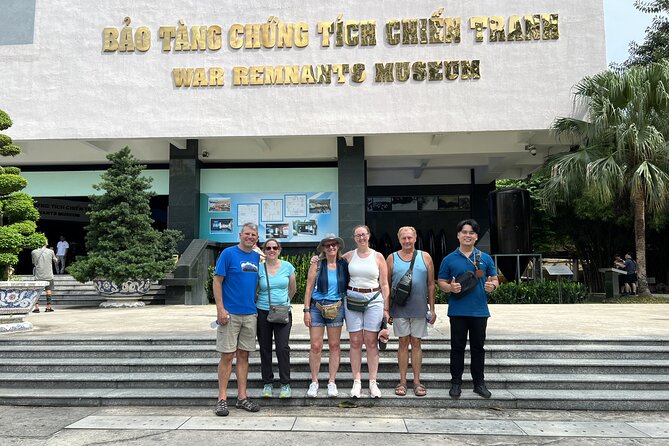
Your first major anchor is the War Remnants Museum, and the schedule gives you about an hour inside, with admission included. This is the right move early in the tour. You’re not just sightseeing landmarks in a vacuum; you’re getting the wartime context that helps you interpret what comes next.
The museum is photo-driven and story-focused, so pace matters. Having a full hour means you can slow down where something grabs you—an image, a caption, a section of the exhibits—and not feel like you’re on a treadmill. I also like that your guide can point out what to notice so you don’t have to guess what’s important.
A practical note: museums can be intense, even when they’re well organized. If you’re sensitive to graphic or heavy topics, take breaks inside and use the guide as your “reset button” for when you want the tour to shift gears.
Independence Palace (Reunification Palace) without the pressure to rush
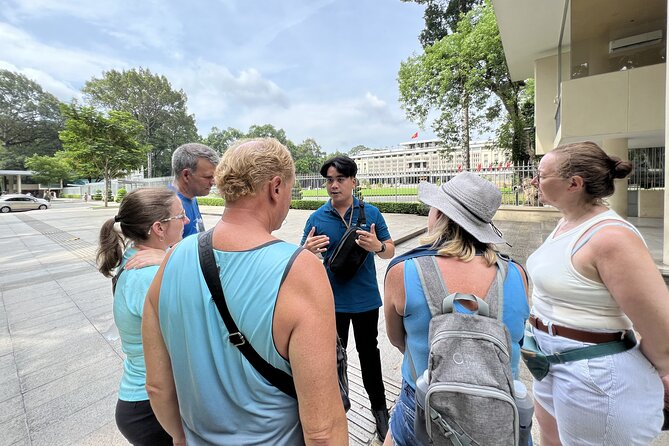
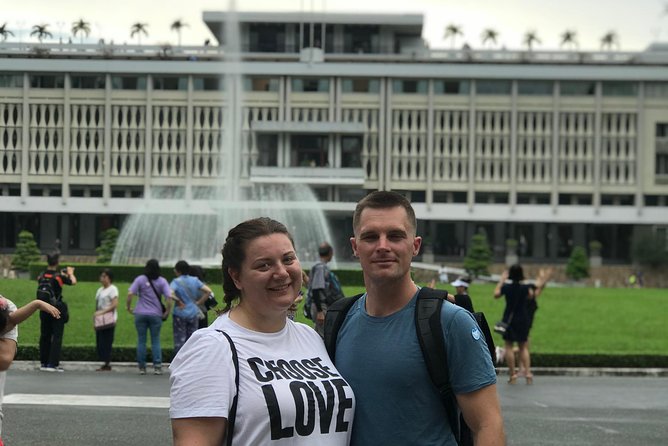
Next comes Independence Palace, sometimes referred to as the Reunification Palace. This stop is ticketed and typically scheduled for about 15 minutes. That’s not a long visit, but it’s enough for a first look at the kind of space where major wartime decisions played out.
Here’s how to make this shorter stop work for you. Walk with intention: look at the layout, the scale, and the key rooms your guide flags. If you’re the type who likes to read every sign and study every room, keep expectations realistic. Think of this as a guided orientation that sets you up to return later if you want a deeper self-guided visit.
If you’re traveling during a day when access or timing feels tight, ask your guide early how they plan to handle the inside time. The structure is built to keep the whole route on schedule, so communication helps.
Notre-Dame Cathedral: French architecture as a living backdrop
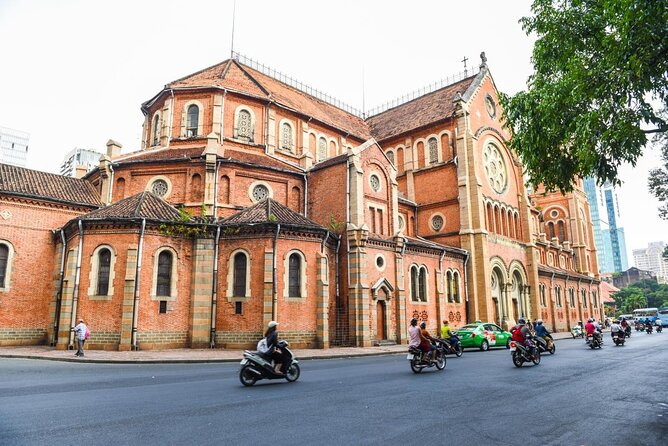
After the palace, you’ll reach Saigon Notre-Dame Cathedral, with entry included and about 15 minutes on the agenda. The big draw here isn’t just the building’s look; it’s how it fits into the city around it. You’ll see why French construction still holds visual power in Saigon, even as the city has changed.
This stop is ideal for quick photos and a short “slow glance.” Spend a minute looking at symmetry, then use the guide’s explanation to connect the architecture to the era it came from. That’s the difference between snapping pictures and understanding what you’re photographing.
You’ll also appreciate the guide’s help crossing roads. Saigon traffic moves fast, and crossing without local cues can feel like a sport you didn’t sign up for. Having a guide who knows how to time the street crossings makes the whole walking plan feel calmer.
Central Post Office: a European-style building in Vietnamese daily life
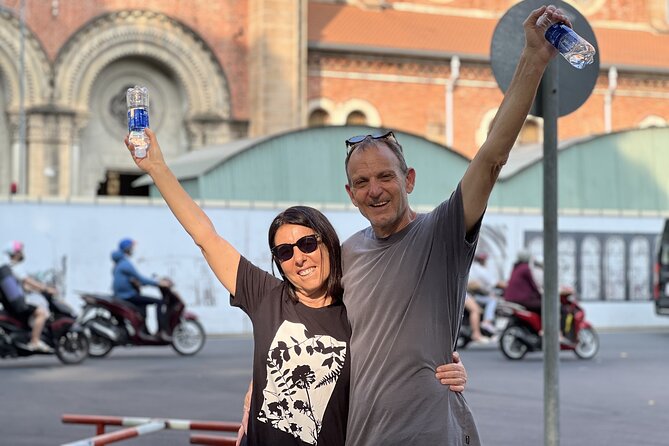
The Central Post Office is a favorite for people who like architecture that still serves real purposes. You’ll have about 15 minutes there, with admission included. The tour framing highlights the building’s European influence and design details tied to the early 20th century.
What I like about this stop is that it’s not only a “look at it” stop. You can treat it like a snapshot of Saigon’s everyday habits while you absorb the structure’s logic. Look up, look at the interior layout, and notice how the design still fits the flow of people inside.
If you’re mailing postcards or just collecting stamps as souvenirs, this is the kind of place where you can do both sightseeing and a small, personal keepsake—without needing extra planning.






Book Street: the walk that feels like a local hangout

Then you get to Ho Chi Minh City’s Book Street, a walking area designed to encourage reading, with both Vietnamese and English books. This is one of the more refreshing stops because it’s not just historic architecture. It feels like the city’s forward-looking side.
The idea is simple: you get a short walk through an actual book-focused street scene, not a curated shopping stretch. You’ll see how Saigon’s culture includes quieter habits too—people browsing, a steady stream of locals, and the everyday rhythm of a place built around ideas.
At the end of the day, you finish near Phương Nam Bookstore, which makes Book Street more than a photo stop. If you want to keep exploring after the tour, you’re already dropped right where you can linger.
Vietnamese coffee stop: budget for the classic drink
There is a Vietnamese coffee experience built into the plan, and it’s treated as part of the Saigon identity. But coffee itself is not included in the price, so you should expect to pay for your own coffee or tea.
This is actually a good setup. It gives you a chance to try what you want—without the tour price forcing you into something you don’t like. If you’re coffee-averse, you can often choose something else, but since the tour data only says coffee or tea is not included, don’t assume a free drink is coming.
If you’re sensitive to caffeine, a small coffee can still be a fun cultural moment. The key is to treat it as a pause that lets you recover from walking time and street noise, not as a mandatory event.
The walking style: short stops, road crossings, and staying on schedule

This isn’t a marathon. The tour is designed for a 3 to 4 hour window with multiple landmark stops. That short timing is what makes it feel accessible, especially if it’s your first day in the city.
But you should know what that pace means. Each interior stop is brief, and most of your learning happens through your guide’s explanations while you’re on the move. If you love museum-style wandering, this tour won’t replace a long, self-guided day in one attraction. It does something else well: it gives you a guided orientation that makes independent exploration easier afterward.
Another practical detail: the tour is described as near public transportation, and it’s “most travelers can participate.” That usually translates into fewer awkward surprises. Still, bring shoes you’re comfortable walking in for a few hours. Saigon streets are busy and surfaces can change quickly.
Guide quality makes the difference: Kevin, Justin, and the others
What gets praised most is the guide experience itself. Names show up in the feedback, including Kevin, Justin, Luke, and Dickies. The consistent theme is not just delivering facts, but giving you context you can use—plus help with practical issues like safe street crossings and keeping the day running on time.
One example from the tour’s feedback: Kevin has been flexible with late arrivals due to traffic and still managed to line things up so the group could get back to transportation. That’s the kind of real-world skill that matters in a city where delays happen.
You’ll also find that guides tend to stick around with recommendations after the route. If you finish at Book Street, you’ll be in the right mindset to ask what to do next nearby, which is a strong use of your limited time in the city.
Price and value: $35 for four hours of structure
At $35 per person, this tour sits in the “serious sightseeing for a reasonable price” category. The biggest reason it feels like good value is that admission tickets for multiple stops are included. That matters because these are not just outside viewpoints; you’re entering key places.
You also get small-group attention and English-speaking interpretation, plus private transportation support as needed. If you tried to stitch the same route together yourself, the planning overhead (timing entrances, figuring out crossings, and deciding what to prioritize) would cost you more time than money.
One last value angle: the finish at a central, walkable book area means you’re not ending somewhere inconvenient. You can keep moving right away, which stretches the usefulness of the tour.
Who this walking tour is best for
You’ll like this tour if you:
- Want a first-timer orientation to Ho Chi Minh City’s center with historical context.
- Prefer small groups over big-bus chaos.
- Learn best when someone points out what to notice at each stop.
- Like mixing landmark sightseeing with a local-feeling street moment at Book Street.
You might want a different option if you:
- Want long, slow time inside major sites like the palace or the museum.
- Hate heavy wartime topics and would rather keep your itinerary lighter.
- Plan to spend your whole day in one place rather than bouncing between several highlights.
Should you book this tour?
If you’re visiting Saigon for only a short time, I think this is a smart buy. The combination of War Remnants Museum context plus classic landmarks in the same guided flow helps you understand what you’re looking at, fast. The small-group size and guide focus make the route feel easier than doing it solo, and finishing at Phương Nam Bookstore gives you a practical next step.
Book it if you want structure. Skip it if you’re determined to do everything at your own pace for hours inside each building. For most people trying to get bearings quickly, this walk gives you a strong start.