REVIEW · HO CHI MINH CITY
Saigon at Sunset: Ultimate Street Food Experience
Book on GetYourGuide →Operated by Intrepid Urban Adventures - Asia · Bookable on GetYourGuide
Street food at sunset turns Saigon into a story. What makes this tour work is the small-group walking pace plus the way your local foodie guide explains how flavors and history mixed together—from Chinese-influenced dishes to a temple pause and a sweet crème caramel ending.
I like that the plan isn’t just eat-then-run. You start with classic bowls, learn why certain tastes show up in Vietnam, and you’re guided through streets and stalls you’d probably skip on your own. One catch: you’ll walk about 2.5 km (1.5 miles), and vegetarian or gluten-free options are possible but limited, so you need to flag dietary needs ahead of time.
In This Review
- Key Things I’d Plan Around
- Saigon After Dusk: Why Street Food Beats a Generic Food Tour
- The Tour’s Starting Point: District 1’s Fine Arts Museum
- Hu Tieu Bo Kho and Xa Xiu: The Flavor Story Starts Immediately
- Chua Ba Thien Hau Temple: A Pause That Makes the Night Make Sense
- Coffee Saigon-Style at a Locals-Loved Café
- Grilled Beef Meatballs and Bo La Lot: When “Familiar” Gets New Texture
- Pham Ngu Lao Street: Where the City’s Energy Shows Up
- Street Beer With Peanuts and Rice Crackers: The Social Script
- The Silky Flan Finale: Ending With Crème Caramel the Right Way
- Price and Value: Is $29 a Good Deal in Saigon?
- Group Size, Private Tours, and Who This Suits Best
- Walking, Timing, and What to Wear (So the Night Feels Easy)
- Dietary Needs: What’s Supported, What’s Limited
- Being a More Responsible Tour: Carbon Neutral and B Corp Certified
- Should You Book This Saigon Street Food Walk?
Key Things I’d Plan Around
Hu Tieu Bo Kho + xa xiu set the stage fast with comfort-food bowls that explain Chinese influence in Vietnamese cuisine
A real temple stop (Chua Ba Thien Hau) breaks up the eating and helps you place what you’re seeing
Coffee Saigon-style at a local-loved spot gives you a calmer pause before the night kicks in
Street beer with peanuts and rice crackers keeps the vibe local, not touristy snack time
Caramel flan finale lands the sweetness right when you’re ready to slow down
Guide support helps with confidence—especially when it comes to ordering and getting back by taxi
Saigon After Dusk: Why Street Food Beats a Generic Food Tour
Saigon at night has a rhythm, and street food is the easiest way to tune in. This tour is built around that idea: you’re not just sampling dishes, you’re learning why they taste the way they do, and how they fit into daily life.
The biggest win here is pacing. With a group capped at 12, you get time to actually talk with your guide and ask questions. That matters in Vietnam, where the difference between a good order and a confusing one is often one small detail—how something is served, what’s in it, or what to do first with your chopsticks.
Another advantage is the mix of food and place. You don’t stay stuck in one tight food court bubble. You move through District 1 streets and make a meaningful stop at Chua Ba Thien Hau temple. It’s a small break, but it makes the eating feel earned.
Finally, you’re not left holding the map. Your guide helps with practical stuff too, like taxi tips so you can keep exploring after the tour finishes.
You can also read our reviews of more food & drink experiences in Ho Chi Minh City

The Tour’s Starting Point: District 1’s Fine Arts Museum
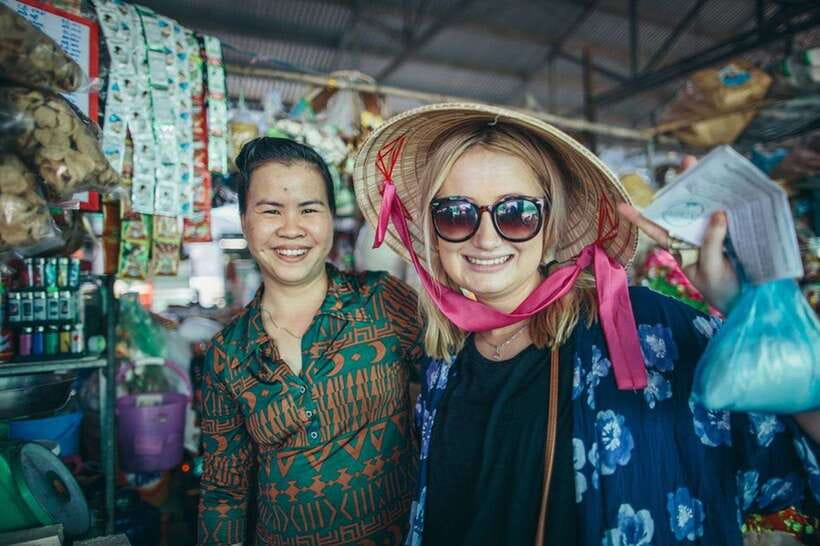
You meet at the Ho Chi Minh City Museum of Fine Arts (97A Pho Duc Chinh Street, District 1). The quick guided orientation there sets a useful tone. Even if you’re not a museum person, it’s a smooth way to orient yourself before you start walking.
This also matters because District 1 can feel like a whirl. Starting with a formal landmark gives you a mental anchor. From there, the tour transitions into the neighborhood flow, where eating turns into a city lesson.
A short museum stop also helps with timing. You get that first dose of structure before you hit street stalls, so you’re not starting the food portion confused or rushing.
Hu Tieu Bo Kho and Xa Xiu: The Flavor Story Starts Immediately
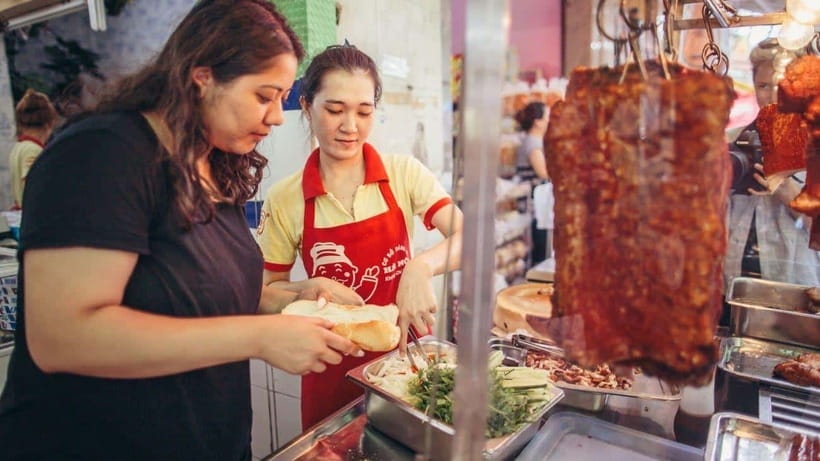
The food portion begins with two familiar icons, served early enough that you’re building confidence before the pace picks up.
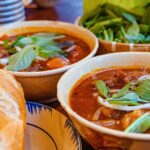
First up is Hu Tieu Bo Kho, beef stew noodles. Think deep, savory comfort. The “stew” isn’t just flavor for flavor’s sake—it’s about how Vietnamese cooks perfected long-simmered richness and turned it into something you can eat quickly on the street.
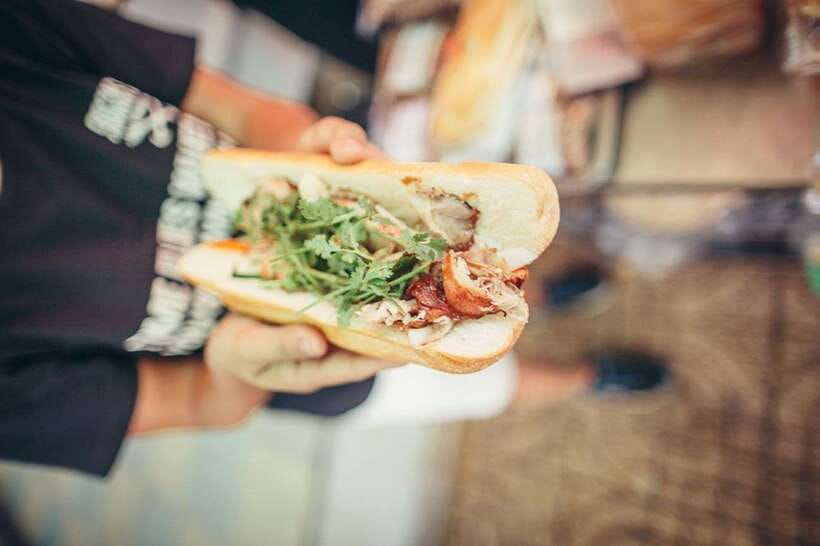
Then you get xa xiu, Cantonese-style barbecued pork (sometimes duck, depending on what you’re served). This dish is a big clue to the broader story your guide shares: Chinese culinary influence didn’t just arrive once. It shaped everyday Vietnamese tastes, especially in how meats are marinated, grilled, and balanced.
What I like about starting with these two is that they act like a decoder ring. After you taste them, everything else you try makes more sense. Even if you’re not a “food history” person, the guide’s explanations connect the dots between Chinese flavors and Vietnamese versions.
Chua Ba Thien Hau Temple: A Pause That Makes the Night Make Sense
Next comes a stop at Thien Hau Temple (Chua Ba Thien Hau). This isn’t just a photo stop. It’s a chance to slow down and notice the cultural context around the food.
In Saigon, you’ll see religious and community spaces woven into the same city life as markets and street stalls. A temple stop helps you read the neighborhood instead of treating it like one long food strip.
It also breaks the tour into chunks, which is smart when you’re eating several times. You’ll appreciate that reset—especially if you tend to get full quickly.
If you’re worried the tour will be all food and no sightseeing, this is the point that balances it.
Coffee Saigon-Style at a Locals-Loved Café
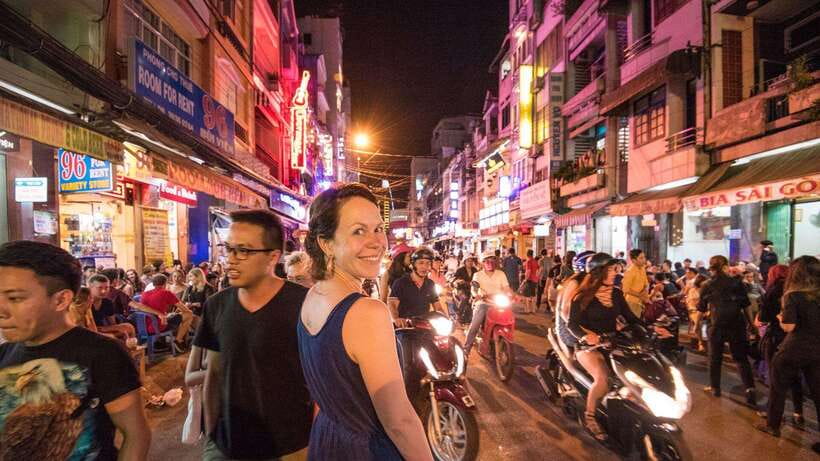
After the temple, you sip coffee Saigon-style at a smaller, local-favorite café. This is the kind of stop that improves the whole experience because it changes tempo.
Street food is fast. Coffee is slower. You get a moment to compare flavors in your head before you start your next tastings. It also helps you recover from the heat and crowds, even though you’re only stopping for a short time.
One practical plus: a café stop is a natural place to ask your guide what to try next on your own. Many guides are happy to share follow-up recommendations for later in your trip, not just for the tour.
You can also read our reviews of more tours and experiences in Ho Chi Minh City
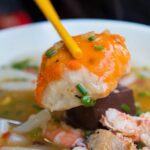
Grilled Beef Meatballs and Bo La Lot: When “Familiar” Gets New Texture
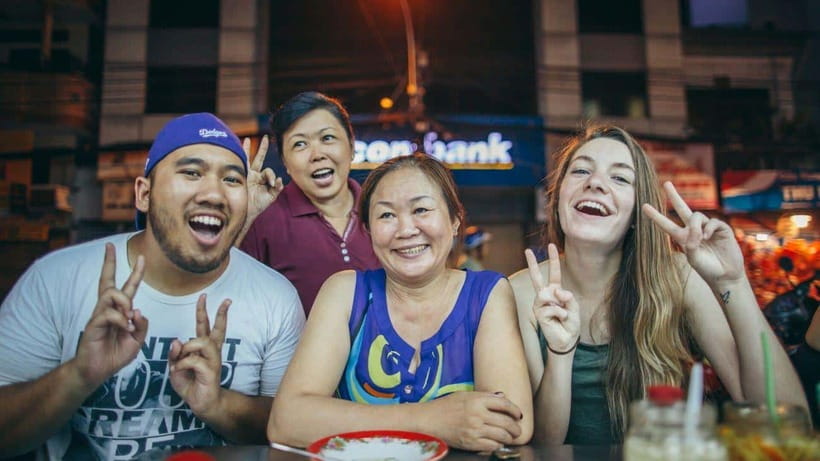
The next bites shift into more grilled, punchy flavors.
You’ll try bo cuon mo chai, described here as grilled beef meatballs bursting with flavor. “Bursting” matters: these aren’t bland balls. You’re likely to notice seasoning that feels bold compared to the softer noodle start earlier.
Then comes bo la lot, barbecued minced beef. This one’s especially fun because it’s built around leaf-wrapped street grilling. Even without getting too technical, it gives you a different mouthfeel than the noodles and barbecued meats you’ve already had.
This part of the tour is where I think the “hidden” value shows up. If you ate on your own, you might order what looks safe and familiar, then miss the street techniques that make Vietnamese food fun. Guided tasting keeps you from playing it too safe.
Pham Ngu Lao Street: Where the City’s Energy Shows Up
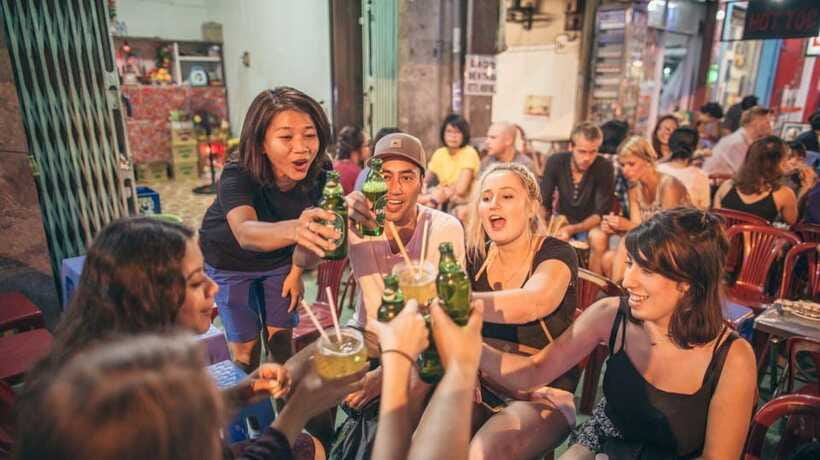
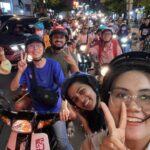
You walk through Pham Ngu Lao Street, a corridor that’s known for backpackers and nightlife energy. That can sound like a problem if you only want quiet local corners.
But on this tour, it works because you’re not there to party. You’re passing through at the right time, while your guide keeps you moving and directing you toward food stops that still feel authentic.
This is also a good moment to notice contrasts: one street can be loud and tourist-heavy, while the food stalls and side streets nearby are where locals go. Your guide’s job is essentially to filter the noise.
Even if you’re not a big walker, this section still feels manageable because the tour is broken into short blocks, not one long slog.
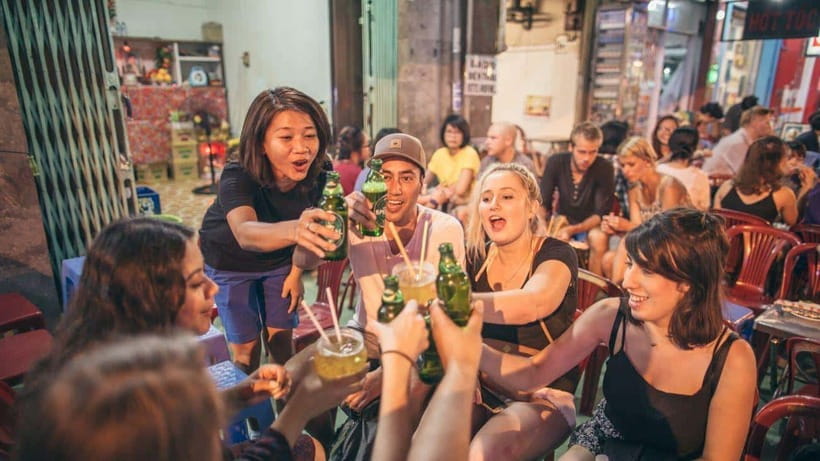
Street Beer With Peanuts and Rice Crackers: The Social Script
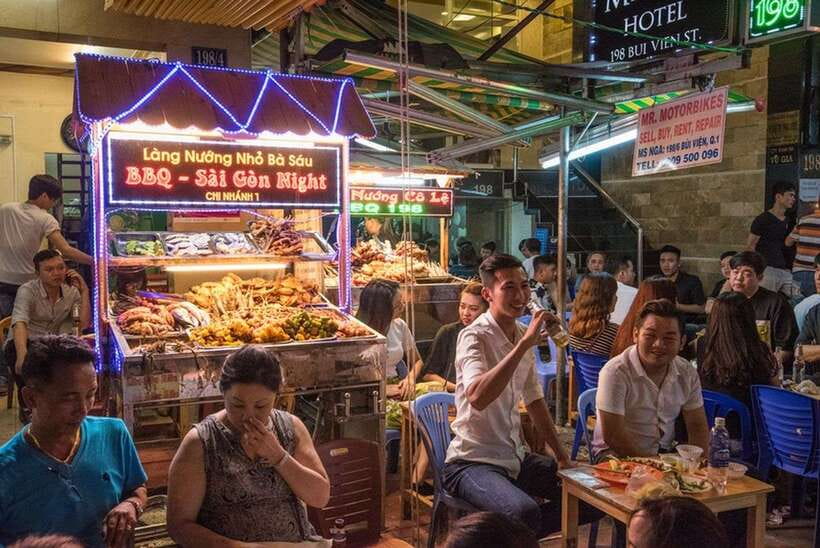
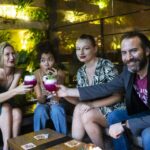
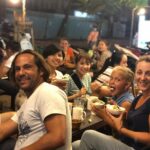
When night falls, the tour turns social with street beer paired with peanuts and rice crackers. This is one of those “small” inclusions that ends up being a highlight.
Why? Because it changes how you eat. Instead of treating each stop like a separate experiment, the beer-and-snack pairing encourages you to slow down, talk, and experience the street as a place where people gather.
The peanuts and crackers also help you pace yourself. You’re eating multiple savory dishes plus something sweet at the end, so having a crunchy snack between heavier items makes the whole meal feel more balanced.
It’s also a good moment to ask your guide how locals order and share. This tour nudges you into the local pattern, not just the local flavors.
The Silky Flan Finale: Ending With Crème Caramel the Right Way
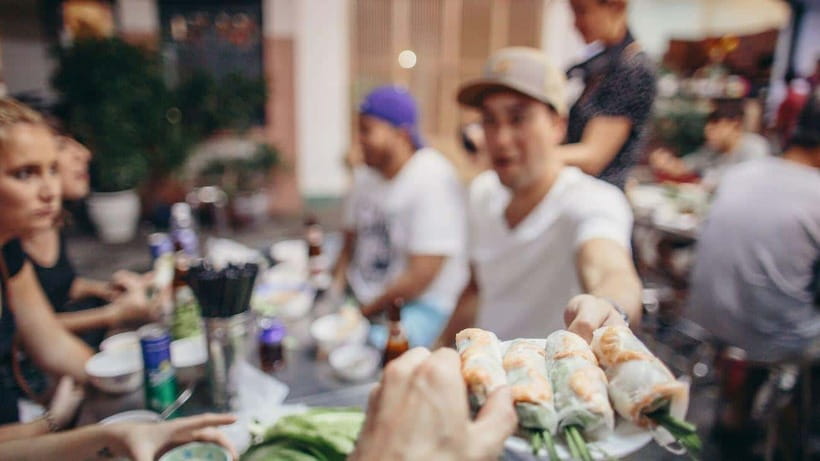
You finish with a traditional sweet: caramel flan (crème caramel). This timing is smart. You’ve had savory tastes for a while, and you end right when you’re ready for something smooth and calming.
Flan works well as a final course because it isn’t overly complicated. You can taste it clearly, and it doesn’t fight with the earlier flavors. If you usually skip dessert when you’re on a food tour, this stop can change your mind.
Also, the sweet ending turns the tour into a complete arc. You get the origin stories, the street grilling, and then the proper payoff. It’s easier to remember the whole night afterward because it has a clean finish.
Price and Value: Is $29 a Good Deal in Saigon?
At $29 per person for about 3 hours (210 minutes), this tour is priced like a true food experience, not a casual snack crawl.
Here’s where the value comes from:
- You get multiple tastings, not just one or two token samples. The included foods cover noodles, grilled meats, coffee, beer (or soft drink), and a caramel flan finale.
- Drinks matter in street food tours. This one includes coffee or tea plus beer or a soft drink with peanuts or rice crackers.
- You’re paying for guidance: ordering help, safe-feeling navigation, and cultural explanations that turn food into understanding.
Could you eat this much on your own for less? Maybe. But the tradeoff is time, confidence, and the risk of missing the dishes your guide knows are worth it.
One thing you should watch: some descriptions note that additional food and drinks aren’t included. So if you’re the type who wants to keep eating after you’re full, you’ll need to budget extra.
Group Size, Private Tours, and Who This Suits Best
This works best for people who like to ask questions while they eat. The maximum of 12 guests makes it social without feeling chaotic.
If you prefer quieter attention, a private group option is available. That can be especially helpful if you’re traveling as a couple or family unit and want the pace set around your tastes.
This is also a strong first-night activity if you want confidence for the rest of your Saigon days. Several people in the past have praised how the tour sends them back to street foods they wouldn’t have tried alone.
Not suitable for kids under 6, which makes sense given the walking and street environment.
Walking, Timing, and What to Wear (So the Night Feels Easy)
Plan for about 2.5 km (1.5 miles) on foot. That’s not a marathon, but it adds up with multiple stops and standing in street-side seating.
Comfort is the key. Wear shoes you don’t mind getting a little scuffed. Also, consider that you’ll be out in the evening air, and street food can come with smoke and strong smells depending on the stall setup.
You’ll likely be eating enough to feel properly full by the end. So don’t show up starving and then immediately keep going beyond the tour unless you’re sure you want to extend the food marathon.
Dietary Needs: What’s Supported, What’s Limited
The operator can cater to gluten-free and vegetarian diets, but the options are limited. The important part is timing: you should provide dietary requirements at least 24 hours before the tour.
So if you have a strict allergy or an unusual restriction not covered by gluten-free or vegetarian, you might need to think twice. The data here is clear that not all dietary requirements can be accommodated.
If you fall into GF or vegetarian, this tour can still work well—you just want to plan the communication early.
Being a More Responsible Tour: Carbon Neutral and B Corp Certified
I appreciate that this is described as carbon neutral and run by a B Corp certified company using travel as a force for good. That’s not a reason to skip good practical choices, but it does align with how I like to travel: pick experiences that are both fun and more thoughtful.
It also helps reinforce that the tour isn’t just about consumption. It’s meant to connect you to the city in a way that feels accountable.
Should You Book This Saigon Street Food Walk?
Book it if you want:
- A guided path through street food you might hesitate to try alone
- A mix of story + tastings, including Chinese-influenced Vietnamese dishes like xa xiu
- A night that ends in a proper sweet finish with crème caramel
- A manageable evening walk (about 2.5 km) that still feels like you saw real Saigon
Skip it if:
- You need lots of dietary flexibility beyond gluten-free or vegetarian, because options are limited
- You hate walking or standing for short periods, since it’s still an evening stroll with multiple stops
My bottom line: at $29, you’re paying for more than food. You’re buying confidence, context, and a local pacing of the evening—so when you explore after the tour, you’re not starting from zero.