REVIEW · HO CHI MINH CITY
Small-Group Cu Chi Tunnels Half-Day Tour from Ho Chi Minh City
Book on Viator →Operated by Ginkgo Voyage · Bookable on Viator
Cu Chi Tunnels bring Vietnam wartime history to ground level fast. I love that this is a small-group outing limited to 10 people, so your English-speaking guide (often mentioned with real personality by name, like Typhoon Honey) can actually answer questions. Two big perks for me: you get a documentary before you go in, and you also get to try a short tunnel crawl that helps you understand how confined life was. One consideration: the tunnels include narrow crawl spaces, so if you’re uncomfortable with tight, dark passages, you’ll want to plan carefully.
You’ll start with hotel pickup in central Ho Chi Minh City and take an air-conditioned minivan out to the Cu Chi district, about a 90-minute drive. After a guided visit to the underground network tied to the 1968 Tet Offensive, you’ll come back the same way and finish with a light snack of boiled tapioca and tea included in the tour.
In This Review
- Key things I’d book this for
- Why the Cu Chi Tunnels still matter in a half day
- Price and logistics: what you really get for $48
- The documentary and orientation: why the first 30 minutes matter
- Walking the forest route and learning how tunnel life worked
- The tunnel crawl: what to expect and how to prepare
- The included snack: a small pause that helps the day land
- Guides and drivers: why the team matters more than you think
- Who this half-day Cu Chi tour is best for
- Should you book this Cu Chi Tunnels half-day tour?
- FAQ
- How long is the Cu Chi Tunnels half-day tour?
- What is the price of the tour?
- Is hotel pickup and drop-off included?
- How big is the group?
- What language is the guide?
- What’s included besides the tunnel visit?
- Do we watch a documentary before going into the tunnels?
- Is the crawl through the tunnels part of the tour?
- Is free cancellation available?
- Where is the tour located?
Key things I’d book this for
- Small-group limits (max 10) for a more personal pace
- Pickup + drop-off in Ho Chi Minh City to keep the day simple
- Documentary first, so the tunnel visit makes sense fast
- Practical tunnel survival items shown to you on site (like Hoang Cam smokeless stoves)
- A real crawl through narrow passageways, not just photos
- Included tapioca and tea to reset before heading back
Why the Cu Chi Tunnels still matter in a half day
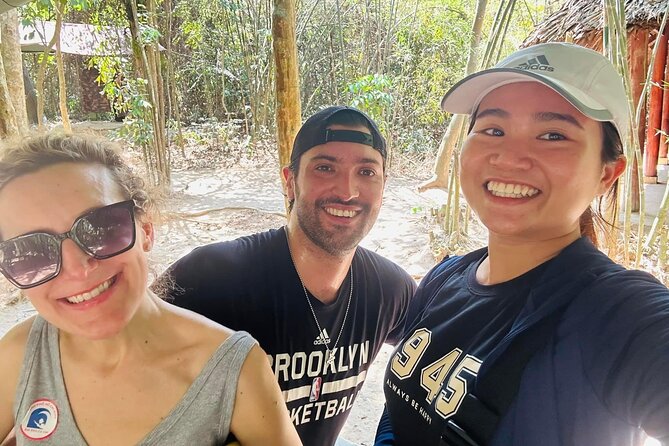
The Cu Chi Tunnels aren’t just a “cool underground place.” They connect to a specific period of the Vietnam War, including the 1968 Tet Offensive, when the Viet Cong used an extensive underground network to move, hide, and strike.
What makes this tour compelling is how it turns the story into something physical. You’re not only seeing tunnels on a map. You’re being shown how everyday survival worked underground—lighting issues, cramped movement, noise and smoke problems, and the constant threat of being discovered. The experience also points out the scale: the Viet Cong used about 75 miles (121 km) of active tunnels. Even if you never crawl the whole system, the tour gives you a feel for why it was so strategically important.
You can also read our reviews of more city tours in Ho Chi Minh City



Price and logistics: what you really get for $48
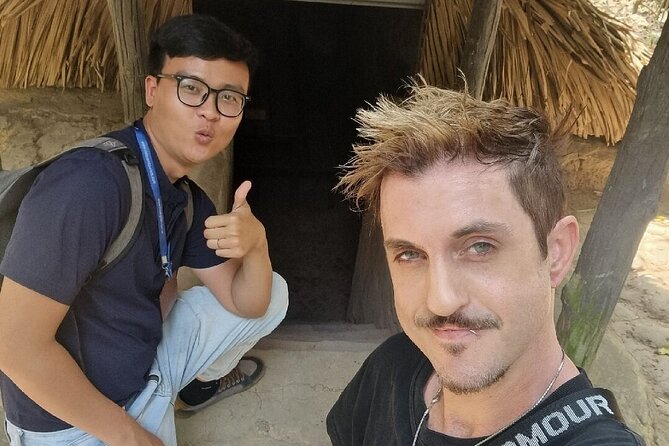
At $48 for a roughly 6-hour tour, this is good value if you like a guided day without extra stress. The price matters because several of the usual add-ons are already covered:
- Hotel pickup and drop-off from central Ho Chi Minh City
- Transport by air-conditioned minivan
- English-speaking guide
- Entrance fees included
- Tapioca & tea included
In plain terms: you’re paying for convenience plus interpretation. You don’t have to figure out what entrance fees are needed, where to meet, or how to manage timing out in the Cu Chi countryside.
Timing is also pretty straightforward. Pickup is described as starting between 8:00 and 8:30am depending on your location in the city, and the tour schedule lists a start time of 7:30am. Either way, plan on an early start, and bring water even though the snack is included later.
The documentary and orientation: why the first 30 minutes matter
When you arrive, you don’t go straight underground. You watch a documentary video and get an overview of the tunnel layout. This matters more than it sounds.
Tunnel visits can easily turn into “look at this, keep moving.” But if you know the basics—how the tunnels were arranged, what sections were used for, and why the Viet Cong needed concealment—you’ll understand the purpose of what you’re about to see. It also helps you process what your guide explains while you’re walking through the area above ground.
This part is also where the small-group format pays off. With a cap of 10 people, you’re not just a face in a crowd. You’re more likely to get clear answers and follow-up explanations when questions pop up.
Walking the forest route and learning how tunnel life worked
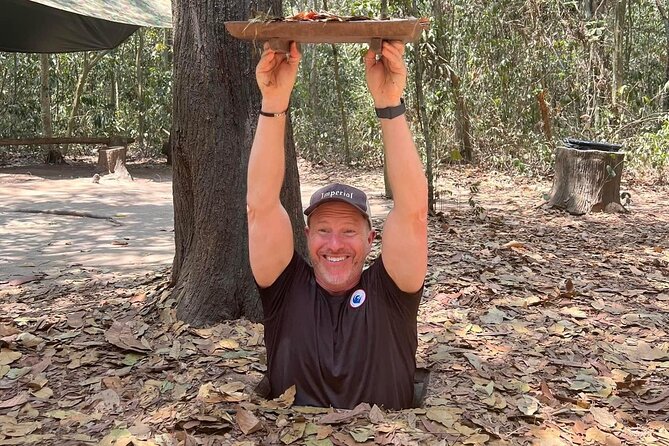
After the documentary, your guide leads you into the forest area around the tunnels. This is where the tour becomes practical.
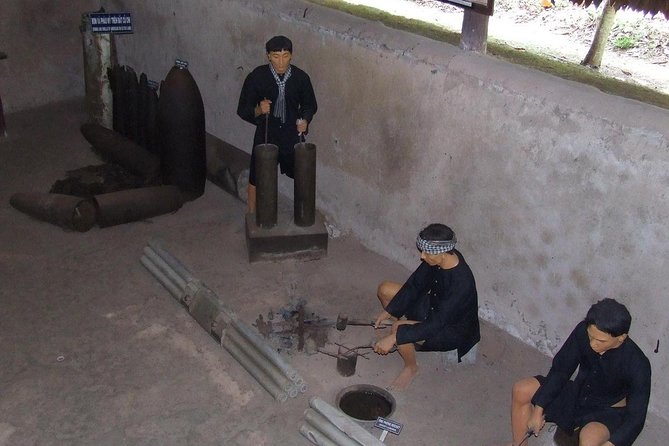
You learn about the gear and tactics that made tunnel life possible, including items like Hoang Cam smokeless stoves. That one detail alone is a great example of why a guided stop works. Smoke is an obvious problem when you’re underground or close to the surface. Teaching you how people tackled that issue helps you see the war through problem-solving, not just dramatic set pieces.
You’ll also hear about dangerous defensive measures—booby traps—and how the Viet Cong prepared for detection and attack. The tour description also references tanks in the context of how the area and defenses played out. Even without getting graphic, these explanations help you understand why the tunnels weren’t just shelters. They were systems.
What I like here is that you’re building context before you’re asked to crawl. The tour is paced so you’re not thrown into darkness first and told the story later.
The tunnel crawl: what to expect and how to prepare
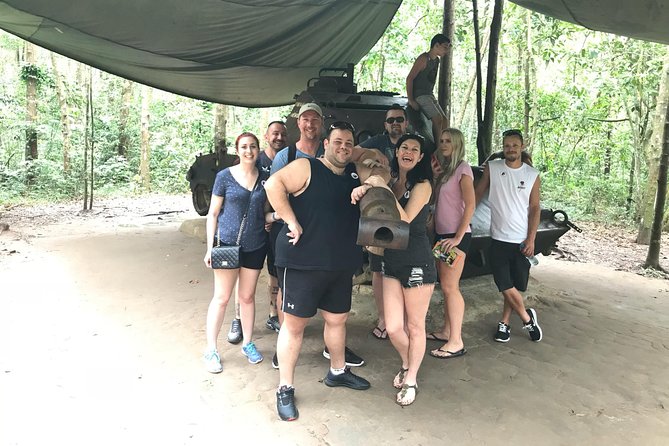
This is the part most people remember.
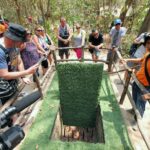
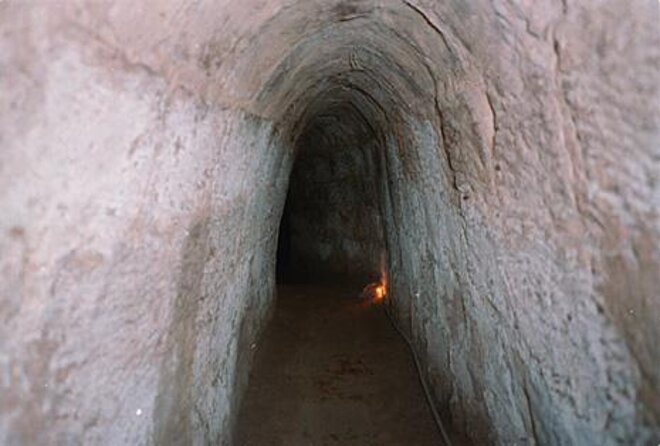
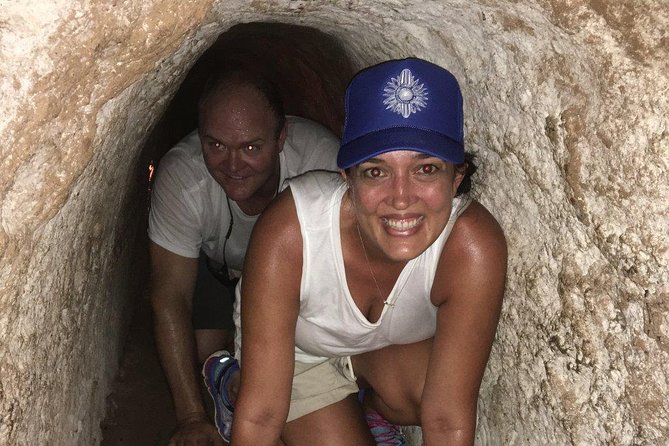
You descend into the tunnel areas and then crawl through narrow passageways. The tour description makes an important point: during much of the war, these sections would have been entirely dark. So even if the site is set up for visitors, the experience is meant to recreate the conditions—tight space, limited visibility, and a sense of how long days would feel when you can’t stand up.
Here’s the best practical mindset: focus on posture and breathing. In a space like this, you’ll want to go slow, keep your movements controlled, and listen to your guide’s instructions. If you panic in tight spaces, it can make the experience worse than it needs to be. If you’re comfortable with small enclosed areas, you’ll likely find this section powerful and memorable.
One more thing: the tour is described as being suitable for most travelers, but “most” doesn’t mean “everyone.” If you have claustrophobia, mobility restrictions, or you hate crawling-type activities, you’ll want to think twice. The tour itself doesn’t say it offers alternatives or “view-only” tunnel options, so it’s smart to check your own comfort level before committing.
You can also read our reviews of more tours and experiences in Ho Chi Minh City





The included snack: a small pause that helps the day land
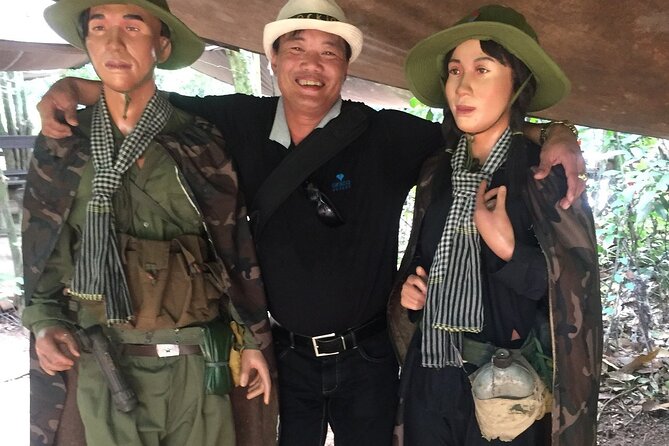
Once you come back out, you don’t jump right back onto the bus in a “no time to think” way. You’ll have a light snack of boiled tapioca and tea, included with the tour.
This tiny break is honestly underrated. After crawling through tunnels that emphasize confinement and threat, you need a little reset. Food and tea also help you avoid the classic travel mistake: feeling shaky, then trying to power through the ride back without energy.
Then it’s the return trip to Ho Chi Minh City, ending with drop-off at your hotel.
Guides and drivers: why the team matters more than you think
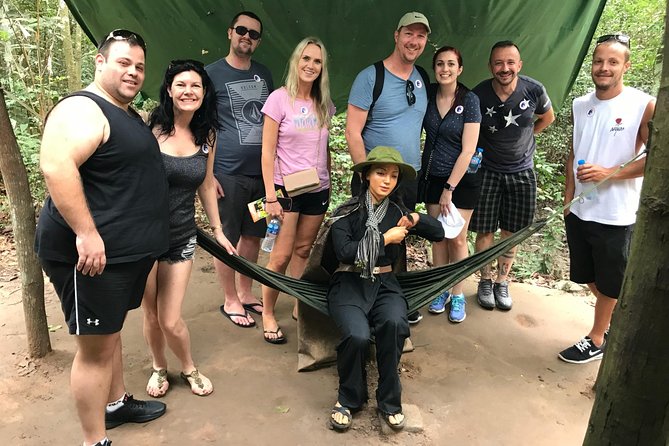
The tour is designed around an English-speaking guide, and the names that keep showing up are worth noting because style changes everything in a historic site like this.
Typhoon Honey is repeatedly highlighted for being passionate and playful—people describe him as funny and highly engaged with both adults and kids, and also good at explaining history clearly. You’ll also see praise for drivers like Dung, Loc, and Hung for safe, patient driving, including accommodating timing and stops.
Even if you don’t know the names in advance, this tells you something useful: you’re not just buying a ticket to a site. You’re buying a guided interpretation plus a smooth ride back.
A good guide helps you connect what you see (stoves, traps, tunnel sections) to what it meant (survival, concealment, pressure under threat). A good driver keeps the schedule calm instead of chaotic.
Who this half-day Cu Chi tour is best for
I’d say this tour fits best if you want history with a physical component and you prefer guidance over self-navigation.
It’s especially appealing if:
- You’re short on time in Ho Chi Minh City and want a structured, half-day plan
- You like small groups and a guide who can talk in full sentences instead of just pointing
- You want a tunnel experience that includes both learning (documentary + explanations) and doing (the crawl)
- You don’t want to manage entrance fees and transport on your own
It might be less ideal if:
- Tight spaces are a problem for you
- You want a mostly above-ground experience with no crawling
- You need a very flexible pace, since the day includes scheduled segments tied to the tunnel visit
Should you book this Cu Chi Tunnels half-day tour?
Yes—if you want the best balance of value, comfort, and real-world experience.
For $48, you’re getting the essentials bundled in: pickup and drop-off, air-conditioned transport, entrance fees included, and a guide-led visit that goes from documentary to forest explanations to a crawl through narrow tunnel passages. The small-group size (max 10) is also a real quality signal. It usually means you’ll get clearer guidance and less waiting.
Book with extra caution only if you know you don’t handle claustrophobic or crawl-based activities well. Otherwise, this is a strong way to see why the tunnels were such an effective part of wartime strategy—and to leave Ho Chi Minh City with more than just photos.
FAQ
How long is the Cu Chi Tunnels half-day tour?
It runs about 6 hours.
What is the price of the tour?
The listed price is $48.
Is hotel pickup and drop-off included?
Yes. You get pickup and drop-off from central Ho Chi Minh City.
How big is the group?
The tour has a maximum of 10 travelers, keeping it small-group.
What language is the guide?
The guide is English-speaking.
What’s included besides the tunnel visit?
Included items are entrance fees, an English-speaking guide, and a light snack of boiled tapioca and tea. You also watch a historical documentary as part of the visit.
Do we watch a documentary before going into the tunnels?
Yes. You’ll watch a documentary video on arrival, then get an overview of the tunnel layout.
Is the crawl through the tunnels part of the tour?
Yes. The tour includes the chance to crawl through narrow passageways in the tunnels.
Is free cancellation available?
Yes. You can cancel for a full refund if you do it at least 24 hours in advance of the experience start time.
Where is the tour located?
The tour takes place in the Cu Chi district outside Ho Chi Minh City, starting from central areas of Ho Chi Minh City.