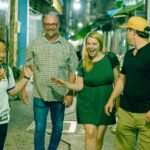
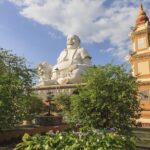
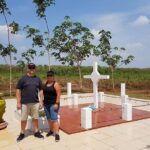
Tiny groups make Saigon feel close. This walking tour in Ho Chi Minh City focuses less on lecturing and more on conversation, using a small group format (up to 6) and university-student guides who share personal stories and practical local tips as you walk. I also like the mix of famous places and the more reflective stops, so you get both the postcard views and the moments that make the city feel human.
One thing to plan for: this tour asks for good weather and it involves steady walking for about 3 hours 15 minutes, so you’ll want comfortable shoes and a quick strategy for the sun and heat.
In This Review
- Key things that make this Saigon tour work
- Why this Saigon walking tour feels more like a conversation
- Price and value: what $14 buys you in real terms
- Where the tour starts: Joy Journeys in District 1
- Stops 1–3: Notre-Dame Cathedral, the Central Post Office, and the Last Helicopter
- 1) Notre-Dame Cathedral Basilica of Saigon
- 2) Saigon Central Post Office
- 3) Vincom Center and the Last Helicopter sculpture
- Stops 4–5: Independence Palace and the Thích Quảng Đức Monument
- 4) Independence Palace (Reunification Palace)
- 5) The Thích Quảng Đức Monument
- Stop 6: Secret Weapons Cellar and the included wartime tunnels
- Student guides like Lucy, Lily, Tyson, and Andrea make the difference
- How to get more out of the walk (without turning it into homework)
- Included coffee break: a small moment that helps the whole tour click
- Should you book this Saigon walking tour?
- FAQ
- How long is the Saigon walking tour?
- What is included in the price?
- Do I need to pay for admission at each stop?
- How big is the group?
- Where does the tour start?
- What happens if the weather is bad?
Key things that make this Saigon tour work
- Up to 6 people: small enough for real Q&A, not just background chatter
- University student guides: expect lively personal storytelling and helpful local recommendations
- Coffee and water included: a cup of Vietnamese coffee (often cà phê sữa đá) plus bottled water
- Memorable variety of stops: cathedral, post office, Independence Palace, a Buddhist memorial, and underground war history
- Secret Weapons Cellar entry included: you won’t have to hunt for tickets on the spot
Why this Saigon walking tour feels more like a conversation
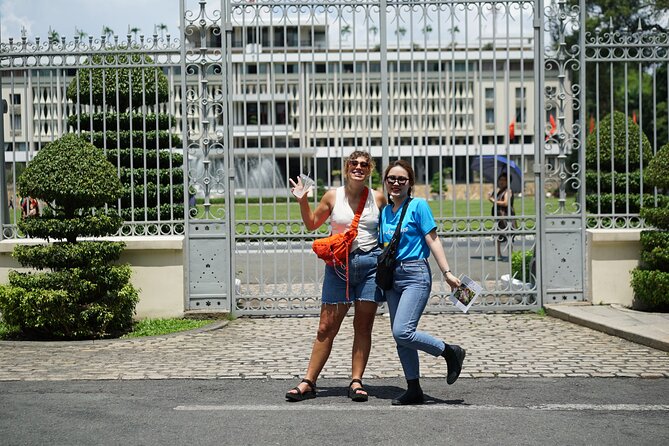
Saigon can be overwhelming. The streets are busy, the history is layered, and most visitors just chase a checklist of landmarks. This tour works differently. You’re out on foot for about 3 hours 15 minutes, and you’re guided by young local university students who are building their skills for future careers as tour guides.
That small-group setup matters. When you’re not packed into a big bus-style crowd, you can ask questions that come up in real time: how locals see certain events, what daily life feels like, or what to pay attention to as you pass by a building. The tone stays relaxed. The guides don’t just name dates and facts; they share what the places mean and how people talk about them.
I also like the way the tour balances mood. You’ll start with major city sights, then move toward sites that carry heavier meaning, including a monument linked to the 1963 self-immolation of Thích Quảng Đức and a look into wartime tunnels. It’s not just sightseeing. It’s a walk that helps you connect dots across religion, colonial-era architecture, and Vietnam War history—without turning it into a dry lecture.
You can also read our reviews of more walking tours in Ho Chi Minh City


Price and value: what $14 buys you in real terms
At $14 per person, this is priced like a budget tour. But the value comes from what’s included and what you get with the small group.
You’re not just paying for a guide’s time. The tour includes:
- Bottled water
- All fees and taxes
- Coffee and/or tea, including Vietnamese coffee (cà phê sữa đá is specifically mentioned)
- Admission included for the Secret Weapons Cellar
Some major stops have free admission, including the Notre-Dame Cathedral Basilica of Saigon and the Ho Chi Minh City Central Post Office. That reduces the usual “ticket overhead” that can surprise you on self-guided days.
One practical point: tips are not included. That matters because small-group tours often depend on guide effort for the overall feel. If you enjoyed the conversation and pacing, you’ll likely want to budget for gratitude.
Where the tour starts: Joy Journeys in District 1

You meet at Joy Journeys, 30A Hồ Hảo Hớn Street, Quận 1. District 1 is where a lot of first-time visitors spend time, so the location is convenient for starting your day without a long commute.
The activity also uses a mobile ticket, which is handy if you don’t want to print anything. Service animals are allowed, and the tour notes that most travelers can participate—so it’s a good fit for people who want to see meaningful parts of central Saigon without needing specialized training.
Stops 1–3: Notre-Dame Cathedral, the Central Post Office, and the Last Helicopter
This route starts with two of Saigon’s most recognizable structures. Even if you’ve seen photos, seeing them at walking speed helps. You notice the scale, the detail, and the way people move through the area.
1) Notre-Dame Cathedral Basilica of Saigon
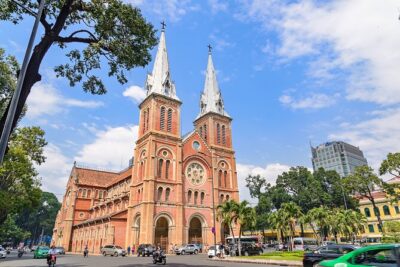
The first stop is the Notre-Dame Cathedral Basilica of Saigon, known locally as Notre-Dame Cathedral. It was built in the late 19th century, and it’s set in the heart of Ho Chi Minh City. Admission for this stop is free.
In a small-group format, this stop becomes more than “look at the building.” You get time to ask questions about what the cathedral represents in modern Saigon, and how locals relate to older colonial-era architecture. The tour gives you a framework for noticing the obvious details, then helps you understand the quieter ones.





2) Saigon Central Post Office
Next is the Ho Chi Minh City Post Office, also called the Saigon Central Post Office. It’s another late 19th-century French colonial-era building, and admission is free here too.
What makes this stop worthwhile on a walking tour is the pace. You can take a moment to slow down and study how a landmark like this stays “useful,” not just scenic. A big building like a post office is easy to skim past on your own. With a guide, you’re more likely to understand why it still matters and what kind of visitors actually use it.
3) Vincom Center and the Last Helicopter sculpture
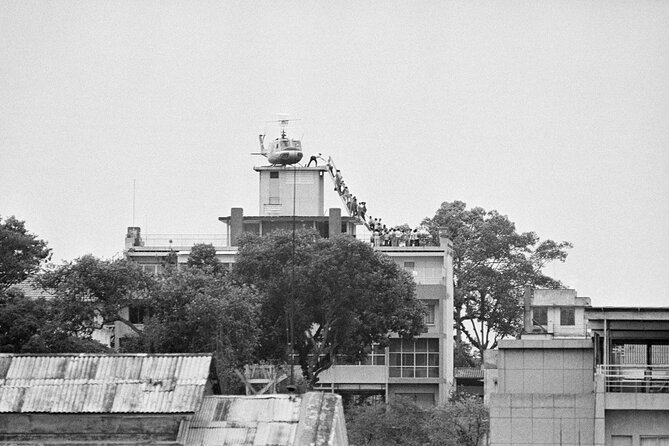
Then you’ll head to Vincom Center for a more modern, war-adjacent moment: the Last Helicopter sculpture. The description highlights that it commemorates the end of the Vietnam War, and that it depicts a Huey helicopter taking off.
This is a smart placement in the route. After the cathedral and post office, you’re already thinking about different layers of Saigon’s story. The Last Helicopter gives you a visual symbol of war’s ending—something you can process emotionally without needing a full museum day.
One practical tip: you’ll likely want a quick look-around here, take photos if you like, and be ready to move. This tour keeps a steady rhythm.
Stops 4–5: Independence Palace and the Thích Quảng Đức Monument
After the more architectural stops, the tour shifts into places that carry heavy historical and moral weight. This is where the student-guide approach really shows.
4) Independence Palace (Reunification Palace)
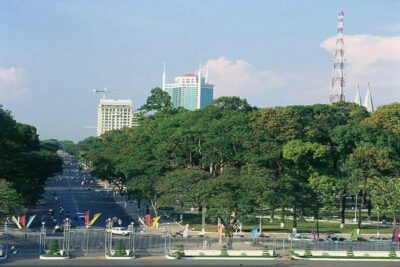
The next landmark is the Independence Palace, also known as the Reunification Palace. It’s described as being built in the 1960s and tied to the workplace of the President of South Vietnam.
This is the kind of stop where you’ll benefit from questions. Even if you’re not a history buff, you can ask what parts of a political building reflect power, what changes after major events, and how people interpret these sites today.
The tour gives you a focused window—about 30 minutes—which is long enough to see the main elements without feeling trapped in “museum mode.”
5) The Thích Quảng Đức Monument
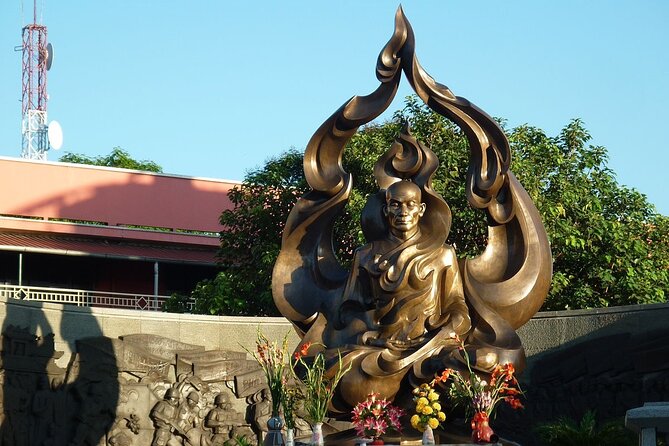
Next is the Thích Quảng Đức Monument, which commemorates the self-immolation of Thích Quảng Đức in 1963 to protest conditions during that time.
This stop is quietly powerful. The tour’s value here isn’t just the fact of what happened; it’s how the guide helps you understand why a memorial like this stays present in a city. You also get time to slow down and take in the meaning, which is harder to do when you’re on your own and rushing between attractions.
If you tend to get overwhelmed by intense history, pace yourself. Spend your time looking, then use the guide for context. That’s usually the sweet spot.
Stop 6: Secret Weapons Cellar and the included wartime tunnels
This is one of the tour’s standout stops, and it’s also the one with entry included.
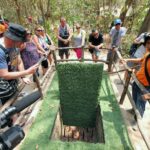
The Secret Weapons Cellar is described as tunnels originally built by the Viet Cong during the Vietnam War. They were used as a base for guerrilla warfare and for transporting supplies and weapons in ways meant to stay hidden from Americans and South Vietnamese forces.
A cellar/tunnel site can go one of two ways on a tour: either you get a quick glance, or you get something that sticks. In this format, the guides have the time to explain the purpose of the tunnels and why this kind of infrastructure mattered.
This is also where you’ll likely feel the difference between someone reading facts versus someone sharing perspective. People have a way of remembering war history when it’s tied to the logic of survival and the geography of concealment. Even with a short visit, you leave with a clearer sense of how the war played out beyond big headlines.
Student guides like Lucy, Lily, Tyson, and Andrea make the difference
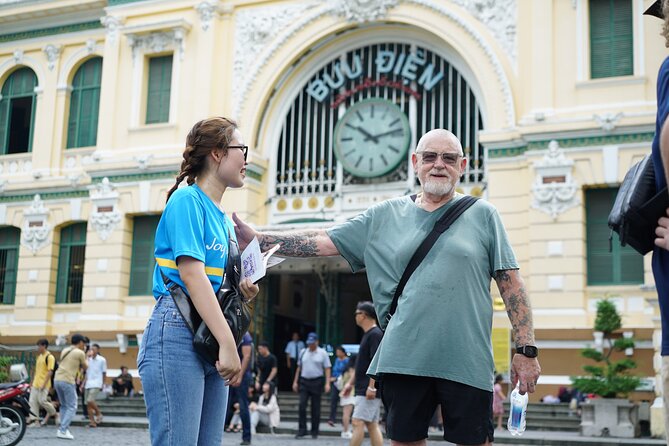
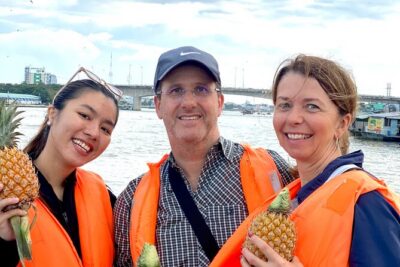
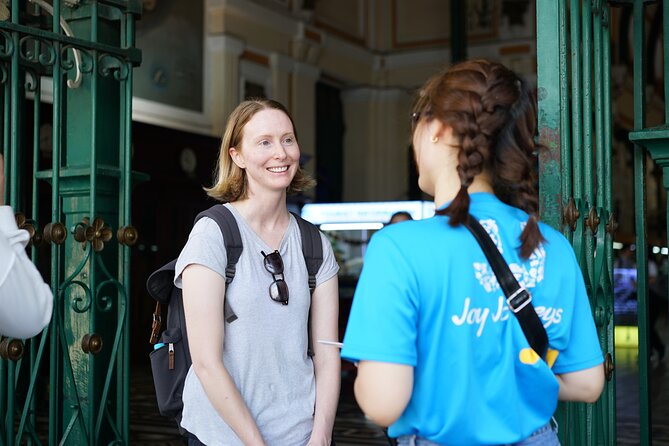
The biggest reason this tour consistently scores well is the human factor. The tour’s approach is built around enthusiastic university students—people who are genuinely interested in sharing Saigon and Vietnam with you, not just reciting a script.
In the guide names shared from past groups, Lucy stands out for being described as kind, generous with time, and passionate about sharing culture in a thoughtful way. Lily is highlighted for being friendly and making sure everything is understood. Tyson is noted for giving lots of information that you likely wouldn’t learn on your own. Andrea is praised for explaining well, with full attention when the group is small.
What you should take from this (even if your guide is someone else) is the tour’s style: ask questions early. If you want personal recommendations, bring them up while you still have time. If you’re curious about the Vietnam War’s impact on everyday life, tell your guide what you want to understand, and you’ll usually get a more tailored answer.
Also, the small group size helps. If you’re traveling as a couple or small group, you’re more likely to feel like a person, not a seat number.
How to get more out of the walk (without turning it into homework)
Here’s how I’d play this tour if you want maximum payoff:
- Come with 2 or 3 questions you actually care about. For example: What does a site like this mean now? How do people talk about this period? What should I do after the tour to keep learning?
- Use the guide for practical choices. A tour like this often ends with ideas you can act on later, like what to photograph, what to skip, or where to go for food (based on your preferences).
- Wear shoes that can handle city sidewalks for 3+ hours. You’ll be on foot from start to finish.
- Bring a little patience for emotional stops. The monument and the tunnels are not light topics. Give yourself time to process instead of trying to speed through.
If you like a morning pace, plan for that. One comment tied the experience to a morning walk being a good way to avoid the worst of the heat. Even if your departure time differs, the general rule is the same: pick the cooler part of the day when you can.
Included coffee break: a small moment that helps the whole tour click
This tour includes coffee and/or tea, with Vietnamese coffee (cà phê sữa đá) specifically listed, plus bottled water.
That coffee stop is more than a perk. It’s a reset button. When you’ve been staring at architecture and symbols for a while, a warm drink gives you a chance to talk with your guide in a calmer setting. It also gives you time to ask follow-up questions without feeling like you’re holding up the group.
If you like sweet coffee, this is usually the kind of break you look forward to in Vietnam.
Should you book this Saigon walking tour?
Book it if you want a small-group Saigon walk that mixes major sights with reflective stops, and you like learning through conversation. At $14, with water and Vietnamese coffee included and with the Secret Weapons Cellar entry covered, it’s strong value—especially if you’re the type who asks questions and wants local perspective.
Consider skipping or swapping if you:
- Prefer fully self-paced sightseeing and don’t want to coordinate your time with a guided schedule.
- Struggle with walking for about 3 hours 15 minutes or with weather changes, since the tour calls out a good-weather requirement.
- Want a strict, dates-and-dates history lecture. This tour leans more on personal storytelling and cultural insight than on nonstop textbook detail.
If you’re balancing your first day in Ho Chi Minh City and you want your city impressions to feel personal—not just photographed—this is a smart pick.
FAQ
How long is the Saigon walking tour?
It runs for about 3 hours 15 minutes.
What is included in the price?
The price includes bottled water, all fees and taxes, and a coffee and/or tea drink (including Vietnamese coffee), plus entry to the Secret Weapons Cellar.
Do I need to pay for admission at each stop?
Some stops list free admission, including the Notre-Dame Cathedral and the Central Post Office. The Secret Weapons Cellar admission is included.
How big is the group?
The tour is described as a small group experience with a maximum of 6 travelers, and the activity also lists an overall maximum of 20 travelers.
Where does the tour start?
It starts at Joy Journeys, 30A Hồ Hảo Hớn Street, Quận 1, Ho Chi Minh City, and ends back at the meeting point.
What happens if the weather is bad?
The tour requires good weather. If it’s canceled due to poor weather, you’ll be offered a different date or a full refund.