REVIEW · HO CHI MINH CITY
Night Food Tour – Explore Saigon Secrets
Book on GetYourGuide →Operated by AN Tours Vietnam · Bookable on GetYourGuide
Saigon at night tastes like a secret. On this Night Food Tour in Ho Chi Minh City, you hop neighborhoods, try dishes you usually miss, and end with a hands-on cooking lesson in District 7. The whole thing runs about four hours, with food, drinks, and guided sightseeing bundled together.
I especially like two things: the tour swaps the usual pho routine for lesser-known bites like Bun Thit Nuong, plus a banh xeo pancake with a Saigon-and-Mekong Delta flavor twist. I also like that the route includes real local places, not just restaurant interiors—think the Nguyen Thien Thuat oldest apartment area, then a flower market that keeps moving nearly 24/7.
One heads-up: you’re going out hungry. The tour asks you not to eat anything beforehand, and it’s not suitable for people with mobility impairments, so walking and getting around won’t work for everyone.
In This Review
- Key Highlights You’ll Feel Right Away
- Why This Saigon Night Food Tour Beats the Usual Pho Run
- What Happens Before You Even Taste Anything
- Pickup, Helmets, and Getting Around at Night
- District Hopping: 7 Stops Across Ho Chi Minh City
- Bun Thit Nuong and Bánh Xèo: The Noodles and Pancake Moment
- Nguyen Thien Thuat: Walk Through an Old Apartment Area
- Grilled Sticky Rice Banana: The Sweet Finish That Feels Like a Street Ritual
- The Flower Market That Never Really Sleeps
- Nguyen Trai Fashion Street: Shopping Energy in the Middle of the Tour
- District 7 Cooking Class: Secret Family Recipe, Real Participation
- Floating Market Scene and Mekong-Style Fresh Coconut
- District 4 Street-Food Alleys: Small, Old, and Heavily Lived-In
- Price and Value: What $49 Buys in Four Hours
- Guides Make the Night: Real Names, Real Energy
- Who This Tour Fits Best (and Who Might Feel Frustrated)
- Should You Book Night Food Tour – Explore Saigon Secrets?
- FAQ
- How long is the Night Food Tour – Explore Saigon Secrets?
- How much does it cost?
- Is pickup included?
- What should I do before the tour starts?
- Can I join if I have food allergies?
- Is this tour suitable for people with mobility impairments?
Key Highlights You’ll Feel Right Away
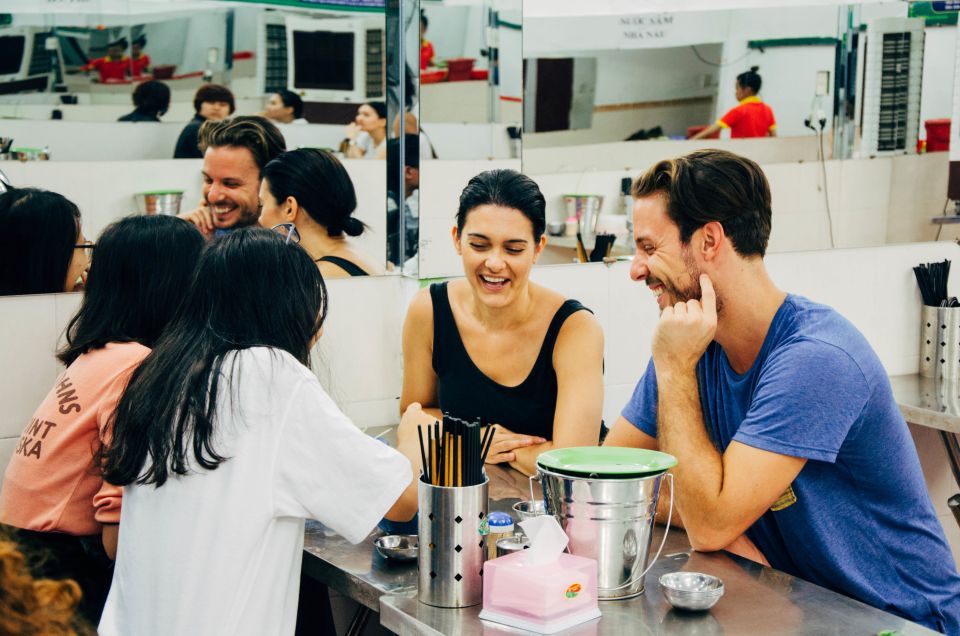
- 7–8 types of authentic local food and drink in about four hours, so you’re not hunting menus all night
- Bun Thit Nuong noodles as the main noodle story, not just pho-on-repeat
- Bánh xèo with Saigon + Mekong Delta character, even if you’ve had it before
- A cooking class in District 7 with a family-style recipe you won’t find on standard restaurant menus
- Sights beyond restaurants, including Nguyen Thien Thuat, the nonstop flower market, and Nguyen Trai fashion street
- District 4 street-food alleys plus a floating-market scene, capped with fresh cold coconut
Why This Saigon Night Food Tour Beats the Usual Pho Run
Most food tours in Vietnam feel like a greatest-hits album. This one doesn’t. Yes, you’ll likely still see pho somewhere in the city, but the focus here is on the dishes that locals treat as everyday comfort, not tourist checklists. The result is a night where your taste buds keep getting new information, not repeats.
I like that the tour is built for variety: noodles, pancakes, grilled desserts, and drinks all show up in the plan. And it’s not just “eat, then move on.” You also get short walks past neighborhoods and markets—places where daily life is the main attraction.
If you’re the kind of person who wants to understand food (where it comes from and how people actually eat), this style fits. And if you want a night that feels different from your daytime sightseeing, this is an easy win.
You can also read our reviews of more food & drink experiences in Ho Chi Minh City


What Happens Before You Even Taste Anything
This is the kind of tour where prep matters. The big instruction is simple: please don’t eat anything before the tour. That’s not a “nice-to-have.” It’s how the tasting pacing works. If you sneak snacks beforehand, you’ll miss what makes the stops satisfying instead of just filling.
You’ll also want to plan around allergies. The tour asks you to provide allergy details ahead of time, so the guide can steer you toward safer choices during tastings and drinks. If you’ve got sensitivities, send them in early rather than hoping for the best.
Finally, know the format: you’ll be guided, and you’ll be moving through multiple districts in a short window. That means some walking and time spent on the move, so comfy shoes help more than you’d think.
Pickup, Helmets, and Getting Around at Night
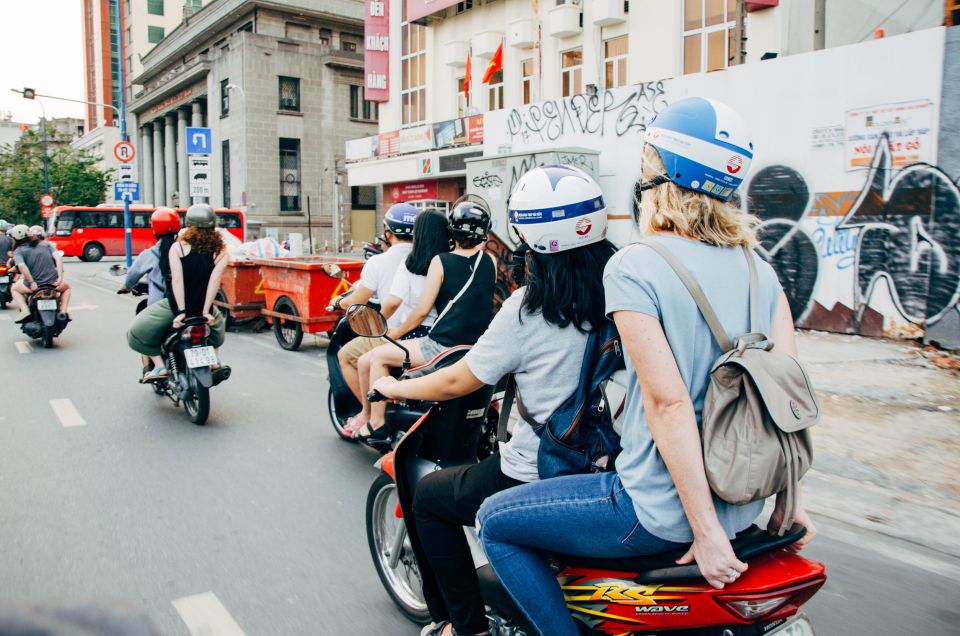
Pickup is included from your accommodation, and you’re expected to wait in the hotel lobby 10 minutes before your scheduled pickup time. That saves time and keeps the group from circling the block at night.
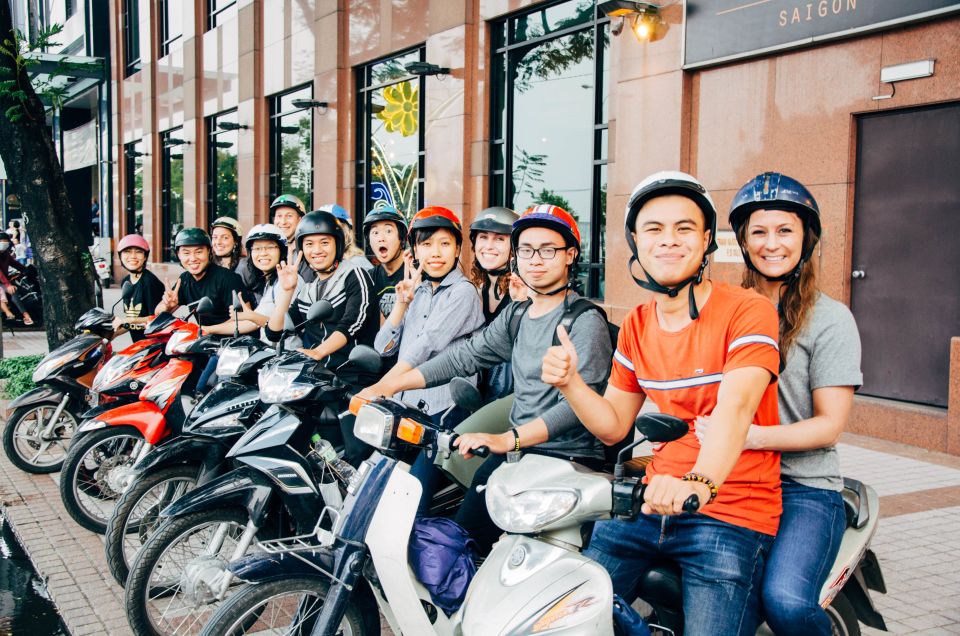
Because you’re crossing different areas quickly, expect motorbike transport as part of the experience. Helmets are included, along with rain ponchos if the weather turns. In other words: you don’t need to plan a whole gear setup just to go eat.
A practical tip: wear layers. Saigon nights can feel different as you move between streets, and you don’t want to be stuck eating with sweat pouring down or a sudden chill.
District Hopping: 7 Stops Across Ho Chi Minh City
The tour is designed as a loop through the city’s different faces. One of the big selling points is that you visit 7 districts of Ho Chi Minh City during the four-hour experience. That’s a lot of ground for a food-and-sightseeing plan, and it changes what you think you’re seeing.
You’ll move from tightly packed residential-style areas to markets and fashion streets, then toward parts of the city where locals go about their routines. Even when a stop is mainly “food,” the surrounding street scene matters because it explains how these dishes fit into daily life.
A heads-up: with this kind of route, you’ll get less time at any single place than a daytime walking tour. If you like slow, long hangs, this might feel fast. If you like sampling and seeing lots in one night, it’s a strong match.
Bun Thit Nuong and Bánh Xèo: The Noodles and Pancake Moment
If you think Vietnamese noodles means pho, you’re not wrong. But you are also being set up for the wrong expectation. This tour intentionally starts you on a different path with Bun Thit Nuong—a traditional noodle dish that’s popular locally but doesn’t get the same attention abroad.
It’s a great choice for a night tour because it teaches you something fast: there’s more than one “default” noodle experience in Vietnam. You’ll come away with a clearer idea of how Vietnamese flavors work beyond the headline dishes.
Then you get bánh xèo, the savory Vietnamese pancake. Yes, you can find bánh xèo all over Ho Chi Minh City, but this stop is pitched as a mix of Saigon taste and Mekong Delta taste. That matters because it suggests regional influence, not just a standard menu item. If you’ve eaten bánh xèo before, this is the part that helps you understand how the same dish can shift depending on where the flavors are tuned.
You can also read our reviews of more tours and experiences in Ho Chi Minh City

Nguyen Thien Thuat: Walk Through an Old Apartment Area
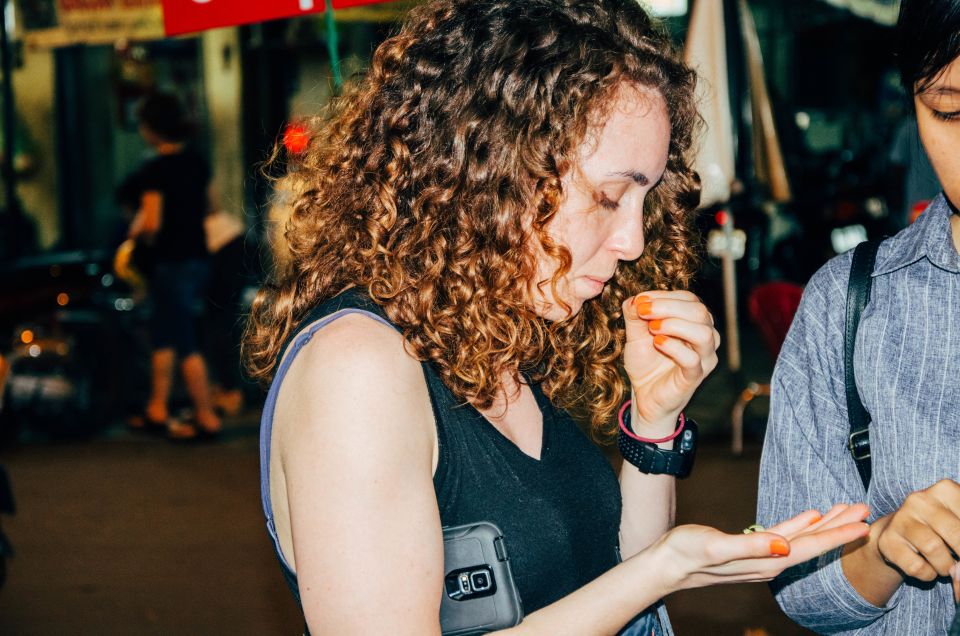
Between bites, the tour gives you a real-feeling neighborhood walk at Nguyen Thien Thuat, described as the oldest apartment in Ho Chi Minh City. It’s the kind of stop that doesn’t require a museum ticket. You’re basically watching how people live, shop, and eat at street level.
I like stops like this because they ground the food. When you see daily life nearby, your tasting stops feel less like a performance and more like a natural extension of the neighborhood.
Expect a walk that’s more about atmosphere than major monuments. If your idea of history is photographs and plaques, you might want to pair this tour with daytime sightseeing. If you prefer seeing “how it works,” this part delivers.
Grilled Sticky Rice Banana: The Sweet Finish That Feels Like a Street Ritual
Food tours can go wrong with desserts that feel like an afterthought. This plan treats dessert as a proper stop, with grilled sticky rice banana described as one of the best desserts in Vietnam.
The appeal here is that it’s not just sweet. It’s a street-style ritual: grilled, served hot, and eaten on the move. It’s also the kind of dessert that makes you rethink what “banana dessert” can mean when it’s paired with sticky rice and heat.
If you’re worried you won’t have room, that’s another reason not to eat beforehand. The tour pacing is built around the idea that you’re saving appetite for these hits, not stuffing in earlier meals.
The Flower Market That Never Really Sleeps
After that, you head to Ho Chi Minh City’s oldest and biggest flower market. The big detail is timing: it’s open nearly 24/7, and flowers are transferred from Da Lat every morning—Da Lat is often described as the flower city of Vietnam.
Walking through thousands of blooms at night isn’t just pretty. It gives context for the city’s rhythms—where supplies come from, how markets operate beyond business hours, and how fresh florals connect different regions.
This stop is also a nice reset from the heavy eating. Even if you’re already full, you’ll likely find yourself slowing down for the sights.
Nguyen Trai Fashion Street: Shopping Energy in the Middle of the Tour
Then comes Nguyen Trai, a fashion street where most local people come to buy clothes, shoes, hats, and more. This is one of those moments where you’re not just eating—you’re seeing how people dress and shop day-to-day.
I like this because it adds “real city texture.” You’re not walking through a themed souvenir zone. You’re watching a street that serves locals first, which makes the night feel more authentic and less staged.
If shopping is your hobby, you’ll probably spot things you want. Keep expectations realistic: this isn’t framed as a shopping tour, so the time you get here is limited.
District 7 Cooking Class: Secret Family Recipe, Real Participation
This is the heart of the tour’s “food beyond eating” idea. In District 7, you join a cooking class in an area described as an island covered with rivers—an area that, the tour says, many tourists don’t see.
The pitch is strong: you cook with a secret family recipe that restaurants don’t offer. Even without getting into exact dish secrets (since the tour framing is about process), the value is clear: you’re learning technique and taste-building, not just ordering dishes and moving on.
And yes, you should expect participation, not a polished professional show. One guide experience included a humorous moment about how the cooking result might not be perfect—so don’t stress. The point is to learn and have fun, even if your first attempt isn’t restaurant-level.
Floating Market Scene and Mekong-Style Fresh Coconut
Next up is a floating market moment: you see life on boats and on the river. This isn’t just a photo stop. It’s about understanding that food culture can be water-based and schedule-driven, not only street-based.
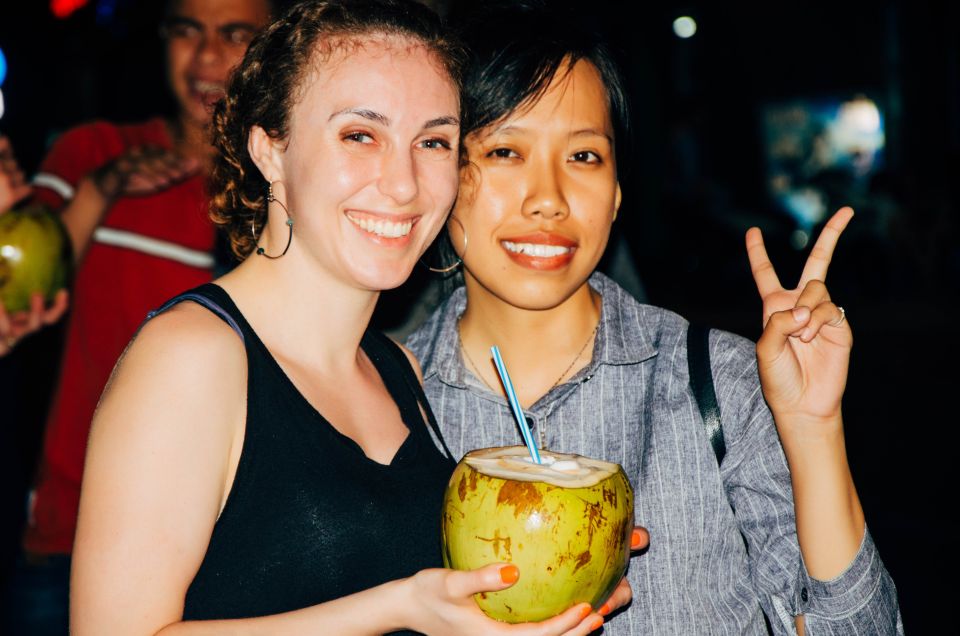
After the river scene, you get fresh cold coconut, described as having authentic Mekong Delta taste. It’s a simple drink, but it fits the whole theme: regional flavor. A cold coconut also helps reset your palate between tastings.
If you’re a coconut fan, you’ll be in heaven. If you’re not, it still works as a cooling palate cleanser, especially after grilled and fried flavors.
District 4 Street-Food Alleys: Small, Old, and Heavily Lived-In
The final segment brings you to District 4, described as the oldest and smallest district in Ho Chi Minh City, also framed as an area covered by the river. It’s famous for street-food stalls packed into narrow alleys.
This stop is about density: lots of small places, lots of choices, lots of everyday cooking happening close together. You’ll get the sense that street food here isn’t a novelty. It’s routine.
This is also a good “wrap-up” district. Earlier stops give you variety across noodles, pancakes, dessert, and markets. District 4 ties it together with the idea that the real action is in the small alley stalls you wouldn’t find on your own.
Price and Value: What $49 Buys in Four Hours
At $49 per person, you’re paying for more than food. You’re also paying for guided route planning across multiple districts, plus the included gear like quality helmets and rain ponchos. Most importantly, you’re getting 7–8 types of local food and drink, plus a cooking class segment.
So the value isn’t only in the number of dishes. It’s in the variety of contexts: markets, neighborhood walks, fashion street, and river life. Without a guide, you might be able to eat a lot—but you’d likely miss some of the off-menu logic: why these dishes show up, what “local version” means, and which places fit the schedule.
If you’re on a tight itinerary or trying to get your bearings fast, this is a smart use of time. It’s also a good first-night activity because it helps you understand the city’s food geography quickly.
Guides Make the Night: Real Names, Real Energy
What makes this experience feel easy is how the guide leads the pace and explains what you’re eating. The names I’ve seen associated with top experiences include Huy and Jaydon, Nguyen Phan, Sunny, and teams like Mary and Hieu, plus safe driving credited to Lee and Mya.
What stands out across these guide styles is simple: you don’t feel like you’re being rushed through food. You’re guided to spots you’d skip, and you get conversation along the way. That matters on a night tour, where the pace can be intense.
If you’re the type who asks questions about ingredients and how dishes are made, this tour format tends to reward you.
Who This Tour Fits Best (and Who Might Feel Frustrated)
This is a strong pick if you want:
- A fast, guided way to try authentic local food and drinks without overthinking menus
- A mix of street scenes and tastings, not only restaurant seating
- A hands-on cooking class experience in District 7
It may be less ideal if:
- You need a very calm pace with long stops (this tour is built for movement)
- You have mobility limitations, since it’s explicitly not suitable for people with mobility impairments
- You’re not comfortable with night transport around busy streets
Also, if you hate surprises, keep your expectations flexible. The best part of this tour is that you’re not choosing every dish. You’re following the local logic.
Should You Book Night Food Tour – Explore Saigon Secrets?
Book it if you want a full sensory night in Saigon that’s built around variety: unusual noodles, a flavor-shift bánh xèo, a dessert that feels like a street ritual, and a cooking class that goes past eating.
Skip it only if your priorities are very narrow, like a single famous dish or a slow, museum-style evening. This tour works best when you’re hungry, curious, and ready to move.
If you’re arriving in Ho Chi Minh City and want one activity that helps you understand both food and neighborhoods at the same time, this is one of the better bets.
FAQ
How long is the Night Food Tour – Explore Saigon Secrets?
The tour lasts 4 hours. Starting times can vary, so you’ll want to check availability for the specific departure you want.
How much does it cost?
It costs $49 per person.
Is pickup included?
Yes. Pickup is included from your accommodation/hotel. You should wait in the hotel lobby 10 minutes before your scheduled pickup time.
What should I do before the tour starts?
Please don’t eat anything before the tour.
Can I join if I have food allergies?
Yes, but you must provide food allergy information ahead of time so the guide can account for it during tastings.
Is this tour suitable for people with mobility impairments?
No. It’s not suitable for people with mobility impairments.