REVIEW · HO CHI MINH CITY
Private Cu Chi & Mekong Delta Tour: History Meets Nature
Book on GetYourGuide →Operated by MILLENIUM TRAVEL CO.,LTD · Bookable on GetYourGuide
Cu Chi isn’t what you expect at first. This private day trip pairs Cu Chi Tunnels with the softer rhythm of the Mekong Delta, so you get war history plus southern Vietnamese river life in one shot. I like how the tour explains how people lived underground, with practical stops like kitchen-and-bedroom spaces and guerrilla “everyday” cassava. I also like the food and small tastings that keep the day from feeling like a classroom. One consideration: this trip is not a good match if you have heart problems, are pregnant, or use a wheelchair.
You’ll be picked up from centrally located areas in Ho Chi Minh City, then spend about 1.5 hours heading out to Cu Chi. Afterward, you shift gears to My Tho Province for Vinh Trang Pagoda, a Tien River cruise, and canal sampans through coconut palm scenery. There’s an optional shooting range stop if you want it, but you’ll need to decide based on comfort and personal boundaries.
In This Review
- Key Highlights You’ll Actually Notice
- Why This Cu Chi and Mekong Combo Works for a Short Ho Chi Minh City Stay
- Pickup, Drive Time, and the Pace Before Cu Chi
- Cu Chi Tunnels: Living Areas, War Machines, and the Logic of Survival
- The Traps and Hidden Doors Part: One of the Most Unsettling Lessons
- Guerrilla-Style Cassava and Tea: A Taste That Makes History Click
- Optional Shooting Range With Real Weapons: Decide Before You Go
- Crossing Toward My Tho: Lunch and the Shift in Atmosphere
- Vinh Trang Pagoda: Architecture Plus a Quiet Reset
- Tien River Cruise: Scenic, but Also Practical for River-Region Understanding
- Coconut Candy, Family Business Stops, and Why They Matter
- Wooden Sampan Ride Through Coconut Canals: The Part You’ll Want to Repeat
- Honey Tea, Seasonal Fruit, and Folk Music: Included Southern Comfort
- Price and Value: Is $140 for Up to Two a Smart Deal?
- What to Bring, What’s Not Allowed, and Comfort Limits
- Who This Tour Suits Best (And Who Should Skip It)
- Should You Book This Cu Chi and Mekong Private Tour?
- FAQ
- How long is the drive from Ho Chi Minh City to Cu Chi?
- What time will the tour return to Ho Chi Minh City?
- Where does the hotel pickup happen?
- What’s included in the tour price?
- Is the shooting range part optional?
- What do you do in the Cu Chi Tunnels area?
- What do you see and do in My Tho Province?
- Are fruit tastings and honey tea included?
- What should I bring?
- Is this tour accessible for everyone?
Key Highlights You’ll Actually Notice
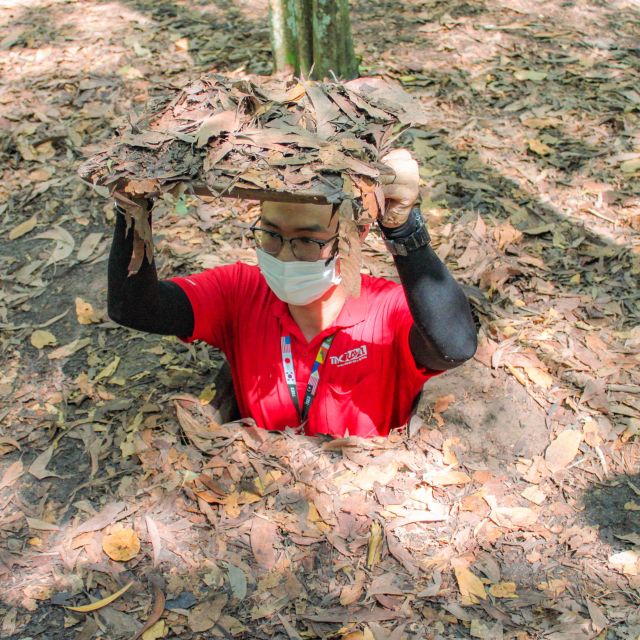
- Cu Chi tunnels with living spaces: kitchens and bedrooms shown side by side, plus weapon-making and field hospital areas
- Traps and hidden doors explained: you’ll hear how the maze design helped keep guerrillas safe
- Guerrilla-style cassava and special tea: a simple taste that connects history to daily survival
- My Tho cruising plus wooden sampans: Tien River sightseeing and canal rides under coconut trees
- Vinh Trang Pagoda architecture stop: a calm cultural pause in the middle of the day
- Honey tea, seasonal fruit, and folk music: included tastes and local performance for the southern vibe
Why This Cu Chi and Mekong Combo Works for a Short Ho Chi Minh City Stay
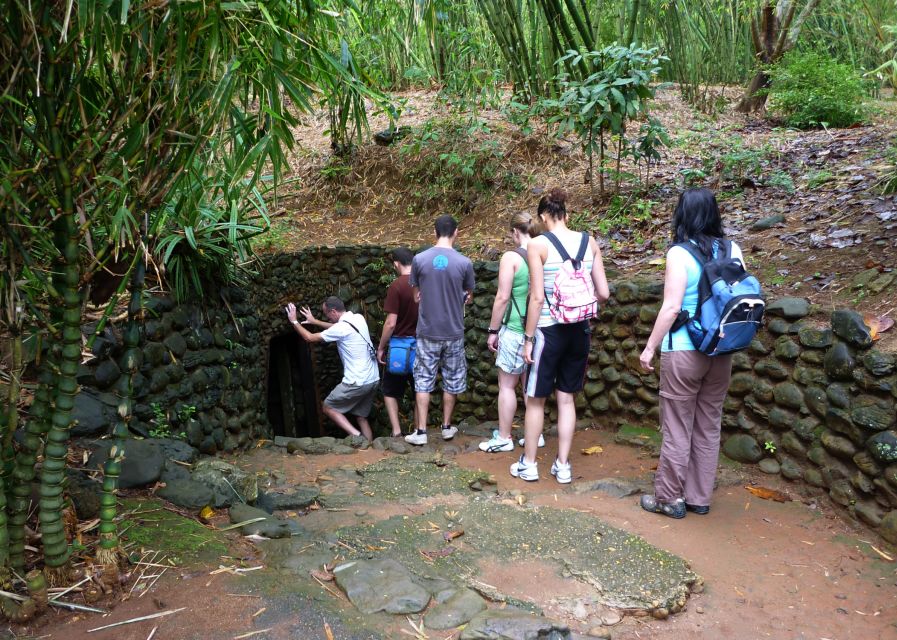
If you only have one day, this kind of itinerary makes sense. You don’t just “see sights.” You see contrast: the tight, engineered world of the tunnels, then the open river world of coconut canals and pagodas.
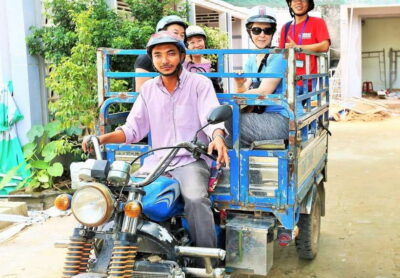
I like that it’s set up as a private day. With a private car/van and an English-speaking guide, you’re not stuck waiting on a bigger group to shuffle from one stop to the next. And because the tour includes lunch plus the tastings, you’re less likely to lose time hunting for food between attractions.
You can also read our reviews of more private tours in Ho Chi Minh City

Pickup, Drive Time, and the Pace Before Cu Chi
The day starts with hotel pickup from central Ho Chi Minh City areas, including Cau Ong Lanh Ward, Ben Thanh Ward, and Saigon Ward. From the downtown area, plan on about 1.5 hours to reach Cu Chi. That drive time matters because it sets your pacing: the day is long, but it’s structured so you’re not constantly rushing.
Once you arrive, the focus turns quickly to explanation and walking through areas connected to the tunnel network. You’ll want comfortable shoes here. Not because it’s a rugged hike, but because you’ll be on uneven ground and moving through a setting built for tight spaces, not wide sidewalks.
Cu Chi Tunnels: Living Areas, War Machines, and the Logic of Survival
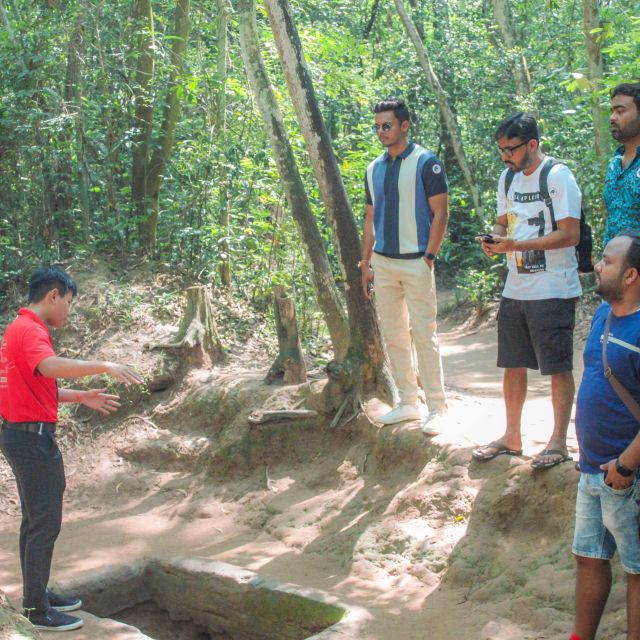
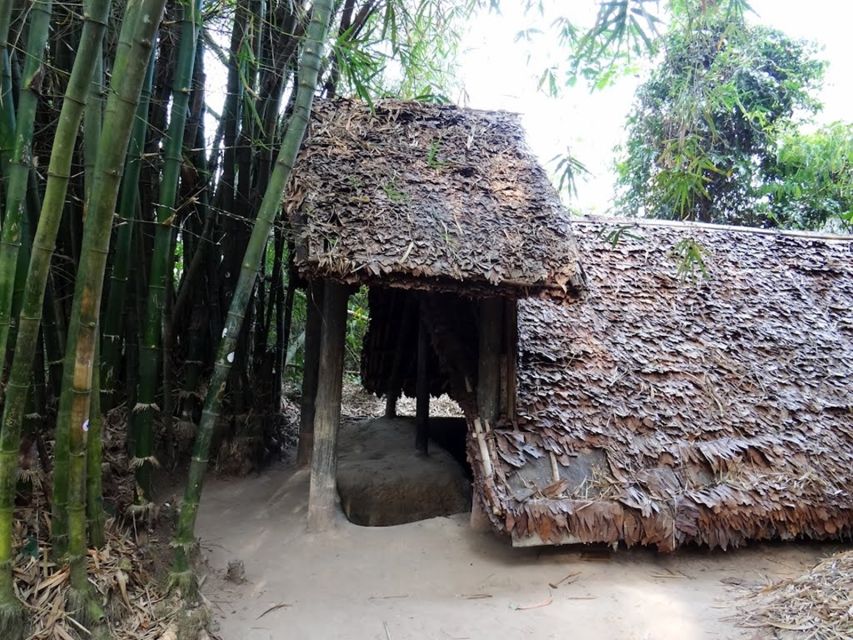
Cu Chi is often described as an underground maze. What makes this experience practical is how it’s organized around what you’d like to understand: how the tunnels functioned for real people.
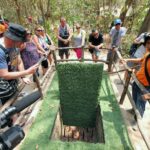
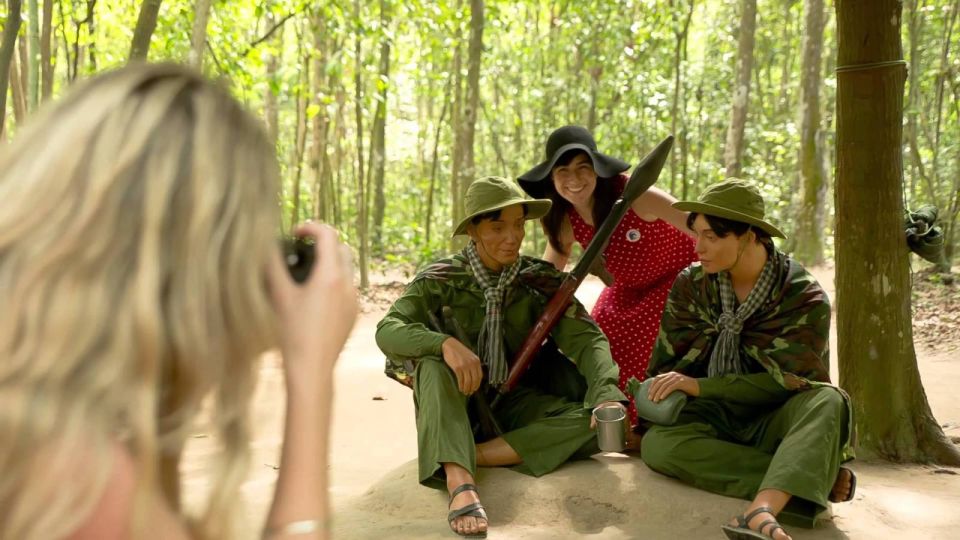
You’ll learn about the tunnels as they were built during the war, then you’ll see remaining sections of the tunnel network. What I like about this approach is that it doesn’t stay abstract. You’re guided through special living areas where kitchens and bedrooms are placed side by side. That detail alone helps you picture what “nearby” life looked like in a place designed for constant risk.
You’ll also visit areas connected to martial and support roles—weapon factories, storage, command centers, and field hospitals. Even if you’ve read about the war before, the tour’s way of grouping those spaces makes it easier to connect how the tunnels served both attack and care.
The Traps and Hidden Doors Part: One of the Most Unsettling Lessons
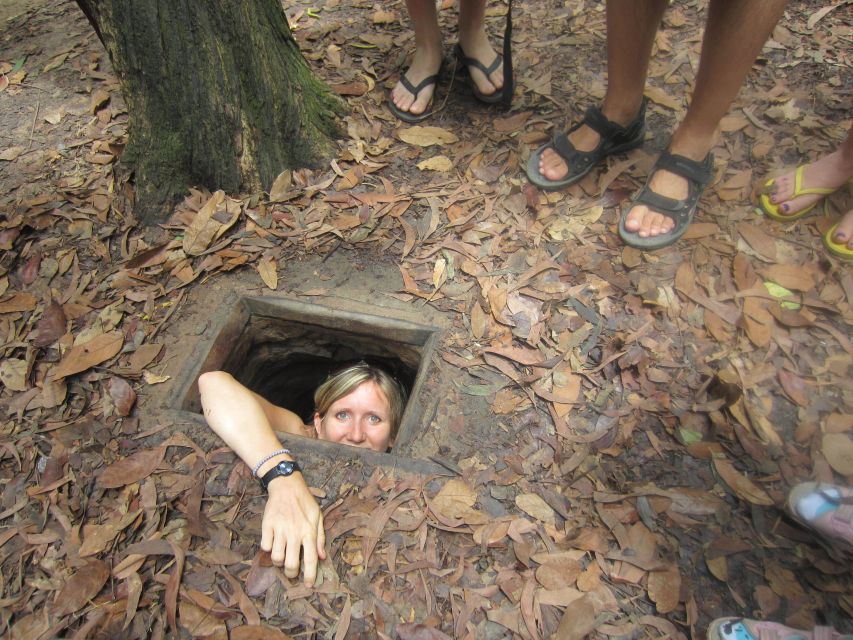
Here’s where the tour gets real in a way that’s hard to forget: you’ll hear about dangerous traps and hidden trap doors inside the tunnel network. The key point for you isn’t fear for its own sake. It’s the purpose—security. In other words, the system wasn’t just dug. It was engineered for protection in a maze-like environment.
If you prefer historical storytelling that explains cause-and-effect, you’ll probably enjoy this section. It gives you a reason for details that might otherwise feel like random obstacles. Just remember: you’re walking around a war-era survival system, so bring a steady pace and stay aware of your surroundings.
Guerrilla-Style Cassava and Tea: A Taste That Makes History Click
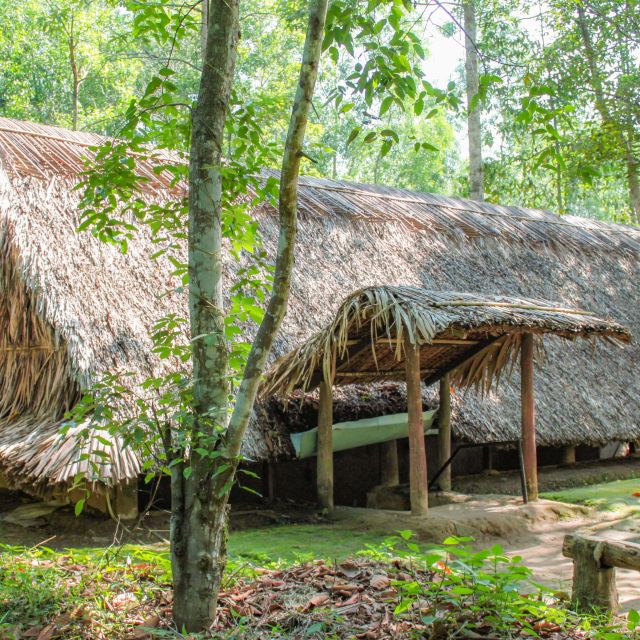
This tour doesn’t treat food like an afterthought. You’ll taste cassava and a special tea that were once part of guerrillas’ everyday food.
Cassava is simple, and that’s the point. It’s not meant to be fancy; it’s meant to show what people ate under pressure. When history includes a real taste, it sticks better in your memory than dates alone.
If you’re the type who likes to understand food as culture, you’ll also like how the day later returns to another kind of food education—honey tea, seasonal fruit, and coconut candy.
You can also read our reviews of more historical tours in Ho Chi Minh City



Optional Shooting Range With Real Weapons: Decide Before You Go
You can take time to try shooting a real gun at the Cu Chi stage, but it’s optional. This is one of those add-ons you should weigh carefully.
If you’re comfortable with the idea and the safety rules, it could be a memorable experience. If you’d rather not be around firearms, you can skip it and use that time to slow down, ask questions, or just enjoy the rest of the Cu Chi explanations.
Because the tour includes optional shooting, it’s smart to plan mentally: do you want action, or do you want reflection? This day can be either, depending on your choice.
Crossing Toward My Tho: Lunch and the Shift in Atmosphere
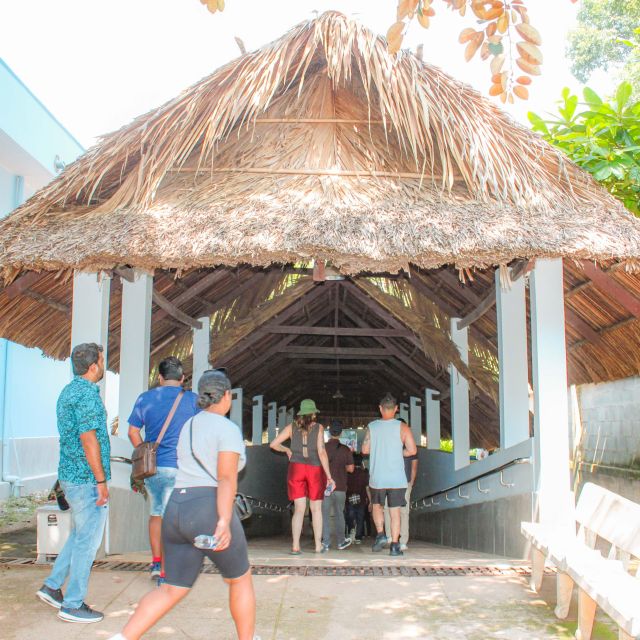
After Cu Chi, the tour heads toward the Mekong Delta. You’ll stop for lunch along the way at a local restaurant. Lunch is included, and that matters because it keeps the day moving without forcing you to make decisions between long drives.
You’ll feel the shift as soon as the day turns river-focused. Cu Chi’s tight, underground logic gives way to open-air scenery and a slower mood built around water transport. That contrast is exactly why this tour is valuable if you want more than one “type” of travel in a single day.
Vinh Trang Pagoda: Architecture Plus a Quiet Reset
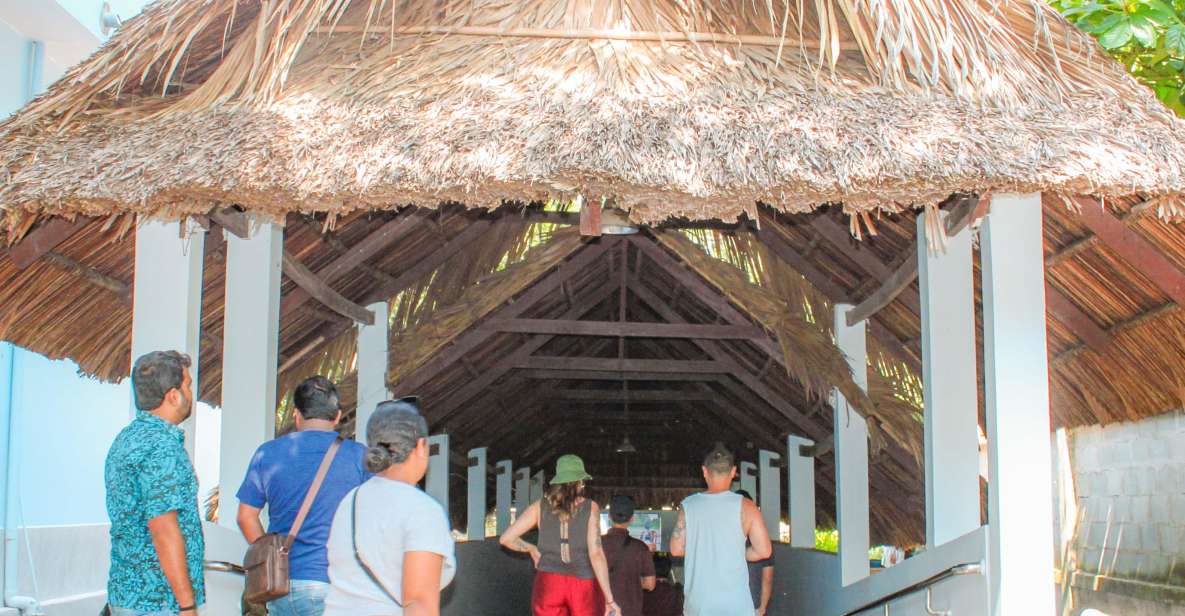
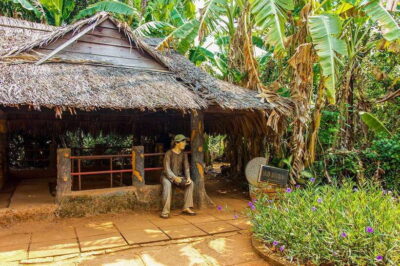
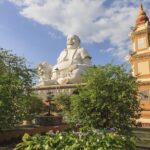
In My Tho Province, you’ll visit Vinh Trang Pagoda. The tour frames it as both stunning in architecture and a solemn space—so treat it as a pause, not a quick photo stop.
This is the kind of stop that balances the militarized setting of Cu Chi. You get a different form of meaning: spiritual space, designed art, and a slower pace for looking. If you like cultural stops that don’t feel like shopping, this pagoda visit is one of the stronger mid-day components.
Tien River Cruise: Scenic, but Also Practical for River-Region Understanding
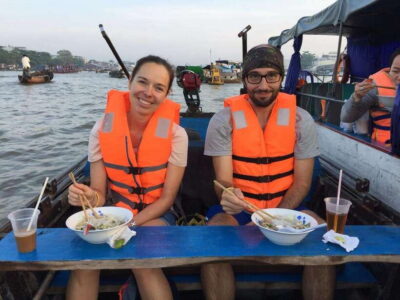
Next comes a scenic cruise along the Tien River. For me, river cruises are worth it when they teach you how the region works—transport, daily rhythm, and how the water shapes life.
Here, you’re not just on a boat for views. The cruise connects the later canal ride to a bigger story: the Mekong region is lived in through waterways. If you’re short on time and you want a “feel” for the delta without taking multiple days, this cruise is a big part of the value.
Coconut Candy, Family Business Stops, and Why They Matter
Before the canal ride, you’ll visit a coconut candy mill. It’s described as a family business, which is exactly why this stop helps.
It’s not a distant factory experience. You get a closer look at a craft tied to local agriculture and southern tastes. Even if you’re not a candy shopper, it’s useful context for why coconuts show up across the region—from sweets to daily canal life.
Wooden Sampan Ride Through Coconut Canals: The Part You’ll Want to Repeat
The boat experience becomes more personal on the wooden sampan ride through small canals. You’ll be taken down canals under the shadow of water coconut trees, soaking up the atmosphere of the river region.
This is the moment where the tour can feel more “you’re here” than “you’re passing through.” Sampans are smaller and slower, so you notice details better. Also, it’s a great change of pace after all the walking around Cu Chi.
If you hate crowds, this kind of ride is a relief because it naturally limits how much you’ll deal with big-group motion. Just be ready for the sun—bring your hat and sunglasses.
Honey Tea, Seasonal Fruit, and Folk Music: Included Southern Comfort
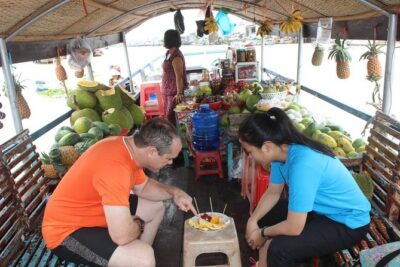
Food and culture show up again in the final stretch. You’ll savor seasonal fruits, take a sip of honey tea, and get a sense of Southern Vietnamese folk music performed by locals.
This is one of the best “done right” inclusions because it’s not just eating. You’re also hearing, and the music ties into the broader river-and-village context of the Mekong region. Honey tea and fruit tasting make sense after a day of travel; they also give you a sensory checklist of what “southern flavors” feel like.
Price and Value: Is $140 for Up to Two a Smart Deal?
This tour costs $140 per group up to 2. On its face, that’s not cheap. But look at what you’re getting: private car or van, an English-speaking guide, entrance fees, lunch, fruit and honey tea, mineral water, plus Mekong boat trips.
For two people, the value usually comes from the “private” part. You’re paying for transportation and guide time that would normally get split across multiple participants on larger group tours. In practice, that can mean fewer delays, more flexibility in pacing, and an experience that feels more like a curated day than a conveyor belt.
If you’re traveling solo or as a couple and you want Cu Chi plus the Mekong on the same day, this pricing can feel reasonable compared to piecing it together yourself—especially when lunch, river activities, and entrance fees are already included.
What to Bring, What’s Not Allowed, and Comfort Limits
To have a smooth day, pack like it’s a full outdoor schedule. You’ll want:
- Passport or ID card
- Comfortable shoes
- Sunglasses
- Sun hat
- Camera
The tour also has a few clear restrictions:
- Pets aren’t allowed.
- Luggage or large bags aren’t allowed.
Comfort limits are important here. The tour is not suitable for the handicapped, wheelchair users, people with heart problems, or pregnant women. And because the day involves different modes of movement (drives, walking, boat rides), it’s not ideal if you need frequent rest breaks or have mobility limitations.
One more real-world note: return time depends on traffic conditions, and the operator isn’t responsible for delays. That means your evening plans should stay flexible.
Who This Tour Suits Best (And Who Should Skip It)
This is a strong choice if:
- you have a short time in Ho Chi Minh City and want two major contrasts in one day
- you want both history and river culture, not just one side
- you like guided explanations with included food and tastings
- you prefer a private day for pacing and comfort
I’d skip it if:
- you need wheelchair access or have serious mobility constraints
- you have heart problems or are pregnant
- you dislike firearm-related options, even if shooting is optional
- you hate long days with drives (the itinerary is structured, but it’s still a full day)
Should You Book This Cu Chi and Mekong Private Tour?
I’d book it if your goal is a focused, time-efficient day that connects war-era engineering with southern Vietnamese river life. The combination of Cu Chi’s tunnel explanations, the cassava-and-tea tasting, the Vinh Trang Pagoda stop, the Tien River cruise, and the coconut canal sampan ride gives you a balanced “history meets nature” day.
If you’re on the fence, decide on two things first: your comfort with long drives and your stance on the optional shooting range. If both feel fine, this is one of those private tours that can be more than a checklist—it can feel like a single coherent story.
FAQ
How long is the drive from Ho Chi Minh City to Cu Chi?
The journey to Cu Chi is about 1.5 hours from the heart of downtown.
What time will the tour return to Ho Chi Minh City?
You’ll return between 7:00 PM and 7:30 PM.
Where does the hotel pickup happen?
Pickup is available from centrally located hotels in areas including Cau Ong Lanh Ward, Ben Thanh Ward, and Saigon Ward.
What’s included in the tour price?
Included: private car or van, English speaking tour guide, boat trips in the Mekong Delta, entrance fees, lunch at a local restaurant, fruit and honey tea, mineral water, and hotel pick-up and drop-off.
Is the shooting range part optional?
Yes. There is an optional experience to try shooting with real weapons.
What do you do in the Cu Chi Tunnels area?
You’ll learn about the tunnels from the war period, explore remaining areas of the tunnel network, see parts connected to living spaces and facilities, and hear about dangerous traps and hidden trap doors. You’ll also taste cassava and tea.
What do you see and do in My Tho Province?
You’ll visit Vinh Trang Pagoda, take a cruise along the Tien River, visit a coconut candy mill, and go on a wooden sampan ride through small canals under coconut trees.
Are fruit tastings and honey tea included?
Yes. Seasonal fruits and honey tea are included.
What should I bring?
Bring your passport or ID card, comfortable shoes, sunglasses, a sun hat, and a camera.
Is this tour accessible for everyone?
No. It’s not suitable for wheelchair users and is not suitable for people with heart problems or pregnant women. It also notes it’s not suitable for handicapped customers.