REVIEW · HO CHI MINH CITY
Ho Chi Minh City History And Culture Half-day Tour
Book on Viator →Operated by Hoi An Express Travel · Bookable on Viator
Ho Chi Minh City hits fast, then explains itself. I love how this half-day format stacks major landmarks in a tight route, and I especially like that the plan includes both the War Remnants Museum and quieter culture stops like Thien Hau Pagoda and a lacquerware workshop. One thing to consider: the schedule is packed, so if you want extra time inside the War Remnants Museum, you may feel a bit rushed.
You’ll get hotel pickup and drop-off in the city center, plus air-conditioned transport and bottled water. The guides are set up for English—though in at least one case, English quality can vary—so if language matters, it’s worth picking a time you can ask questions. The group is capped at 15, which helps keep it manageable without turning it into a slow, sightseeing-only shuffle.
In This Review
- Key highlights you’ll feel right away
- Why this half-day tour works for first-timers (and time-crunched travelers)
- Price and logistics: what you’re paying for (and when it’s a smart buy)
- Getting from stop to stop without wasting your day
- War Remnants Museum: heavy topic, but that’s the point
- Independence Palace (Reunification Convention Hall): Vietnam’s power switch, in person
- Notre-Dame Cathedral of Saigon: French roots in the middle of modern life
- Saigon Central Post Office: architecture that still works for everyday people
- Ba Thien Hau Pagoda in Cho Lon: a quieter kind of history
- Lacquerware factory: craft, process, and a chance to ask questions
- Guides make or break the experience: what to look for
- Who should book this tour (and who might want something else)
- Should you book? My practical call
- FAQ
- How long is the Ho Chi Minh City History And Culture Half-day Tour?
- What’s included in the price?
- Does the tour include the War Remnants Museum and Independence Palace?
- Is Saigon Central Post Office entrance included?
- How long is the stop at Notre-Dame Cathedral of Saigon?
- Is food or lunch included?
- What about kids and pricing?
Key highlights you’ll feel right away
- War Remnants Museum with built-in context: time for the exhibits and a guide to connect them to the city’s later shifts
- Colonial-era landmarks in one walkable cluster: Saigon Central Post Office and Notre-Dame Cathedral of Saigon anchor the French period
- Independence Palace (Reunification Convention Hall): a major Vietnam War-era political landmark in a short stop
- Thien Hau Pagoda in Cho Lon: a Chinese-style temple visit tied to the Lady of the Sea (Mazu)
- Lacquerware factory watch-and-learn time: see how traditional products are made before you buy anything
Why this half-day tour works for first-timers (and time-crunched travelers)
Ho Chi Minh City can feel like a lot on day one: motorbikes, chatter, heat, and a skyline that mixes old and new in the same block. This tour is designed for the moment when you want a clean map of meaning, not just photos. In about 4 hours, you cover big headline sites and also fit in a real cultural stop where you can see craft work with your own eyes.
I like the balance of topics. You’re not stuck only in museums or only in architecture. You get war and politics (through the War Remnants Museum and the Independence Palace), then you switch gears into religion and neighborhood life via Thien Hau Pagoda, and you end with something hands-on-ish at a lacquerware factory. That mix helps the city stop feeling random.
The value is also in what’s included. Entrance fees are part of the package, English-speaking guides are provided, and you get hotel pickup and drop-off in the city center plus air-conditioned transport. When you’re only in town for a short stay, these “small” inclusions add up fast.
You can also read our reviews of more city tours in Ho Chi Minh City


Price and logistics: what you’re paying for (and when it’s a smart buy)
At $36 per person for roughly 4 hours, this is the kind of deal that makes sense if you want structure and you don’t want to spend your limited time hunting tickets, figuring out routes, or negotiating street-by-street rides.
Here’s the practical breakdown of why it can be good value:
- You’re paying for guide interpretation, not just entry into sites. The most satisfying part of this kind of tour is usually hearing the story that connects French colonial buildings, Chinese temple traditions, and Vietnam War landmarks.
- Entrance fees are included, which prevents the budget from ballooning once you’re already out the door.
- Transportation is included, with air-conditioned comfort and bottled water. In Saigon heat, that matters more than you expect.
- Group size stays small (max 15), so you can actually hear explanations instead of getting lost in a crowd.
A small caution: one experience point that came up is transport comfort. In one case, the car was described as tight with a low roof, and the person reported bumping their head getting in and out. If you’re tall or travel with mobility concerns, that’s worth taking seriously. Also, language quality can vary—one guided session was described as having poor English—so if you rely heavily on spoken explanations, plan to ask questions early and stay flexible.
Getting from stop to stop without wasting your day
This tour uses pickup and drop-off in Ho Chi Minh City center, so you don’t waste your first half-day figuring out where to meet. You also get air-conditioning, which is not a luxury here—it’s part of surviving the heat.
The pacing is built around short, efficient visits:
- one longer museum stop
- one major palace stop
- a couple of brief architecture and pagoda visits
- a craft-time stop at the end
That means you’ll be moving through the city quite a bit, and you’ll likely stand in lines at entrances like everyone else. Still, having a driver and guide handling logistics keeps your mental energy focused on the sights.
And yes, group tours can be a little less flexible than private time. If your top priority is lingering in one place, you may want to treat this as your “overview first” day, then plan a deeper return visit on your own later.
War Remnants Museum: heavy topic, but that’s the point
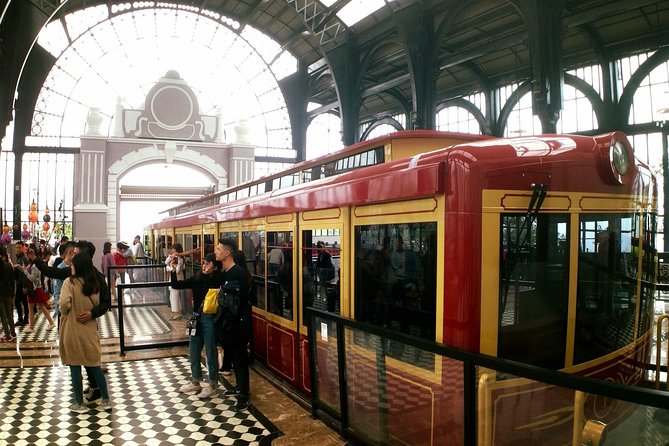
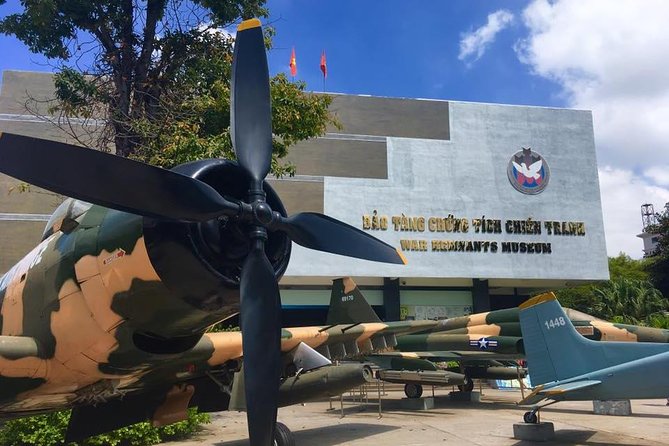
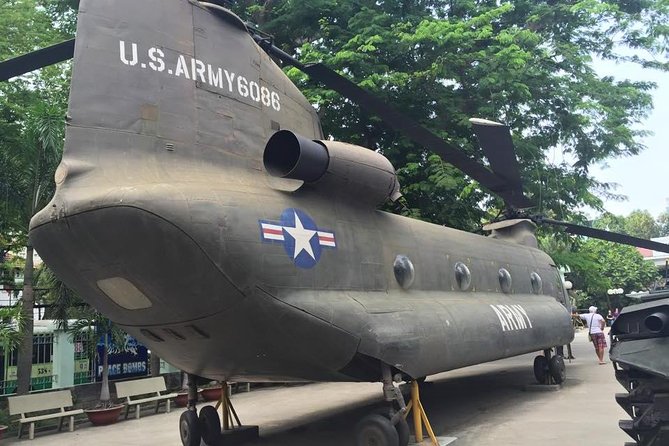
The War Remnants Museum is the most emotionally intense stop on the route. An earlier version opened on September 4, 1975, starting as an exhibition house for US and puppet crimes. Later, the museum evolved, and in 1995 it expanded following normalization of diplomatic relations. Even if you don’t memorize that timeline, you can feel the shift in how the story is presented.
On this tour, you get about 45 minutes with admission included. That’s enough time to see the core exhibits, read key captions, and let a guide explain the connections between war, memory, and the city’s later identity.
What I like about the way this fits the half-day: it anchors the political background behind the rest of the route. Without it, the Independence Palace might feel like just another big building. With it, you start to understand why that site is treated like a landmark.
Possible drawback: 45 minutes can feel short if the exhibits really grab you. One key piece of feedback was that more time would help. So if you’re the type who wants to linger over photographs and documentation, plan your expectations accordingly. I’d treat this stop as a strong overview, then do a longer revisit if the museum leaves you wanting more.
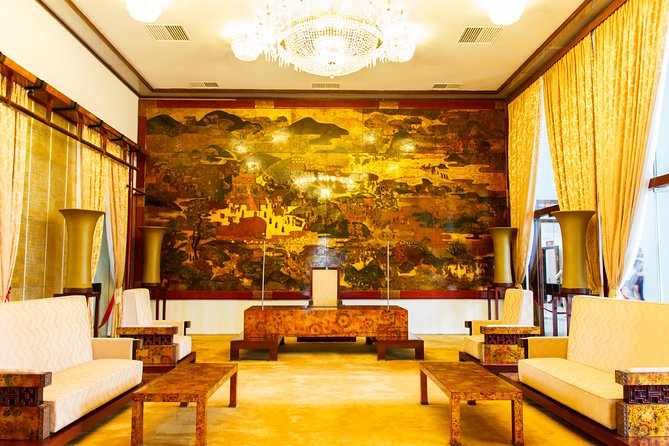
Independence Palace (Reunification Convention Hall): Vietnam’s power switch, in person
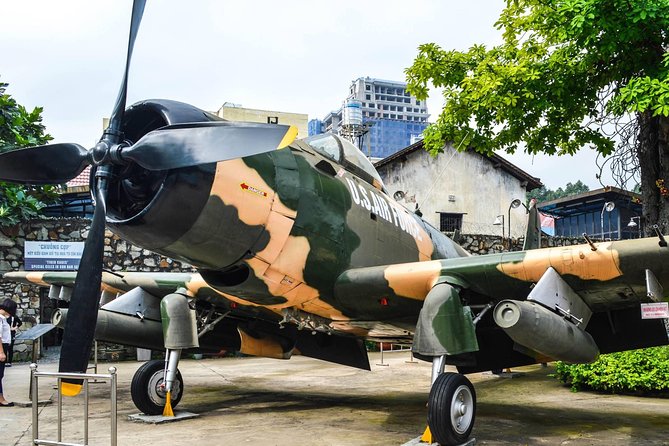
Next up is the Independence Palace, also known publicly as the Reunification Convention Hall. It sits on the former site of Norodom Palace, which gives the building a layered identity. One moment it’s architecture tied to older power; another moment it becomes a symbol of a major political shift.
Your time here is about 1 hour, with admission included. That hour is used well if you take it slow. Don’t rush through doorways just for a checklist. Instead, look for the details that show how leadership spaces were designed—then compare that feeling with what you just learned in the museum.
Why this stop matters: it’s the bridge between history as an exhibit and history as a place you can walk through. The palace doesn’t just tell you a story; it shows you how decisions were staged.
A practical note: this is one of the stops where you’ll benefit most from a guide who can connect physical rooms to the broader timeline. The better the guide’s pacing and explanations, the more your hour feels like more than one building.
You can also read our reviews of more historical tours in Ho Chi Minh City






Notre-Dame Cathedral of Saigon: French roots in the middle of modern life
The Notre-Dame Cathedral Basilica of Saigon is a quick stop (about 15 minutes) but an important one. French colonists established it, and it initially carried the name Church of Saigon. You’ll find it in the downtown area, near other iconic colonial architecture.
This is the kind of place where you can either zoom past or slow down. In a half-day tour, slowing down is still possible—you just have to choose what you care about: the façade details, the scale, or the way the building holds its place amid today’s traffic and growth.
What I like: the cathedral works as a visual reset. After the heavy museum and the weighty palace, standing in front of a French-era landmark can feel like a breath—while still grounding you in the colonial chapter that shaped the city.
Time is short, so if you want photos from a specific angle, plan to move quickly when the guide gives you a moment to pause.
Saigon Central Post Office: architecture that still works for everyday people
Right next to the downtown cathedral area is the Saigon Central Post Office, visited for about 10 minutes (with entry labeled as free on the tour). It was constructed during Vietnam’s time as part of French Indochina, and its proximity to the cathedral keeps this stop efficient.
Even if you’re not a stamp-and-letter person, I’d still treat this as a chance to observe how colonial-era design intersects with local daily rhythm. Post offices are built for motion: sorting, sending, waiting. That makes the building feel less like a museum object and more like a living public space.
Because the stop is brief, don’t expect a deep architectural tour here. Instead, enjoy the contrast between the building’s structure and what’s happening around it—then move on before heat and crowds get the better of you.
Ba Thien Hau Pagoda in Cho Lon: a quieter kind of history
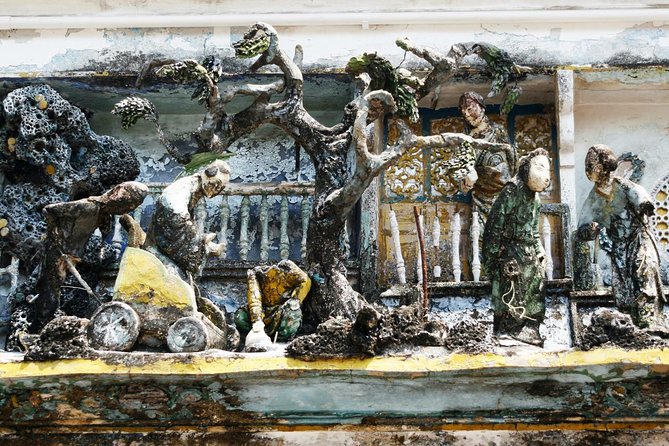
Then you shift into the Cho Lon area for Thien Hau Pagoda, also called Ba Thien Hau Temple. This is a Chinese-style temple on Nguyen Trai Street in District 5, dedicated to Thien Hau, the Lady of the Sea, also known as Mazu.
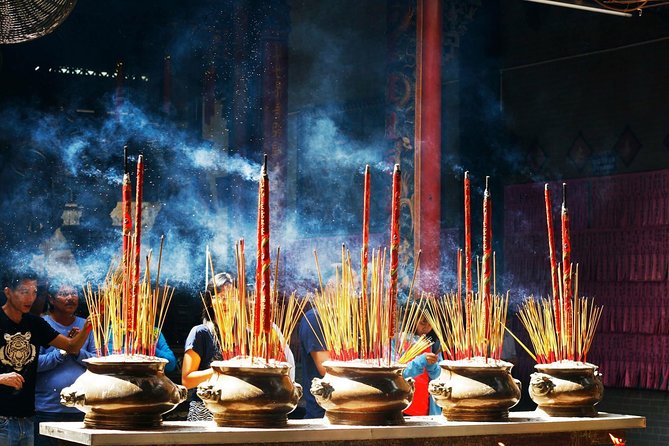
Your time is about 15 minutes with admission included. For a lot of people, this becomes one of the most memorable stops because it feels personal rather than political. You’re not just learning a timeline—you’re seeing a living religious site that helps explain why “history” here isn’t only about wars and rulers.
What I like about fitting this into a history and culture tour: it reminds you that cultures overlap. Vietnam’s city identity is shaped by multiple influences—Chinese traditions, French colonial architecture, and Vietnam’s modern story—often in the same neighborhoods.
Quick tip: keep your phone away until you’re sure where people are walking or praying. This is one of those places where respectful behavior helps your experience more than it slows you down.
Lacquerware factory: craft, process, and a chance to ask questions
The last stop is a Vietnamese lacquerware factory, with about 20 minutes. The goal here isn’t just to watch a demonstration; it’s to observe the process of making traditional lacquerware products.
This is a smart ending because it changes your brain from “history mode” to “craft mode.” After war stories, palace rooms, and architecture, watching artisans work can reset your perspective. Even if you don’t plan to buy anything, you get a clearer sense of why lacquerware matters locally: it’s skill, time, and layered finishing.
One caution: factory visits can sometimes feel like a sales stop. The tour time is short, so you’re not trapped there forever. If shopping isn’t your thing, treat it as a learning stop, ask one or two questions, and move on.
Guides make or break the experience: what to look for
This tour’s success often comes down to the guide. Some names that have stood out from strong experiences include Joseph, Hao, Bau, and Lam. The best sessions are the ones where the guide not only talks about landmarks, but also explains how daily life and history connect.
Here’s what to look for during the tour:
- Clear explanations you can follow without needing to translate everything in your head
- Flexibility when timing gets tight
- A willingness to connect the buildings to the real story, not just facts on a slide
If you end up with a guide whose English is difficult to follow, don’t just suffer through it. Ask simple questions like what to notice at the next stop. With a good guide, that turns a short stop into something useful fast.
Who should book this tour (and who might want something else)
I’d recommend this tour if:
- you’re visiting Ho Chi Minh City for the first time and want a fast overview
- you want a mix of war, colonial architecture, religion, and craft in one morning/afternoon block
- you prefer guided structure over navigating by yourself
- you’re short on time and want pickup, transport, and entrances handled
You might want a different option if:
- you’re the type who could spend hours in the War Remnants Museum and would feel frustrated by a set 45-minute slot
- you’re sensitive to transport comfort (especially if you’re tall, due to reports of a tight vehicle roofline)
- you need highly polished spoken English and worry about language variation
Should you book? My practical call
If you want a high-impact introduction to Ho Chi Minh City without turning your day into a logistics puzzle, I think this is a solid pick. The big wins are the way it layers history (museum + palace) with culture (pagoda) and craft (lacquerware), all inside 4 hours with guide support and included admissions.
Book it if your goal is get oriented fast and leave with a sense of how the city got here. Skip or upgrade if you know you want deep, slow time in the War Remnants Museum or you strongly prefer private pacing.
FAQ
How long is the Ho Chi Minh City History And Culture Half-day Tour?
It lasts about 4 hours.
What’s included in the price?
The tour includes bottled drinking water, an English-speaking guide (other languages may be available with a surcharge), hotel pickup and drop-off in Ho Chi Minh City center, travel insurance, entrance fees, and air-conditioned transportation.
Does the tour include the War Remnants Museum and Independence Palace?
Yes. The War Remnants Museum is included (about 45 minutes), and the Independence Palace is included (about 1 hour).
Is Saigon Central Post Office entrance included?
Entrance fees are included in the tour price, and the Saigon Central Post Office stop is listed as free for you.
How long is the stop at Notre-Dame Cathedral of Saigon?
It’s listed as about 15 minutes.
Is food or lunch included?
Meals are not listed among the inclusions. Personal expenses like beverages are also noted as not included.
What about kids and pricing?
Children ages 0–5 are free. Children 6–10 pay 50% off. The policy also specifies that a maximum of 1 child can be accompanied by 1 adult, and the 2nd child pays the adult price.